
In the realm of finance, percentages are the universal language. Whether you are assessing the growth of an investment portfolio, determining the interest rate on a mortgage, or calculating the profit margin of a burgeoning startup, the ability to accurately calculate and interpret percentages is a non-negotiable skill. Percentages allow us to normalize data, making it possible to compare a small local business to a multinational corporation or to understand the impact of inflation on our purchasing power over time.
While the basic formula for a percentage is taught in primary school, its application in the sophisticated world of money requires a deeper understanding of context and nuance. To master your finances, you must move beyond simple ratios and learn how percentages dictate the flow of wealth.
The Foundations of Financial Percentages
Before diving into complex investment strategies or corporate balance sheets, one must have a rock-solid grasp of the fundamental mechanics of percentage calculations. In a financial context, a percentage represents a portion of a total sum, expressed as a fraction of 100.
Understanding the Basic Formula
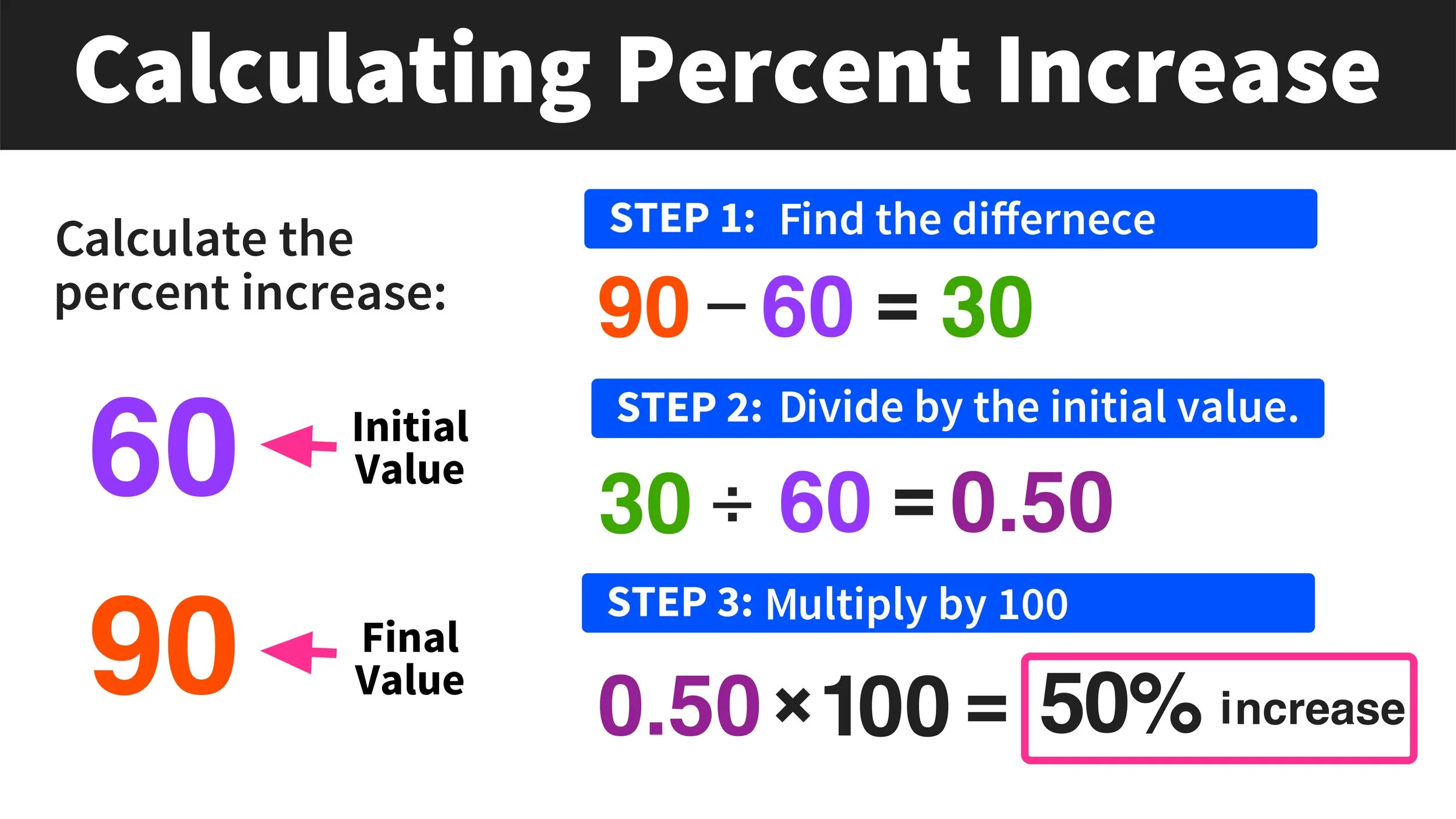
The core formula to find a percentage is:
Percentage = (Part / Whole) × 100
In money management, the “Part” is often a specific amount of interest, profit, or expense, while the “Whole” is the principal investment, total revenue, or gross income. For example, if you earned $500 in dividends from an investment of $10,000, you would divide 500 by 10,000 (0.05) and multiply by 100 to find that your yield is 5%. This simple calculation is the bedrock of all financial analysis.
Converting Fractions and Decimals to Percentages
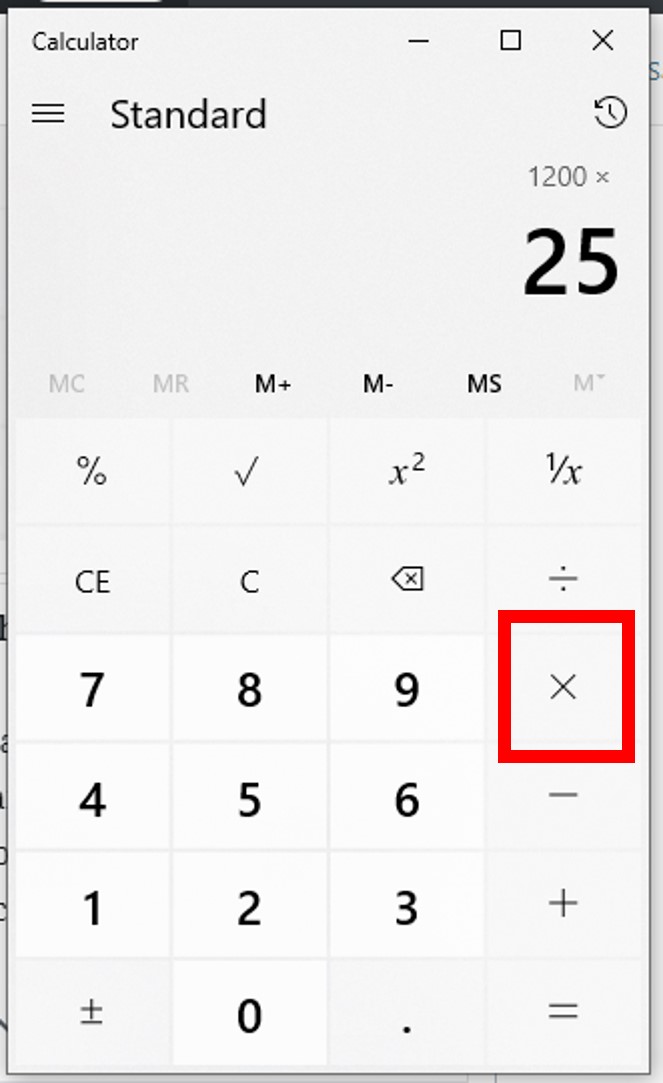
Financial professionals often work with decimals to speed up calculations. To convert a decimal to a percentage, you simply move the decimal point two places to the right. Conversely, to use a percentage in a calculation, you move the decimal two places to the left. For instance, if you need to calculate a 15% tip on a $60 dinner bill, it is often faster to multiply 60 by 0.15. Understanding this fluidity between decimals and percentages is essential for making quick, on-the-spot financial decisions.
Percentages in Personal Finance and Budgeting
For the individual, percentages serve as the primary tool for resource allocation. Without percentages, a budget is merely a list of numbers; with them, it becomes a strategic roadmap for wealth building.
The 50/30/20 Rule: Allocating Your Income
One of the most popular personal finance frameworks is the 50/30/20 rule. This strategy suggests that 50% of your after-tax income should go toward “Needs” (housing, utilities, groceries), 30% toward “Wants” (entertainment, dining out), and 20% toward “Financial Goals” (debt repayment, savings, investments).
To implement this, you must first calculate your net income. If your take-home pay is $5,000 per month, calculating 20% for savings involves multiplying $5,000 by 0.20, resulting in $1,000. By viewing your budget through the lens of percentages rather than fixed dollar amounts, your lifestyle can scale proportionally as your income grows, preventing “lifestyle creep.”
Calculating Interest Rates on Debt and Savings
Interest is the price of money, and that price is always expressed as a percentage—the Annual Percentage Rate (APR) or Annual Percentage Yield (APY). When you carry a balance on a credit card with a 24% APR, you aren’t just paying back what you spent; you are paying a monthly percentage of the outstanding balance.
To find the monthly interest charge, you divide the annual percentage by 12. Using the 24% example, your monthly interest rate is 2%. If you owe $2,000, you will be charged $40 in interest that month alone ($2,000 × 0.02). Understanding this calculation is often the catalyst that drives individuals to prioritize debt elimination.
Investment Mathematics: ROI and Portfolio Growth
In the world of investing, percentages are the ultimate yardstick of success. They allow investors to strip away the “noise” of dollar amounts and focus on the efficiency of their capital.
Calculating Return on Investment (ROI)
The most vital percentage for any investor is the Return on Investment (ROI). This metric tells you how much profit or loss you have realized relative to the amount of money you invested.
The formula is:
ROI = [(Current Value – Original Cost) / Original Cost] × 100
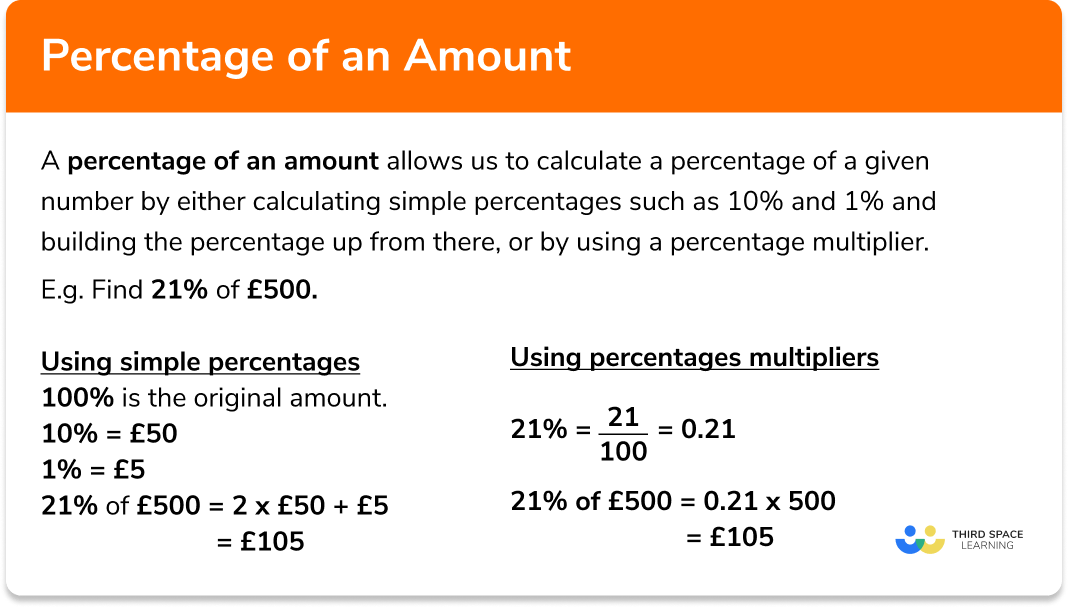
Suppose you purchased shares of a stock for $2,000 and sold them a year later for $2,600. Your capital gain is $600. To find the ROI: ($600 / $2,000) × 100 = 30%. Knowing that you achieved a 30% return allows you to compare this investment’s performance against other benchmarks, such as the S&P 500 index, which historically averages around 10% annually.
The Power of Compound Interest and Annualized Returns
While simple ROI is useful for short-term trades, long-term wealth is built through compound interest. Compound interest is calculated on the initial principal and also on the accumulated interest of previous periods.
When evaluating long-term performance, we use the Compound Annual Growth Rate (CAGR). This percentage provides a smoothed annual rate of return, accounting for the “snowball effect” of money. For an investor, understanding that a 7% annual return will double their money in approximately 10 years (based on the “Rule of 72”) is a much more powerful insight than simply looking at a bank balance. To use the Rule of 72, you divide 72 by the annual percentage return to find the number of years it takes for an investment to double (72 / 7 = 10.2).
Business Finance and Profitability
For business owners and entrepreneurs, percentage calculations are the difference between a thriving enterprise and bankruptcy. Revenue is a “vanity metric”; percentages, specifically margins, are the “sanity metrics.”
Gross vs. Net Profit Margins
Profit margin is a percentage that expresses how much of every dollar of sales a company actually keeps in earnings.
- Gross Profit Margin: This is calculated by subtracting the Cost of Goods Sold (COGS) from Total Revenue, then dividing by Revenue. If a product sells for $100 and costs $60 to make, the Gross Profit Margin is 40%.
- Net Profit Margin: This is the “bottom line.” It accounts for all expenses, including taxes, interest, and operating costs. If that same $100 sale results in only $10 of actual profit after all bills are paid, the Net Profit Margin is 10%.
A business owner who knows how to calculate these percentages can quickly identify if their operating costs are too high or if their pricing strategy is flawed.
Calculating Discounts and Sales Tax
In the daily operations of a business, percentages are used to drive sales through discounts and to comply with government regulations through sales tax.
- Discounts: To apply a 25% discount to a $200 item, you calculate 25% of 200 ($50) and subtract it from the original price ($150). Alternatively, you can multiply the original price by the “remaining” percentage (200 × 0.75 = 150).
- Sales Tax: If you operate in a jurisdiction with an 8% sales tax, you must add this to the subtotal. For a $150 purchase, the tax is 150 × 0.08 = $12, making the total $162. Accurate percentage calculations ensure that the business remains profitable while fulfilling its tax obligations.
Advanced Financial Ratios for Informed Decision Making
Beyond basic profits and losses, sophisticated financial management involves using percentages to assess risk and stability. These ratios are used by banks to approve loans and by investors to vet companies.
Debt-to-Income (DTI) Ratios
When you apply for a mortgage, lenders calculate your Debt-to-Income (DTI) ratio. This is the percentage of your gross monthly income that goes toward paying your monthly debt obligations.
DTI = (Total Monthly Debt Payments / Gross Monthly Income) × 100
Lenders generally look for a DTI of 36% or lower. If you earn $6,000 a month and your total debts (car loan, student loans, credit cards) equal $2,400, your DTI is 40%. Knowing this percentage before applying for a loan allows you to take corrective action, such as paying down a balance to improve your creditworthiness.
Portfolio Diversification Percentages
In investment management, percentages are used to mitigate risk through diversification. An investor might decide on an “Asset Allocation” of 70% stocks and 30% bonds. As the market fluctuates, these percentages will shift. If stocks perform exceptionally well, they might grow to represent 80% of the portfolio.
To maintain the desired risk profile, the investor must “rebalance”—calculating the dollar amount needed to sell in stocks and buy in bonds to return to the 70/30 percentage split. This disciplined use of percentages prevents an investor from becoming over-exposed to market volatility.
Conclusion: The Strategic Value of the Percentage
Calculating a percentage is more than just a mathematical exercise; it is a fundamental pillar of financial literacy. In personal finance, it provides the framework for disciplined budgeting and debt management. In the world of investing, it serves as the ultimate scorecard for performance and risk. For businesses, it is the lens through which efficiency and sustainability are measured.
By mastering the various ways to calculate and apply percentages, you transition from being a passive observer of your money to an active strategist. Whether you are aiming for early retirement, scaling a business, or simply trying to get out of debt, the humble percentage is the most powerful tool in your financial arsenal. Precision in these calculations leads to clarity in decision-making, and clarity is the precursor to financial freedom.
aViewFromTheCave is a participant in the Amazon Services LLC Associates Program, an affiliate advertising program designed to provide a means for sites to earn advertising fees by advertising and linking to Amazon.com. Amazon, the Amazon logo, AmazonSupply, and the AmazonSupply logo are trademarks of Amazon.com, Inc. or its affiliates. As an Amazon Associate we earn affiliate commissions from qualifying purchases.