
For millions of Americans, Social Security represents a cornerstone of their retirement security, providing a vital income stream that can significantly impact their financial well-being in their golden years. Yet, the precise methodology behind how these benefits are calculated often remains a mystery, shrouded in a complex array of terms like “indexed earnings,” “bend points,” and “full retirement age.” Understanding this calculation is not merely an academic exercise; it empowers individuals to make informed decisions about their careers, savings, and especially, when to claim their benefits, potentially adding thousands of dollars to their lifetime payouts.

This article aims to demystify the Social Security retirement benefit calculation, breaking down the intricate process into understandable components. We’ll delve into the foundational elements that contribute to your benefit, explore the core formulas used by the Social Security Administration (SSA), and highlight the various factors that can modify your final monthly payment. Ultimately, our goal is to provide a clear, comprehensive guide that helps you navigate this crucial aspect of retirement planning.
Understanding the Foundation: Your Earnings History
The entire Social Security benefit calculation begins and ends with your earnings history. The SSA meticulously tracks every dollar you’ve earned (up to a certain limit each year) throughout your working life that was subject to Social Security taxes. This record is the bedrock upon which your future benefits are built.
The Importance of Taxed Earnings
Every paycheck you receive typically has a deduction for FICA (Federal Insurance Contributions Act) taxes, which includes contributions to Social Security and Medicare. It’s these specific earnings—those subject to Social Security (OASDI) taxes—that count towards your benefit calculation. The amount of earnings subject to Social Security tax has a cap each year, known as the “contribution and benefit base.” For example, in 2024, earnings above $168,600 are not subject to Social Security tax and thus do not count towards your benefit calculation for that year. It’s crucial to understand that only earnings up to this annual limit are factored in, regardless of how much more you may have earned.
Identifying Your Highest Earning Years
The Social Security Administration calculates your benefit based on your highest 35 years of indexed earnings. This means that if you have worked for more than 35 years, the years with your lowest earnings (or zero earnings) will be dropped from the calculation. Conversely, if you have worked for fewer than 35 years, each year short of 35 will be counted as a zero-earning year in the calculation. This highlights the importance of consistent employment and robust earnings, especially in your prime working years. The system is designed to reward longer careers and higher contributions.
The Impact of Zero-Earnings Years
As mentioned, if you have fewer than 35 years of taxed earnings, the remaining years up to 35 will be filled in with zeros. These zero-earning years can significantly depress your average indexed monthly earnings (AIME), which is a critical component of the benefit formula. This is a common challenge for individuals who take extended breaks from the workforce (e.g., for childcare, education, or career changes), or those who experience periods of unemployment or underemployment. Understanding this factor can motivate individuals to either work longer or plan for higher earnings in their working years to offset any potential zero-earning periods.
The Core Calculation: Average Indexed Monthly Earnings (AIME)
Once your relevant earnings history is established, the next crucial step is to determine your Average Indexed Monthly Earnings (AIME). This is the linchpin of the entire benefit calculation, representing a weighted average of your lifetime earnings.
What is Indexing? Preserving Earning Power
Simply taking a raw average of your past earnings wouldn’t be fair, as a dollar earned in 1980 had significantly more purchasing power than a dollar earned today. To account for changes in average wages over time, the SSA “indexes” your past earnings. Indexing adjusts your earnings from earlier years to reflect the general increase in wages that has occurred since then.
For example, an income of $20,000 in 1985 would be adjusted upwards to a much higher value in today’s dollars before being included in your average. This ensures that your past earnings are given appropriate weight in current economic terms, providing a more accurate representation of your lifetime earning power. Earnings are indexed up to the year you turn 60. Earnings after age 60 are included at their nominal (actual) value.
The 35-Year Rule for AIME Calculation
To calculate your AIME, the SSA takes your highest 35 years of indexed earnings.
-
Identify 35 highest indexed earning years: From your entire work history, select the 35 years with the highest indexed earnings.
-
Sum these indexed earnings: Add up the indexed earnings from these 35 selected years.
-
Divide by 35 years: Divide this total by 35 to get an annual average.
-
Divide by 12 months: Finally, divide the annual average by 12 to arrive at your Average Indexed Monthly Earnings (AIME).
So, the formula essentially looks like this:
AIME = (Sum of your 35 highest indexed earning years) / (35 years * 12 months/year)
Beyond 35 Years: Replacing Low-Earning Years
The “35-year rule” is incredibly important. If you work for more than 35 years, say 40 years, the SSA will identify your 35 highest indexed earning years and drop the 5 lowest years from the calculation. This mechanism is beneficial because it allows workers with long careers to replace early, lower-earning years (which might have been due to entry-level wages or part-time work) with later, higher-earning years, thereby boosting their AIME. This offers an incentive for continued employment, as each additional high-earning year can potentially replace a lower-earning year, leading to a higher overall benefit.
From AIME to Primary Insurance Amount (PIA)
Once your Average Indexed Monthly Earnings (AIME) is determined, the next step is to calculate your Primary Insurance Amount (PIA). The PIA is the monthly benefit you are entitled to receive if you claim Social Security at your Full Retirement Age (FRA). It’s the base figure from which all other benefit adjustments are made.
Introducing the PIA Formula Bend Points
The calculation of the PIA is progressive, meaning it provides a higher percentage of replacement income for lower-income workers than for higher-income workers. This is achieved through a formula that uses “bend points.” These bend points are dollar amounts in the AIME formula that separate different percentage tiers. The formula for calculating the PIA uses three fixed percentages (90%, 32%, and 15%) applied to different segments of your AIME. These bend points are indexed annually to reflect changes in the national average wage index.
For example, for someone becoming eligible in 2024:
-
90% of the first $1,174 of AIME
-
Plus 32% of AIME between $1,174 and $7,078
-
Plus 15% of AIME over $7,078
It’s crucial to understand that these are not marginal tax rates; rather, they are the percentages applied to portions of your AIME.
Applying the Bend Points: A Step-by-Step Example
Let’s illustrate with a hypothetical AIME of $4,500 for someone becoming eligible in 2024:
-
First Segment: 90% of $1,174 = $1,056.60
-
Second Segment: The portion of AIME between $1,174 and $7,078.
-
$4,500 (AIME) – $1,174 (first bend point) = $3,326
-
32% of $3,326 = $1,064.32
-
-
Third Segment: Since our hypothetical AIME of $4,500 does not exceed the second bend point of $7,078, there is no amount to apply the 15% to.
Total PIA: $1,056.60 + $1,064.32 = $2,120.92
This $2,120.92 would be the individual’s monthly benefit if they claim at their Full Retirement Age. This example clearly shows how different parts of your AIME are weighted differently, leading to the progressive nature of Social Security benefits.
Why the PIA is Crucial: The Starting Point of Your Benefit
The Primary Insurance Amount (PIA) is the fundamental building block of your Social Security benefit. It represents your “full” benefit amount. Any decision you make regarding when to claim your benefits—whether early, at your full retirement age, or later—will adjust this PIA upwards or downwards. Furthermore, spousal, divorced spousal, and survivor benefits are also calculated as a percentage of the worker’s PIA. Therefore, understanding your PIA is essential for comprehending the full scope of your Social Security entitlements.
Factors Modifying Your Final Monthly Benefit
While the PIA sets your baseline benefit, it’s rare that your first Social Security check will be exactly your PIA. Several critical factors can significantly modify your final monthly benefit amount.
Claiming Age: Early vs. Full vs. Delayed Retirement Credits
This is perhaps the most impactful decision you’ll make regarding your Social Security benefits.
-
Early Retirement (Age 62): You can start receiving retirement benefits as early as age 62, but your monthly benefit will be permanently reduced. The reduction is approximately 5/9 of 1% for each month before your full retirement age, up to 36 months. If the number of months exceeds 36, the benefit is further reduced by 5/12 of 1% per month. This can lead to a reduction of up to 30% for someone with an FRA of 67 claiming at 62.
-
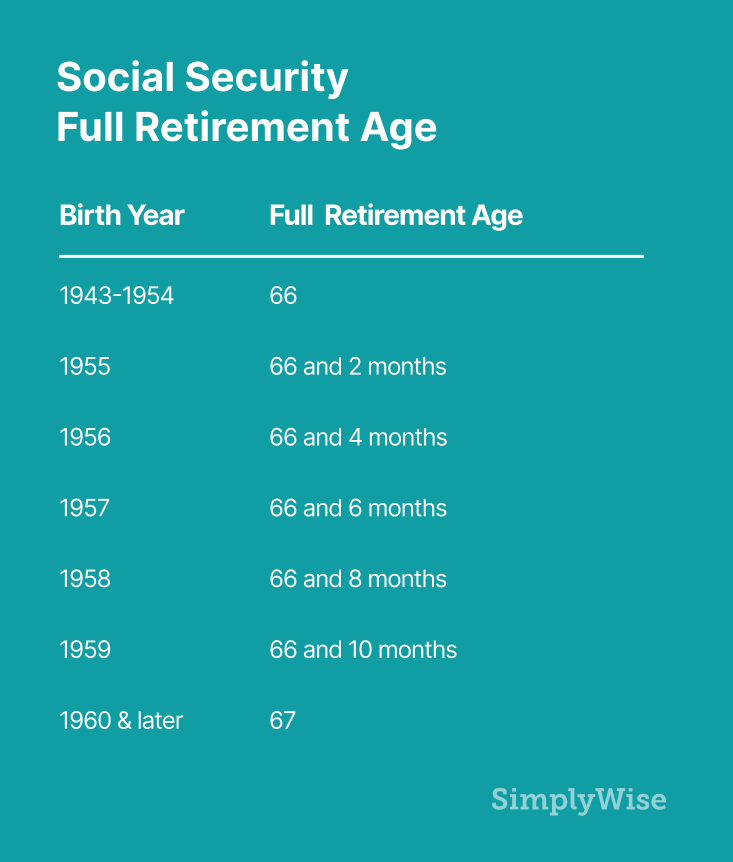
Full Retirement Age (FRA): Your FRA is the age at which you are entitled to receive 100% of your PIA. It depends on your birth year, ranging from 66 for those born between 1943 and 1954, gradually increasing to 67 for those born in 1960 or later.
-
Delayed Retirement Credits (DRCs): If you delay claiming benefits past your FRA, your monthly benefit will increase. For each month you delay, up to age 70, you earn Delayed Retirement Credits. These credits typically add 2/3 of 1% per month (or 8% per year) to your PIA. This can result in a benefit that is 24% to 32% higher than your PIA if you delay until age 70, depending on your FRA.
The choice of claiming age involves a careful consideration of your health, life expectancy, other retirement income sources, and financial needs.
The Impact of Working While Receiving Benefits (Earnings Test)
If you claim Social Security benefits before your Full Retirement Age and continue to work, your benefits may be reduced if your earnings exceed certain annual limits. This is known as the “earnings test.”
-
Before the year you reach FRA: The SSA deducts $1 from your benefits for every $2 you earn above the annual earnings limit ($22,320 in 2024).
-
In the year you reach FRA: The SSA deducts $1 from your benefits for every $3 you earn above a different, higher earnings limit ($59,520 in 2024) until the month you reach your FRA. Once you reach your FRA, the earnings test no longer applies, and you can earn as much as you want without your benefits being reduced.
It’s important to note that any benefits withheld due to the earnings test are not lost permanently. When you reach your FRA, your monthly benefit amount will be recalculated to account for the benefits that were withheld, effectively increasing your future payments.
Spousal and Survivor Benefits: Extensions of Your Record
Social Security is not just for individual workers; it also provides benefits for family members based on a worker’s earnings record.
-
Spousal Benefits: A spouse can claim benefits based on their own work record or up to 50% of their living spouse’s PIA, whichever is higher. If they claim spousal benefits early (before their own FRA), they will be reduced, just like a worker’s benefits.
-
Survivor Benefits: When a worker passes away, certain family members (e.g., a widow(er), children, or dependent parents) may be eligible for survivor benefits. A surviving spouse can receive up to 100% of the deceased worker’s PIA (if claiming at their own FRA or later), or a reduced amount if claiming earlier. Children and dependent parents also have specific eligibility rules.
These auxiliary benefits underscore the protective safety net that Social Security provides beyond individual retirement.
Taxation of Social Security Benefits
Finally, it’s important to be aware that your Social Security benefits may be subject to federal (and in some states, state) income tax. The amount of your benefit that is taxable depends on your “provisional income,” which includes your adjusted gross income, tax-exempt interest, and half of your Social Security benefits.
-
Up to 50% of benefits taxable: If your provisional income is between $25,000 and $34,000 for an individual, or $32,000 and $44,000 for a couple filing jointly.
-
Up to 85% of benefits taxable: If your provisional income exceeds $34,000 for an individual, or $44,000 for a couple filing jointly.
This taxation can reduce the net amount you receive, a crucial consideration for overall retirement income planning.
Maximizing Your Social Security Benefits
Understanding the calculation is the first step; strategically applying that knowledge can lead to a more secure financial future. While you cannot alter your past earnings, you can make informed decisions moving forward.
Monitoring Your Earnings Record
It is critical to regularly check your Social Security earnings record, which you can do by creating an account on the SSA’s website (ssa.gov). Verify that your reported earnings are accurate. Discrepancies can occur due to employer errors or unreported wages. Correcting these errors proactively can ensure that your benefit calculation is based on a complete and accurate history.
Strategic Claiming Age Decisions
As discussed, your claiming age profoundly impacts your monthly benefit. Consider the following:
-
Health and Longevity: If you have a family history of longevity or are in excellent health, delaying benefits could provide a significant cumulative increase over your lifetime.
-
Other Income Sources: If you have sufficient retirement savings or other pension income, delaying Social Security might be a viable strategy.
-
Spousal Considerations: Coordinating claiming strategies with a spouse can optimize total household benefits, especially if there’s a significant difference in earnings history.
Understanding Cost-of-Living Adjustments (COLAs)
Once you start receiving benefits, your payments are subject to annual Cost-of-Living Adjustments (COLAs). These adjustments are designed to help your benefits keep pace with inflation, maintaining your purchasing power over time. COLAs are determined by the Consumer Price Index for Urban Wage Earners and Clerical Workers (CPI-W) and are typically announced in the fall for the following year. While COLAs are not part of the initial calculation, they are a vital component of the long-term value of your Social Security income.

Integrating Social Security with Your Overall Retirement Plan
Social Security should not be viewed in isolation but as one component of a holistic retirement plan. Understanding how your benefits are calculated and how they interact with your savings, investments, and other income sources is crucial. Financial advisors can help you model different claiming scenarios and integrate Social Security into your broader financial strategy to ensure a comfortable and secure retirement.
The Social Security retirement benefit calculation, though intricate, is a logical process built upon your lifetime contributions. By grasping the concepts of indexed earnings, AIME, PIA, and the factors that modify your benefit, you gain valuable insight into one of your most significant retirement assets. This knowledge empowers you to approach your retirement planning with greater confidence, making choices that can optimize your financial security for years to come.
aViewFromTheCave is a participant in the Amazon Services LLC Associates Program, an affiliate advertising program designed to provide a means for sites to earn advertising fees by advertising and linking to Amazon.com. Amazon, the Amazon logo, AmazonSupply, and the AmazonSupply logo are trademarks of Amazon.com, Inc. or its affiliates. As an Amazon Associate we earn affiliate commissions from qualifying purchases.