
Social Security is more than just a government program; it’s a foundational pillar of financial security for millions of Americans, providing retirement, disability, and survivor benefits. For many, it represents a significant portion, if not the entirety, of their post-career income. Yet, despite its widespread importance, the process by which the Social Security Administration (SSA) determines an individual’s benefit amount often remains a mystery. It’s a complex calculation influenced by decades of work history, earnings, and carefully calibrated formulas designed to be both progressive and actuarially sound. Demystifying this process is crucial for effective financial planning, allowing individuals to make informed decisions about their retirement timeline and overall financial strategy. Understanding the mechanics behind your future Social Security check can transform uncertainty into empowerment, enabling you to better anticipate and plan for your financial future.

The Foundational Pillars: Earnings and Work History
At its core, your Social Security benefit is directly tied to your lifetime earnings and how long you’ve contributed to the system. The SSA meticulously tracks your income over your working life, and these records form the bedrock upon which your future benefits are built. This ensures that the system rewards consistent contributions and higher earnings, while also providing a safety net for those with lower incomes.
Understanding Covered Earnings
Not all income counts towards Social Security benefits. The system specifically considers “covered earnings,” which are wages, salaries, and net earnings from self-employment on which you’ve paid Social Security taxes (FICA taxes). Each year, there’s an annual earnings limit for Social Security tax purposes (the “taxable maximum”). Income earned above this limit is not subject to Social Security taxes, nor is it considered when calculating your benefits. For example, if the taxable maximum in a given year is $168,600, and you earn $200,000, only the first $168,600 will be counted as covered earnings for that year. It’s vital for individuals to periodically review their Social Security statement (which can be accessed online via the SSA website) to ensure their earnings record is accurate. Any discrepancies could significantly impact future benefit calculations, making timely corrections essential.
The 35-Year Rule
The SSA doesn’t just look at a few years of your earnings; it considers a substantial portion of your entire working career. Specifically, it uses your highest 35 years of indexed earnings to calculate your benefit. The emphasis here is on “highest,” meaning years with no earnings or very low earnings will be dropped if you have more than 35 years of work. If you have fewer than 35 years of covered earnings, “zeroes” will be averaged in for the missing years. For instance, if you only worked for 30 years, five years of zero earnings will be included in the calculation, which will naturally lower your overall average. This rule underscores the importance of a long and consistent work history in maximizing your Social Security benefits. Gaps in employment, especially lengthy ones, can have a noticeable impact on the final benefit amount.
Indexing for Inflation
A dollar earned in 1980 holds significantly less purchasing power than a dollar earned today. To account for this, the SSA “indexes” your past earnings to reflect the general increase in wages that has occurred since the year you earned them. This process ensures that your past earnings are converted into current-dollar terms, making them comparable to today’s wages. For example, earnings from 1985 might be multiplied by an indexing factor to bring them up to a value reflecting the wage levels of the year you turn 60. This indexing ensures that the value of your career contributions isn’t eroded by inflation over time and that your benefit calculation is based on a fair representation of your lifetime earning power relative to the national wage index. The indexing process is a critical step in accurately reflecting a worker’s real economic contribution over their lifetime, before averaging occurs.
Calculating Your Primary Insurance Amount (PIA)
Once your earnings record is established and indexed, the SSA moves on to calculate your Primary Insurance Amount (PIA). The PIA is the bedrock of your Social Security benefit; it represents the amount you would receive if you claim benefits precisely at your Full Retirement Age (FRA). All other benefit amounts – whether reduced for early claiming or increased for delayed claiming – are derived from this fundamental PIA.
Average Indexed Monthly Earnings (AIME)
The first step in determining your PIA is to calculate your Average Indexed Monthly Earnings (AIME). This is done by taking your total indexed earnings from your highest 35 years, summing them up, and then dividing that total by 420 (which is the number of months in 35 years). The result is your AIME, which represents your average monthly earnings after they have been adjusted for historical wage growth. This figure is crucial because it’s the input into the progressive formula that determines your actual benefit. A higher AIME generally translates to a higher PIA, but the relationship isn’t linear due to the progressive nature of the benefit formula.
The PIA Formula (Bend Points)
The SSA uses a progressive formula to convert your AIME into your PIA, utilizing what are known as “bend points.” This means that different percentages are applied to different segments of your AIME. The formula is structured to provide a higher replacement rate for lower-income workers compared to higher-income workers, ensuring a safety net for those who need it most. For example, in a given year, the formula might look something like this:
-
90% of the first “X” dollars of your AIME
-
Plus 32% of your AIME between “X” and “Y” dollars
-
Plus 15% of your AIME above “Y” dollars
These “bend points” (X and Y) are adjusted annually to reflect changes in the national average wage index. The progressive nature of this formula is a hallmark of the Social Security system, designed to redistribute income and provide a larger proportion of pre-retirement earnings for those at the lower end of the income spectrum, ensuring a baseline level of income security for all covered workers.
Why PIA Matters
Your Primary Insurance Amount (PIA) is the cornerstone of your Social Security benefits. It’s the maximum basic benefit you’re entitled to based on your earnings record. If you wait until your Full Retirement Age (FRA) to claim, you will receive 100% of your PIA. All other benefit scenarios – whether claiming early or delaying – are simply adjustments (reductions or increases) to this core PIA. Understanding your PIA is therefore essential because it allows you to project the potential range of benefits you could receive and plan your claiming strategy accordingly. It provides a concrete benchmark against which to evaluate the financial implications of different claiming ages.
Adjustments to Your PIA: When and How You Claim
While your PIA is the foundational amount, the exact benefit you receive each month can vary significantly based on your claiming decisions. The age at which you choose to start receiving benefits is one of the most critical factors influencing your monthly check.
Full Retirement Age (FRA)
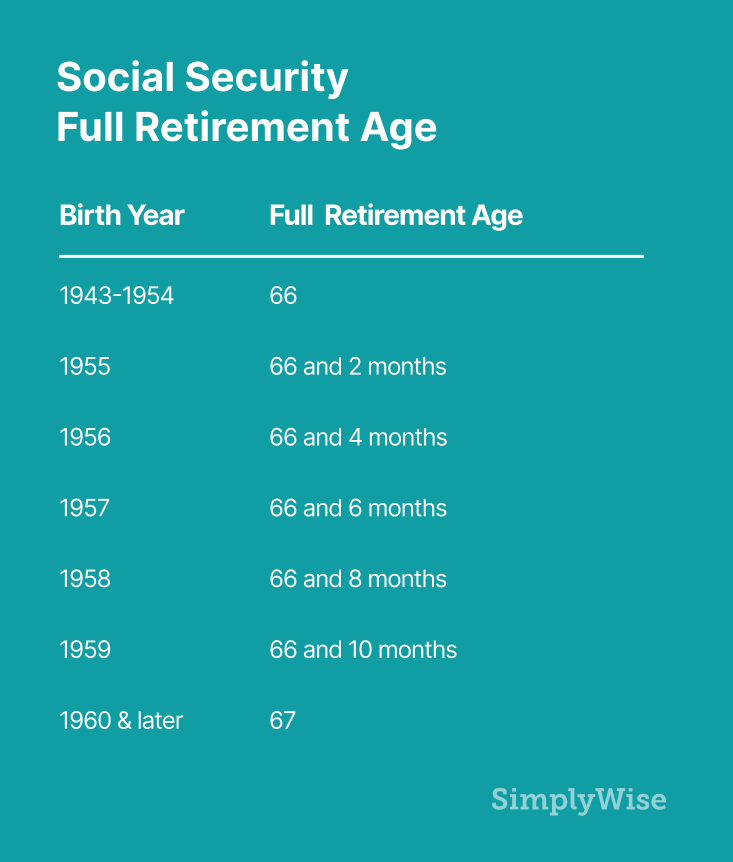
Your Full Retirement Age (FRA) is the age at which you are entitled to receive 100% of your Primary Insurance Amount (PIA). This age is not universal; it depends on your birth year. For those born in 1943 through 1954, FRA is 66. It then gradually increases by a few months for each subsequent birth year until it reaches 67 for those born in 1960 or later. Knowing your FRA is paramount because it serves as the benchmark for determining whether your benefits will be reduced or increased. Claiming exactly at your FRA means you receive precisely what your earnings record and the PIA formula have determined you are owed without any actuarial adjustments for early or delayed claiming.
Claiming Early (Before FRA)
You have the option to begin receiving Social Security retirement benefits as early as age 62. However, choosing to claim before your FRA results in a permanent reduction of your monthly benefit amount. This reduction is actuarially calculated to account for the fact that you will be receiving benefits for a longer period. For instance, if your FRA is 67, claiming at age 62 could result in a benefit reduction of approximately 30%. The reduction is typically about 5/9 of 1% for each month you claim early, up to 36 months, and then 5/12 of 1% for each month beyond that. Once you elect to receive reduced benefits, that reduction is generally permanent, meaning even after you reach your FRA, your monthly payment will remain lower than if you had waited. This trade-off between receiving benefits sooner versus a higher monthly amount over your lifetime is a critical decision point for many retirees.
Delaying Benefits (After FRA)
Conversely, if you delay claiming your benefits past your Full Retirement Age, you can significantly increase your monthly payment. For each month you delay, up to age 70, you earn what are called “Delayed Retirement Credits” (DRCs). These credits increase your benefit by a certain percentage for each year you delay, typically 8% per year (or 2/3 of 1% per month) for those born in 1943 or later. This means that if your FRA is 67 and you delay claiming until age 70, your monthly benefit could be 24% higher than your PIA. This option is particularly attractive for individuals who are healthy, continue to work, or have other financial resources, as it provides a substantial boost to their lifetime Social Security income. There is no additional benefit increase for delaying beyond age 70, so there’s no financial incentive to wait longer.
The Earnings Test (If Claiming Early)
If you claim Social Security benefits before your Full Retirement Age and continue to work, your benefits may be temporarily reduced if your earnings exceed certain annual limits. This is known as the “earnings test.” For example, in 2024, if you are under FRA for the entire year, the SSA will deduct $1 from your benefits for every $2 you earn above an annual limit (e.g., $22,320). In the year you reach FRA, the deduction rate is $1 for every $3 earned above a higher annual limit (e.g., $59,520), but only for earnings before the month you reach FRA. Once you reach your FRA, the earnings test no longer applies, and you can earn any amount without your Social Security benefits being reduced. Importantly, any benefits withheld due to the earnings test are not lost forever; they are factored back into your benefit calculation at your FRA, increasing your monthly payment slightly as if you had delayed claiming for those months.
Other Factors Influencing Benefit Amounts
While individual earnings and claiming age are primary determinants, several other provisions and situations can influence the final amount of Social Security benefits received by an individual and their family.
Cost-of-Living Adjustments (COLAs)
To ensure that the purchasing power of Social Security benefits isn’t eroded by inflation, the SSA implements annual Cost-of-Living Adjustments (COLAs). These adjustments, usually announced in October for the following year, are based on the Consumer Price Index for Urban Wage Earners and Clerical Workers (CPI-W). If the CPI-W increases, benefits are automatically adjusted upward to help beneficiaries maintain their standard of living. These COLAs apply to all beneficiaries, not just those claiming retirement benefits, and help maintain the real value of benefits over time, especially crucial for those who rely heavily on Social Security as their primary income source.
Spousal and Survivor Benefits
Social Security isn’t just for primary workers; it also provides crucial benefits for spouses, divorced spouses, and survivors of deceased workers. These auxiliary benefits are typically calculated as a percentage of the primary worker’s PIA. For instance, a spouse can receive up to 50% of the primary worker’s PIA, while a surviving spouse can receive up to 100% of the deceased worker’s PIA (if claiming at their own FRA or later). There are complex rules regarding eligibility, claiming age, and how these benefits interact with an individual’s own work record. Understanding these provisions is vital for comprehensive family financial planning, as they can significantly enhance household income, particularly in situations of a single-earner household or after the loss of a loved one.
Disability Benefits
Social Security also provides benefits to individuals who become disabled and are unable to work. The amount of a Social Security Disability Insurance (SSDI) benefit is largely based on the worker’s earnings record, much like retirement benefits, but with different eligibility requirements regarding recent work. The calculation generally uses a similar PIA formula, but often takes into account fewer years of earnings due to the nature of disability. These benefits provide a critical financial lifeline for individuals who can no longer perform substantial gainful activity due to a severe medical condition.

Windfall Elimination Provision (WEP) and Government Pension Offset (GPO)
For individuals who receive a pension from employment not covered by Social Security (such as some state or local government jobs or foreign employment), their Social Security benefits may be affected by special provisions. The Windfall Elimination Provision (WEP) can reduce the Social Security retirement or disability benefit for workers who also receive a pension from non-covered employment. Similarly, the Government Pension Offset (GPO) can reduce or eliminate Social Security spousal or survivor benefits for individuals who receive their own government pension from non-covered employment. These provisions are designed to prevent “double-dipping” and ensure that individuals who did not pay Social Security taxes on all their earnings do not receive the full proportional benefit as if they had. They can significantly impact the final benefit amount for a specific subset of beneficiaries.
In conclusion, the determination of your Social Security benefit is a multi-faceted process rooted in your lifetime earnings, work history, and the age at which you choose to claim. From the indexing of past earnings and the calculation of your Primary Insurance Amount (PIA) to the critical adjustments for early or delayed claiming, each step plays a vital role. Furthermore, external factors like Cost-of-Living Adjustments (COLAs) and specific provisions for spouses, survivors, and those with non-covered pensions can modify the final figure. Understanding these intricate details is not merely an academic exercise; it’s a crucial component of sound financial planning. By regularly reviewing your Social Security statement and, if necessary, seeking advice from a financial professional, you can make informed decisions that optimize your benefits and contribute significantly to your long-term financial security in retirement. Social Security remains a cornerstone of American financial well-being, and a clear grasp of its workings is an invaluable asset.
aViewFromTheCave is a participant in the Amazon Services LLC Associates Program, an affiliate advertising program designed to provide a means for sites to earn advertising fees by advertising and linking to Amazon.com. Amazon, the Amazon logo, AmazonSupply, and the AmazonSupply logo are trademarks of Amazon.com, Inc. or its affiliates. As an Amazon Associate we earn affiliate commissions from qualifying purchases.