
Understanding inflation is not just for economists; it’s a critical skill for anyone managing personal finances, running a business, or making investment decisions. Inflation erodes purchasing power, making your money worth less over time. To grasp its impact, you first need to know how it’s measured. The primary tool for this is the Consumer Price Index (CPI). This comprehensive guide will demystify the CPI and walk you through the step-by-step process of calculating the inflation rate, empowering you with a crucial piece of financial literacy.
Understanding the Consumer Price Index (CPI)
The Consumer Price Index (CPI) is a fundamental economic indicator that provides insights into the average change over time in the prices paid by urban consumers for a market basket of consumer goods and services. It’s essentially a barometer for the cost of living. Governments worldwide, like the Bureau of Labor Statistics (BLS) in the United States, compile and release CPI data regularly.

What is CPI?
At its core, the CPI is an index number that reflects the price level of a standardized basket of goods and services relative to a base period. This “market basket” includes a wide range of categories that ordinary consumers spend money on, such as food and beverages, housing, apparel, transportation, medical care, recreation, education, and communication. By tracking the prices of these items over time, the CPI can show whether prices are generally rising or falling. A higher CPI indicates that the cost of living has increased, while a lower CPI suggests it has decreased or remained stable.
How CPI is Constructed
The construction of the CPI is a meticulous process designed to accurately represent consumer spending patterns. It begins with identifying a representative “market basket” of goods and services. This basket is derived from detailed surveys of household spending, ensuring it reflects what people actually buy. Each item in the basket is then assigned a weight based on its share of total household expenditures. For instance, housing typically has a much larger weight than, say, a particular type of fruit because consumers spend a greater proportion of their income on shelter.
Once the basket and weights are established, government agencies collect price data for thousands of items from a variety of retail outlets across different geographical areas. These prices are then averaged and aggregated using the assigned weights to produce a single index number for the period. The index is always compared against a “base period” – a specific year or average of years, which is assigned an arbitrary CPI value (often 100). All subsequent CPI figures are expressed relative to this base, making it easy to see percentage changes. The BLS, for example, frequently updates the market basket and weights to account for changes in consumer preferences and the introduction of new products, ensuring the CPI remains relevant and accurate.
The Importance of CPI
The CPI is far more than just a theoretical economic figure; it has profound real-world implications. For individuals, it dictates purchasing power. A rising CPI means that your wages buy less than they used to, driving demands for pay raises. For businesses, CPI data influences pricing strategies, wage negotiations, and production planning. If input costs are rising due to inflation, businesses may need to adjust their prices to maintain profitability.
From a macroeconomic perspective, central banks, like the Federal Reserve, closely monitor CPI as a key indicator of inflation. This data heavily influences monetary policy decisions, particularly interest rate adjustments. If inflation is accelerating, central banks might raise interest rates to cool down the economy and curb price increases. Conversely, if inflation is too low, they might lower rates to stimulate economic activity. Furthermore, many government benefits, such as Social Security payments, and even private contracts are indexed to the CPI, meaning they are adjusted periodically to keep pace with the cost of living, protecting recipients from the erosive effects of inflation.
The Mechanics of Inflation Rate Calculation
Once you have a grasp of what the CPI represents, calculating the inflation rate becomes a straightforward mathematical exercise. The inflation rate essentially measures the percentage change in the CPI over a specific period, most commonly a year. This calculation reveals how quickly the general price level of goods and services is rising, indicating the rate at which your purchasing power is diminishing.
The Core Formula
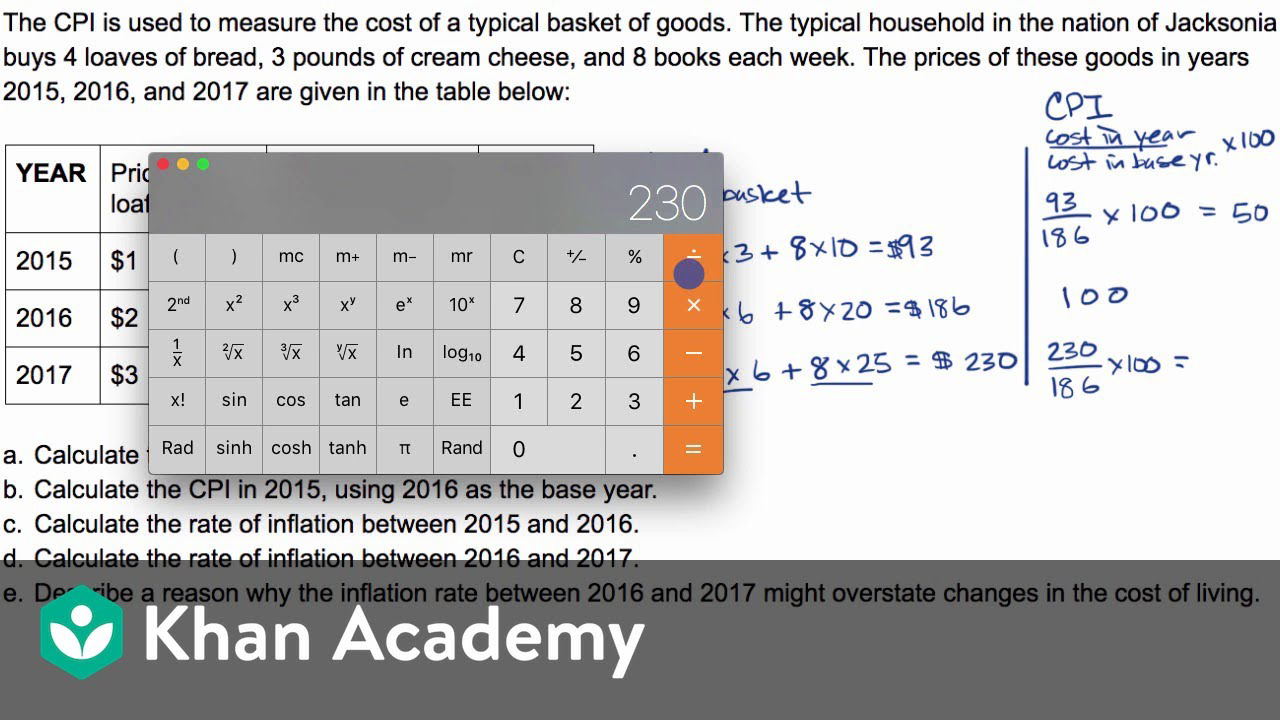
The formula for calculating the inflation rate using CPI is as follows:
$$
text{Inflation Rate} = left( frac{text{CPI}{text{Current Period}} – text{CPI}{text{Previous Period}}}{text{CPI}_{text{Previous Period}}} right) times 100
$$
Where:
-
CPI_Current Period is the Consumer Price Index for the most recent period you are analyzing (e.g., this month or this year).
-
CPI_Previous Period is the Consumer Price Index for the earlier period you are comparing against (e.g., the same month last year, or the previous year).
This formula effectively tells you the percentage increase or decrease from the previous period’s price level to the current period’s price level. A positive result indicates inflation, while a negative result would signify deflation (a general decrease in prices).
Step-by-Step Calculation Guide
Let’s walk through an example to solidify your understanding. Suppose we want to calculate the annual inflation rate between January 2023 and January 2024.
-
Step 1: Identify the CPI for the Current Period.
Let’s assume the CPI for January 2024 is 310.4. (This is a hypothetical number for demonstration; actual CPI figures are published by government agencies.)
-
Step 2: Identify the CPI for the Previous Period.
Let’s assume the CPI for January 2023 was 300.0.
-
Step 3: Calculate the Difference Between the Current and Previous CPIs.
Difference = CPICurrent – CPIPrevious = 310.4 – 300.0 = 10.4
-
Step 4: Divide the Difference by the CPI of the Previous Period.
Ratio = Difference / CPI_Previous = 10.4 / 300.0 = 0.034666…
-
Step 5: Multiply the Result by 100 to Express it as a Percentage.
Inflation Rate = 0.034666… × 100 = 3.47% (rounded to two decimal places).
Therefore, the annual inflation rate from January 2023 to January 2024 is 3.47%. This means that, on average, the prices of goods and services in the consumer market basket increased by 3.47% over that year. You would need 3.47% more money in January 2024 to purchase the same basket of goods and services that cost a certain amount in January 2023.
Different Timeframes for Calculation
While annual inflation is the most commonly cited figure, the inflation rate can be calculated over various timeframes, each offering a slightly different perspective:
-
Monthly Inflation: Compares the CPI of the current month to the CPI of the previous month. This provides a very granular view of recent price changes but can be volatile due to seasonal factors. Often annualized to give a sense of what the annual rate would be if the monthly rate persisted.
-
Quarterly Inflation: Compares the CPI of the current quarter to the CPI of the previous quarter or the same quarter in the previous year. This smooths out some monthly volatility.
-
Annual Inflation: As demonstrated above, this compares the CPI of the current month/quarter/year to the same period in the previous year. It is the most widely used measure because it accounts for seasonal variations and provides a clear picture of the year-over-year price change.
-
Average Annual Inflation: This refers to the average inflation rate over several years, useful for long-term financial planning.
The choice of timeframe depends on the specific analysis being conducted, but the underlying calculation using the CPI remains consistent.
Nuances and Considerations When Using CPI
While the CPI is an invaluable tool for measuring inflation, it’s not a perfect measure and comes with certain nuances and limitations. Understanding these aspects is crucial for a complete and informed interpretation of inflation data and its real-world implications.
Core Inflation vs. Headline Inflation

When discussing inflation, you will often hear terms like “headline inflation” and “core inflation.”
-
Headline Inflation refers to the raw, unadjusted CPI that includes all items in the market basket. It’s the most comprehensive measure of inflation, reflecting the total change in the cost of living.
-
Core Inflation, on the other hand, excludes volatile components, primarily food and energy prices. Food prices can fluctuate significantly due to weather events, supply chain disruptions, or global commodity markets, while energy prices are highly susceptible to geopolitical events and oil production decisions. By stripping out these unpredictable elements, core inflation aims to provide a clearer picture of the underlying, long-term inflationary trends in the economy. Central banks often pay close attention to core inflation when making monetary policy decisions, as it is believed to be a better predictor of future inflation and less prone to short-term shocks.
Limitations of CPI
Despite its sophisticated construction, the CPI has several recognized limitations:
-
Substitution Bias: The market basket is fixed for certain periods. When the price of a good rises significantly, consumers often substitute it with a cheaper alternative (e.g., chicken instead of beef). The CPI, however, might continue to track the original, more expensive item, overstating the true cost of living increase.
-
Quality Bias: Over time, goods and services often improve in quality (e.g., cars become safer, computers become faster). A higher price for a better-quality item might be mistakenly interpreted as pure inflation, when a portion of the price increase is actually for enhanced features or performance. Adjustments are made for this, but it’s a challenging aspect to perfectly quantify.
-
New Goods Bias: New products are constantly introduced into the market, often at high prices initially, which then fall as they become more widely adopted. The CPI can be slow to incorporate these new goods into its market basket, potentially missing out on the early price drops and understating the true decrease in the cost of living that consumers experience.
-
Doesn’t Represent Everyone’s Exact Spending Pattern: The CPI represents the average spending of a typical urban consumer. Individual spending habits vary widely based on income, location, age, and lifestyle. Therefore, the official inflation rate might not precisely reflect the personal inflation rate experienced by every individual or household. For example, an elderly person who spends a larger proportion of their income on healthcare might experience a different inflation rate than a young urban professional who spends more on technology and dining out.
Other Inflation Measures (Brief Mention)
While CPI is paramount, it’s not the only measure of inflation. Other indices offer different perspectives:
-
Producer Price Index (PPI): Measures the average change over time in the selling prices received by domestic producers for their output. It’s often seen as an early indicator of consumer inflation, as producers’ costs eventually get passed on to consumers.
-
Personal Consumption Expenditures (PCE) Price Index: This is the primary inflation measure used by the U.S. Federal Reserve. It differs from CPI in its weighting methodology (it allows for substitution more readily) and broader coverage of goods and services, including those purchased on behalf of households by non-profits.
Each measure has its strengths and is used by different stakeholders for specific analytical purposes. However, for most personal finance discussions, CPI remains the most accessible and widely understood benchmark.
The Impact of Inflation on Your Finances
Understanding how to calculate inflation is just the first step; appreciating its pervasive impact on your financial well-being is equally crucial. Inflation is a subtle, yet powerful, force that silently reshapes your economic landscape, affecting everything from your daily budget to your long-term investment goals.
Purchasing Power Erosion
The most direct and noticeable impact of inflation is the erosion of purchasing power. When prices rise, each unit of currency buys fewer goods and services than it did before. For example, if the inflation rate is 3% annually, then an item that cost $100 this year will cost $103 next year. This means your $100 will only buy approximately 97% of what it could buy a year ago. Over time, this cumulative effect can significantly diminish the value of your savings, making it harder to maintain your standard of living or reach financial milestones. It essentially acts as a hidden tax on your cash.
Investment Decisions
Inflation plays a critical role in shaping investment outcomes. Different asset classes react to inflation in distinct ways:
-
Fixed Income: Bonds and other fixed-income investments are particularly vulnerable to inflation. If you hold a bond that pays a fixed interest rate, and inflation rises, the real (inflation-adjusted) return on that bond decreases. The principal repayment also loses value over time.
-
Stocks: The impact on stocks is more complex. Companies that can easily pass on higher costs to consumers might perform well, as their revenues and profits can keep pace with inflation. However, companies unable to raise prices may see their profit margins squeezed, leading to lower stock valuations. Generally, growth stocks can be more sensitive to inflation and rising interest rates, while value stocks or companies with strong pricing power might be more resilient.
-
Real Estate & Commodities: These are often considered inflation hedges. Real estate values and rents tend to rise with inflation, while commodities (like gold, oil, and agricultural products) often see their prices increase when the cost of living goes up, providing a buffer against declining purchasing power.
Wage Adjustments and Cost of Living
Inflation is a primary driver behind demands for wage increases. Employees seek higher salaries to maintain their real income and protect their purchasing power. Labor unions often negotiate cost-of-living adjustments (COLAs) tied directly to the CPI. Many government benefits, such as Social Security and pensions, also include COLAs to ensure recipients don’t fall behind as prices rise. However, if wage growth lags behind inflation, workers experience a decline in their real wages, meaning they are effectively poorer even if their nominal income has increased.
Interest Rates and Borrowing Costs
Central banks frequently use interest rates as a tool to manage inflation. When inflation is high, central banks may raise benchmark interest rates to cool down the economy. Higher interest rates make borrowing more expensive for consumers and businesses, discouraging spending and investment, which in turn can help temper price increases. Conversely, during periods of low inflation or deflation, central banks might lower interest rates to stimulate economic activity. For individuals, rising interest rates mean higher costs for mortgages, car loans, and credit card debt, impacting monthly budgets and affordability.
Leveraging Your Understanding of Inflation
An informed understanding of inflation is not merely academic; it’s a potent tool for making smarter financial decisions in a constantly evolving economic landscape. By acknowledging its potential effects, you can strategically plan to mitigate risks and even find opportunities.
Personal Financial Planning
Integrating inflation into your personal financial planning is paramount.
-
Budgeting: When creating a budget, anticipate that your expenses will likely increase over time due to inflation. Don’t just plan for current costs; project future costs for items like groceries, utilities, and transportation.
-
Saving Strategies: Holding too much cash in a low-interest savings account during high inflation periods is detrimental, as its value erodes rapidly. While an emergency fund is critical, consider investing excess savings in assets that have historically provided returns above the inflation rate.
-
Retirement Planning: This is where inflation hits hardest over the long term. If you plan to retire in 30 years, the cost of living will likely be significantly higher than it is today. You need to save substantially more than you might initially think to maintain your desired lifestyle in retirement. Factor in an average inflation rate (e.g., 2-3%) when calculating how much you need to save.
Investment Strategies
Your investment portfolio should be designed with inflation in mind.
-
Diversification: A diversified portfolio across different asset classes (stocks, bonds, real estate, commodities) can help cushion the blow of inflation, as some assets perform better than others during inflationary periods.
-
Inflation-Indexed Securities: Consider investments like Treasury Inflation-Protected Securities (TIPS). The principal value of TIPS adjusts with the CPI, providing protection against inflation and ensuring your real return remains intact.
-
Real Assets: Historically, real assets like real estate, land, and commodities (gold, silver, oil) tend to perform well during inflationary times, as their intrinsic value often rises with general price levels.
-
Equity Investments in Companies with Pricing Power: Look for companies that have strong brands, unique products, or dominant market positions that allow them to pass on increased costs to their customers without significantly losing sales volume. These companies are often more resilient to inflation.
Business Implications
For business owners and managers, understanding inflation is critical for sustainable operations.
-
Pricing Strategies: Businesses must regularly review and adjust their pricing to account for rising input costs (raw materials, labor, energy). Failing to do so can quickly erode profit margins.
-
Cost Management: Proactive cost management becomes even more vital during inflationary periods. Businesses need to identify efficiencies, negotiate better supplier contracts, and manage inventory effectively to mitigate rising operational expenses.
-
Wage Negotiations: Businesses must balance the need to offer competitive wages that keep pace with the cost of living for their employees with the need to maintain profitability. Inflation data provides a factual basis for these discussions.
-
Financial Forecasting: Inflation should be a key variable in financial forecasting and budgeting, impacting projected revenues, costs, and capital expenditures.
By actively monitoring inflation and integrating its implications into personal and business financial planning, you can navigate economic cycles more effectively, safeguard your wealth, and make more informed decisions for a stable financial future.
Conclusion
The ability to calculate and understand the inflation rate using the Consumer Price Index is more than just an academic exercise; it’s an indispensable skill for navigating the complexities of the modern financial world. From the subtle erosion of purchasing power to the strategic decisions made by central banks, inflation permeates every aspect of our economic lives.
By grasping the mechanics of CPI and its calculation, acknowledging its nuances and limitations, and integrating this knowledge into your personal finance, investment strategies, and business operations, you empower yourself to make more informed and resilient financial decisions. In an environment where the value of money is constantly shifting, a solid understanding of inflation is your compass to protect and grow your wealth.
aViewFromTheCave is a participant in the Amazon Services LLC Associates Program, an affiliate advertising program designed to provide a means for sites to earn advertising fees by advertising and linking to Amazon.com. Amazon, the Amazon logo, AmazonSupply, and the AmazonSupply logo are trademarks of Amazon.com, Inc. or its affiliates. As an Amazon Associate we earn affiliate commissions from qualifying purchases.