
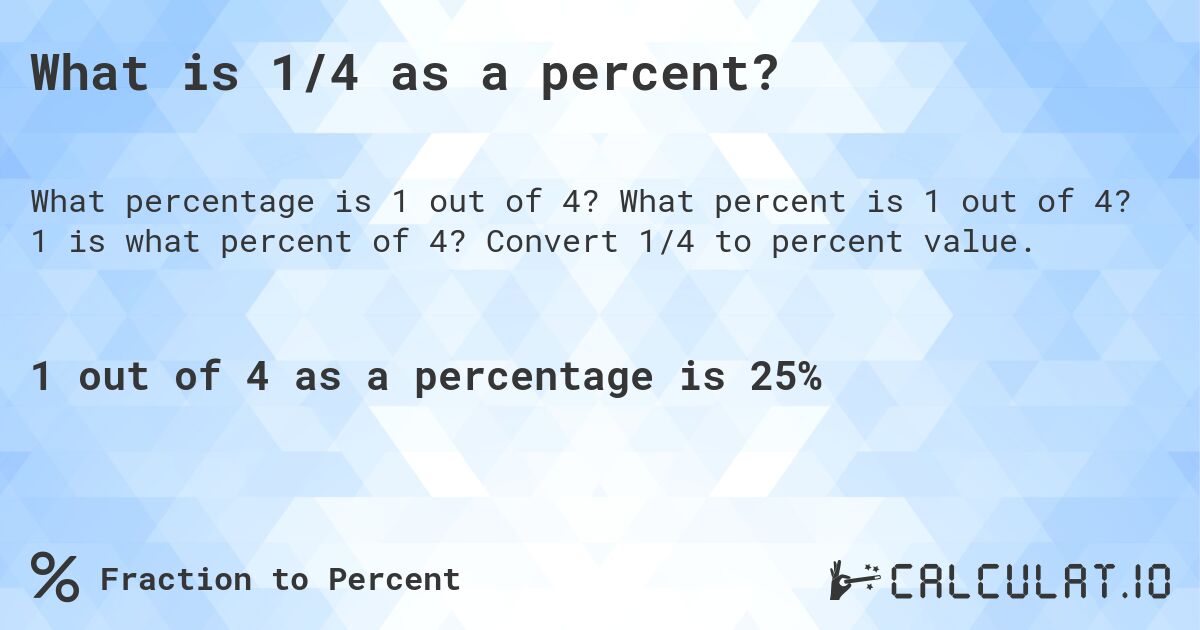
In the simplest mathematical terms, 1 out of 4 is 25%. While this calculation is elementary, its application within the realms of personal finance, investing, and business strategy is profound. The “one-fourth” benchmark acts as a psychological and practical cornerstone for wealth management. Whether you are allocating assets, determining housing affordability, or setting aside tax reserves for a side hustle, understanding how to leverage this 25% can be the difference between financial stagnation and long-term prosperity.
In the world of money, 25% is rarely just a number; it is a boundary. It represents a quarter of your effort, a quarter of your capital, or a quarter of your time. By mastering the implications of this percentage, investors and earners can create a balanced framework that protects against volatility while ensuring consistent growth.
The Mathematical Foundation: Why 1 Out of 4 Matters in Your Financial Life
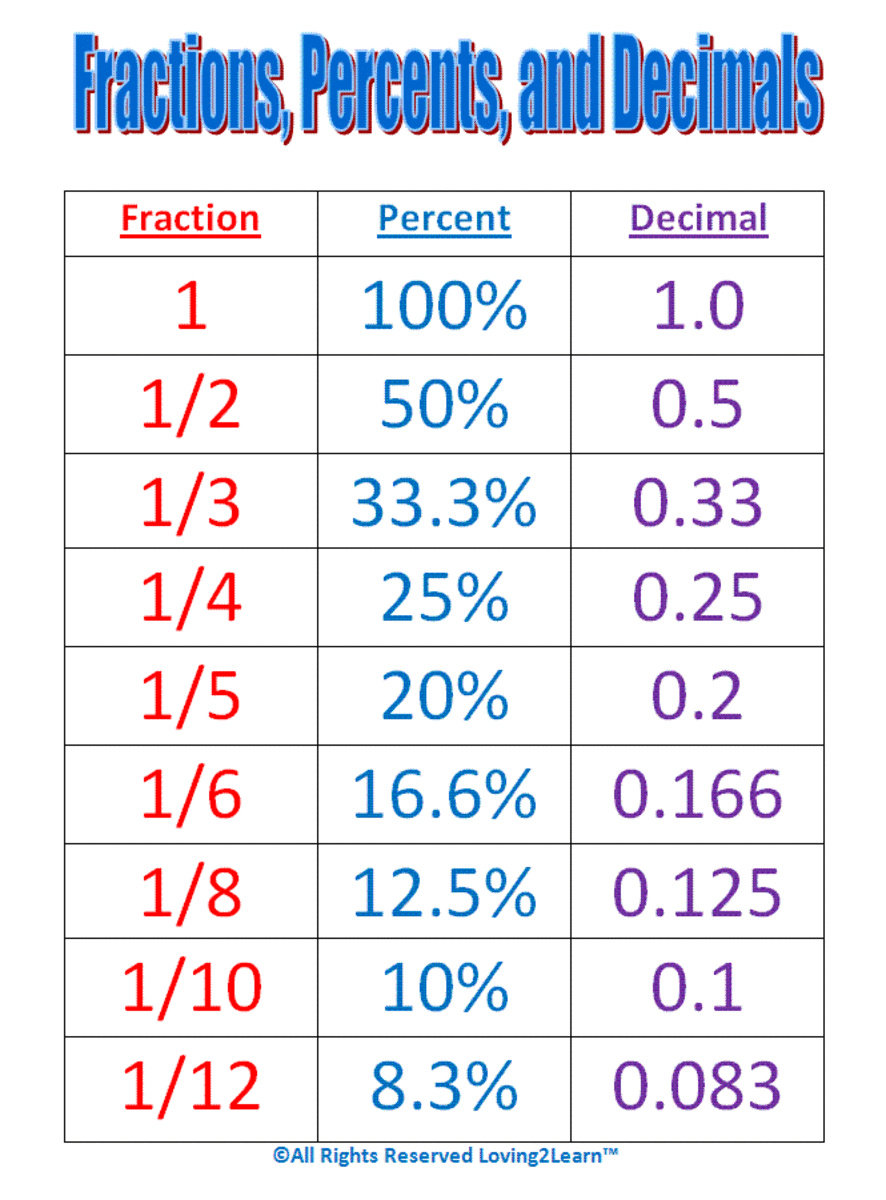
The transition from a fraction (1/4) to a percentage (25%) is the first step in financial literacy. Percentages allow us to compare disparate financial figures on an even playing field. When we look at our income, expenses, and investments through the lens of percentages, we strip away the noise of raw currency values and see the true health of our financial ecosystem.
The Basics of Percentages in Budgeting
In a standard budgeting framework, the 25% threshold often appears as a recommendation for specific categories. For many, the “25% rule” is applied to discretionary spending or high-priority savings. When you conceptualize 1 out of every 4 dollars you earn, you are looking at a substantial portion of your purchasing power. If 25% of your income is leaking into non-essential subscriptions or impulse buys, you are essentially working three months out of every year solely to fund those habits.
By identifying these “one-fourth” segments of your cash flow, you gain clarity. It becomes easier to visualize the impact of your choices: “Am I willing to trade one out of every four hours I work for this lifestyle upgrade?” This shift from abstract numbers to fractional reality is a hallmark of disciplined financial planning.
Fractional Thinking vs. Strategic Growth
Strategic growth requires an understanding of how small fractions compound over time. A 25% increase in a portfolio’s value is a significant milestone, often signaling the transition from a “recovery phase” to a “growth phase.” Conversely, a 25% loss requires a 33% gain just to break even. This mathematical asymmetry is why professional money managers obsess over the 1-out-of-4 metric. Protecting that first quarter of your capital is more important than chasing the next quarter of potential gains.
The 25% Allocation Strategy for Diversified Portfolios
Modern Portfolio Theory and various institutional investment strategies often lean on the “rule of four.” Dividing an investment pie into four equal quadrants—1 out of 4 for each—is a time-tested method for mitigating risk while capturing market upside. This approach, often referred to as the “Permanent Portfolio” or a modified version of it, suggests that the most resilient way to build wealth is to not over-index on any single asset class.
Balancing Risk Across Asset Classes
A classic example of the 1-out-of-4 strategy involves splitting a portfolio into four equal parts:
-
Equities (Stocks): To capture growth and hedge against long-term inflation.
-
Fixed Income (Bonds): To provide stability and income during market downturns.
-
Hard Assets (Real Estate or Gold): To protect purchasing power when fiat currencies devalue.
-
Cash or Liquid Equivalents: To provide “dry powder” for opportunities and a safety net for emergencies.
When an investor allocates 25% to each of these pillars, they are prepared for any economic climate—inflation, deflation, recession, or prosperity. Because 1 out of 4 components is likely to perform well in any given scenario, the overall volatility of the portfolio is smoothed out. This is the essence of being “mathematically diversified.”
The Psychology of the Quadrant Approach
Psychologically, the 25% allocation prevents the “all-in” mentality that leads to catastrophic financial errors. By committing to a 1-out-of-4 structure, an investor acknowledges that they cannot predict the future. This humility in the face of market uncertainty is what separates seasoned investors from gamblers. When one quadrant grows to represent 30% or 35% of the total, the investor rebalances, selling high and buying low to return to the 25% equilibrium.
Housing and the Traditional “One-Fourth” Benchmark

Perhaps the most famous application of the 1-out-of-4 rule is in the realm of housing affordability. For decades, financial advisors and lending institutions have suggested that an individual’s housing costs should not exceed 25% to 28% of their gross monthly income.
Defining Housing Affordability
When you spend 1 out of every 4 dollars on your mortgage or rent, you leave the remaining 75% of your income available for taxes, insurance, food, transportation, and savings. This balance is critical. The moment housing costs creep toward 40% or 50%, the household becomes “house poor.” In this state, even a minor financial shock—such as a car repair or a medical bill—can lead to a debt spiral because there is no remaining “margin of safety” in the monthly budget.
Adjusting for Modern Economic Realities
In today’s high-interest and high-priced real estate market, staying within the 25% limit is increasingly difficult. However, the mathematical reality of the rule remains unchanged. If you are forced to spend more than 1 out of 4 dollars on housing, you must consciously reduce spending in other “quadrants” of your life. This might mean allocating only 5% to transportation instead of the average 15%, or delaying retirement contributions. Understanding that 1 out of 4 is the “golden ratio” for housing helps buyers make more sober decisions about how much house they can truly afford.
Tax Planning and the 25% Reserve
For entrepreneurs, freelancers, and those with side hustles, the “1 out of 4” rule is a vital operational standard. Unlike W-2 employees who have taxes withheld automatically, the self-employed must act as their own tax collectors.
Managing Side Hustle Income
A common mistake among new business owners is treating their gross revenue as personal income. A veteran business owner knows that 1 out of every 4 dollars earned essentially belongs to the government. By immediately moving 25% of every payment received into a separate, high-yield savings account designated for taxes, the entrepreneur avoids the “tax time panic.”
This 25% reserve usually covers federal income tax, self-employment tax, and potentially state taxes, depending on the jurisdiction and income bracket. It creates a disciplined barrier between “business money” and “lifestyle money.”
Avoiding the Quarterly Payment Pitfall
The IRS and state agencies typically require quarterly estimated payments. If an individual has not been practicing the 25% rule, these quarterly deadlines can be devastating to cash flow. By thinking in terms of “1 out of 4,” the entrepreneur stays liquid. Furthermore, if the actual tax liability ends up being only 22%, the remaining 3% serves as a “tax refund” that can be reinvested back into the business or moved into a retirement account.
The Long-Term Impact of 25% Savings Rates
If you want to understand the speed of your journey toward financial independence, look at your savings rate. Saving 1 out of every 4 dollars you earn (a 25% savings rate) is a transformative milestone that places you far ahead of the average consumer.
The Path to Early Retirement (FIRE)
In the Financial Independence, Retire Early (FIRE) community, the savings rate is the most important variable in the wealth equation. If you save 25% of your income, you are effectively living on 75% of what you earn. This means that for every three years you work, you have saved enough to fund one full year of your current lifestyle.
When you factor in compound interest, a 25% savings rate can lead to financial independence in roughly 30 years, assuming a standard market return and starting from zero. While this may seem like a long time, it is significantly shorter than the 45-to-50-year career path associated with the traditional 5% to 10% savings rates.
Compounding 1 Out of Every 4 Dollars
The power of 25% is magnified by the duration of the investment. Consider two individuals: one saves 10% of their income, and the other saves 1 out of every 4 dollars (25%). Over a 20-year period, the second individual doesn’t just have 2.5 times more money; they have a vastly different relationship with debt and opportunity. The person saving 25% has the liquidity to take advantage of market crashes, invest in new ventures, or pivot careers without the fear of financial ruin.
By viewing “1 out of 4” not just as a math problem but as a lifestyle design choice, you harness the power of percentages to build a fortress of financial security. Whether it is your portfolio’s asset allocation, your housing budget, or your tax strategy, the 25% rule provides the clarity needed to navigate a complex economic landscape.
aViewFromTheCave is a participant in the Amazon Services LLC Associates Program, an affiliate advertising program designed to provide a means for sites to earn advertising fees by advertising and linking to Amazon.com. Amazon, the Amazon logo, AmazonSupply, and the AmazonSupply logo are trademarks of Amazon.com, Inc. or its affiliates. As an Amazon Associate we earn affiliate commissions from qualifying purchases.