
Interest is the fundamental pulse of the financial world. Whether you are a seasoned investor, a small business owner, or an individual looking to manage personal debt, understanding the interest formula is not merely an academic exercise—it is a vital skill for wealth preservation and growth. At its core, interest represents the cost of borrowing money or the compensation for lending it. However, the way this value is calculated can vary significantly, leading to vastly different outcomes over time.
To master your personal finances, you must look beyond the surface-level percentages. You must understand the mechanics of simple and compound interest, the impact of compounding frequency, and the critical distinction between nominal and effective rates. This guide provides a comprehensive deep dive into the interest formulas that dictate the movement of capital in the modern economy.
Simple Interest: The Foundation of Financial Calculations
Simple interest is the most straightforward method of calculating the cost of credit or the return on an investment. It is calculated solely on the initial amount of money—the principal—borrowed or invested. While simple interest is less common in modern consumer banking than compound interest, it remains a standard for specific types of short-term loans, certificates of deposit (CDs), and certain personal lending arrangements.
The Simple Interest Formula
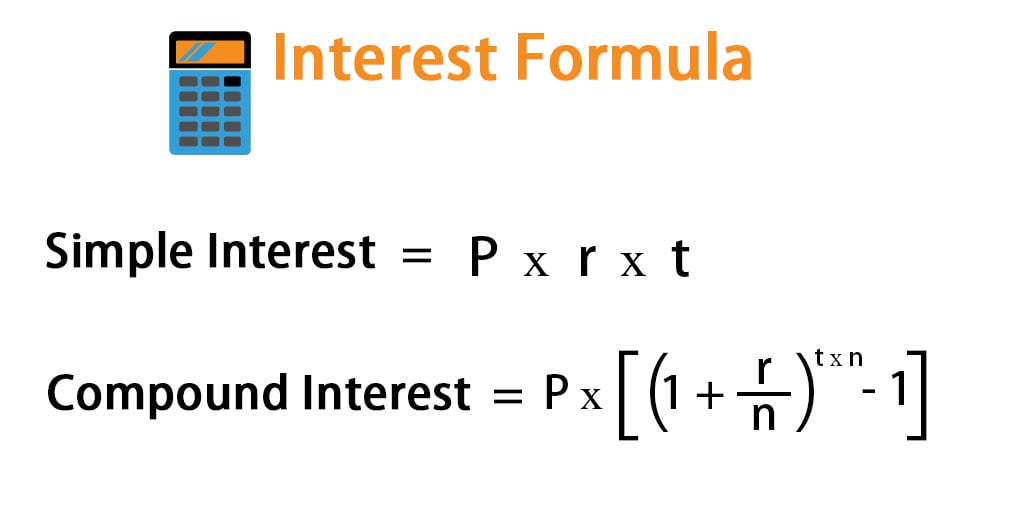
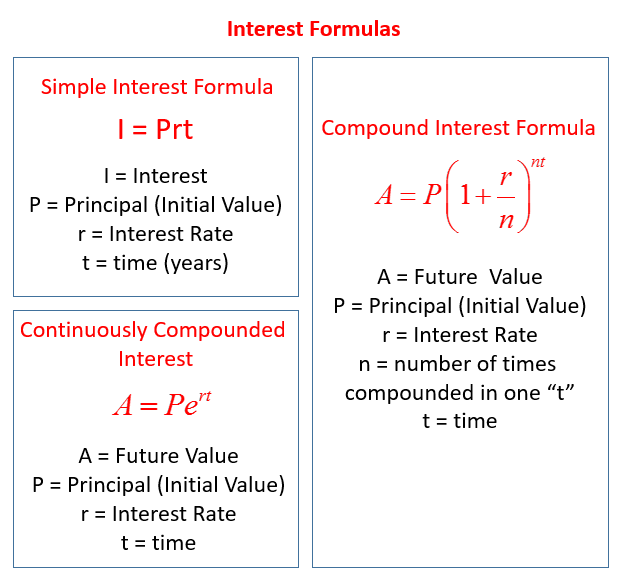
The formula for calculating simple interest is expressed as:
I = P × r × t
Where:
-
I is the total interest earned or paid.
-
P is the Principal amount (the initial sum of money).
-
r is the annual interest Rate (expressed as a decimal).
-
t is the Time the money is borrowed or invested (expressed in years).
To find the total amount (A) at the end of the period, you add the interest to the principal: A = P(1 + rt).
Practical Application of Simple Interest
Imagine you lend $10,000 to a business partner at a simple interest rate of 5% per year for three years. Using the formula:
I = $10,000 × 0.05 × 3 = $1,500.
At the end of the term, you would receive your $10,000 principal back plus $1,500 in interest. The defining characteristic here is that the interest earned in the first year does not contribute to the interest earned in the second year. The “yield” remains linear. Because of this linear nature, simple interest is often preferred by borrowers for short-term financing but is less attractive for long-term investors seeking to maximize growth.
Compound Interest: The Engine of Long-Term Wealth
If simple interest is a linear progression, compound interest is exponential. Often referred to as the “eighth wonder of the world,” compound interest occurs when interest is calculated on the initial principal and also on the accumulated interest of previous periods. This creates a snowball effect where wealth grows at an accelerating rate over time.
The Compound Interest Formula
The formula for compound interest is slightly more complex as it accounts for the frequency of compounding:
A = P(1 + r/n)^(nt)
Where:
-
A is the final amount (Principal + Interest).
-
P is the Principal amount.
-
r is the annual interest Rate (as a decimal).
-
n is the number of times interest is compounded per year.
-
t is the number of years the money is invested.
The Variable of Frequency (n)
The frequency of compounding (n) is a critical lever in your financial strategy. The more frequently interest is compounded, the higher the final amount will be. Common compounding intervals include:
-
Annual: n = 1
-
Semi-annual: n = 2
-
Quarterly: n = 4
-
Monthly: n = 12
-
Daily: n = 365
For example, if you invest $10,000 at a 5% interest rate for 10 years, the difference between annual and daily compounding is significant. With annual compounding, your total would be approximately $16,288.95. With daily compounding, that figure rises to $16,486.64. While the difference may seem marginal in the short term, over decades and with larger sums of capital, the frequency of compounding becomes a dominant factor in portfolio performance.
Continuous Compounding
In advanced financial modeling and some high-end derivatives, interest may be compounded continuously. This represents the mathematical limit of compounding frequency. The formula uses the mathematical constant e (approximately 2.71828):
A = Pe^(rt)
Continuous compounding provides the maximum possible growth for a given interest rate and time frame, serving as a theoretical ceiling for interest calculations.
Navigating APR vs. APY: What Borrowers and Savers Need to Know
In the world of personal finance, banks and lenders often use different terms to describe interest rates depending on whether they are marketing a loan or a savings product. Understanding the difference between Annual Percentage Rate (APR) and Annual Percentage Yield (APY) is essential for making “apples-to-apples” comparisons.
Annual Percentage Rate (APR)
APR is the standard way of expressing the annual cost of a loan, including interest and certain fees. Crucially, APR usually represents simple interest. It does not take into account the compounding of interest within the year. Lenders prefer to highlight APR because it appears lower than the effective rate the borrower will actually pay.
Annual Percentage Yield (APY)
APY, also known as the Effective Annual Rate (EAR), represents the actual interest rate earned on a savings account or investment when compounding is taken into account. The formula for APY is:
APY = (1 + r/n)^n – 1
Because APY includes the effect of compounding, it is always higher than the nominal interest rate (unless interest is only compounded once per year). Financial institutions typically advertise the APY for savings accounts and CDs to make their returns look as attractive as possible.
The Borrower’s Trap and the Saver’s Advantage
As a consumer, you should look for the lowest APR when borrowing (mortgages, car loans, credit cards) and the highest APY when saving. A credit card might advertise an APR of 19.99%, but because interest is often compounded daily, the effective rate you pay—the APY—is actually closer to 22.1%. Conversely, a High-Yield Savings Account (HYSA) boasting a 4.5% APY is telling you exactly what you will earn by the end of the year, inclusive of monthly compounding.
Strategic Application: Using Interest Formulas to Optimize Your Portfolio
Understanding the math is the first step; applying it to your financial life is the second. Interest formulas can be used as diagnostic tools to evaluate debt, project retirement goals, and assess the true value of an investment.
The Rule of 72: A Mental Shortcut
For those who want to estimate the power of compound interest without a calculator, the Rule of 72 is an invaluable heuristic. It allows you to estimate how long it will take for an investment to double at a fixed annual rate of return.
Years to Double = 72 / Interest Rate
If you expect an 8% return on your stock market investments, your money will double approximately every 9 years (72 / 8 = 9). This rule highlights why even a 1% or 2% difference in interest rates can lead to a massive variance in wealth over a 30-year career.
Real Interest Rates vs. Nominal Interest Rates
In the context of personal finance, looking at the nominal interest rate (the number stated on your bank statement) is often misleading. To understand your true purchasing power, you must calculate the Real Interest Rate.
Real Interest Rate ≈ Nominal Interest Rate – Inflation Rate
If your savings account offers a 4% interest rate but inflation is running at 5%, your “real” interest rate is -1%. Despite the numerical increase in your balance, your money is actually losing value. Sophisticated investors use this formula to ensure their portfolios are outperforming the cost of living, often pivoting to assets like Treasury Inflation-Protected Securities (TIPS) or equities during high-inflation cycles.
Debt Management: The Interest Avalanche Method
When managing multiple debts, interest formulas dictate the most mathematically efficient path to freedom. The “Interest Avalanche” method involves listing all debts by their interest rates and putting every extra dollar toward the debt with the highest rate, regardless of the balance size.
By prioritizing the highest interest rate, you minimize the total interest paid over the life of your debts. This is the inverse of the compounding effect; by aggressively cutting down the principal on high-interest loans (like credit cards), you stop the compounding of debt that often traps consumers in a cycle of perpetual payments.
The Role of Interest in Business Finance and Valuation
For entrepreneurs and corporate finance professionals, the interest formula extends into the concept of the Time Value of Money (TVM). TVM is the idea that money available today is worth more than the same amount in the future due to its potential earning capacity.
Discounting and Present Value
Businesses use a variation of the interest formula to determine the Present Value (PV) of future cash flows. This is essential for deciding whether to invest in a new project or buy a piece of equipment.
PV = FV / (1 + r)^n
Where:
-
FV is the Future Value.
-
r is the discount rate (the required rate of return).
-
n is the number of periods.
If a project is expected to return $100,000 in five years, a business owner must “discount” that figure back to today’s dollars using their cost of capital as the interest rate. If the present value is less than the cost of the investment, the project is financially unviable. This application of the interest formula ensures that capital is allocated only to the most productive uses.
Interest as a Tax Shield
In business finance, interest isn’t just a cost; it can also be a strategic tool. In many jurisdictions, interest payments on corporate debt are tax-deductible. This creates a “tax shield,” reducing the business’s taxable income and effectively lowering the true cost of borrowing. The formula for the after-tax cost of debt is:
After-Tax Cost of Debt = Interest Rate × (1 – Tax Rate)
This formula explains why many large corporations carry significant debt even when they have cash on hand. If a company can borrow at 5% and has a 21% tax rate, the effective cost of that debt is only 3.95%. If they can earn 7% by reinvesting their cash into the business, the interest formula shows that borrowing is the more profitable path.

Conclusion: Mastery Through Mathematical Literacy
The interest formula is more than a sequence of variables; it is the blueprint for financial success. By mastering simple and compound interest, recognizing the nuances of APR and APY, and understanding the impact of inflation and discounting, you gain the ability to make data-driven decisions.
In the realm of money, those who do not understand the interest formula are destined to pay it, while those who do are positioned to earn it. Whether you are compounding your way to retirement or strategically de-leveraging high-interest debt, these mathematical principles remain the most powerful tools in your financial arsenal. Tightening your grasp on these formulas allows you to move from being a passive participant in the economy to an active architect of your financial future.
aViewFromTheCave is a participant in the Amazon Services LLC Associates Program, an affiliate advertising program designed to provide a means for sites to earn advertising fees by advertising and linking to Amazon.com. Amazon, the Amazon logo, AmazonSupply, and the AmazonSupply logo are trademarks of Amazon.com, Inc. or its affiliates. As an Amazon Associate we earn affiliate commissions from qualifying purchases.