
In the intricate world of finance, few concepts hold as much transformative power as compounding. Often hailed as the “eighth wonder of the world” by Albert Einstein, its ability to generate exponential growth over time is fundamental to wealth accumulation and debt management. At the heart of this phenomenon lies a critical, yet frequently misunderstood, factor: compound frequency.
Compound frequency refers to how often interest is calculated and added to the principal balance of an investment or a loan within a given period, typically a year. It dictates the pace at which your money grows or your debt accrues, making it an indispensable element for anyone navigating personal finance, investing, or business financial planning. Understanding compound frequency is not merely an academic exercise; it’s a strategic imperative that can significantly impact your financial outcomes, whether you’re saving for retirement, investing in the stock market, or managing mortgage payments and credit card debt. This article will delve deep into what compound frequency truly means, its profound impact on your financial journey, and how you can leverage this knowledge to make more informed and advantageous financial decisions.
The Core Concept of Compound Frequency
To fully grasp the significance of compound frequency, it’s essential to first establish a solid understanding of its parent concept: compound interest. Once that foundation is laid, we can precisely define and explore the mechanics of how frequency amplifies its effects.
Understanding Compound Interest
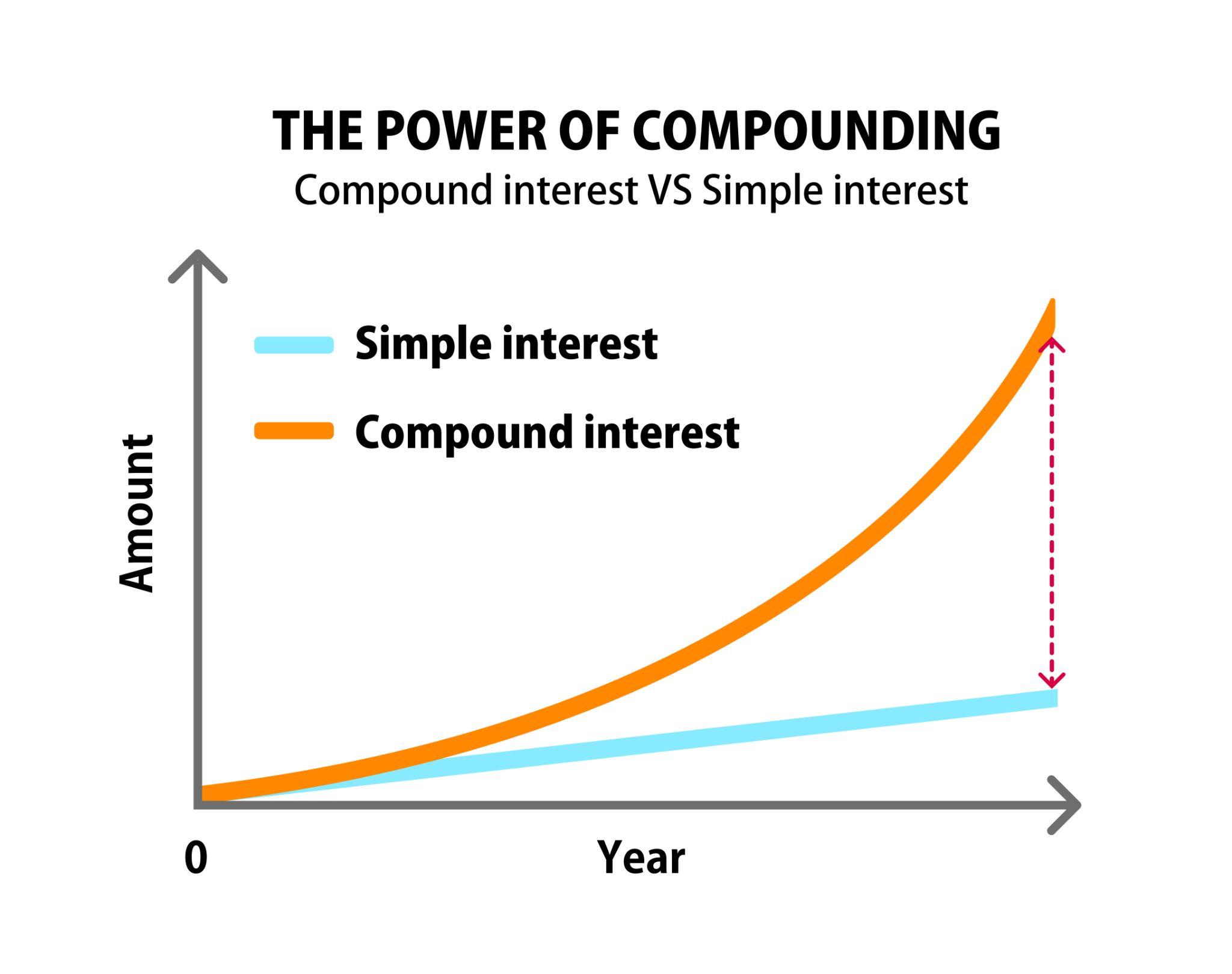
At its most basic, interest is the cost of borrowing money or the reward for lending it. Simple interest is calculated solely on the original principal amount. For example, if you invest $1,000 at a 5% simple annual interest rate, you earn $50 each year, regardless of how long you hold the investment. The interest earned never contributes to the base on which future interest is calculated.
Compound interest, however, is a game-changer. It’s the interest earned on both the initial principal and on the accumulated interest from previous periods. Imagine your initial investment as a single seed. Simple interest allows that seed to produce fruit only from itself. Compound interest, on the other hand, allows the fruit produced in one season to become new seeds for the next, exponentially increasing the harvest over time. This “interest on interest” effect is the engine of long-term wealth creation.
Defining Compound Frequency
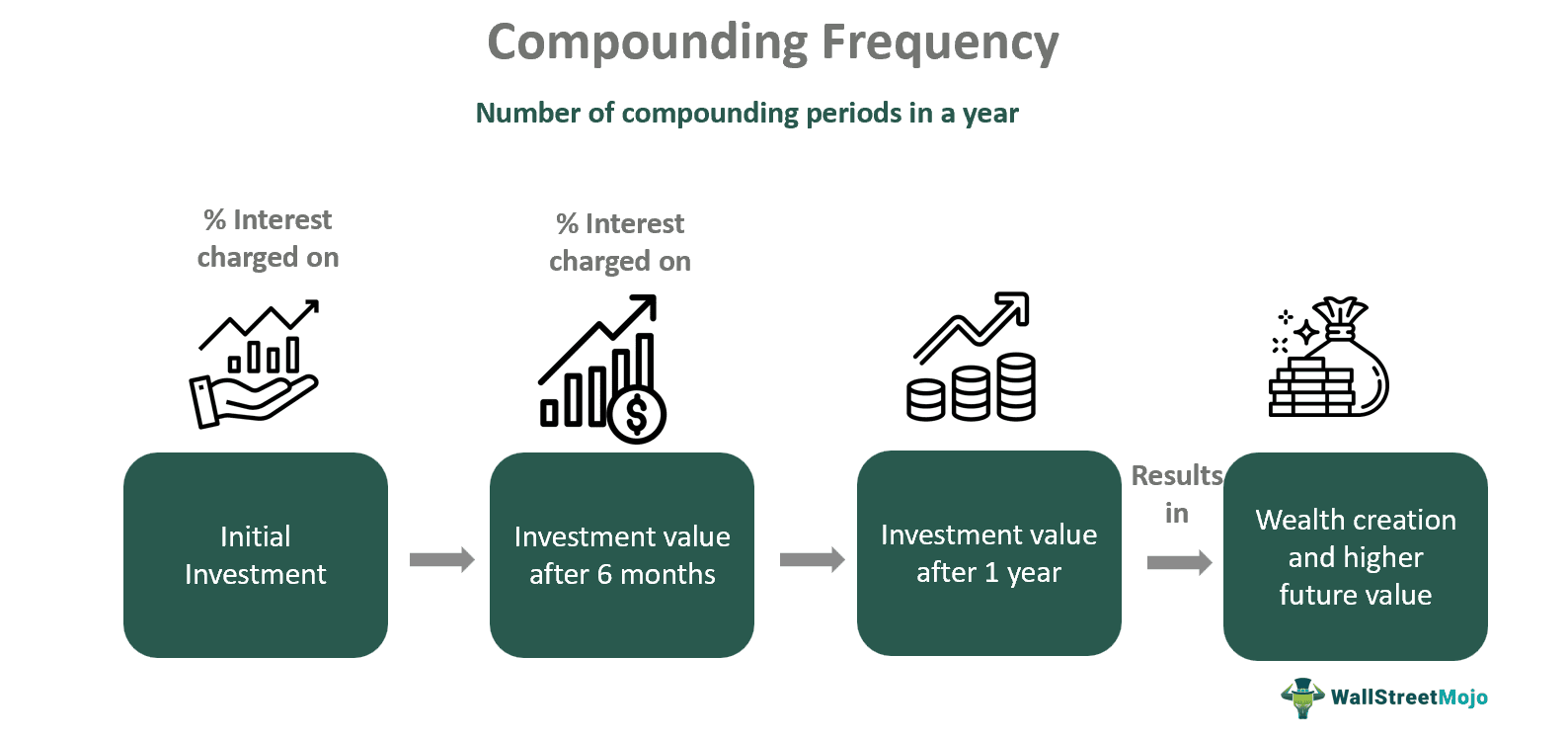
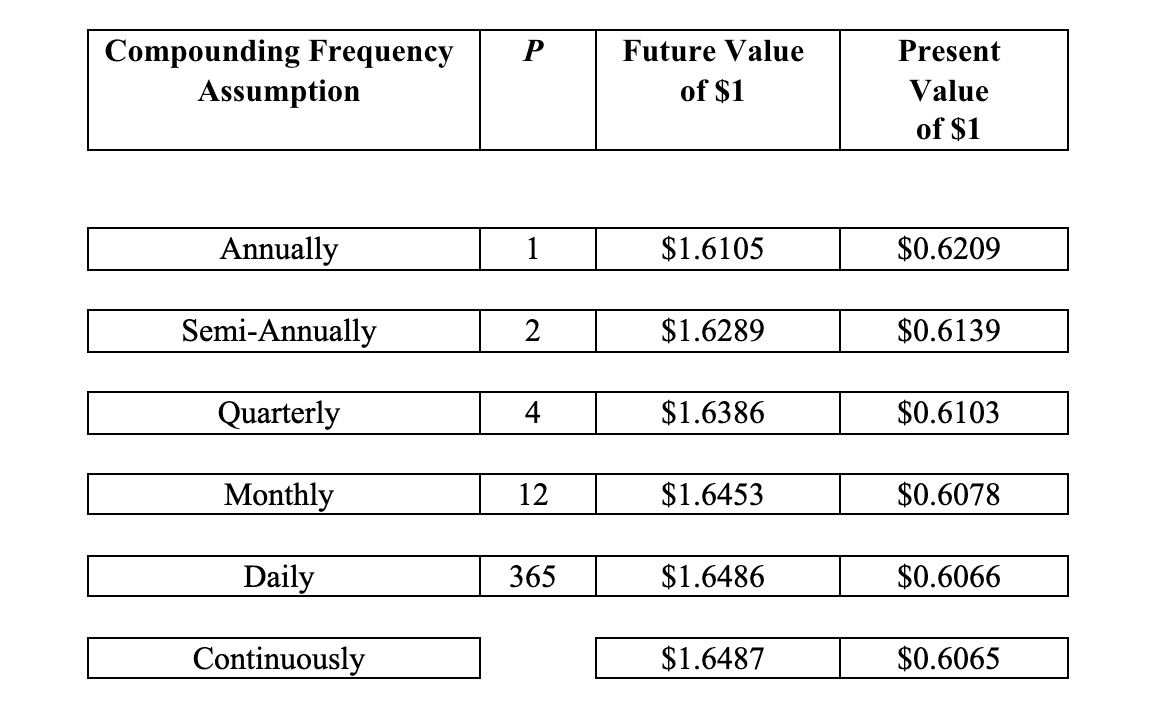
If compound interest is the engine, compound frequency is the throttle. It specifies the number of times interest is calculated and applied within a defined period, usually a year. Common frequencies include annually, semi-annually (twice a year), quarterly (four times a year), monthly (12 times a year), daily (365 times a year), and even continuously.
Consider two identical investments: both offer an annual interest rate of 5%. One compounds annually, while the other compounds monthly. With annual compounding, your interest is calculated and added once a year. With monthly compounding, your interest is calculated and added 12 times a year. Each time interest is added, it immediately starts earning interest itself. This means that with monthly compounding, your principal grows more frequently, and thus, your “interest on interest” effect kicks in sooner and more often, leading to a larger overall return by the end of the year, even if the stated annual rate is the same. The higher the compound frequency, the more rapidly the balance grows (for investments) or accrues (for debt).
The Mechanics of Compounding
The mathematical formula that encapsulates compound interest and frequency is a cornerstone of financial calculations:
A = P (1 + r/n)^(nt)
Where:
-
A = The future value of the investment/loan, including interest
-
P = The principal investment amount (the initial deposit or loan amount)
-
r = The annual interest rate (as a decimal)
-
n = The number of times that interest is compounded per year (the compound frequency)
-
t = The number of years the money is invested or borrowed for
The variable ‘n’ is where compound frequency directly influences the outcome. A higher ‘n’ means more frequent compounding. While the term (r/n) reduces with increasing ‘n’, the exponent (nt) increases significantly. This interplay means that even a slightly higher frequency of compounding can lead to a noticeably larger final amount, especially over longer periods. For instance, comparing daily compounding (n=365) to annual compounding (n=1) for the same principal, rate, and time clearly demonstrates how more frequent compounding enhances the final value.
The Impact of Compound Frequency on Your Wealth
The nuanced difference in compounding frequency can translate into substantial differences in your financial reality, whether you are diligently saving for the future or managing outstanding debts. Recognizing this impact is key to making financially astute decisions.
Accelerating Investment Growth
For investors, higher compounding frequency is unequivocally a powerful ally. When interest is added more frequently, your principal balance increases more often, meaning that subsequent interest calculations are performed on an ever-growing base. This creates a positive feedback loop that accelerates the growth of your investments.
Let’s illustrate with an example: Imagine investing $10,000 at a 5% annual interest rate over 10 years.
-
Annual Compounding: After 10 years, the investment would grow to approximately $16,288.95.
-
Monthly Compounding: If the same investment compounds monthly, it would grow to approximately $16,470.10.
The difference of nearly $200 might seem modest over 10 years, but as the principal grows and the time horizon extends, this divergence becomes significantly larger. Over 30 years, the monthly compounded investment would be thousands of dollars more than the annually compounded one. This phenomenon underscores why early investment, combined with higher compounding frequency, is crucial for harnessing the full “power of compounding.” It allows your money more opportunities to earn interest on itself, setting the stage for exponential wealth accumulation.
The Cost of Borrowing
While higher frequency benefits investors, it works against borrowers. Loans, such as credit cards, mortgages, and personal loans, also employ compound interest, and their compound frequency directly impacts the total amount you repay. For instance, credit card debt often compounds daily. This means that if you carry a balance, interest is calculated and added to your principal every single day. This daily addition quickly inflates your outstanding balance, leading to higher interest charges in subsequent days.
Consider a credit card with a 20% Annual Percentage Rate (APR) that compounds daily. If you have a $5,000 balance and only make minimum payments, the daily compounding will rapidly increase the effective interest you pay, making it incredibly difficult to get ahead of the debt. The more frequently interest is added, the faster your debt snowballs, increasing the total cost of borrowing significantly if you don’t pay down the principal swiftly. Understanding this mechanism highlights the urgency of eliminating high-interest, frequently compounded debts.
Effective Annual Rate (EAR) vs. Annual Percentage Rate (APR)
When comparing financial products, the stated Annual Percentage Rate (APR) can often be misleading because it doesn’t always account for the effect of compound frequency. This is where the Effective Annual Rate (EAR), also known as Annual Equivalent Rate (AER), becomes indispensable.
-
APR is the simple annual rate charged on a loan or investment, without taking into account the compounding of interest within that year. It’s often quoted for loans.
-
EAR is the true annual rate of interest earned or paid, considering the effect of compounding over the year. It provides a standardized measure that accounts for compound frequency.
For example, a loan with an APR of 10% compounded monthly will have an EAR slightly higher than 10%. Conversely, an investment with a stated annual rate of 5% compounded quarterly will yield an EAR slightly above 5%. When comparing investment opportunities or loan offers, always look beyond the stated APR and try to determine the EAR. The product with the highest EAR for investments offers the best return, while the product with the lowest EAR for loans represents the cheapest borrowing cost. Ignoring compound frequency and relying solely on APR can lead to miscalculations and suboptimal financial choices.
Common Compounding Frequencies and Their Implications
Financial products employ various compounding frequencies, each carrying specific implications for both the institution and the individual. Understanding these common frequencies can help you dissect and compare financial offerings more effectively.
Annual Compounding
This is the simplest form of compounding, where interest is calculated and added to the principal once a year. It’s often found in certain types of bonds, GICs (Guaranteed Investment Certificates), or simpler savings accounts. While straightforward, annual compounding offers the slowest growth rate for investments compared to more frequent options, assuming the same stated annual rate. For loans, it results in the lowest effective cost for borrowers, assuming other factors are equal.
Semi-Annual and Quarterly Compounding
Semi-annual compounding means interest is calculated twice a year (every six months), and quarterly compounding means it’s calculated four times a year (every three months). These frequencies are quite common in bonds, some GICs, and certain fixed-deposit accounts. They offer a moderate increase in the effective annual return for investors compared to annual compounding. For instance, a bond paying 4% interest semi-annually will effectively yield slightly more than 4% per year due to the intermediate compounding. While still less aggressive than monthly or daily, these frequencies significantly outperform simple annual compounding over the long run.
Monthly and Daily Compounding
Monthly compounding (12 times a year) and daily compounding (365 times a year) are prevalent in a wide array of financial products. Most modern savings accounts, money market accounts, mortgages, and credit cards utilize these higher frequencies.
-
Monthly Compounding: For investors, this significantly boosts returns compared to annual or quarterly compounding. For borrowers, it means interest accrues faster, impacting the total cost of mortgages and personal loans if not managed proactively.
-
Daily Compounding: This offers the maximum practical benefit for savers and the maximum cost for borrowers. Many online savings accounts advertise daily compounding to entice depositors, highlighting how every day’s interest starts earning interest immediately. Conversely, credit cards with daily compounding are particularly perilous for those carrying balances, as the debt can grow extremely rapidly. The convenience of daily compounding for consumers means that even fractional interest amounts are immediately rolled into the principal, accelerating the process.
Continuous Compounding
Continuous compounding represents the theoretical limit of compound frequency, where interest is calculated and added an infinite number of times over a given period. While not practically achievable in real-world financial products for consumer applications, it’s an important concept in advanced financial mathematics, particularly in derivatives pricing and complex financial models. It provides the highest possible effective annual rate for any given nominal rate, serving as a benchmark for how much compounding can possibly accelerate growth. While you won’t typically encounter it in your everyday savings account, its existence helps financial professionals model optimal scenarios.
Practical Applications and Strategic Considerations
Armed with a thorough understanding of compound frequency, you can now approach your financial decisions with greater insight and strategic foresight. This knowledge empowers you to actively optimize your financial outcomes.
Maximizing Investment Returns
To leverage compound frequency for your investments, several strategies come into play:
-
Seek Higher Frequencies: When comparing investment options with similar stated interest rates, always opt for the one that compounds more frequently. A savings account or GIC that compounds monthly will outperform one that compounds annually over the same period, assuming all other factors are equal.
-
Reinvest Earnings: For investments that pay out interest or dividends, choose to automatically reinvest these earnings back into the principal. This ensures that your interest is immediately subject to compounding, accelerating your wealth accumulation rather than allowing those earnings to sit idle.
-
Start Early: The true magic of compounding, especially with higher frequencies, is realized over extended periods. The longer your money has to grow and compound, the more significant the “interest on interest” effect becomes. Beginning your investment journey early allows the forces of time and frequency to work maximally in your favor.
Minimizing Borrowing Costs
Understanding compound frequency is equally vital for managing debt effectively:
-
Identify Compounding Frequency: Know how often interest is compounded on your loans. This is especially crucial for high-interest debts like credit cards, which often compound daily.
-
Prioritize High-Frequency Debt: Debts that compound more frequently will accrue interest faster and cost you more over time. Make it a priority to pay down these debts as quickly as possible. Every dollar you pay towards the principal reduces the base on which frequent interest calculations are made, directly lowering your overall borrowing cost.
-
Accelerate Payments: For mortgages or other installment loans, even making an extra payment or two per year, or increasing your regular payment slightly, can significantly reduce the principal faster. This reduces the base for future interest calculations, particularly if the loan compounds frequently, thereby shortening the loan term and saving you substantial amounts in interest.
Comparing Financial Products
When faced with multiple options for savings accounts, investment products, or loans, compound frequency should be a primary consideration.
-
Look Beyond APR: As discussed, the Annual Percentage Rate (APR) alone doesn’t tell the full story. Always inquire about the compounding frequency or, better yet, ask for the Effective Annual Rate (EAR). The EAR provides a true apples-to-apples comparison between different financial products, regardless of their stated APR or compounding schedule.
-
Read the Fine Print: Account disclosures and loan agreements will detail the compounding frequency. Take the time to read and understand these terms. Don’t assume that all products offering the same stated annual rate will yield the same results; the difference often lies in the compounding frequency.
-
Use Online Calculators: Many financial websites offer compound interest calculators. Utilize these tools to compare different scenarios by inputting varying compounding frequencies to see the tangible impact on your future value or total debt cost. This practical exercise can vividly demonstrate the power of ‘n’.
In conclusion, compound frequency is far more than a technical detail; it is a pivotal driver of financial outcomes. Whether you are aiming to grow your investments or reduce your debt burden, a clear understanding of how often interest is calculated and applied is paramount. By actively seeking out higher compounding frequencies for your savings and investments, and diligently working to minimize the impact of frequent compounding on your debts, you empower yourself to make smarter financial decisions that accelerate your journey towards financial independence and security.
aViewFromTheCave is a participant in the Amazon Services LLC Associates Program, an affiliate advertising program designed to provide a means for sites to earn advertising fees by advertising and linking to Amazon.com. Amazon, the Amazon logo, AmazonSupply, and the AmazonSupply logo are trademarks of Amazon.com, Inc. or its affiliates. As an Amazon Associate we earn affiliate commissions from qualifying purchases.