
In the intricate world of finance, understanding how to increase a number by a percentage is not merely a mathematical exercise; it’s a foundational skill that empowers individuals and businesses alike to make informed decisions, project growth, manage costs, and ultimately, build wealth. From calculating investment returns and salary raises to analyzing inflation and setting business profit margins, this seemingly simple calculation underpins a vast array of financial scenarios. Without a firm grasp of this concept, navigating personal finance, investing, or entrepreneurial ventures can feel like sailing without a compass.
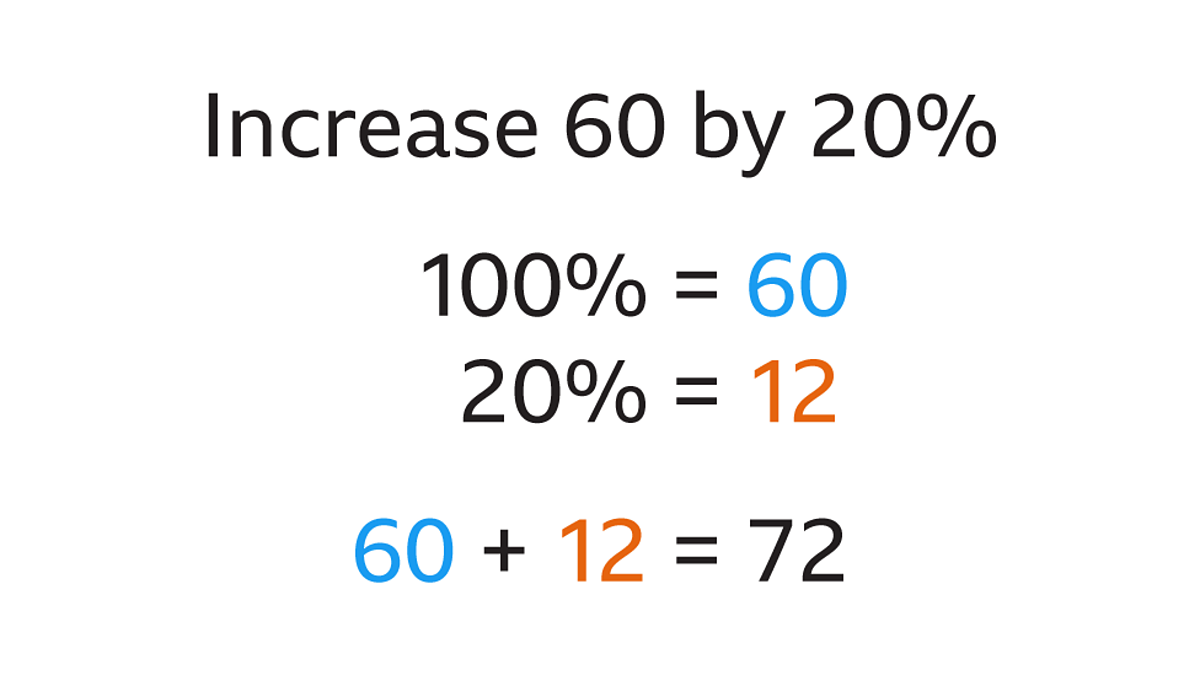
This article aims to demystify the process of increasing a number by a percentage, providing a clear, step-by-step guide and illustrating its profound relevance across various financial domains. We will explore the core mechanics of the calculation, delve into its critical applications in personal finance, business, and investing, and highlight common pitfalls to avoid. By mastering this essential skill, you’ll gain a significant advantage in understanding financial dynamics, enabling you to forecast, plan, and optimize your financial journey with confidence and precision.
The Core Calculation: Understanding the Mechanics
At its heart, increasing a number by a percentage is a straightforward operation, yet its implications are far-reaching in the financial realm. Before we delve into its diverse applications, it’s crucial to understand the fundamental formula and the various ways to execute it accurately.
The Basic Formula Explained
A percentage represents a part of a whole, expressed as a fraction of 100. For instance, 10% means 10 out of 100, or 0.10 as a decimal. When we talk about increasing a number by a percentage, we are essentially adding a calculated portion of that original number back to itself.
There are two primary ways to express this formula:
-
Method 1 (Two Steps):
-
Calculate the percentage amount:
Percentage Amount = Original Number × (Percentage / 100) -
Add this amount to the original number:
Increased Number = Original Number + Percentage Amount
-
-
Method 2 (One Step – often more efficient):
- Directly calculate the increased number:
Increased Number = Original Number × (1 + (Percentage / 100))
- Directly calculate the increased number:
Let’s illustrate with a simple example: increasing $200 by 15%.
-
Using Method 1:
-
Percentage amount = $200 × (15 / 100) = $200 × 0.15 = $30
-
Increased number = $200 + $30 = $230
-
-
Using Method 2:
- Increased number = $200 × (1 + (15 / 100)) = $200 × (1 + 0.15) = $200 × 1.15 = $230
Both methods yield the same result, but the second method is often preferred for its conciseness, especially when using calculators or spreadsheets.
Step-by-Step Guide
For clarity, here’s a step-by-step breakdown using the one-step method, which is generally more streamlined:
-
Convert the percentage to a decimal: Divide the percentage by 100. For example, 15% becomes 0.15, 5% becomes 0.05, and 120% becomes 1.20.
-
Add 1 to the decimal: This represents the original number (100%) plus the increase. So, 0.15 becomes 1.15, 0.05 becomes 1.05, etc.
-
Multiply this result by the original number: The product is your increased number.
This systematic approach minimizes errors and helps in quickly processing financial calculations.
Practical Tools for Calculation
While mental math can suffice for simple percentages (e.g., 10% or 20%), more complex calculations benefit from dedicated tools:
-
Standard Calculators: Any basic calculator can perform these operations. Input the original number, multiply by (1 + percentage as a decimal).
-
Financial Calculators: These often have dedicated percentage functions, simplifying the process for more complex financial scenarios.
-
Spreadsheets (Excel, Google Sheets): For recurring calculations, financial modeling, or large datasets, spreadsheets are invaluable. You can easily set up formulas. For example, if your original number is in cell A1 and your percentage increase (as a decimal) is in B1, the formula would be
=A1 * (1 + B1). This allows for quick adjustments and visual analysis of results.
Personal Finance Applications: Growing Your Wealth and Understanding Costs
Understanding how to increase a number by a percentage is indispensable for managing personal finances effectively. It’s the language of growth for your investments and the key to comprehending the erosion of your purchasing power.
Investment Growth and Compound Interest
One of the most powerful applications of percentage increases in personal finance is in understanding investment growth, particularly the magic of compound interest. Whether you’re investing in stocks, bonds, mutual funds, or even a high-yield savings account, your returns are typically expressed as a percentage.
-
Calculating Returns: If you invest $10,000 and it yields a 7% return in a year, your investment grows to $10,000 * (1 + 0.07) = $10,700.
-
Compound Interest: This is where the true power lies. Compound interest means earning returns not just on your initial principal, but also on the accumulated interest from previous periods. If that $10,700 from the previous example also earns 7% the next year, it becomes $10,700 * 1.07 = $11,449. This exponential growth, calculated repeatedly using percentage increases, is why starting to invest early is so crucial. Over decades, even modest percentage returns can lead to substantial wealth accumulation.
Salary Raises, Bonuses, and Income Growth
Your income is directly impacted by percentage increases. Understanding this calculation allows you to accurately project your earnings and negotiate effectively.
-
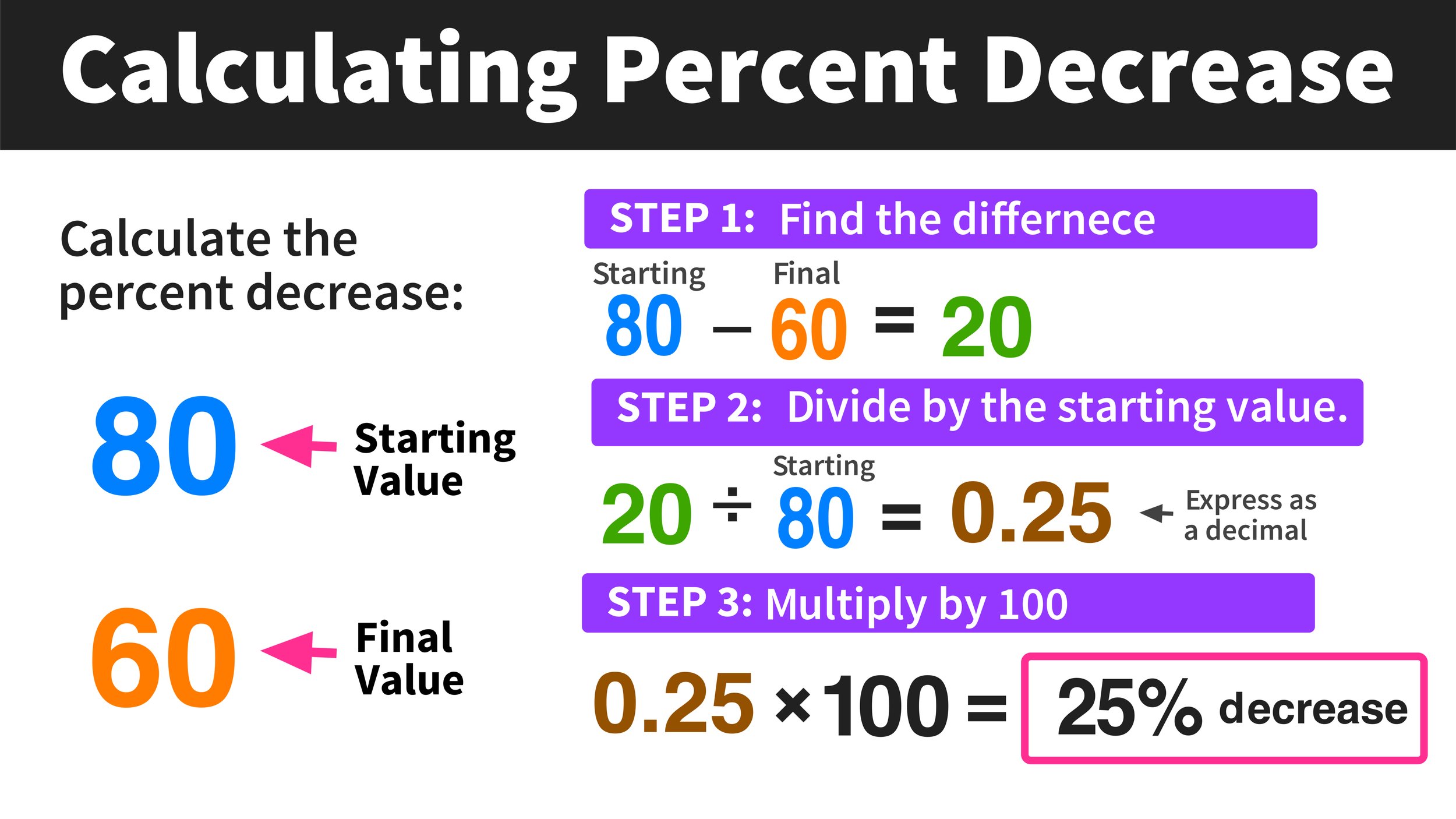
Salary Raises: If you earn $60,000 annually and receive a 4% raise, your new salary will be $60,000 * (1 + 0.04) = $62,400. This helps you understand the real impact on your take-home pay and budgeting.
-
Bonuses and Commissions: Many performance-based bonuses or sales commissions are calculated as a percentage of profits or sales. If your team achieves $1,000,000 in sales and your bonus is 1.5% of that, you’ll receive $1,000,000 * 0.015 = $15,000.
-
Projecting Future Income: When planning for retirement or major life goals, you might project your income to grow by a certain percentage annually, helping you assess your future financial capacity.
Understanding Inflation and Cost Increases
While often perceived as a “negative” increase, inflation is fundamentally about percentage changes that impact the cost of living. It’s crucial for budgeting and long-term financial planning.
-
Erosion of Purchasing Power: Inflation means that money today will buy less in the future. If the inflation rate is 3% annually, an item costing $100 today will effectively cost $100 * (1 + 0.03) = $103 next year to maintain the same purchasing power.
-
Future Cost of Goods/Services: You can estimate the future cost of significant expenses like college tuition, healthcare, or a new car by applying historical or projected inflation rates. For instance, if college tuition is $30,000 today and is expected to increase by 5% annually, in 5 years it will be $30,000 * (1.05)^5 ≈ $38,288.
-
Budgeting for Rising Expenses: Utilities, groceries, and housing costs often increase over time. Anticipating these percentage increases allows you to adjust your budget proactively, preventing financial strain.
Business Finance & Entrepreneurship: Driving Profits and Strategic Planning
For entrepreneurs and business professionals, the ability to increase a number by a percentage is not just a calculation; it’s a strategic tool for setting prices, forecasting sales, managing debt, and ensuring profitability.
Pricing Strategies and Markups
One of the most direct applications in business is in setting prices to achieve desired profit margins. Businesses typically calculate their selling price by applying a percentage markup to their cost.
-
Calculating Selling Price: If a product costs $50 to produce, and you want a 40% profit margin (markup), your selling price would be $50 * (1 + 0.40) = $50 * 1.40 = $70. This ensures that when the product sells, it covers its cost and generates the intended profit.
-
Service Pricing: Similarly, service businesses can calculate their hourly rates or project fees by marking up their operational costs (labor, overhead) by a desired percentage to ensure profitability.
-
Discounting (Reverse Calculation): While focused on increasing a number, understanding markups also helps in understanding discounts. If an item is on sale for 20% off, its original price was a number that, when decreased by 20%, resulted in the sale price.
Sales Growth and Revenue Projections
Businesses constantly monitor and project sales figures, and these projections are almost always expressed in terms of percentage growth.
-
Forecasting Future Sales: If your current annual sales are $1,000,000 and your market research suggests a 12% growth rate for the next year, your projected sales would be $1,000,000 * (1 + 0.12) = $1,120,000. This is vital for budgeting, resource allocation, and strategic planning.
-
Setting Sales Targets: Sales teams are often given targets to increase sales by a certain percentage over the previous period. For example, “increase Q3 sales by 8% over Q2.”
-
Understanding Market Share Growth: If your company’s revenue grows by 15% while the overall market only grows by 5%, it indicates that you are increasing your market share, a critical indicator of business health.
Loan Interest and Debt Management
Loans, whether for business expansion or personal mortgages, are fundamentally structured around percentage-based interest rates.
-
Calculating Interest Payments: If a business takes out a $100,000 loan at a simple annual interest rate of 6%, the annual interest cost would be $100,000 * 0.06 = $6,000. This directly impacts cash flow and profitability.
-
Understanding Total Cost of Borrowing: For larger loans like mortgages, interest compounds over time. While the calculation can be complex (often involving amortized schedules), the underlying principle is repeated percentage increases applied to the outstanding principal. Understanding this helps businesses choose the most favorable loan terms and manage debt effectively.
-
Impact of Varying Interest Rates: A slight percentage increase in interest rates can significantly increase the total cost of borrowing over the life of a loan, highlighting the importance of monitoring interest rate movements.
Avoiding Common Pitfalls and Advanced Considerations
While the core calculation is straightforward, certain nuances and common misconceptions can lead to errors in financial analysis. Being aware of these advanced considerations ensures greater accuracy and more robust financial decision-making.
The Importance of the Base Number
A critical aspect often overlooked is that a percentage increase is always relative to the original or base number. A 10% increase of a small number will result in a small absolute increase, whereas the same percentage increase of a large number will result in a significantly larger absolute increase.
- Example: A 10% raise on a $30,000 salary is an increase of $3,000, resulting in $33,000. A 10% raise on a $100,000 salary is an increase of $10,000, resulting in $110,000. The percentage is the same, but the absolute monetary impact is vastly different. This concept is crucial when comparing growth rates or impacts across different scales.
Distinguishing Between Simple and Compound Increases
It’s vital to differentiate between simple interest (or simple percentage increases) and compound interest, especially for long-term financial planning.
-
Simple Increase: The percentage increase is always calculated on the original principal. For example, a simple 5% annual return on $1,000 means you get $50 each year, and your principal remains $1,000 for calculation purposes.
-
Compound Increase: The percentage increase is calculated on the original principal plus any accumulated interest or growth from previous periods. This is the bedrock of investment growth and debt accumulation. Most real-world financial scenarios, especially involving investments and loans, operate on compound principles. Always clarify whether a stated percentage is simple or compound to accurately project future values.
The Impact of Multiple Increases/Decreases
A common misconception is that a percentage increase followed by an equal percentage decrease will return you to the original number. This is incorrect because the base number changes.
-
Example: Start with $100.
-
Increase by 10%: $100 * 1.10 = $110.
-
Now, decrease $110 by 10%: $110 * (1 – 0.10) = $110 * 0.90 = $99.
-
You end up with $99, not the original $100. This occurs because the 10% decrease is applied to the new, higher base ($110), not the original $100. This concept is crucial in understanding market volatility, sequential price changes, or any scenario involving multiple percentage adjustments. To accurately calculate the net effect of multiple percentage changes, always apply them sequentially to the resulting base number.
-

Conclusion
The ability to accurately increase a number by a percentage is far more than a basic arithmetic skill; it is a fundamental pillar of financial literacy and a prerequisite for sound financial decision-making. As we’ve explored, this single calculation unlocks insights into personal investment growth, helps in understanding salary progression, illuminates the silent creep of inflation, informs business pricing strategies, and drives revenue forecasting.
By understanding the simple formulas, leveraging practical tools like spreadsheets, and being mindful of common pitfalls such as the changing base number or the distinction between simple and compound growth, you equip yourself with an invaluable financial superpower. Whether you are managing your personal budget, planning for retirement, investing in the market, or running a business, mastering “how to increase a number with a percentage” will empower you to navigate the financial landscape with greater confidence, make more informed choices, and ultimately, achieve your financial goals. Embrace this skill, practice it regularly, and watch as your financial understanding and control grow exponentially.
aViewFromTheCave is a participant in the Amazon Services LLC Associates Program, an affiliate advertising program designed to provide a means for sites to earn advertising fees by advertising and linking to Amazon.com. Amazon, the Amazon logo, AmazonSupply, and the AmazonSupply logo are trademarks of Amazon.com, Inc. or its affiliates. As an Amazon Associate we earn affiliate commissions from qualifying purchases.