
In the vast landscape of personal finance, investing, and business operations, few concepts are as ubiquitous and fundamental as the percentage. From understanding a sale discount to calculating your investment returns, or even deciphering complex profit margins, the ability to “get a percentage of something” is not merely an arithmetic skill; it’s a cornerstone of financial literacy. Mastering this basic concept unlocks a deeper, more nuanced understanding of monetary opportunities, risks, and the intricate workings of the financial world around us. This article will demystify percentages, providing you with the tools and insights to confidently apply them across all facets of your financial life, ultimately empowering you to make smarter, more informed decisions.

The Core Mechanics: Calculating Percentages
At its heart, a percentage is simply a way to express a part of a whole as a fraction of 100. The word “percent” literally means “per hundred.” Understanding the fundamental formula and its variations is the first step toward unlocking its power in financial contexts.
The Basic Formula: Part / Whole * 100
The universal formula for calculating a percentage is straightforward:
$$ text{Percentage} = frac{text{Part}}{text{Whole}} times 100 $$
Let’s break down each component:
-
Part: This is the specific amount or quantity you are interested in, which is a portion of the larger total.
-
Whole: This represents the total amount, the entire quantity from which the part is taken.
-
100: Multiplying by 100 converts the resulting decimal or fractional value into a percentage, making it easier to understand and compare.
Example 1: Calculating a Tip
Imagine your restaurant bill is $50, and you want to leave a 15% tip.
Here, the “Whole” is $50. You want to find the “Part” that represents 15%.
First, convert the percentage to a decimal: 15% = 0.15.
Then, multiply: $50 times 0.15 = $7.50. So, your tip would be $7.50.
Example 2: Discount Calculation
A $200 item is on sale for $160. What is the percentage discount?
The “Whole” is $200. The “Part” that represents the discount amount is $200 – $160 = $40.
Using the formula:
$$ text{Discount Percentage} = frac{$40}{$200} times 100 = 0.20 times 100 = 20% $$
The item is discounted by 20%.
Working with Decimals and Fractions
While the final percentage is often expressed as a number followed by the “%” sign, many financial calculations require an intermediate step of converting percentages to decimals or vice versa.
-
Percentage to Decimal: To convert a percentage to a decimal, simply divide by 100 (or move the decimal point two places to the left). For instance, 25% becomes 0.25, and 5% becomes 0.05. This is crucial when multiplying amounts by a percentage, such as calculating interest or taxes.
-
Decimal to Percentage: To convert a decimal to a percentage, multiply by 100 (or move the decimal point two places to the right). For example, 0.75 becomes 75%, and 1.2 becomes 120%. This is useful when you’ve already performed a division (Part/Whole) and need to express the result as a percentage.
Understanding this interconversion is vital for using financial calculators, spreadsheets, and investment platforms, which often operate using decimal forms of percentages.
Finding a Percentage of a Number
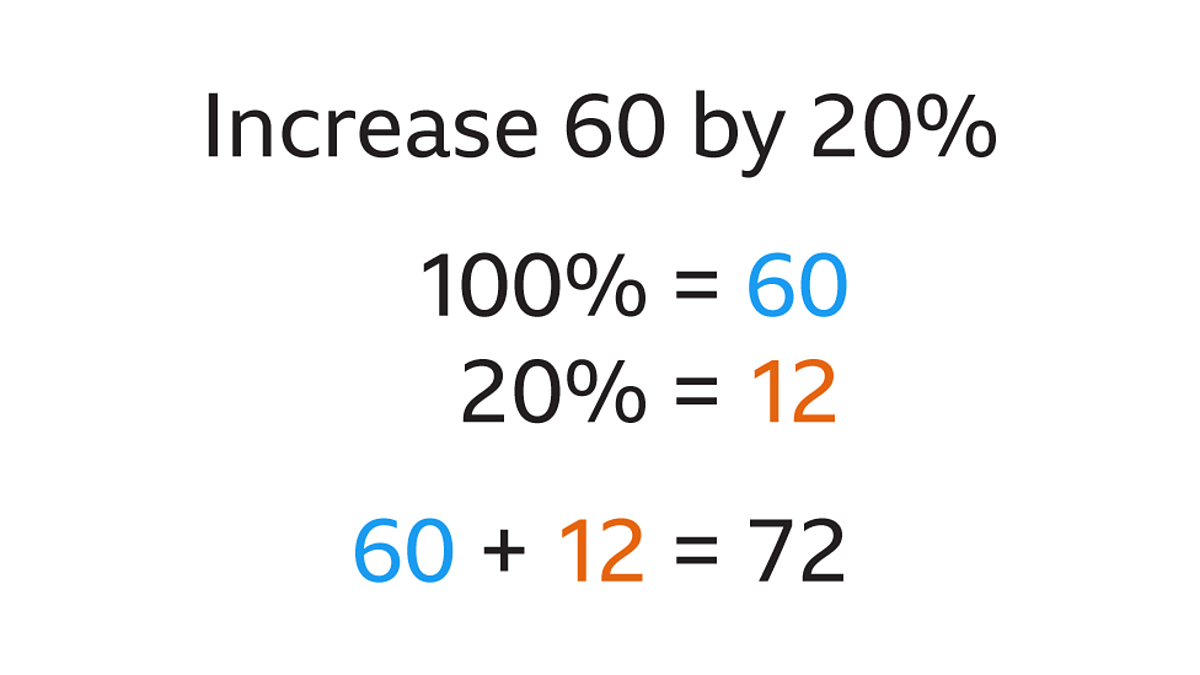
One of the most common applications in finance is finding a specific percentage of a given number. This is done by converting the percentage to its decimal form and then multiplying it by the number.
Example: Calculating Sales Tax
If an item costs $80 and the sales tax is 7%, you calculate the tax amount by:
$$ text{Tax Amount} = $80 times 0.07 = $5.60 $$
The total cost would then be $80 + $5.60 = $85.60.
Example: Commission Earnings
A salesperson earns a 10% commission on sales. If they make $5,000 in sales, their commission is:
$$ text{Commission} = $5,000 times 0.10 = $500 $$
This simple multiplier approach is fundamental to calculating everything from discounts and surcharges to interest payments and equity stakes.
Percentages in Personal Finance: Mastering Your Money
For the individual, percentages are the unsung heroes of sound financial management. They provide a clear, standardized way to understand and control personal income, expenses, savings, and debt.
Budgeting and Expense Tracking
Percentages offer an intuitive framework for allocating your income and understanding your spending habits.
-
The 50/30/20 Rule: A popular budgeting guideline suggests allocating 50% of your after-tax income to needs (housing, groceries, utilities), 30% to wants (entertainment, dining out), and 20% to savings and debt repayment. These percentages provide a flexible structure rather than rigid dollar amounts, making it adaptable to varying incomes.
-
Identifying Spending Categories: By tracking your monthly expenses and expressing each category (e.g., food, transport, entertainment) as a percentage of your total spending, you gain immediate insight into where your money is truly going. This visual representation often highlights areas for potential savings more effectively than raw dollar figures alone.
-
Calculating Savings Rates: Your savings rate—the percentage of your income you save—is a critical metric for financial independence. If you earn $4,000 net per month and save $800, your savings rate is ($800 / $4,000) * 100 = 20%. Monitoring this percentage helps you assess progress towards your financial goals.
Debt Management and Interest Rates
Understanding percentages is paramount when dealing with debt, particularly interest rates.
-
Annual Percentage Rate (APR) and Annual Percentage Yield (APY): APR is the annual rate charged for borrowing, while APY reflects the total annual return on an investment, considering compound interest. Both are expressed as percentages and directly impact the cost of loans and the growth of savings. A credit card with a 20% APR means that, over a year, you’d effectively pay 20% of your outstanding balance in interest if you don’t pay it off.
-
Calculating Interest Paid: For a loan, calculating the interest paid involves applying the interest rate percentage to the principal amount over a given period. For example, a $10,000 loan at 5% annual interest will accrue $500 in interest over a year ($10,000 * 0.05). Understanding this allows you to compare loan offers and project total repayment costs.
-
The Impact of Compounding Interest: This is where percentages truly reveal their power (or peril). Compounding means earning interest on your initial principal and on the accumulated interest from previous periods. Over time, even small interest rate percentages can lead to substantial growth in savings or a significant increase in debt if left unchecked.
Discounts, Sales, and Value for Money
Retail sales and promotions are practically designed around percentages, and knowing how to calculate them ensures you truly capitalize on savings.
-
Calculating Real Savings: A “30% off” sign instantly tells you how much you’ll save. On a $100 item, 30% off means $30 in savings. But sometimes discounts are layered (e.g., 20% off plus an additional 10% off). Knowing how to calculate these sequentially (not just adding the percentages) is vital for understanding the true final price.
-
Comparing Percentage Discounts vs. Fixed Amount Discounts: When deciding between a “20% off” deal and a “$20 off” coupon, knowing the original price allows you to calculate which offers a greater percentage saving. For a $50 item, $20 off is 40% off, which is better than 20% off.
-
Identifying “Good Deals”: Your personal threshold for a “good deal” might be 25% off or more. Using percentages helps you quickly assess if a price reduction meets your value expectations.
Percentages in Investing and Wealth Building: Growing Your Assets
In the realm of investments, percentages are the lingua franca for measuring performance, risk, and allocation. They provide a universal metric for comparing disparate assets and strategies.
Return on Investment (ROI)
ROI is perhaps the most fundamental percentage in investing, quantifying the profitability or efficiency of an investment.
-
Definition and Formula: ROI measures the gain or loss generated on an investment relative to its initial cost.
$$ text{ROI} = frac{text{Current Value of Investment} – text{Cost of Investment}}{text{Cost of Investment}} times 100 $$
-
Examples: If you buy a stock for $100 and sell it for $120, your ROI is (($120 – $100) / $100) * 100 = 20%. Similarly, if you invest $50,000 in a property and sell it for $60,000 (after all expenses), your ROI is 20%.
-
Comparing Opportunities: ROI allows investors to compare the effectiveness of various investments, regardless of their absolute dollar amounts. An investment returning 15% ROI is generally more attractive than one returning 5%, assuming similar risk profiles.
Portfolio Allocation and Diversification
Intelligent investing involves diversifying your assets to manage risk, and this is typically done through percentages.
-
Setting Target Percentages: Investors often set target percentages for different asset classes based on their risk tolerance and financial goals (e.g., 60% stocks, 30% bonds, 10% cash). This allocation helps manage overall portfolio volatility.
-
Rebalancing Strategies: As market values fluctuate, your portfolio’s actual percentages will drift from your targets. Rebalancing involves buying or selling assets to bring your portfolio back to its desired percentage allocation, ensuring you stick to your long-term strategy. For example, if stocks outperform, they might become 70% of your portfolio, and you might sell some to bring it back to 60%, investing the proceeds in bonds or other underperforming assets.
Understanding Gains, Losses, and Volatility
Percentages are the primary way to express changes in investment values.
-
Expressing Profit/Loss: A stock increasing from $50 to $55 represents a 10% gain (($55-$50)/$50 * 100). A decrease from $50 to $45 is a 10% loss. This standardized format makes it easy to track performance over time.
-
Market Volatility and Percentage Swings: Financial news frequently reports daily market movements in percentage terms (e.g., “The S&P 500 closed down 1.5% today”). These percentage changes indicate market volatility and investor sentiment.
-
Compound Annual Growth Rate (CAGR): For investments held over multiple years, CAGR provides a smoothed annual growth rate percentage, allowing for easy comparison of investments with different growth trajectories.
Percentages in Business Finance: Driving Profitability
For businesses, percentages are vital metrics that inform strategic decisions, evaluate performance, and communicate financial health to stakeholders.
Profit Margins (Gross, Operating, Net)
Profitability is often measured in percentage terms, giving a clear picture of how much profit a company makes per dollar of revenue.
-
Gross Profit Margin: Measures the percentage of revenue left after deducting the cost of goods sold (COGS).
$$ text{Gross Profit Margin} = frac{text{Revenue} – text{COGS}}{text{Revenue}} times 100 $$
A higher gross margin indicates efficient production.
-
Operating Profit Margin: Shows the percentage of revenue remaining after covering COGS and operating expenses (like salaries, rent, marketing).
$$ text{Operating Profit Margin} = frac{text{Operating Income}}{text{Revenue}} times 100 $$
This reflects the core profitability of the business’s operations.
-
Net Profit Margin: Represents the percentage of revenue left after all expenses, including taxes and interest, have been deducted.
$$ text{Net Profit Margin} = frac{text{Net Income}}{text{Revenue}} times 100 $$
This is the “bottom line” profit percentage for shareholders.
Comparing these margins against industry averages or competitors provides critical insights into a company’s financial efficiency and competitive standing.
Revenue Share and Commission Structures
Businesses frequently use percentages to define agreements and incentivize performance.
-
Calculating Commissions: Sales professionals often earn a percentage of the sales they generate. A 5% commission on a $10,000 sale means a $500 payout. This directly links compensation to performance.
-
Partnership Revenue Splits: In joint ventures or partnerships, revenue is often divided by agreed-upon percentages (e.g., 60/40 split). Understanding these percentages ensures fair distribution of earnings.
-
Royalty Payments: Artists, authors, or patent holders may receive a percentage of sales or profits from their creations, known as royalties.
Growth Rates and Market Share
Percentages are essential for measuring business expansion and competitive standing.
-
Measuring Business Growth: Companies report growth rates (e.g., year-over-year revenue growth of 15%) to demonstrate their expansion. This is calculated as the percentage change in a metric (like revenue or profits) from one period to another.
-
Calculating Market Share: A company’s market share is the percentage of total sales in an industry generated by that company. If the total market revenue for widgets is $1 million, and your company sells $200,000 worth of widgets, your market share is ($200,000 / $1,000,000) * 100 = 20%. Market share is a key indicator of competitive strength and strategic positioning.
Common Pitfalls and Advanced Applications
While the basics are fundamental, a deeper understanding of percentages also requires navigating common misunderstandings and appreciating their more nuanced applications.
Percentage Points vs. Percent Change
This is a frequent point of confusion, especially in financial news.
-
Percentage Points: This refers to the absolute difference between two percentage values. If an interest rate increases from 5% to 6%, it has increased by 1 percentage point.
-
Percent Change: This refers to the relative change. An interest rate increasing from 5% to 6% is a 20% increase in the rate itself (calculated as ((6-5)/5) * 100 = 20%).
Failing to distinguish between these two can lead to significant misinterpretations of financial data, particularly concerning economic growth, inflation, or investment returns.
Inflation and Real vs. Nominal Returns
Inflation, a general increase in prices and fall in the purchasing value of money, is always expressed as a percentage.
-
How Inflation Erodes Purchasing Power: If inflation is 3% annually, your dollar buys 3% less than it did a year ago. Understanding this percentage is crucial for preserving your wealth.
-
Calculating Real Returns: Your nominal (stated) investment return needs to be adjusted for inflation to get your “real” return—the actual increase in your purchasing power. If your investment yields 7% but inflation is 3%, your real return is approximately 4% (7% – 3%). This adjustment highlights the importance of investments that outpace inflation.
The Power of Compounding (Revisited)
While mentioned earlier with interest rates, the concept of compounding deserves a revisit for its profound impact over time. Whether it’s the growth of your investments, the accumulation of debt, or the consistent application of a savings rate, small percentages applied consistently over long periods yield massive results. An extra 1% return on an investment or an extra 1% saved from your income might seem negligible yearly, but over decades, the compounding effect can result in hundreds of thousands, if not millions, more in wealth. This principle underscores why understanding and optimizing percentages is not just about immediate calculations, but about long-term financial prosperity.

Conclusion
The ability to “get a percentage of something” is far more than a simple mathematical trick; it is a foundational skill for navigating the complexities of the financial world. From the daily decisions of personal budgeting and managing debt to the strategic choices in investing and steering a business towards profitability, percentages provide the universal language for comparison, analysis, and informed decision-making. By mastering the core mechanics, understanding their diverse applications in personal finance, investing, and business, and being mindful of common pitfalls, you equip yourself with an invaluable tool. Embrace the power of percentages, and you will undoubtedly find yourself on a clearer, more confident path towards achieving your financial goals and building lasting wealth.
aViewFromTheCave is a participant in the Amazon Services LLC Associates Program, an affiliate advertising program designed to provide a means for sites to earn advertising fees by advertising and linking to Amazon.com. Amazon, the Amazon logo, AmazonSupply, and the AmazonSupply logo are trademarks of Amazon.com, Inc. or its affiliates. As an Amazon Associate we earn affiliate commissions from qualifying purchases.