
In the intricate world of personal finance, business operations, and investment strategies, a foundational mathematical concept consistently emerges as indispensable: the ability to calculate a percentage of a number. Far from being a mere academic exercise, this skill is a cornerstone of financial literacy, empowering individuals and businesses to make informed decisions, understand financial data, and navigate the economic landscape with confidence. From deciphering discounts on a sale tag to evaluating investment returns or understanding interest rates on a loan, percentages are the universal language of financial comparison and growth. Mastering this basic arithmetic operation unlocks a deeper comprehension of how money works, allowing you to optimize your spending, saving, and earning potential. This article will demystify the process of finding a percent of a number, illustrating its profound relevance across various financial contexts and providing practical methods to apply this essential knowledge.

The Fundamentals: Understanding Percentage Basics
Before diving into the myriad financial applications, it’s essential to solidify our understanding of what a percentage truly represents and why it holds such significance in the realm of money. Grasping these basics provides the necessary foundation for all subsequent financial calculations.
What is a Percentage?
At its core, a percentage is simply a way of expressing a number as a fraction of 100. The term “percent” derives from the Latin “per centum,” meaning “by the hundred.” When we say “25 percent,” we mean 25 out of 100, or 25/100, which can also be expressed as the decimal 0.25. This standardized representation makes it incredibly useful for comparing different quantities or understanding proportions, regardless of the size of the original numbers. Instead of saying “you saved $20 out of $80” or “you saved $50 out of $200,” using percentages allows for a universal comparison: in both cases, you saved 25%.
Why Percentages Matter in Finance
The ubiquitous nature of percentages in finance is no accident. They provide a clear, concise, and comparable metric for a wide array of financial scenarios. Whether it’s to quantify growth (e.g., a 5% increase in sales), measure decline (e.g., a stock fell by 3%), indicate a portion (e.g., paying 15% income tax), or express a rate (e.g., a loan with a 7% annual interest rate), percentages simplify complex financial information into easily digestible and comparable figures. Without them, financial statements, investment reports, and everyday transactions would be significantly more challenging to interpret and act upon.
The Core Formula: Part/Whole x 100
The most fundamental way to understand or calculate a percentage is through its underlying formula. If you want to find what percentage one number (the “part”) is of another number (the “whole”), the formula is:
Percentage = (Part / Whole) × 100
However, when you already know the percentage and want to find what that percentage is of a given number, the formula slightly adapts, often involving converting the percentage to a decimal first. For example, to find X% of a number Y:
Amount = (X / 100) × Y
Or, more commonly:
Amount = (X as a decimal) × Y
To convert a percentage to a decimal, simply divide it by 100. So, 25% becomes 0.25, and 7% becomes 0.07. This conversion is crucial for most practical financial calculations.
Practical Applications in Personal Finance
For the average individual, a solid grasp of percentage calculations translates directly into smarter personal financial decisions. It empowers you to maximize your savings, minimize your debts, and effectively manage your income.
Navigating Sales and Discounts
One of the most common everyday applications of percentages is understanding sales and discounts. When a store advertises “30% off” or “buy one get one 50% off,” knowing how to quickly calculate the final price or the amount saved can significantly impact your budget.
- Example: A shirt costs $50, and there’s a 20% discount. To find the discount amount, you calculate 20% of $50: (20/100) * $50 = 0.20 * $50 = $10. The final price is $50 – $10 = $40. This skill helps you quickly determine if a “deal” is truly a good value.
Understanding Interest Rates
Interest rates are percentages that dictate the cost of borrowing money or the return on saved money. From credit card APRs (Annual Percentage Rates) to mortgage interest and savings account yields, understanding how to calculate interest is paramount.
- Example (Simple Interest): You take out a $1,000 loan with a 5% annual simple interest rate. The interest for one year would be 5% of $1,000: (5/100) * $1,000 = 0.05 * $1,000 = $50. This means you’d owe $50 in interest in addition to the principal. For more complex scenarios like mortgages or credit cards, compound interest comes into play, making the calculations more involved but still rooted in percentage fundamentals.
Budgeting and Expense Tracking
Effective personal budgeting relies heavily on percentages. Many budgeting strategies advocate allocating certain percentages of your income to different categories like housing, food, savings, and entertainment (e.g., the 50/30/20 rule).
- Example: If your monthly take-home income is $4,000 and you allocate 10% to savings, you’d calculate 10% of $4,000: (10/100) * $4,000 = 0.10 * $4,000 = $400. This helps you identify how much money should go into each bucket, ensuring you stay on track with your financial goals and identify where your money is actually going.
Calculating Tips and Gratuities
In many service industries, calculating a tip is a common practice. Knowing how to quickly determine 15%, 18%, or 20% of a bill total ensures you can appropriately reward good service.
- Example: Your restaurant bill is $65, and you want to leave an 18% tip. You’d calculate 18% of $65: (18/100) * $65 = 0.18 * $65 = $11.70. Your total payment would be $65 + $11.70 = $76.70.
Percentages in Business and Investing
Beyond personal finance, percentages form the backbone of business analysis and investment decisions. Companies use them to track performance, set prices, and measure profitability, while investors rely on them to evaluate potential returns and risks.
Profit Margins and Markups
Businesses constantly work with percentages to determine pricing strategies and assess profitability. Markups are used to set retail prices, while profit margins indicate how much profit a company makes from its sales.
-
Example (Markup): A product costs a retailer $20, and they want a 50% markup. The markup amount is 50% of $20: (50/100) * $20 = 0.50 * $20 = $10. The selling price would be $20 + $10 = $30.
-
Example (Profit Margin): If a company sells an item for $100 and its cost of goods sold is $60, the gross profit is $40. The gross profit margin is ($40 / $100) * 100 = 40%. This tells the business how efficient it is at turning revenue into profit before other expenses.
Growth and Decline Rates
Whether analyzing sales growth, market share fluctuations, or changes in investment value, percentages offer a standardized way to express changes over time.
- Example (Sales Growth): A company’s sales increased from $1,000,000 last year to $1,200,000 this year. The absolute increase is $200,000. To find the percentage growth, divide the increase by the original amount and multiply by 100: ($200,000 / $1,000,000) * 100 = 0.20 * 100 = 20%. A 20% growth rate is far more informative than just stating the raw numbers, especially when comparing different companies or periods.
Taxes and Deductions
Taxes are almost universally expressed as percentages. Income tax rates, sales tax, property tax rates, and corporate tax rates all require percentage calculations to determine the exact amount owed or deducted.
- Example (Sales Tax): You buy an item for $150 in an area with an 8% sales tax. The sales tax amount is 8% of $150: (8/100) * $150 = 0.08 * $150 = $12. Your total cost would be $150 + $12 = $162. For businesses, calculating payroll deductions, including various taxes and contributions, also heavily relies on percentages.
Investment Returns and Portfolio Allocation
In the world of investing, percentages are critical for measuring performance and managing risk. Returns on investments are almost always expressed as percentages (e.g., “my portfolio grew by 15%”). Diversification strategies also involve allocating specific percentages of capital to different asset classes.
-
Example (Return on Investment – ROI): You invest $1,000 and it grows to $1,200. The gain is $200. The ROI is ($200 / $1,000) * 100 = 20%. This metric allows you to compare the profitability of different investments.
-
Example (Portfolio Allocation): An investor might decide to allocate 60% of their portfolio to stocks and 40% to bonds. If their total portfolio value is $100,000, then $60,000 should be in stocks (0.60 * $100,000) and $40,000 in bonds (0.40 * $100,000).
Mastering Percentage Calculations: Methods and Tools
While the underlying concept is simple, the actual execution of percentage calculations can vary depending on the complexity of the numbers and the tools available. Familiarity with different methods can enhance speed and accuracy.
Manual Calculation Techniques
For simpler numbers, mental math or quick pen-and-paper calculations are often sufficient.
-
Converting to Decimal: The most straightforward approach is to convert the percentage to a decimal (divide by 100) and then multiply by the number. For instance, to find 25% of 80, convert 25% to 0.25, then 0.25 * 80 = 20.
-
Using Fractions: Some percentages have simple fractional equivalents (e.g., 50% = 1/2, 25% = 1/4, 10% = 1/10). This can simplify mental calculations. To find 25% of 80, think 1/4 of 80, which is 20.
-
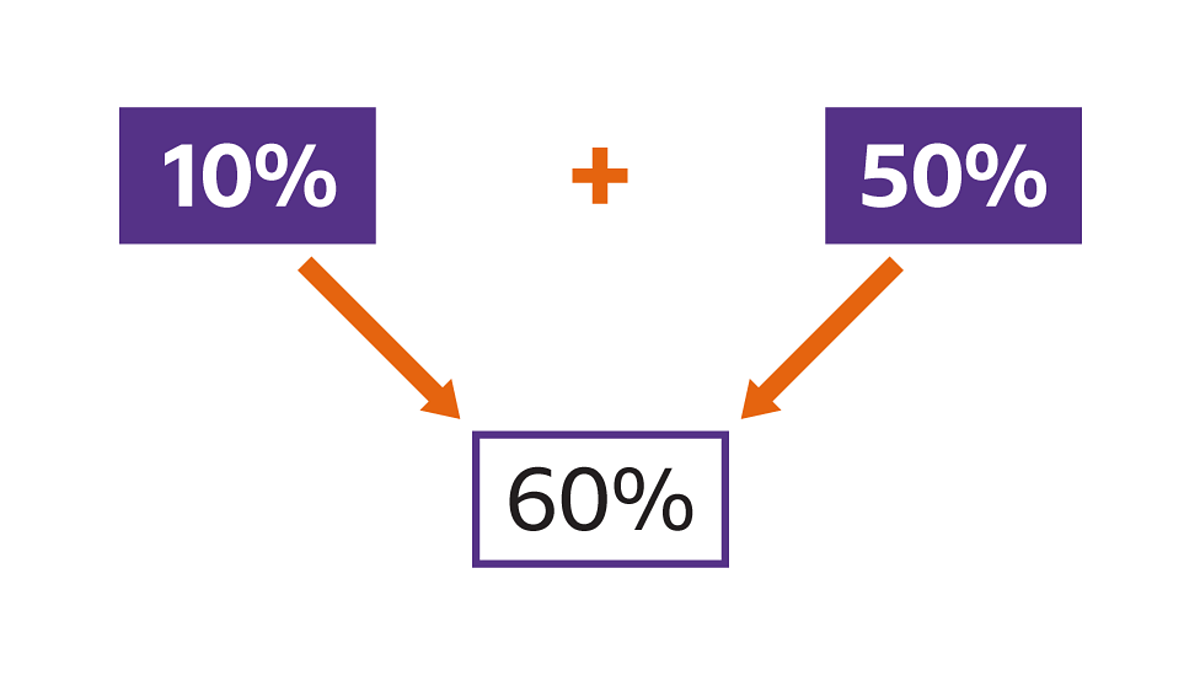
Breaking Down Percentages: For trickier percentages, you can break them down. To find 35% of 60, you can find 10% of 60 (which is 6), multiply by 3 (18), and then add 5% of 60 (which is 3). So, 18 + 3 = 21.
Utilizing Calculators
For more complex numbers or when precision is paramount, a calculator is invaluable. Most standard calculators have a percentage key (%) or allow for direct decimal conversion.
- To find 20% of 50 using a calculator: Enter 50 * 20 %. Or enter 50 * 0.20 =.
Spreadsheet Software (Excel, Google Sheets)
For managing budgets, analyzing large datasets, or tracking investments, spreadsheet software like Microsoft Excel or Google Sheets is an incredibly powerful tool. They allow you to perform percentage calculations on multiple figures quickly and accurately, often with built-in functions.
- Example: To calculate 20% of a number in cell A1, you would simply type
=A1*0.20or=A1*20%into another cell. Spreadsheets also excel at calculating percentage changes, conditional formatting based on percentage thresholds, and creating dynamic financial models.
Mobile Apps and Financial Tools
Many banking apps, budgeting apps (like Mint or YNAB), and dedicated financial calculators available on smartphones or online can automate percentage calculations, especially for scenarios like loan payments, compound interest, or investment growth. These tools simplify complex calculations, allowing users to focus on the implications of the results rather than the arithmetic itself.
Common Pitfalls and Advanced Considerations
While the basic calculation of percentages is straightforward, the financial world often presents nuances that require careful attention to avoid misinterpretations.
Avoiding Misinterpretations: Percentage Points vs. Percentage Change
One common area of confusion is the distinction between “percentage points” and “percentage change.” If an interest rate increases from 4% to 5%, that’s a 1 percentage point increase. However, the percentage change is ((5-4)/4) * 100 = 25%. Understanding this difference is crucial when evaluating financial news or investment performance. A “1 percentage point” increase in a small rate can represent a massive relative change.
Compound Interest Explained
While simple interest is easy to calculate, most real-world financial products, from savings accounts to mortgages, use compound interest. This means interest is calculated not only on the initial principal but also on the accumulated interest from previous periods.
-
Example: $1,000 at 5% compound annual interest.
-
Year 1: $1,000 * 0.05 = $50. New balance = $1,050.
-
Year 2: $1,050 * 0.05 = $52.50. New balance = $1,102.50.
-
The growth accelerates because the base for the percentage calculation increases each period. Understanding compound interest is vital for long-term financial planning, especially for retirement savings and managing debt.
Inflation and Purchasing Power
Inflation, often expressed as an annual percentage rate, represents the rate at which the general level of prices for goods and services is rising, and consequently, the purchasing power of currency is falling. Understanding how to factor in inflation is critical for assessing the real return on investments or the true value of future earnings. A 5% investment return might seem good, but if inflation is 3%, your real return is effectively only 2%.

Conclusion: Empowering Your Financial Decisions with Percentage Fluency
The ability to find a percent of a number is not just a mathematical trick; it’s a vital skill that underpins virtually every aspect of personal and business finance. From making smart shopping choices and effectively budgeting your income to understanding the true cost of a loan or evaluating the performance of your investments, fluency in percentage calculations empowers you to take control of your financial well-being. By understanding the core concepts, applying them to real-world financial scenarios, and leveraging available tools, you can move beyond simply reacting to financial information to proactively managing and growing your money. In a world increasingly driven by data and economic fluctuations, mastering this fundamental skill is an investment in your own financial literacy and a key to unlocking greater financial freedom and security.
aViewFromTheCave is a participant in the Amazon Services LLC Associates Program, an affiliate advertising program designed to provide a means for sites to earn advertising fees by advertising and linking to Amazon.com. Amazon, the Amazon logo, AmazonSupply, and the AmazonSupply logo are trademarks of Amazon.com, Inc. or its affiliates. As an Amazon Associate we earn affiliate commissions from qualifying purchases.