
In the realm of personal and business finance, the ability to calculate percentages is not merely a mathematical exercise; it is a fundamental survival skill. Whether you are analyzing the performance of a stock portfolio, determining the health of a business through profit margins, or simply trying to figure out how much of your monthly income is being consumed by housing costs, understanding the relationship between two numbers is essential. Percentages provide a universal language that allows us to compare disparate values on a level playing field, transforming raw data into actionable financial intelligence.
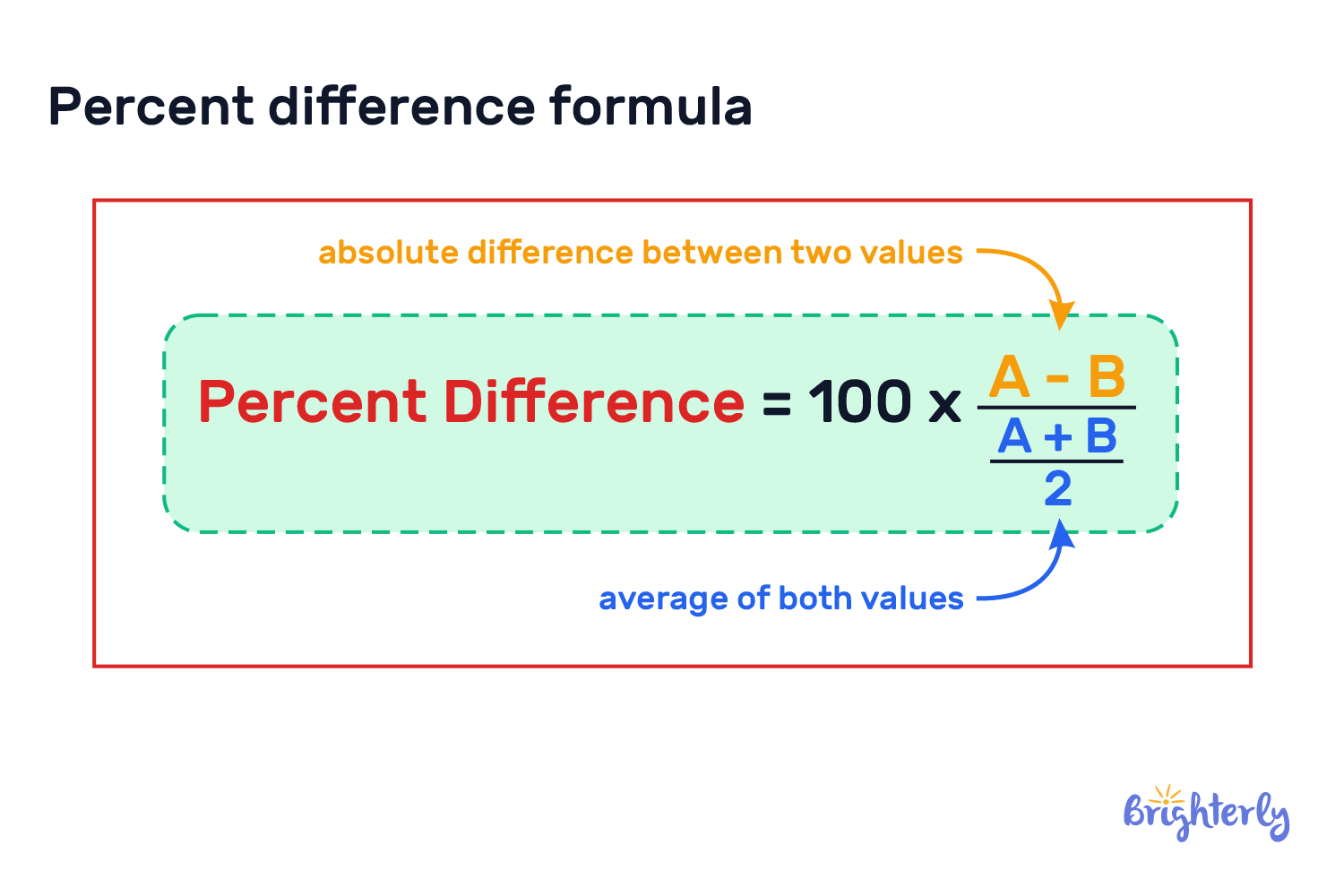
The Core Mathematics of Financial Literacy
To find the percentage that one number represents of another, you must first understand the relationship between a “part” and a “whole.” In financial terms, the “whole” is often your total capital, your total revenue, or your total monthly income. The “part” is the specific expense, gain, or allocation you are trying to analyze.
The Basic Formula and Its Logic
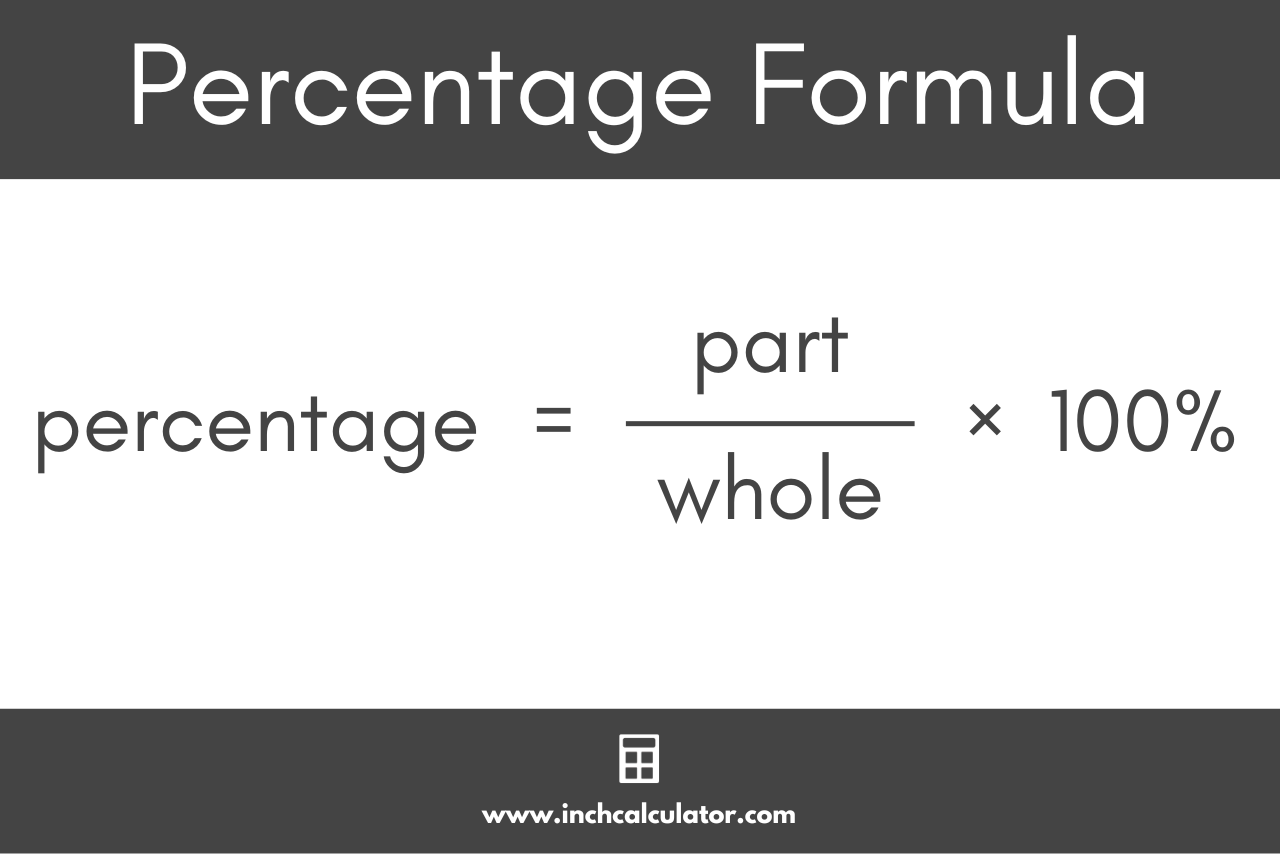
The mathematical formula to find the percentage is straightforward:
(Part ÷ Whole) × 100 = Percentage (%)
For example, if you earn $5,000 per month and you save $750, the calculation to determine your savings rate is $750 divided by $5,000, which equals 0.15. Multiplying this decimal by 100 gives you 15%. This simple calculation provides an immediate health check on your financial habits. Without converting these numbers to a percentage, it is difficult to benchmark your progress against standard financial advice, such as the common recommendation to save 20% of your income.
Avoiding Common Calculation Pitfalls
One of the most frequent errors in financial percentage calculations is the confusion between the base (the whole) and the portion (the part). In finance, the “whole” can change depending on the context. If you are calculating a discount, the whole is the original price. If you are calculating a tax, the whole is the taxable income. Precision in identifying these variables ensures that your financial planning remains accurate and that you are not underestimating liabilities or overestimating growth.
Investment Analysis: Calculating Returns and Growth
For investors, percentages are the primary metric for success. Comparing a $500 gain on a $5,000 investment to a $500 gain on a $50,000 investment reveals two very different stories. The first represents a robust 10% return, while the second is a modest 1% gain. This is why “finding the percent” is the first step in any investment review.
Calculating Return on Investment (ROI)
Return on Investment is perhaps the most critical percentage in the world of finance. It measures the efficiency of an investment or compares the efficiencies of several different investments. To calculate ROI from two numbers—your initial investment and your final value—you must first find the net profit.
[(Final Value – Initial Cost) ÷ Initial Cost] × 100 = ROI%
If you purchased shares of a company for $2,000 and sold them for $2,600, your net profit is $600. Dividing $600 by the original $2,000 gives you 0.30, or a 30% ROI. This percentage allows you to compare the performance of this stock against other assets, such as real estate or high-yield savings accounts, regardless of the dollar amounts involved.
Understanding Percentage Increase and Decrease
Volatility is a constant in the financial markets. Knowing how to calculate percentage changes allows investors to maintain an objective perspective during market swings. If a stock drops from $100 to $80, it has experienced a 20% decrease. However, for that stock to return to its original value of $100, it must increase by 25% ($20 gain on an $80 base). This mathematical reality—that it takes a larger percentage gain to recover from a percentage loss—is a cornerstone of risk management and capital preservation strategies.
Business Profitability: Decoding Margins and Markups
In the corporate world, managers and entrepreneurs use percentages to monitor the pulse of their operations. Revenue alone is a vanity metric; profitability, expressed as a percentage, is the true indicator of a sustainable business model.

Gross and Net Profit Margins
A business owner needs to know what percentage of every dollar earned is kept as profit. To find the gross profit margin, you take the gross profit (Revenue minus Cost of Goods Sold) and divide it by the total revenue.
If a product sells for $150 and costs $90 to produce, the gross profit is $60.
($60 ÷ $150) × 100 = 40% Gross Margin.
However, the net profit margin is even more telling. This figure takes into account all operating expenses, taxes, and interest. If, after all expenses, the business keeps $15 from that $150 sale, the net profit margin is 10%. By monitoring these percentages over time, a business can identify if costs are rising faster than sales, signaling a need for operational adjustments or price increases.
The Critical Distinction Between Margin and Markup
A common mistake in business finance is using “margin” and “markup” interchangeably. While both involve percentages derived from two numbers, they serve different purposes. Markup is the percentage added to the cost to reach a selling price. Margin is the percentage of the selling price that is profit.
If an item costs $100 and you sell it for $150, the markup is 50% ($50 is 50% of $100). However, the profit margin is only 33.3% ($50 is 33.3% of $150). Misunderstanding this difference can lead to disastrous pricing strategies where a business believes it is more profitable than it actually is.
Managing Debt and Credit Health
Percentage calculations are equally vital on the liability side of the balance sheet. Lenders use specific percentage ratios to determine your creditworthiness, and understanding these can help you secure better interest rates and financial terms.
The Debt-to-Income (DTI) Ratio
Lenders use the DTI ratio to measure your ability to manage monthly payments and repay debts. To find this percentage, you divide your total monthly debt payments by your gross monthly income.
If your monthly debt (mortgage, car loan, student loans) totals $2,000 and your gross income is $6,000, your DTI is 33.3%. Generally, a DTI of 36% or less is considered healthy by most lenders. By calculating this percentage yourself, you can determine your “borrowing power” before ever stepping foot into a bank.
Credit Utilization and Interest Rates
Your credit score is heavily influenced by your credit utilization ratio—the percentage of your available credit that you are currently using. If you have a total credit limit of $10,000 across all cards and carry a balance of $3,000, your utilization is 30%. Financial experts recommend keeping this percentage below 30% to maintain a high credit score.
Furthermore, understanding the Annual Percentage Rate (APR) on your debt is crucial. When you see an interest rate, you are seeing a percentage that determines the cost of borrowing. Calculating how much of your monthly payment goes toward interest versus principal requires a firm grasp of how percentages apply to declining balances.
Tactical Implementation in Modern Finance
While the formulas are simple, the application of percentage calculations in modern finance often involves large datasets or complex scenarios. Utilizing digital tools can enhance accuracy and provide deeper insights.
Leveraging Spreadsheets for Financial Modeling
Programs like Excel or Google Sheets are designed to handle percentage calculations at scale. By using the formula =A1/B1 and formatting the cell as a percentage, you can instantly see the relationship between any two numbers. This is particularly useful for “What-If” analysis. For instance, you can model how a 5% increase in your marketing budget (one number) might affect your total annual revenue (the second number).
The Role of Percentages in Tax Planning
Taxation is almost entirely a game of percentages. From effective tax rates to capital gains brackets, knowing how to find the percent of your income that goes to the government is essential for accurate budgeting. If you paid $12,000 in federal taxes on a $60,000 taxable income, your effective tax rate is 20%. Understanding this allows you to make informed decisions about tax-advantaged accounts like 401(k)s or IRAs, where contributions can lower the “whole” (your taxable income), thereby reducing the total percentage of your wealth lost to taxation.
In conclusion, finding the percent from two numbers is the foundational skill upon which all financial analysis is built. It moves the conversation from “How much?” to “How well?” By mastering these simple calculations, you gain the ability to interpret your financial reality with clarity, allowing for more strategic investments, more profitable business decisions, and a more secure personal financial future. Knowledge of percentages is, quite literally, the key to measuring value in the modern economy.
aViewFromTheCave is a participant in the Amazon Services LLC Associates Program, an affiliate advertising program designed to provide a means for sites to earn advertising fees by advertising and linking to Amazon.com. Amazon, the Amazon logo, AmazonSupply, and the AmazonSupply logo are trademarks of Amazon.com, Inc. or its affiliates. As an Amazon Associate we earn affiliate commissions from qualifying purchases.