
In the realm of personal and corporate finance, the ability to calculate and interpret percentages is not merely a mathematical requirement; it is a fundamental pillar of strategic decision-making. Whether you are evaluating the performance of a stock portfolio, determining the true cost of a high-interest loan, or optimizing a corporate budget, understanding how to find a percentage allows you to distill complex financial data into actionable insights. Percentages provide a universal language for comparison, enabling investors and professionals to assess growth, risk, and value across disparate asset classes and economic cycles.
The Foundation: Basic Percentage Formulas for Financial Growth
Before diving into complex financial modeling, one must master the core mechanics of percentage calculations. In a financial context, a percentage represents a fraction of 100, serving as a standardized way to express the relationship between a part and a whole. This is the bedrock of budgeting and expense tracking.
The Basic Formula: Part vs. Whole
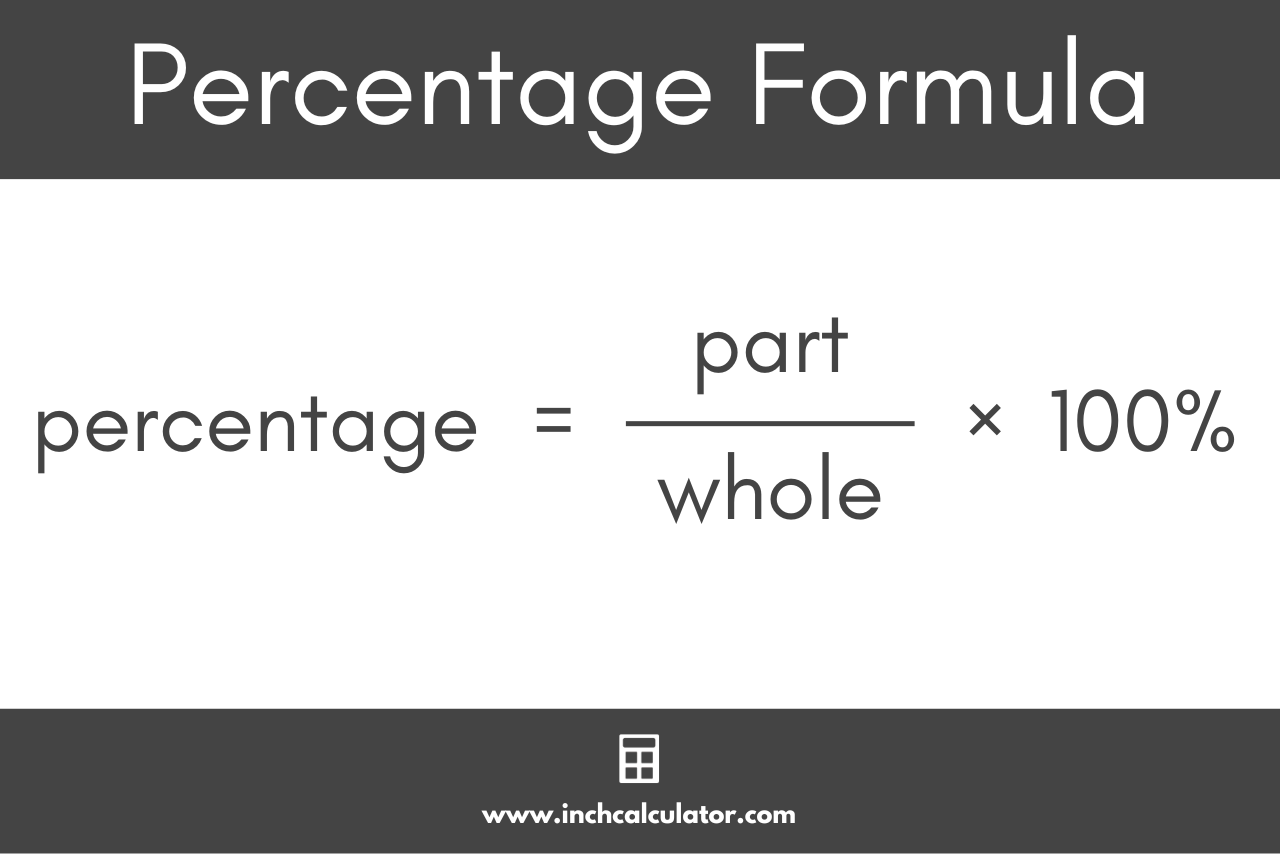
To find the percentage of a specific financial figure, the standard formula is: (Part / Whole) x 100 = Percentage. For example, if you are analyzing your monthly budget and want to know what portion of your $5,000 income is spent on housing ($1,500), the calculation is (1,500 / 5,000) x 100, resulting in 30%. Mastering this simple division is the first step in identifying where your capital is being allocated and where adjustments are necessary to meet long-term savings goals.
Reverse Percentage: Calculating Original Values
In wealth management, you often encounter a final value and need to work backward to find the original amount. This is common when analyzing prices after a tax has been applied or evaluating a portfolio after a specific loss. If a high-yield savings account has grown to $10,500 after a 5% interest gain, finding the original principal requires dividing the current total by 1.05. Understanding this “reverse” logic prevents the common error of simply subtracting 5% from the final total, which would yield an inaccurate result.
Percentage Increase and Decrease
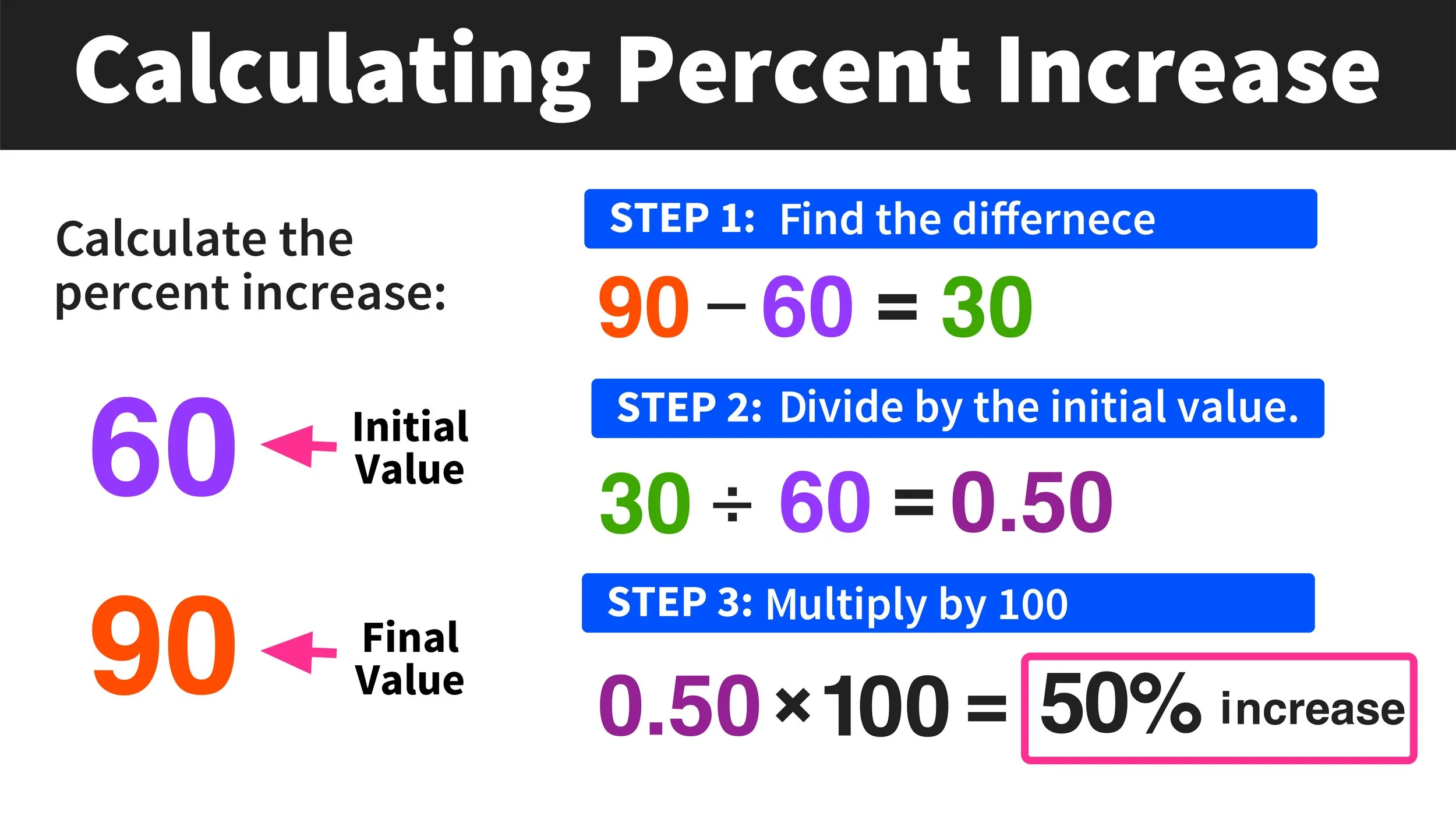
Volatility is a constant in the financial markets. Investors must be able to calculate the percentage change between two points in time. The formula—(New Value – Old Value) / Old Value x 100—is essential for calculating capital gains. If an equity position moves from $50 to $75, it represents a 50% increase. Conversely, if it drops from $75 back to $50, it is a 33.3% decrease. This asymmetry is a vital lesson in risk management: it takes a much larger percentage gain to recover from a significant percentage loss.
Percentages in the Investment Landscape: Measuring Success
For the sophisticated investor, percentages are the primary metric for measuring performance, risk, and diversification. Without these figures, it would be impossible to compare the efficiency of a real estate investment against a tech-heavy index fund.
Calculating Return on Investment (ROI)
ROI is the ultimate gauge of an investment’s profitability. It is expressed as a percentage to allow for a “like-for-like” comparison between different types of assets. To find the ROI, subtract the initial cost of the investment from its final value to determine the net profit, then divide that profit by the initial cost. If you invested $10,000 in a private equity venture and received $13,000 two years later, your ROI is 30%. This percentage tells you the efficiency of your capital regardless of the dollar amount involved.
The Power of CAGR: Compound Annual Growth Rate
While simple ROI measures total growth, the Compound Annual Growth Rate (CAGR) provides a more accurate picture of an investment’s performance over time, accounting for the effects of compounding. CAGR is the geometric progression ratio that provides a constant rate of return over the time period. For long-term retirement planning, focusing on CAGR rather than annual “average” returns is crucial because averages can be skewed by a single high-performing year, whereas CAGR smooths these fluctuations to show the true pace of wealth accumulation.
Yield and Dividend Ratios
Income-focused investors rely heavily on yield percentages. A dividend yield is calculated by taking the annual dividend per share and dividing it by the current share price. This percentage allows an investor to see how much cash flow they are generating for every dollar “locked” in the equity. Similarly, in the bond market, the “Yield to Maturity” (YTM) is a complex percentage calculation that helps investors understand the total return they can expect if the bond is held until its expiration, factoring in both interest payments and price fluctuations.
Navigating the World of Interest: Borrowing and Saving
Interest rates are perhaps the most pervasive application of percentages in the world of money. They represent the “cost of money,” whether you are the one borrowing from a bank or the one lending to it via a savings account or certificate of deposit.
Simple vs. Compound Interest
Understanding the difference between these two percentage applications can mean the difference between financial struggle and substantial wealth. Simple interest is calculated only on the principal amount. Compound interest, however, is calculated on the principal plus any accumulated interest. In the context of a credit card, the “Annual Percentage Rate” (APR) compounds, meaning the interest you owe this month will generate its own interest next month. On the flip side, the “Annual Percentage Yield” (APY) on a savings account shows the real percentage you earn over a year when compounding is factored in. Always look for the highest APY for savings and the lowest APR for debt.
The Rule of 72
A favorite mental shortcut for financial planners is the Rule of 72. By dividing 72 by your fixed annual percentage rate of return, you can estimate how many years it will take for your initial investment to double. For instance, if you are earning a 6% return on a mutual fund, 72 / 6 = 12 years. This percentage-based rule helps in visualizing the long-term impact of seemingly small changes in interest rates or investment returns.
Debt-to-Income (DTI) Ratios
Lenders use percentages to assess your creditworthiness. The Debt-to-Income ratio is a percentage that compares your total monthly debt payments to your gross monthly income. Most mortgage lenders prefer a DTI ratio below 36%. Knowing how to calculate this percentage yourself allows you to understand your “borrowing power” before you ever step foot in a bank, ensuring you don’t overleverage your personal balance sheet.
Corporate and Business Metrics: Understanding Profitability
For entrepreneurs and business owners, finding percentages is a daily necessity for maintaining a healthy bottom line. Business finance relies on various “margins” to ensure that the company is not just generating revenue, but generating profit.
Gross vs. Net Profit Margin
Gross profit margin is the percentage of revenue that exceeds the cost of goods sold (COGS). It is calculated by subtracting COGS from total revenue and dividing the result by total revenue. This percentage highlights the efficiency of your production or service delivery. Net profit margin, however, is the “bottom line” percentage—the amount of profit left after all operating expenses, taxes, and interest have been paid. A company with high revenue but a thin net profit margin (e.g., 2%) is much more vulnerable to economic shifts than a smaller company with a 20% net margin.
Markup vs. Margin: Avoiding the Common Trap
One of the most frequent financial errors in business is confusing markup with margin. Markup is the percentage added to the cost to reach a selling price, whereas margin is the percentage of the selling price that is profit. If an item costs $80 and you sell it for $100, you have a 25% markup ($20 is 25% of $80) but only a 20% profit margin ($20 is 20% of $100). Miscalculating this percentage can lead to pricing strategies that fail to cover overhead costs, ultimately threatening the viability of the business.
Effective Tax Rates
In business and personal finance, your “tax bracket” is often different from your “effective tax rate.” While a marginal tax bracket might be 37%, your effective tax rate is the actual percentage of your total income that goes to the government after deductions and credits. Finding this percentage is vital for accurate cash flow forecasting. By dividing your total tax liability by your total taxable income, you arrive at the percentage that truly matters for your financial planning.
The Strategic Use of Percentages in Lifestyle Design
Ultimately, the goal of understanding how to find a percentage is to apply it to your life through strategic budgeting and asset allocation.
The 50/30/20 Rule
This popular budgeting framework suggests a percentage-based allocation of after-tax income: 50% for needs (housing, utilities, groceries), 30% for wants (hobbies, dining out), and 20% for financial goals (debt repayment, savings, investments). By viewing your income through these percentage buckets rather than rigid dollar amounts, your budget becomes scalable; as your income increases, your contributions to wealth-building automatically grow in tandem.

Asset Allocation and Rebalancing
In portfolio management, asset allocation is the process of deciding what percentage of your wealth should be in stocks, bonds, real estate, or cash. Over time, as some assets outperform others, your initial percentages will shift. If your target is 70% stocks and 30% bonds, and a bull market pushes your stocks to 80%, you must “rebalance” by selling a portion of your stocks to return to your target percentages. This disciplined, percentage-based approach forces you to “buy low and sell high,” which is the cornerstone of long-term financial success.
By mastering the various ways to find and apply percentages, you transform from a passive observer of your finances into an active strategist. Whether you are calculating the impact of inflation (a percentage increase in the cost of living) or evaluating the expense ratio of an index fund, percentages provide the clarity needed to navigate the complexities of the modern financial world with confidence and precision.
aViewFromTheCave is a participant in the Amazon Services LLC Associates Program, an affiliate advertising program designed to provide a means for sites to earn advertising fees by advertising and linking to Amazon.com. Amazon, the Amazon logo, AmazonSupply, and the AmazonSupply logo are trademarks of Amazon.com, Inc. or its affiliates. As an Amazon Associate we earn affiliate commissions from qualifying purchases.