
In the realm of personal finance, compound interest is often heralded as the “eighth wonder of the world.” While simple interest is straightforward, compound interest—specifically interest compounded daily—represents one of the most powerful mechanisms for wealth accumulation and, conversely, one of the most persistent challenges for those managing debt. Understanding how to calculate and leverage daily compounding is essential for any investor, saver, or borrower looking to optimize their financial health.
Daily compounding occurs when the interest earned on an account is calculated every single day and then added back to the principal balance. This means that on day two, you are earning interest not just on your initial deposit, but also on the interest earned on day one. Over long periods, this creates an exponential growth curve that can significantly outperform simpler calculation methods.

The Mathematical Foundation of Daily Compounding
To find interest compounded daily, one must move beyond basic arithmetic and utilize the standard compound interest formula. While online calculators are readily available, understanding the underlying math allows for better financial decision-making and a deeper grasp of how your money is working for or against you.
The Compound Interest Formula
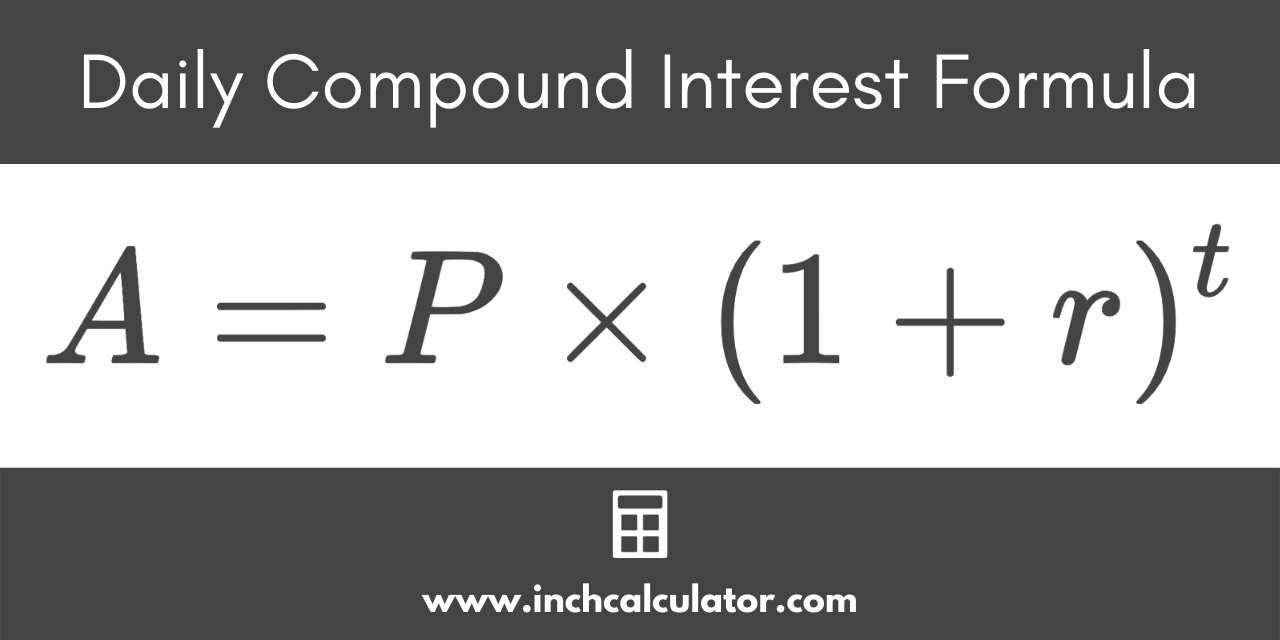
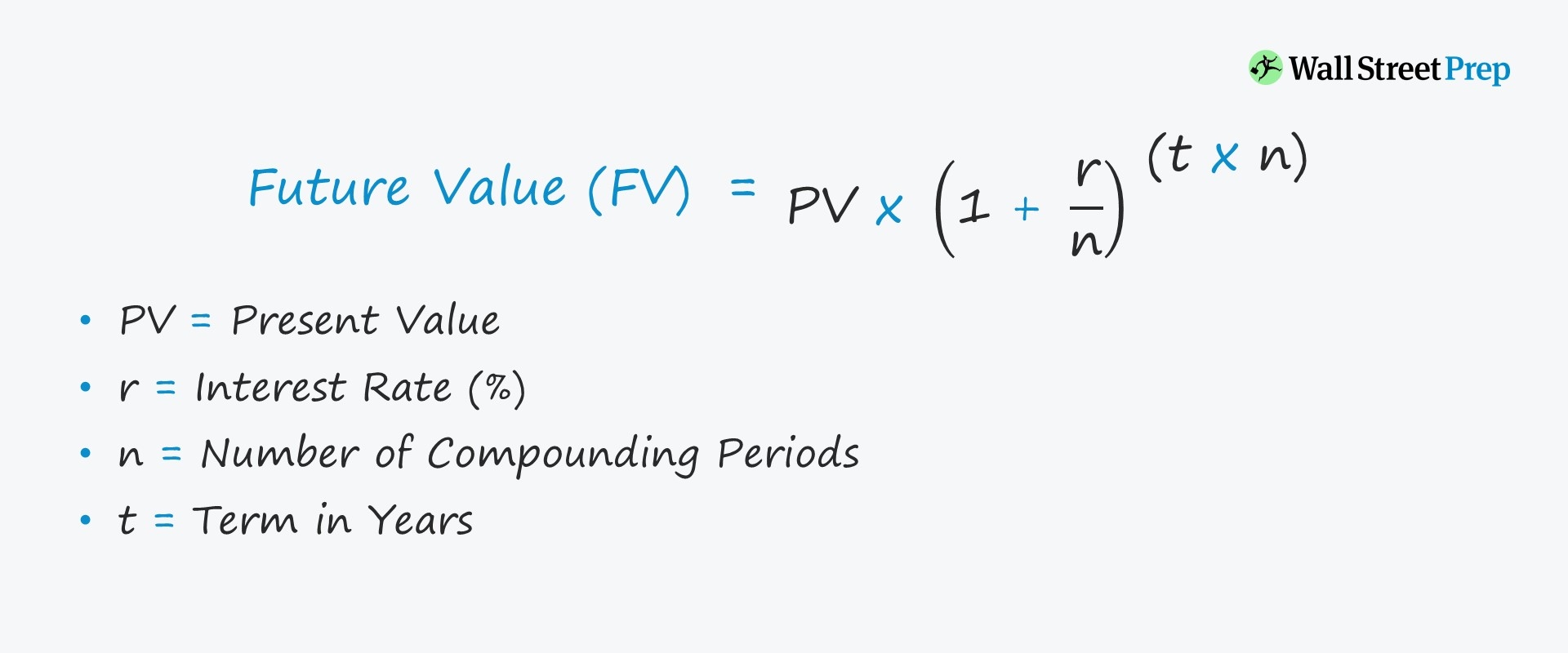
The universal formula for compound interest is:
A = P (1 + r/n)^(nt)
Where:
-
A is the final amount of money accumulated after n years, including interest.
-
P is the principal amount (the initial sum of money).
-
r is the annual interest rate (decimal).
-
n is the number of times that interest is compounded per unit t (for daily compounding, this is 365).
-
t is the time the money is invested or borrowed for, expressed in years.
To specifically find the interest compounded daily, you set n to 365. If you are calculating for a leap year, some institutions may use 366, but 365 is the industry standard for most financial modeling and bank disclosures.
The Daily Periodic Rate
A critical component of the daily compounding calculation is the “Daily Periodic Rate.” This is determined by taking the annual interest rate (APR) and dividing it by the number of days in the year. For example, if you have an annual interest rate of 5%, your daily periodic rate is:
- 0.05 / 365 = 0.000136986 (or 0.01369% per day)
Every day, the financial institution applies this tiny percentage to your current balance. Because the balance grows slightly every day, the amount of interest added also grows, even if the rate remains static.
Step-by-Step Calculation Example
Suppose you deposit $10,000 into a high-yield savings account with a 4% annual interest rate, compounded daily, for a period of one year.
-
Identify the variables: P = 10,000; r = 0.04; n = 365; t = 1.
-
Divide the rate by the compounding frequency: 0.04 / 365 = 0.000109589.
-
Add 1 to the result: 1.000109589.
-
Raise that sum to the power of (n * t): (1.000109589)^365.
-
Multiply by the principal: 10,000 * 1.04081.
-
Final Result: $10,408.11.
In this scenario, the daily compounding resulted in $408.11 in interest. If this had been simple interest, the total would have been exactly $400.00. While an $8.11 difference may seem negligible on a small scale, when applied to larger sums and longer time horizons, the discrepancy becomes massive.
APR vs. APY: Why Compounding Frequency Matters
When navigating the world of personal finance, you will frequently encounter two acronyms: APR (Annual Percentage Rate) and APY (Annual Percentage Yield). The difference between these two is rooted entirely in the frequency of compounding.
Understanding APR
APR is the annual rate of interest without taking into account the compounding of interest within that year. It is a “nominal” rate. Lenders are required to disclose APR to give borrowers a baseline for the cost of a loan, but it does not reflect the total interest you will actually pay if that interest compounds daily.
Understanding APY
APY, on the other hand, is the effective annual rate of return. It takes into account the effect of compounding. If a bank says their savings account has an APY of 4.08%, and they compound interest daily, they have already done the math for you. The APY reflects the total amount of interest you will earn in a year, inclusive of the daily growth.
When comparing financial products, always look at the APY for savings and the effective rate for loans. A credit card with an 18% APR compounded daily actually has an effective annual rate significantly higher than 18%. This is why daily compounding is often a boon for savers but a burden for those carrying high-interest debt.
Practical Applications in Personal Finance
Daily compounding is not just a theoretical math problem; it is the engine behind many of the most common financial products in the market today.
High-Yield Savings Accounts (HYSAs)
In the current economic landscape, HYSAs have become a staple for emergency funds and short-term savings. Most of these accounts compound interest daily and credit it to the account monthly. This means that every single day your balance sits in the account, it is generating a small amount of “interest on interest.” For savers, this creates a passive income stream that accelerates as the balance grows, especially when combined with consistent monthly contributions.
Credit Card Debt
Perhaps the most aggressive use of daily compounding is found in the credit card industry. Most credit card issuers calculate interest based on your “average daily balance.” They take your APR, divide it by 365 to get the daily periodic rate, and apply it to your balance every day.
Because credit card rates are often high (frequently exceeding 20%), the daily compounding effect can make it incredibly difficult to pay down the principal if only minimum payments are made. The interest grows so quickly that a significant portion of every payment is consumed by the interest accrued in just the last 30 days.
Certificates of Deposit (CDs) and Bonds
While many bonds pay simple interest (coupons) semi-annually, some modern savings products like certain CDs or digital “flex” bonds offer daily compounding. For an investor, choosing a product that compounds daily versus one that compounds annually can result in thousands of dollars of difference over a 10- or 20-year investment horizon.
Strategies to Maximize the Power of Daily Compounding
Knowing how to find interest compounded daily is the first step. The second step is utilizing that knowledge to build a more robust financial portfolio.
The Importance of “Time in the Market”
Because the compound interest formula is exponential, the variable t (time) has the most significant impact on the final outcome. In daily compounding, the “snowball effect” takes time to gain momentum. An investment of $1,000 might only earn a few cents of interest in its first few days, but twenty years later, the daily interest earned could exceed the original daily principal growth by a wide margin.
Utilizing Automation for Frequent Deposits
Since daily compounding calculates interest on your current balance, adding money to your accounts as early as possible in the month is more beneficial than waiting until the end of the month. If you deposit $500 on the 1st of the month into a daily compounding account, that $500 earns interest for 30 days. If you wait until the 30th, it earns zero interest for that month. Automating your savings to coincide with your payday ensures that every dollar starts compounding the moment it is earned.
Leveraging the Rule of 72
To quickly estimate how long it will take for your money to double with daily compounding, you can use the “Rule of 72.” Divide 72 by your annual interest rate. For example, at a 6% interest rate, your money will double in approximately 12 years (72 / 6 = 12). While daily compounding actually makes the doubling happen slightly faster than the Rule of 72 suggests, it remains a reliable mental shortcut for assessing the long-term potential of an investment.
Analyzing the Impact of Inflation
While daily compounding helps your money grow, a professional financial strategy must also account for inflation. Inflation is essentially “reverse compounding”—it is the rate at which the purchasing power of your money decreases.
If your savings account is compounding daily at a rate of 4%, but inflation is running at 3%, your “real” rate of return is only about 1%. To truly build wealth, the goal is to find daily compounding vehicles that significantly outpace the Consumer Price Index (CPI). This often involves moving beyond traditional savings accounts and looking toward brokerage accounts, dividend-reinvesting stocks, or inflation-protected securities where the compounding effect can be even more pronounced due to capital appreciation.
Conclusion: The Strategic Advantage of Daily Compounding
Mastering the calculation of daily compound interest is a fundamental skill in business finance and personal wealth management. By using the formula A = P (1 + r/365)^(365t), you gain the ability to project future values with precision and compare various financial products on an even playing field.
For the saver, daily compounding is a tireless ally, turning small, consistent contributions into substantial capital over time. For the borrower, it is a reminder of the importance of early repayment and the dangers of high-interest revolving debt. In both cases, the frequency of compounding is the “hidden” variable that dictates the speed of financial movement. By prioritizing accounts that compound daily and understanding the math behind them, you position yourself to take full advantage of the mathematical laws that govern the modern financial world.
aViewFromTheCave is a participant in the Amazon Services LLC Associates Program, an affiliate advertising program designed to provide a means for sites to earn advertising fees by advertising and linking to Amazon.com. Amazon, the Amazon logo, AmazonSupply, and the AmazonSupply logo are trademarks of Amazon.com, Inc. or its affiliates. As an Amazon Associate we earn affiliate commissions from qualifying purchases.