
Understanding the time value of money (TVM) is arguably one of the most fundamental concepts in finance. It’s the cornerstone upon which nearly all financial decisions, from personal savings to multi-million dollar corporate investments, are built. At its core, TVM posits that a dollar today is worth more than a dollar received in the future. This isn’t just a theoretical musing; it’s a practical truth driven by factors like inflation, opportunity cost, and the inherent risk associated with future uncertainty. Grasping how to calculate TVM empowers individuals and businesses to make informed choices, whether it’s planning for retirement, evaluating investment opportunities, or assessing the true cost of a loan. This comprehensive guide will demystify TVM, breaking down its core principles, essential formulas, and practical applications, ensuring you can confidently navigate the financial landscape.

Understanding the Core Principles of Time Value of Money
Before diving into calculations, it’s crucial to appreciate the underlying principles that make the time value of money so powerful and pervasive in finance. These principles are not abstract theories but rather reflections of economic realities.
The Rationale Behind TVM
The belief that money available now is more valuable than the same amount in the future stems from several key factors:
-
Opportunity Cost: If you have money today, you can invest it and earn a return. By deferring receipt of that money to the future, you forego the opportunity to earn that return. This lost potential earning is the opportunity cost.
-
Inflation and Purchasing Power: Over time, inflation erodes the purchasing power of money. A dollar today can buy more goods and services than a dollar a year from now, assuming a positive inflation rate. Therefore, future money is inherently worth less in real terms.
-
Risk and Uncertainty: There’s always an element of risk associated with receiving money in the future. Economic downturns, bankruptcies, or unforeseen circumstances could prevent you from receiving the expected funds. Money in hand today carries no such future delivery risk.
-
Preference for Present Consumption: Most individuals and businesses prefer to have resources available sooner rather than later, reflecting a natural human inclination towards immediate gratification and the ability to address immediate needs or seize current opportunities.
Key Components of TVM Calculations
Every TVM calculation relies on a standard set of variables. Understanding each one is vital for setting up and solving any TVM problem:
-
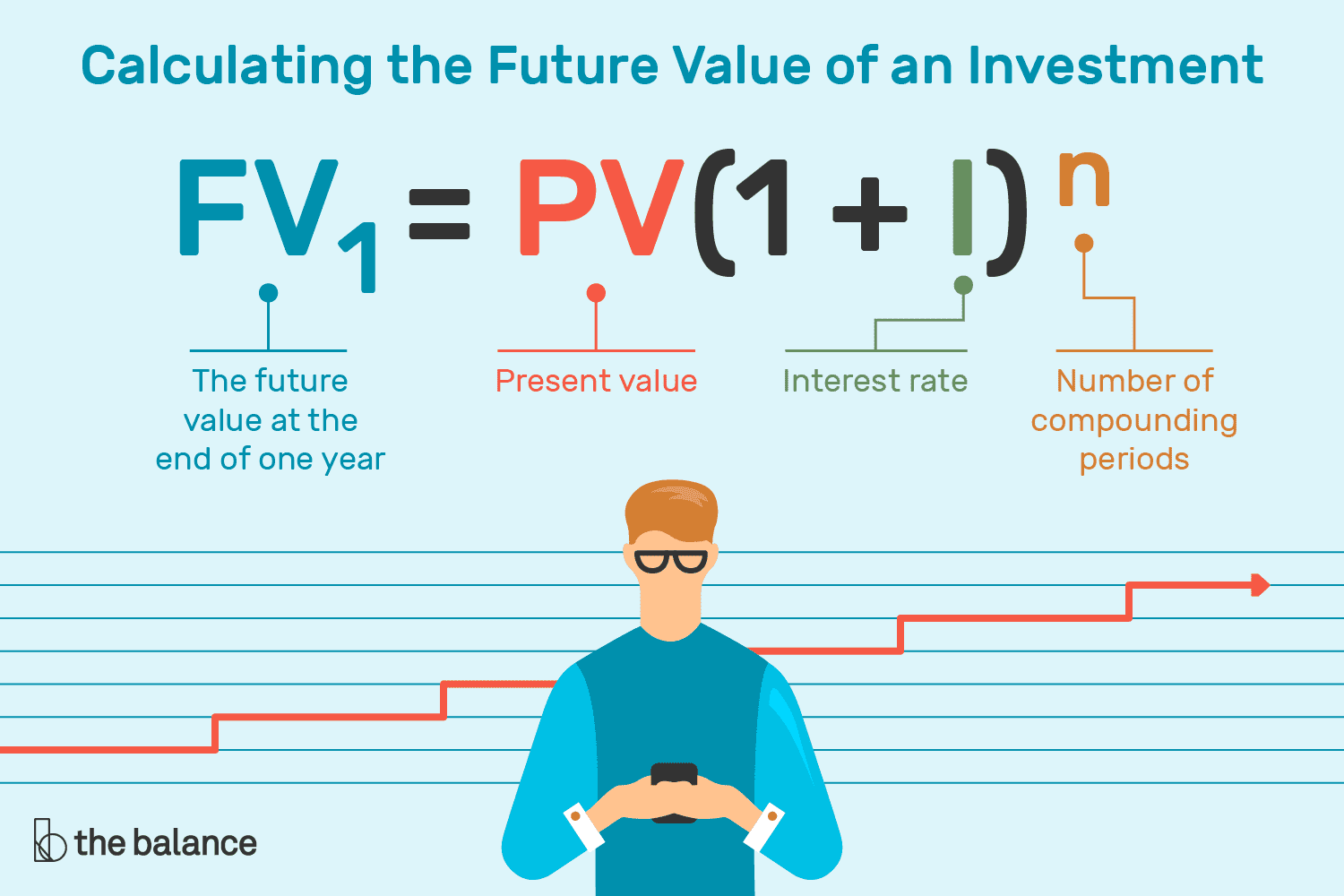
Present Value (PV): The current worth of a future sum of money or stream of cash flows. It’s the amount you have today.
-
Future Value (FV): The value of an asset or cash at a specified date in the future, based on a given rate of return. It’s what your money will grow into.
-
Interest Rate (r) / Discount Rate: The rate at which money grows or is discounted. It represents the cost of borrowing money or the rate of return on an investment. When calculating future value, it’s typically referred to as the interest rate or growth rate. When calculating present value, it’s called the discount rate because you are discounting future cash flows back to the present.
-
Number of Periods (n): The total number of compounding or discounting periods. This could be years, months, or quarters, depending on the frequency of interest application.
-
Payment (PMT): A series of equal payments or receipts occurring at regular intervals. This variable is used when dealing with annuities (a series of equal payments).
Calculating Future Value (FV)
Future Value (FV) calculations help you determine how much an investment made today will be worth at a specific point in the future, given a certain interest rate. It’s a fundamental tool for understanding the power of compounding.
Simple Future Value (Lump Sum)
This is the most basic TVM calculation, showing the future value of a single sum of money invested today.
Formula:
FV = PV * (1 + r)^n
Where:
-
FV = Future Value
-
PV = Present Value (the initial investment)
-
r = Interest rate per period (expressed as a decimal)
-
n = Number of compounding periods
Example:
Suppose you invest $10,000 today (PV) at an annual interest rate of 5% (r = 0.05) for 10 years (n = 10).
FV = $10,000 * (1 + 0.05)^10
FV = $10,000 * (1.05)^10
FV = $10,000 * 1.62889
FV = $16,288.95
So, your $10,000 investment will grow to approximately $16,288.95 in 10 years.
Future Value of an Annuity
An annuity is a series of equal payments made or received at regular intervals. Retirement contributions, loan payments, and insurance premiums are common examples. The future value of an annuity tells you how much a series of regular payments will accumulate to over time.
There are two main types of annuities:
-
Ordinary Annuity: Payments occur at the end of each period.
-
Annuity Due: Payments occur at the beginning of each period. (For simplicity, we’ll focus on ordinary annuities here, as annuity due calculations are simply the ordinary annuity result multiplied by (1+r)).
Formula for an Ordinary Annuity:
FV_annuity = PMT * [((1 + r)^n – 1) / r]
Where:
-
FV_annuity = Future Value of the Annuity
-
PMT = The amount of each payment
-
r = Interest rate per period (expressed as a decimal)
-
n = Number of payments/periods
Example:
You decide to save $500 (PMT) at the end of each year for 20 years (n = 20) in an account that earns an annual interest rate of 7% (r = 0.07).
FV_annuity = $500 * [((1 + 0.07)^20 – 1) / 0.07]
FV_annuity = $500 * [((1.07)^20 – 1) / 0.07]
FV_annuity = $500 * [(3.86968 – 1) / 0.07]
FV_annuity = $500 * [2.86968 / 0.07]
FV_annuity = $500 * 40.9954
FV_annuity = $20,497.70
After 20 years, your consistent $500 annual contributions will grow to approximately $20,497.70.
Calculating Present Value (PV)
Present Value (PV) calculations are essentially the inverse of Future Value calculations. They help you determine how much a future sum of money or stream of cash flows is worth today. This process is often referred to as “discounting” because future money is discounted back to its current value.
Simple Present Value (Lump Sum)
This calculation tells you how much money you would need to invest today to receive a specific lump sum in the future.
Formula:
PV = FV / (1 + r)^n
(Alternatively: PV = FV * (1 + r)^-n)
Where:
-
PV = Present Value
-
FV = Future Value (the amount you expect to receive)
-
r = Discount rate per period (expressed as a decimal)
-
n = Number of compounding/discounting periods
Example:
You want to have $50,000 (FV) in 5 years (n = 5) for a down payment on a house. If your investments can earn an annual return of 6% (r = 0.06), how much do you need to invest today (PV)?
PV = $50,000 / (1 + 0.06)^5
PV = $50,000 / (1.06)^5
PV = $50,000 / 1.33822
PV = $37,362.91

You would need to invest approximately $37,362.91 today to reach your $50,000 goal in 5 years.
Present Value of an Annuity
The present value of an annuity tells you the current worth of a series of equal future payments. This is incredibly useful for evaluating loans, retirement payouts, or structured settlements.
Formula for an Ordinary Annuity:
PV_annuity = PMT * [(1 – (1 + r)^-n) / r]
Where:
-
PV_annuity = Present Value of the Annuity
-
PMT = The amount of each payment
-
r = Discount rate per period (expressed as a decimal)
-
n = Number of payments/periods
Example:
You win a lottery that promises to pay you $1,000 (PMT) at the end of each year for the next 25 years (n = 25). If the appropriate discount rate is 8% (r = 0.08), what is the present value of these winnings (i.e., how much is it worth today)?
PV_annuity = $1,000 * [(1 – (1 + 0.08)^-25) / 0.08]
PV_annuity = $1,000 * [(1 – (1.08)^-25) / 0.08]
PV_annuity = $1,000 * [(1 – 0.146018) / 0.08]
PV_annuity = $1,000 * [0.853982 / 0.08]
PV_annuity = $1,000 * 10.67478
PV_annuity = $10,674.78
The present value of your 25 annual payments of $1,000 is approximately $10,674.78. This is a common calculation used to determine the lump sum payout equivalent for such winnings.
Present Value of a Perpetuity (Brief Mention)
A perpetuity is a special type of annuity that continues indefinitely. While less common in everyday finance, it’s used in valuing certain financial instruments or businesses.
Formula:
PV_perpetuity = PMT / r
For example, if you receive $1,000 forever and the discount rate is 5%, its present value is $1,000 / 0.05 = $20,000.
Practical Applications of Time Value of Money
The theoretical underpinnings of TVM truly shine when applied to real-world financial scenarios. It provides the framework for sound decision-making in both personal and business finance.
Personal Finance Decisions
TVM is indispensable for individuals planning their financial futures:
-
Retirement Planning: Calculating the future value of your consistent savings allows you to project how large your nest egg will be. Conversely, determining the present value of your desired future retirement income helps you figure out how much you need to save today.
-
Loan and Mortgage Analysis: Understanding the present value of loan payments helps assess the true cost of borrowing. For mortgages, TVM helps in comparing different interest rates, terms, and the impact of extra payments.
-
Investment Evaluation: Comparing investment options often involves TVM. For instance, deciding between two investment opportunities that offer different payment schedules and future returns requires calculating their present values to make an “apples-to-apples” comparison.
-
Education Savings: Projecting the future cost of education and then working backward to determine how much needs to be saved regularly uses FV and PV of annuities.
Business Finance Decisions
For businesses, TVM is critical for capital allocation and valuation:
-
Capital Budgeting: This is perhaps the most significant application. Businesses use Net Present Value (NPV) and Internal Rate of Return (IRR), both derived from TVM, to evaluate potential projects (e.g., purchasing new equipment, expanding a factory). NPV discounts all future cash flows of a project back to the present, while IRR calculates the discount rate that makes the NPV of all cash flows from a particular project equal to zero.
-
Valuation: Valuing a company, a stock, or a bond relies heavily on TVM. The value of an asset is often the present value of its expected future cash flows.
-
Lease vs. Buy Decisions: Businesses use TVM to compare the present value of lease payments versus the present value of purchasing and owning an asset, helping them choose the most financially advantageous option.
-
Debt Structuring: When issuing bonds or taking on loans, businesses use TVM to determine appropriate interest rates and repayment schedules that align with their financial goals and market conditions.
Tools and Methods for TVM Calculations
While the formulas are essential, thankfully, you don’t always need to perform complex manual calculations. Various tools can simplify the process and minimize errors.
Financial Calculators
Dedicated financial calculators (like the Texas Instruments BA II Plus or HP 12c) are designed specifically for TVM problems. They have dedicated buttons for N (number of periods), I/Y (interest rate per year), PV (present value), PMT (payment), and FV (future value). You input four variables, and the calculator solves for the fifth.
Example using a financial calculator (FV of a lump sum):
To find the FV of $10,000 invested at 5% for 10 years:
-
Clear previous work.
-
Input 10,000 and press PV.
-
Input 5 and press I/Y (note: input as a percentage, not a decimal).
-
Input 10 and press N.
-
Press CPT (compute) then FV.
The result will be approximately $16,288.95.
Spreadsheet Software (Excel/Google Sheets)
Spreadsheets like Microsoft Excel or Google Sheets offer powerful built-in functions for TVM calculations, making them incredibly versatile for financial modeling.
-
FV Function:
=FV(rate, nper, pmt, [pv], [type]) -
PV Function:
=PV(rate, nper, pmt, [fv], [type]) -
PMT Function:
=PMT(rate, nper, pv, [fv], [type]) -
NPER Function:
=NPER(rate, pmt, pv, [fv], [type]) -
RATE Function:
=RATE(nper, pmt, pv, [fv], [type], [guess])
Example using Excel (PV of an annuity):
To find the PV of $1,000 received annually for 25 years at an 8% discount rate:
=PV(0.08, 25, 1000)
The result will be approximately -$10,674.78. (Excel often displays cash outflows as negative numbers).
Online TVM Calculators
Numerous websites offer free, easy-to-use TVM calculators. These are great for quick checks or for those who don’t have a financial calculator or access to spreadsheet software. They typically provide input fields for all the TVM variables and compute the missing one with a click. While convenient, always double-check the inputs to ensure accuracy, especially regarding compounding frequency.
Conclusion
The time value of money is more than just a financial concept; it’s a fundamental principle that underpins virtually every investment, savings, and lending decision. By understanding how to calculate future value and present value, whether for a lump sum or a series of payments (annuity), you gain a powerful lens through which to view your financial world. This knowledge empowers you to evaluate opportunities accurately, plan effectively for major life events like retirement or homeownership, and make fiscally sound choices. Embrace these calculations, utilize the available tools, and transform your financial decision-making from guesswork into a strategic, informed process. The sooner you master TVM, the better equipped you’ll be to build a secure and prosperous financial future.
aViewFromTheCave is a participant in the Amazon Services LLC Associates Program, an affiliate advertising program designed to provide a means for sites to earn advertising fees by advertising and linking to Amazon.com. Amazon, the Amazon logo, AmazonSupply, and the AmazonSupply logo are trademarks of Amazon.com, Inc. or its affiliates. As an Amazon Associate we earn affiliate commissions from qualifying purchases.