
Understanding how interest is calculated is a cornerstone of sound financial literacy. Whether you’re saving for retirement, investing in a certificate of deposit, or even analyzing a loan, the concept of compound interest plays a pivotal role in the growth or cost of your money over time. While interest can compound at various frequencies – monthly, quarterly, or semi-annually – annual compounding offers a straightforward yet powerful introduction to this financial marvel. It’s the simplest form to grasp, providing a clear illustration of how your initial capital, or principal, can expand not just on its own, but also on the accumulated interest from previous periods.
This article will demystify the process of calculating interest compounded annually. We will break down the underlying principles, walk through the essential formula, provide practical examples, and explore the real-world applications and tools that can help you leverage this knowledge. By the end, you’ll possess a clear understanding of how to calculate annual compound interest and, more importantly, appreciate its profound impact on your financial journey.
Understanding the Fundamentals of Compound Interest
Before diving into the calculations, it’s crucial to establish a solid understanding of what compound interest is and why annual compounding holds a unique place in personal finance.
What is Compound Interest?
At its core, compound interest is “interest on interest.” Unlike simple interest, which is calculated only on the initial principal amount, compound interest is calculated on the principal amount and also on the accumulated interest from previous periods. This creates an accelerating growth effect, often referred to as the “snowball effect,” where your money grows at an increasingly faster rate over time.
Consider an initial deposit, known as the principal. After the first compounding period, interest is earned and added to that principal. In the next period, the interest is calculated on this new, larger total. This cycle repeats, allowing your wealth to build upon itself. The key variables involved are:
-
Principal (P): The initial amount of money invested or borrowed.
-
Interest Rate (r): The percentage at which interest is charged or earned, usually expressed annually.
-
Time (t): The duration over which the money is invested or borrowed, typically in years.
-
Compounding Frequency: How often the interest is calculated and added to the principal (e.g., annually, semi-annually, quarterly, monthly, daily).
Why is Annual Compounding Special?
Annual compounding is a particularly accessible entry point into the world of compound interest for several reasons. Firstly, its simplicity makes it easy to understand and calculate without complex fractional periods. The interest is added to the principal just once a year, making the year itself the single compounding period.
Secondly, many financial products and scenarios frequently use annual compounding, or at least express their rates on an annual basis (APR – Annual Percentage Rate or APY – Annual Percentage Yield). For example, some bonds, long-term savings accounts, or even certain loan structures might articulate their returns or costs in terms of annual compounding. While products might advertise an APY that reflects more frequent compounding, understanding the base annual calculation is fundamental to deciphering these more complex scenarios. It provides a clear baseline from which to compare different investment opportunities or loan options.
The Formula for Annually Compounded Interest
Calculating annual compound interest involves a straightforward formula that can be applied to a variety of financial situations. Mastering this formula is key to predicting your financial growth or understanding your debt obligations.
Deconstructing the Compound Interest Formula
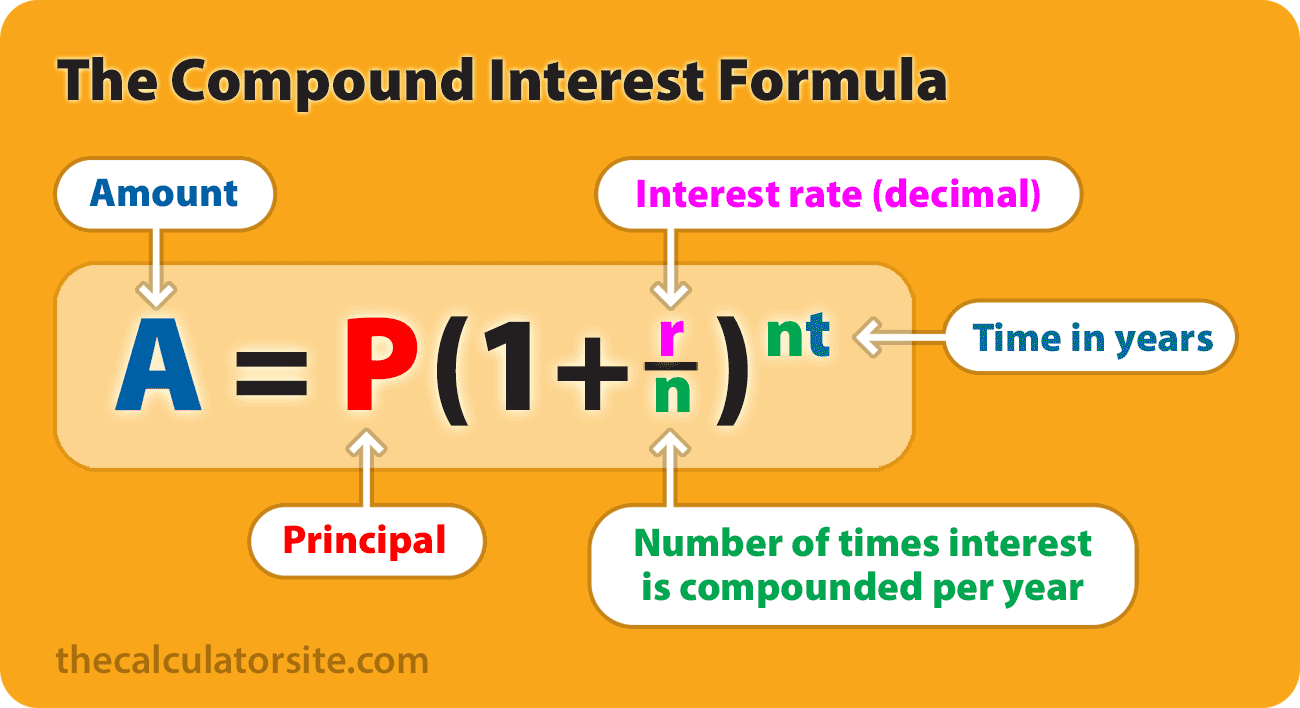
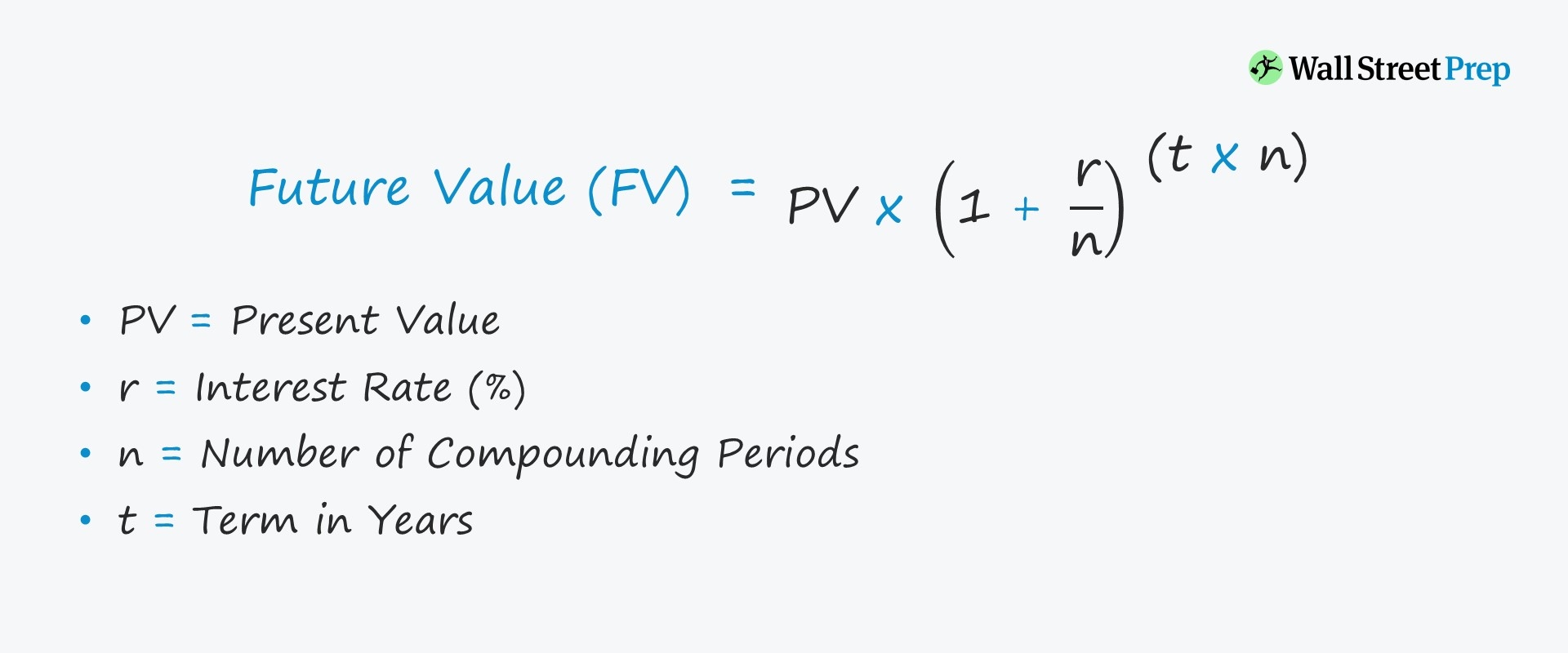
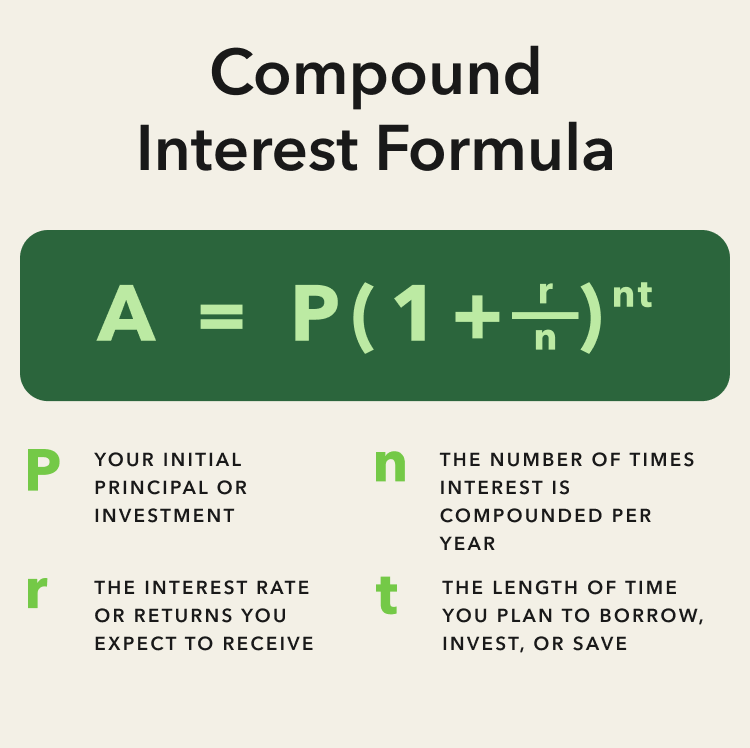
The general formula for compound interest is:
A = P (1 + r/n)^(nt)
Where:
-
A = the future value of the investment/loan, including interest
-
P = the principal investment amount (the initial deposit or loan amount)
-
r = the annual interest rate (as a decimal)
-
n = the number of times that interest is compounded per year
-
t = the number of years the money is invested or borrowed for
For annually compounded interest, the value of ‘n’ is 1, because the interest is compounded once per year.
When n = 1, the formula simplifies to:
A = P (1 + r)^t
Let’s break down each component of this simplified formula:
-
A (Future Value): This is the total amount you will have at the end of the investment period, including both your initial principal and all the accumulated interest.
-
P (Principal): This is the starting amount of money. If you invest $1,000, P is $1,000.
-
r (Annual Interest Rate): This must be expressed as a decimal. If the interest rate is 5%, you use 0.05 in the formula. If it’s 2.5%, you use 0.025.
-
t (Time in Years): This is the duration of the investment or loan in full years.
Step-by-Step Calculation Guide
Let’s walk through an example to illustrate how to calculate annual compound interest using the formula.
Scenario: You invest $5,000 in a savings account that offers an annual interest rate of 4%, compounded annually. How much money will you have after 3 years?
Step 1: Identify your variables.
-
Principal (P) = $5,000
-
Annual Interest Rate (r) = 4% = 0.04 (as a decimal)
-
Time (t) = 3 years
Step 2: Plug the variables into the simplified formula.
A = P (1 + r)^t
A = $5,000 (1 + 0.04)^3
Step 3: Calculate the value inside the parentheses.
1 + 0.04 = 1.04
Step 4: Raise the result to the power of ‘t’.
(1.04)^3 = 1.04 * 1.04 * 1.04 = 1.124864
Step 5: Multiply the principal by this result.
A = $5,000 * 1.124864
A = $5,624.32
So, after 3 years, you will have $5,624.32 in your account.
Calculating Only the Interest Earned
Often, you might want to know not just the total future value, but specifically how much interest you earned. To find this, simply subtract the original principal from the future value (A – P).
Using our example:
Interest Earned = A – P
Interest Earned = $5,624.32 – $5,000
Interest Earned = $624.32
This shows that your initial $5,000 earned $624.32 in interest over three years due to annual compounding.
Practical Applications and Real-World Scenarios
Understanding annual compound interest isn’t just an academic exercise; it’s a practical skill with wide-ranging applications in personal finance, helping individuals make informed decisions about saving, investing, and borrowing.
Savings Accounts and Certificates of Deposit (CDs)
Many traditional savings vehicles, especially Certificates of Deposit (CDs), often advertise their interest rates with annual compounding. While some high-yield savings accounts might compound more frequently, using the annual calculation provides a good benchmark. For example, if you lock in a CD for 5 years at a 3% annual compound rate, you can precisely calculate your total return at maturity. This knowledge empowers you to compare different CD offerings or even understand the potential growth of a simple savings account over the long term, assuming the rate remains constant. Even if your bank compounds monthly, the Annual Percentage Yield (APY) they quote will already reflect the effect of compounding, often making it equivalent to an annually compounded rate for comparative purposes.
Loans and Mortgages (Annual Percentage Rate – APR)
While most consumer loans and mortgages compound interest much more frequently (e.g., monthly), the Annual Percentage Rate (APR) is a standardized way of expressing the annual cost of borrowing. The APR typically represents the total cost of the loan over one year, including interest and certain fees, expressed as a single percentage. When comparing loans, looking at the APR allows you to compare different lenders on an apples-to-apples basis. Although the exact calculation of interest charged on a mortgage payment involves monthly compounding, understanding the annual rate helps in grasping the fundamental cost and projected interest payments over the life of the loan. For simple personal loans or small business loans, some may indeed adhere to annual compounding schedules.
Retirement Planning and Investments
The true power of annual compound interest shines brightest in long-term investments like retirement funds (e.g., 401(k)s, IRAs) and general investment portfolios. Though these typically involve more complex calculations due to regular contributions and variable returns, the foundational principle of compounding remains. The concept that your earnings themselves start earning returns is what allows small, consistent investments to grow into substantial sums over decades. Calculating annual compound interest on a hypothetical sum for 20, 30, or even 40 years vividly demonstrates why starting early and maintaining discipline are paramount in investment strategies. It highlights the exponential growth that time, coupled with a steady interest rate, can achieve.
Tools and Resources for Annual Compound Interest Calculation
While understanding the manual calculation is essential, various tools can simplify the process and allow for quick exploration of different scenarios.
Financial Calculators and Spreadsheets
For quick, one-off calculations, many online financial calculators are available. These tools typically require you to input the principal, interest rate, time, and compounding frequency, instantly providing the future value and interest earned. They are excellent for hypothetical scenarios or for double-checking manual calculations.
For more complex planning, such as comparing multiple investment options or creating personal financial models, spreadsheet software like Microsoft Excel or Google Sheets is invaluable. You can easily set up the compound interest formula in a cell and then adjust variables (P, r, t) to see immediate changes. This allows for sensitivity analysis, helping you understand how variations in interest rates or investment duration impact your final outcome. For instance, in Excel, you could use a formula like =FV(rate, nper, pmt, pv, type) where rate would be ‘r’ and nper would be ‘t’ (with pmt and type being 0 for a single investment). Or more directly for annual compounding: =P*(1+r)^t.
Manual Calculation vs. Automation
Manual calculation provides a deep understanding of the underlying mechanics. It forces you to grasp each component of the formula and appreciate how interest accrues year after year. This foundational knowledge is crucial for financial literacy. It’s particularly useful for simple, short-term scenarios or when you need to verify results from automated tools.
Automated tools (online calculators, spreadsheets) offer speed, accuracy, and convenience, especially for complex scenarios or when dealing with numerous calculations. They are excellent for long-term projections, scenario planning, and reducing the risk of human error. The best approach often involves a combination: understanding the manual process first, then leveraging automation for efficiency and exploring various possibilities.
Strategies to Maximize the Power of Compounding
Once you understand how annual compound interest works, the next step is to actively implement strategies that allow you to harness its incredible power for your own financial benefit.
Start Early and Be Consistent
The single most powerful factor in compound interest is time. Due to the exponential nature of compounding, money invested earlier has significantly more time for interest to accrue on interest. Even small amounts invested consistently over a long period can grow into substantial sums. This is often referred to as the “miracle of compounding” – a concept that underscores the importance of beginning your savings and investment journey as early as possible and making regular contributions, even modest ones. A $100 monthly contribution over 40 years will accumulate far more than a $500 monthly contribution over 10 years, assuming the same rate of return, purely because of the extended compounding period.
Understand Your Interest Rate
The interest rate (r) directly dictates the speed at which your money grows or your debt accumulates. For investments, seek out the highest possible annual percentage yield (APY) you can safely obtain. For loans, aim for the lowest possible annual percentage rate (APR). A seemingly small difference in interest rate can lead to a significant divergence in outcomes over time. Comparing rates across different financial products and institutions is a vital step in optimizing your compounding effect, ensuring your money is working as hard as possible for you.
Reinvest Your Returns
To fully leverage compound interest, it’s crucial to reinvest any interest or dividends you earn back into your principal. If you withdraw the interest earned each year, you essentially convert your compound interest scenario back to a simple interest one, losing the benefit of “interest on interest.” Many savings accounts and investment platforms offer automatic reinvestment options, making it easy to ensure your earnings continue to contribute to your growth. This strategy is particularly effective in long-term investment accounts where the goal is maximum accumulation.
Understanding how to calculate interest compounded annually is more than just a mathematical exercise; it’s a foundational skill for smart financial management. By grasping the formula, practicing calculations, and applying strategic insights, you empower yourself to make informed decisions that can significantly impact your financial future, whether you’re building wealth or managing debt. The power of compounding, when understood and utilized effectively, truly can turn time into your most valuable financial asset.
aViewFromTheCave is a participant in the Amazon Services LLC Associates Program, an affiliate advertising program designed to provide a means for sites to earn advertising fees by advertising and linking to Amazon.com. Amazon, the Amazon logo, AmazonSupply, and the AmazonSupply logo are trademarks of Amazon.com, Inc. or its affiliates. As an Amazon Associate we earn affiliate commissions from qualifying purchases.