
In the dynamic world of personal and business finance, understanding percentages isn’t just a mathematical exercise; it’s a fundamental skill that underpins sound decision-making, strategic planning, and financial literacy. Whether you’re a burgeoning entrepreneur calculating profit margins, an investor tracking portfolio growth, or an individual navigating everyday expenses like tips and sales tax, the ability to accurately add a percentage to a number is indispensable. This guide delves into the precise methods of adding 20 percent to any given number, but more importantly, it explores the profound financial contexts where this seemingly simple calculation becomes a powerful tool for wealth creation, cost management, and informed financial health.
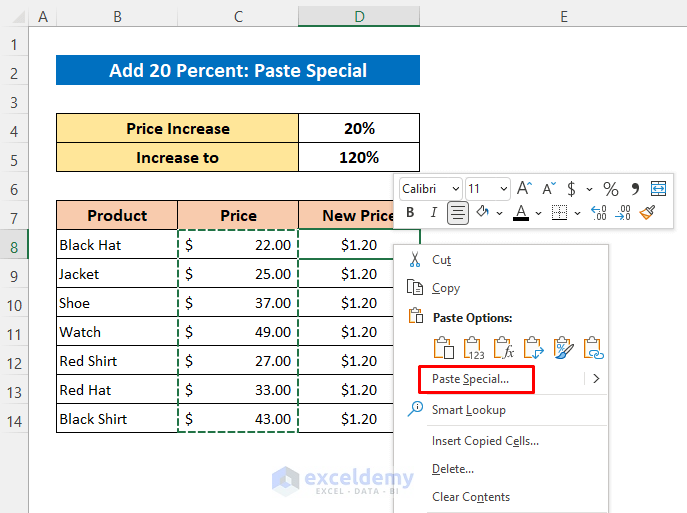
Understanding how to add 20 percent to a number is far more than a basic arithmetic lesson; it’s a gateway to comprehending financial growth, inflation adjustments, pricing strategies, and investment returns. This article will demystify the process, offer practical applications across various financial scenarios, and equip you with the knowledge to confidently apply this skill in your financial life.
The Financial Significance of Understanding Percentage Increases
Percentages are the language of financial comparison and change. They allow us to standardize growth, decline, and proportions, making disparate figures comparable and trends discernible. When we talk about adding 20 percent, we’re discussing a specific rate of increase that holds particular weight in numerous financial contexts, often representing standard markups, significant growth targets, or common tax rates.
Why 20% Matters in Money Management
The figure of 20% frequently appears across the financial landscape. For instance, the “20/4/10” rule for car loans suggests a 20% down payment. Many investors eye a 20% annual return as an ambitious yet achievable target in certain market conditions. Businesses often use 20% as a baseline for profit margins or as a common discount figure to stimulate sales. Understanding how to calculate this increase is not merely academic; it’s a practical necessity for:
-
Budgeting and Expense Planning: Anticipating price increases, calculating service charges, or understanding interest accumulation.
-
Investment Analysis: Projecting potential returns on investments, understanding compound growth, or evaluating portfolio performance.
-
Business Operations: Setting competitive prices, calculating value-added tax (VAT) in some regions, determining profit margins, and forecasting sales growth.
-
Negotiation and Decision-Making: Evaluating proposals, understanding the true cost of items after markups, or calculating the impact of salary raises.
Without a firm grasp of percentage increases, individuals and businesses risk making suboptimal financial choices, underestimating costs, or overestimating potential gains. It’s the foundational arithmetic that empowers financial literacy and strategic planning.
Beyond Simple Addition: The Power of Proportional Growth
Adding a percentage isn’t just about tagging on a fixed amount; it’s about proportional growth. A 20% increase on $10 is $2, resulting in $12. A 20% increase on $100 is $20, resulting in $120. The rate of increase (20%) remains constant, but the absolute amount changes proportionally to the base number. This distinction is crucial for understanding concepts like compound interest, where growth builds upon previous growth, or for accurately scaling business operations. Recognizing proportional growth allows for more sophisticated financial modeling and forecasting, enabling you to project future values based on consistent growth rates, a cornerstone of long-term financial planning and wealth accumulation.
Mastering the Calculation: Step-by-Step Methods
The beauty of adding 20 percent to a number lies in its straightforward nature, achievable through a couple of distinct but equally effective methods. Each method offers a slightly different perspective, catering to various preferences and computational contexts.
Method 1: The Multiplication Shortcut (Direct Calculation)
This is often the most efficient method, especially when using calculators or spreadsheets. It streamlines the two-step process into a single multiplication.
The Logic:
If you want to add 20% to a number, you are essentially finding 100% of the original number plus an additional 20% of that number. This totals 120% of the original number. In decimal form, 120% is 1.20.
The Formula:
New Number = Original Number × 1.20
Step-by-Step:
-
Identify the original number.
-
Multiply the original number by 1.20.
Practical Examples:
-
Calculating a Price Markup: A product costs your business $50 to produce. You want to add a 20% markup.
$50 × 1.20 = $60
The new selling price is $60.
-
Forecasting Investment Growth: You invested $1,000, and it grew by 20%.
$1,000 × 1.20 = $1,200
Your investment is now worth $1,200.
-
Estimating a Bill with 20% Tip/Service Charge: Your restaurant bill is $85, and you want to add a 20% tip (or a service charge is automatically added).
$85 × 1.20 = $102
The total amount including tip/service charge is $102.
Method 2: The Two-Step Approach (Calculate and Add)
This method breaks down the calculation into its fundamental components, which can be intuitive for those who prefer to see the percentage amount explicitly before adding it.
The Logic:
First, calculate 20% of the original number. Then, add that calculated amount to the original number.
The Formula:
-
Percentage Amount = Original Number × (20 / 100) OR Original Number × 0.20
-
New Number = Original Number + Percentage Amount
Step-by-Step:
-
Identify the original number.
-
Calculate 20% of the original number by multiplying it by 0.20 (or 20/100).
-
Add the result from step 2 to the original number.
Practical Examples:
-
Determining a Bonus: Your base salary is $4,000, and you’ve been promised a 20% bonus.
-
Bonus Amount = $4,000 × 0.20 = $800
-
Total Payout = $4,000 + $800 = $4,800
Your total payout including the bonus is $4,800.
-
-
Understanding VAT: An item costs $200 before Value Added Tax (VAT), and the VAT rate is 20%.
-
VAT Amount = $200 × 0.20 = $40
-
Total Price = $200 + $40 = $240
The total price including VAT is $240.
-
Both methods yield the exact same result. The choice between them often comes down to personal preference or the specific context of the calculation. For speed and efficiency, especially with multiple calculations, Method 1 is generally preferred.
Real-World Applications in Personal Finance

In personal finance, the ability to add percentages is a cornerstone of smart money management. It empowers individuals to make informed decisions about their spending, saving, and investing, ensuring financial goals are met and financial stability is maintained.
Budgeting for Inflation and Price Increases
Inflation is a pervasive economic force that erodes purchasing power over time. Understanding how to apply percentage increases helps you adjust your budget proactively. If your living costs are expected to rise by 20% over a few years (a significant but not unheard-of cumulative increase), you can factor this into your long-term budgeting.
-
Example: Your current monthly expenses total $2,500. If inflation causes a 20% increase in costs over the next few years, your new monthly budget would need to be:
$2,500 × 1.20 = $3,000
This insight allows you to plan for necessary income adjustments or find areas to cut costs to maintain your lifestyle.
Calculating Tips, Sales Tax, and Service Charges
These are perhaps the most common daily applications of percentage increases. Whether dining out, shopping, or using a service, percentages determine the final amount.
-
Tips: Standard tips range from 15% to 20% (or more for excellent service). For a $75 meal, a 20% tip is:
$75 × 0.20 = $15
Total bill: $75 + $15 = $90 (or $75 × 1.20 = $90).
-
Sales Tax: While sales tax rates vary by location, knowing how to apply them is crucial. If an item costs $40 and the sales tax is 20% (hypothetical high rate for illustration):
$40 × 1.20 = $48
You’d pay $48.
-
Service Charges: Some services or events include a mandatory service charge, often around 10-20%. This is directly added to the base cost.
Understanding Investment Growth and Returns
For investors, adding percentages is vital for projecting portfolio growth and understanding the power of compounding. If an investment yields a 20% return in a year, you can quickly calculate its new value.
-
Example: You start with an initial investment of $5,000. If it grows by 20% in the first year:
$5,000 × 1.20 = $6,000
In the second year, if it grows by another 20% (compounding):
$6,000 × 1.20 = $7,200
This demonstrates how a consistent 20% annual growth can significantly accelerate wealth accumulation over time. Understanding this calculation is fundamental for setting realistic investment goals and assessing performance.
Business and Entrepreneurial Applications
For businesses, mastering percentage additions is not just about compliance; it’s about profitability, competitive positioning, and strategic growth. From pricing products to forecasting revenue, these calculations are at the heart of financial operations.
Pricing Strategies: Setting Markups and Profit Margins
One of the most critical applications for any business is determining the selling price of goods or services. Markups are percentages added to the cost of a product to arrive at its selling price, ensuring profitability. A 20% markup is a common starting point for many industries.
-
Example: A wholesaler sells a product to your retail store for $15. To cover overheads and achieve a desired profit, you decide on a 20% markup.
$15 × 1.20 = $18
You would price the product at $18, ensuring you make a gross profit of $3. This basic calculation is essential for setting prices that are both competitive and sustainable.
Sales and Discounts: Working Backwards
While this article focuses on adding 20%, businesses often encounter scenarios where they need to understand the original price before a percentage was added, or calculate the effect of a discount. For instance, if an item is currently priced at $120 after a 20% markup, you might need to find its original cost. Or, conversely, if you are offering a 20% discount, you need to calculate the reduction, which is conceptually related but distinct from an addition. Businesses need fluidity in these calculations to manage promotions and understand true cost structures.
Projecting Revenue Growth and Financial Targets
Businesses regularly set growth targets, often expressed as percentages. Projecting next year’s revenue based on a desired growth rate, such as 20%, is a common strategic exercise.
-
Example: Your company’s annual revenue this year was $500,000. Your board sets a target of 20% growth for the next fiscal year.
$500,000 × 1.20 = $600,000
This means the target revenue for the next year is $600,000. Such projections inform budgeting, resource allocation, and operational planning to achieve these financial milestones.
Leveraging Tools for Accuracy and Efficiency
While understanding the manual calculation is vital, modern financial management often benefits from leveraging technology to ensure accuracy and handle larger datasets.
Utilizing Spreadsheets (Excel/Google Sheets) for Complex Calculations
Spreadsheets are invaluable tools for financial professionals and individuals alike. They allow for rapid calculations, scenario analysis, and the automation of percentage additions across numerous entries.
- Example: In Excel, if you have a number in cell A1 (e.g., $100) and you want to add 20% to it, you can simply type
=A1*1.20into another cell, and it will instantly display $120. For a column of numbers, you can drag the formula down, applying the 20% increase to hundreds of values in seconds. This is particularly useful for budgeting, inventory management, or tracking investment portfolios.
Financial Calculators and Online Tools
Dedicated financial calculators, whether physical devices or online apps, often have built-in percentage functions that simplify these calculations. Many online budgeting or investment platforms also integrate these functions, allowing users to input numbers and instantly see the results of percentage increases. These tools are designed for user-friendliness and can be a quick alternative for single calculations.
The Importance of Double-Checking Your Numbers
Regardless of the method or tool used, the golden rule of finance is to always double-check your calculations. A misplaced decimal, a typo, or a misunderstanding of the percentage basis can lead to significant errors. For critical financial decisions, consider using both methods or different tools to verify your results, ensuring confidence and accuracy in your financial planning.
In conclusion, the simple act of “how to add 20 percent to a number” unfolds into a sophisticated and essential financial skill. From everyday spending to strategic business planning and long-term wealth building, mastering this calculation is a fundamental step toward achieving greater financial acumen and control. By understanding the methods and their diverse applications, you empower yourself to navigate the complexities of money with confidence and precision.
aViewFromTheCave is a participant in the Amazon Services LLC Associates Program, an affiliate advertising program designed to provide a means for sites to earn advertising fees by advertising and linking to Amazon.com. Amazon, the Amazon logo, AmazonSupply, and the AmazonSupply logo are trademarks of Amazon.com, Inc. or its affiliates. As an Amazon Associate we earn affiliate commissions from qualifying purchases.