
Understanding the true cost of borrowing money is a fundamental pillar of sound personal finance. Whether you’re contemplating a mortgage, an auto loan, a student loan, or simply using a credit card, the interest you pay can significantly impact your financial health, determining not just the monthly payment but also the total amount you’ll eventually return to the lender. Many borrowers focus solely on the principal amount or the monthly installment, overlooking the cumulative burden of interest—a oversight that can lead to substantial financial strain. This article aims to demystify interest payments, providing you with a clear understanding of what interest is, how it’s calculated, the factors that influence it, and actionable strategies to minimize the amount you pay over time. By arming yourself with this knowledge, you can make more informed borrowing decisions, manage your debt more effectively, and ultimately take greater control of your financial future.

What is Interest and Why Does It Matter?
At its core, interest is the cost of borrowing money, or alternatively, the return on lending money. For borrowers, it represents the fee paid to a lender for the use of their funds. For lenders, it’s the compensation received for the risk and opportunity cost of providing capital. This seemingly simple concept underpins nearly every financial transaction involving credit, making it crucial for anyone engaging with the financial system to grasp its implications fully.
Defining Interest: The Cost of Borrowing
When you take out a loan, you’re not just agreeing to repay the original amount borrowed (the “principal”); you’re also agreeing to pay an additional sum over time—that’s the interest. This interest is typically expressed as an annual percentage rate (APR), but the actual monetary cost depends on several variables. It compensates the lender for inflation, the risk of default, and the lost opportunity to invest that money elsewhere. Without interest, there would be little incentive for financial institutions or individuals to lend money, as they wouldn’t profit from the transaction or be protected against economic depreciation.
The Impact of Interest on Your Financial Health
The amount of interest you pay directly affects your financial well-being in several ways. High interest payments can:
-
Increase your total debt burden: Even a small loan can balloon into a much larger repayment sum with high interest over a long term.
-
Limit your cash flow: A significant portion of your monthly income might be allocated to interest payments, leaving less for savings, investments, or discretionary spending.
-
Delay wealth accumulation: Money spent on interest is money not invested, slowing down your ability to build assets and achieve financial independence.
-
Affect your credit score: Missing interest payments or struggling with high-interest debt can negatively impact your creditworthiness, making future borrowing more expensive or difficult.
Understanding interest isn’t just about knowing a number; it’s about appreciating its pervasive influence on your ability to save, spend, and invest wisely.
Key Factors Influencing Your Interest Payments
Calculating exactly how much interest you’ll pay isn’t always straightforward, as it’s a function of multiple interdependent variables. To accurately estimate this cost, you need to consider the principal amount, the interest rate, the loan term, the compounding frequency, and even your own creditworthiness. Each of these elements plays a significant role in determining the total interest paid over the life of a loan.
Principal Amount: The Starting Point
The principal is the original amount of money you borrow. Logically, the larger the principal, the greater the potential for interest to accrue, assuming all other factors remain constant. If you borrow $100,000, the interest calculation starts from that figure. If you borrow $200,000, your interest payments will be roughly double, all else being equal. This fundamental relationship means that reducing the amount you need to borrow upfront is one of the most effective ways to lower your total interest burden.
Interest Rate: The Percentage Power
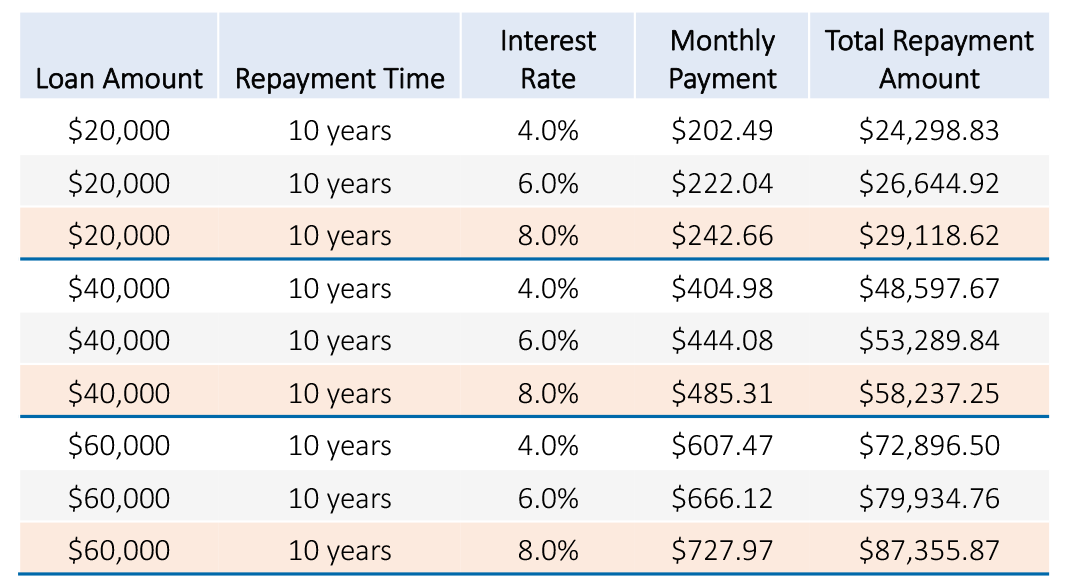
The interest rate is arguably the most visible factor, typically expressed as an annual percentage. A higher interest rate means a larger percentage of your principal is charged as interest each period. For example, a 5% interest rate on a $10,000 loan will result in less interest than a 15% rate on the same principal. This is why shopping around for the lowest possible interest rate is paramount, especially for large loans like mortgages or student loans, where even a fraction of a percentage point difference can save you thousands over the loan’s term.
Loan Term: Time is Money
The loan term is the duration over which you agree to repay the loan. This factor has a profound, often underestimated, impact on total interest paid. While a longer loan term typically results in lower monthly payments (making the loan seem more affordable), it significantly increases the total interest paid because interest accrues over a longer period. Conversely, a shorter loan term means higher monthly payments but substantially less total interest paid. For instance, a 30-year mortgage will incur far more total interest than a 15-year mortgage for the same principal, despite the lower monthly payments of the former.
Compounding Frequency: The Silent Multiplier
Interest can be calculated and added to the principal at different frequencies—daily, monthly, quarterly, or annually. This process is known as compounding. The more frequently interest is compounded, the faster your principal grows, and thus the more interest you pay. For example, if interest is compounded monthly, you start paying interest on the interest that accrued in the previous month. While the difference might seem negligible for small loans, for large, long-term loans like mortgages, frequent compounding can add a substantial amount to your total interest bill.
Credit Score: Your Financial Report Card
Your credit score is a numerical representation of your creditworthiness, reflecting your history of managing debt. Lenders use it to assess the risk of lending money to you. A higher credit score signals lower risk, often qualifying you for lower interest rates. Conversely, a lower credit score suggests higher risk, leading lenders to offer higher interest rates to compensate for that perceived risk. Therefore, maintaining a healthy credit score (typically 700+) is crucial for securing favorable borrowing terms and minimizing your interest payments.
Types of Interest and How They Affect You
The way interest is structured can vary widely across different financial products, and understanding these distinctions is key to predicting your overall cost. Not all interest is created equal, and the type you encounter will directly impact your repayment strategy and total financial outlay.
Simple vs. Compound Interest
-
Simple Interest: This is the most straightforward form of interest, calculated only on the original principal amount. The formula is Principal × Rate × Time. Simple interest is common for short-term loans or some types of bonds. For example, a $1,000 loan at 10% simple annual interest over 3 years would accrue $100 in interest each year, totaling $300.
-
Compound Interest: This is interest calculated on the initial principal and also on the accumulated interest from previous periods. It’s often referred to as “interest on interest.” Most loans—mortgages, auto loans, credit cards—use compound interest. The power of compounding means that your debt can grow exponentially over time if not managed properly. While beneficial for investments, it can be a significant burden for borrowers.
Fixed vs. Variable Interest Rates
-
Fixed Interest Rates: The interest rate remains constant throughout the entire loan term. This provides predictability, as your monthly payments for principal and interest will not change. Fixed rates are common for traditional mortgages and auto loans, offering stability and ease of budgeting.
-
Variable (or Adjustable) Interest Rates: The interest rate can fluctuate over the loan term, typically tied to a benchmark interest rate (like the prime rate or LIBOR/SOFR). This means your monthly payments can increase or decrease, introducing an element of uncertainty. Adjustable-rate mortgages (ARMs) are a prime example. While variable rates might start lower than fixed rates, they carry the risk of significant increases, potentially making your loan much more expensive in the future.
Amortization: Unpacking Your Payments
Amortization refers to the process of paying off a debt over time through regular, scheduled payments. With amortizing loans (like mortgages and auto loans), each monthly payment consists of both principal and interest. In the early stages of an amortized loan, a larger portion of your payment goes towards interest. As the loan matures, a greater percentage of each payment is applied to the principal. This structure means that early extra payments, which go directly to the principal, can have a disproportionately large impact on reducing the total interest paid over the loan’s life. Understanding your loan’s amortization schedule can reveal just how much of your early payments are pure interest.
Strategies to Minimize Interest Paid
While paying interest is an unavoidable part of borrowing, there are numerous proactive steps you can take to significantly reduce the total amount you fork over. By strategically managing your debt and making informed choices, you can free up substantial funds that would otherwise be consumed by interest charges.
Making Extra Payments: Shaving Off Years and Dollars
One of the most powerful strategies is to pay more than the minimum required payment whenever possible. Even small extra payments can have a dramatic effect, especially on long-term, high-interest loans.
-
Apply extra payments directly to the principal: Ensure your lender applies any additional funds to the principal balance, rather than advancing your due date.
-
Bi-weekly payments: For mortgages, paying half your monthly payment every two weeks results in 13 “monthly” payments per year, effectively making an extra principal payment annually and significantly shortening your loan term.
-
Lump-sum payments: Use bonuses, tax refunds, or other windfalls to make a significant dent in your principal.
Each dollar applied directly to the principal reduces the base on which future interest is calculated, saving you money over the long haul.
Refinancing and Loan Consolidation: Better Terms
-
Refinancing: This involves taking out a new loan to pay off an existing one, typically to secure a lower interest rate, a shorter term, or more favorable conditions. If interest rates have dropped since you took out your original loan, or if your credit score has improved, refinancing could save you thousands. However, be mindful of closing costs and fees associated with refinancing, ensuring the savings outweigh these expenses.
-
Loan Consolidation: Combining multiple debts (like credit card balances) into a single new loan, often with a lower interest rate and a single monthly payment. This can simplify your finances and reduce the overall interest paid, especially if you consolidate high-interest debts into a lower-interest personal loan or a balance transfer credit card (with an introductory 0% APR, but be sure to pay it off before the promotional period ends).
Improving Your Credit Score: Accessing Lower Rates
As discussed, your credit score is a major determinant of the interest rates you’re offered. A higher score signals less risk to lenders, allowing you to qualify for more competitive rates.
-
Pay bills on time: Payment history is the most significant factor in your credit score.
-
Reduce credit utilization: Keep your credit card balances low relative to your credit limits.
-
Avoid opening too many new accounts at once: This can signal increased risk.
-
Check your credit report regularly: Dispute any errors that could be dragging down your score.
By consistently practicing good credit habits, you can steadily improve your score and unlock access to lower interest rates on future loans.
Avoiding Unnecessary Debt: Prevention is Key
The most effective way to minimize interest paid is to borrow less in the first place.
-
Save for large purchases: Whenever possible, save up for big-ticket items like cars or home down payments to reduce the amount you need to finance.
-
Live within your means: Avoid accumulating high-interest credit card debt for discretionary spending.
-
Create an emergency fund: A robust emergency fund can prevent you from needing to use high-interest loans or credit cards when unexpected expenses arise.
Choosing Shorter Loan Terms (When Affordable)
While longer loan terms offer lower monthly payments, they come at the cost of significantly more interest paid over time. If your budget allows, opt for the shortest loan term you can comfortably afford. For example, choosing a 15-year mortgage over a 30-year one can save you hundreds of thousands in interest, despite the higher monthly obligation. This strategy requires careful budgeting but yields substantial long-term financial benefits.
Tools and Resources for Calculating and Managing Interest
Navigating the complexities of interest payments can feel daunting, but a variety of tools and resources are available to help you understand, calculate, and ultimately manage your debt more effectively. Leveraging these resources can provide clarity and empower you to make smarter financial decisions.
Online Calculators: Instant Insights
The internet is replete with free online calculators designed to help you estimate interest payments for various types of loans.
-
Loan amortization calculators: These allow you to input the principal, interest rate, and loan term to see a detailed breakdown of your monthly payments, showing how much goes to principal versus interest over the life of the loan. Many also allow you to factor in extra payments to see the resulting savings.
-
Mortgage calculators: Specifically tailored for home loans, these can help you compare different loan terms, interest rates, and even factor in property taxes and insurance to give you a full picture of your housing costs.
-
Credit card interest calculators: These illustrate how quickly interest can accumulate on credit card balances, especially if only minimum payments are made.
By using these tools, you can run various scenarios and gain immediate insights into the financial implications of different borrowing choices.
Spreadsheets: DIY Financial Modeling
For those who prefer a more hands-on approach, spreadsheet software (like Microsoft Excel or Google Sheets) offers powerful capabilities for financial modeling. You can create your own amortization schedules, track multiple debts, and experiment with different repayment strategies.
-
Custom formulas: Use functions to calculate monthly interest, remaining principal, and total interest paid based on your specific loan terms.
-
Scenario analysis: Build models to compare the impact of making extra payments, refinancing, or adjusting loan terms on your overall interest costs.
This DIY approach provides a deeper understanding of the mechanics behind interest calculations and offers complete customization.
Financial Advisors: Expert Guidance
For complex financial situations, such as managing multiple large debts, planning for retirement while carrying a mortgage, or evaluating sophisticated refinancing options, consulting a qualified financial advisor can be invaluable.
-
Personalized advice: Advisors can provide tailored strategies based on your unique financial situation, goals, and risk tolerance.
-
Debt management plans: They can help you create a comprehensive plan to tackle debt efficiently, prioritizing high-interest obligations.
-
Future planning: Beyond just debt, advisors can integrate interest management into your broader financial planning, including investments and savings.
While there’s a cost associated with their services, the long-term savings and peace of mind gained from expert advice can often outweigh the expense.

Understanding Your Loan Statements
Your monthly loan statements are more than just payment reminders; they are crucial documents for tracking your interest payments.
-
Review statement details: Pay attention to how much of your payment goes towards principal vs. interest each month. This is particularly insightful for amortized loans.
-
Identify accrued interest: Your statement will typically show the total interest accrued during the billing cycle and the year-to-date interest paid.
-
Check for fees: Be aware of any late fees or other charges that can add to your overall cost.
Regularly reviewing your statements helps you stay informed about your debt’s progress and ensures there are no discrepancies in your account.
In conclusion, understanding how much interest you will pay is not merely an academic exercise; it is a critical skill for navigating the financial landscape effectively. Interest represents a substantial cost of borrowing, profoundly impacting your budget, cash flow, and long-term financial goals. By grasping the fundamentals of principal, interest rates, loan terms, and compounding, and by proactively employing strategies such as making extra payments, refinancing, and maintaining a strong credit score, you can significantly reduce your interest burden. Utilizing available tools like online calculators and financial advisors further empowers you to make informed decisions and exert greater control over your financial destiny. Ultimately, mastering the concept of interest transforms you from a passive borrower into an active manager of your money, paving the way for greater financial freedom and security.
aViewFromTheCave is a participant in the Amazon Services LLC Associates Program, an affiliate advertising program designed to provide a means for sites to earn advertising fees by advertising and linking to Amazon.com. Amazon, the Amazon logo, AmazonSupply, and the AmazonSupply logo are trademarks of Amazon.com, Inc. or its affiliates. As an Amazon Associate we earn affiliate commissions from qualifying purchases.