
The transition from earning a paycheck to building lasting wealth is a fundamental shift in mindset. For many, the concept of “making money” is synonymous with labor—trading hours for dollars in a linear fashion. However, the true secret to financial independence lies in the transition from linear growth to exponential growth. To make your money grow, you must stop viewing it as a medium of exchange for consumer goods and start viewing it as a workforce. Every dollar you save and invest is a “financial soldier” capable of working 24 hours a day to recruit more soldiers to your cause.

In an era defined by fluctuating inflation rates and shifting global markets, simply leaving cash in a traditional brick-and-mortar savings account is often a recipe for losing purchasing power. To achieve meaningful growth, one must employ a multi-faceted strategy that combines disciplined saving, strategic market participation, and the exploration of alternative income streams.
The Foundation: Building a High-Performance Capital Base
Before money can grow, it must be harvested. The first step in any wealth-building journey is the optimization of your cash flow. This does not merely mean “spending less,” but rather “managing better.” By creating a gap between what you earn and what you consume, you generate the raw material necessary for investment.
Maximizing the Power of Compound Interest
Albert Einstein famously referred to compound interest as the “eighth wonder of the world.” The math behind it is simple yet profound: you earn interest not only on your initial principal but also on the accumulated interest from previous periods. In the early stages, the growth feels slow, often referred to as the “grind” phase. However, as the capital base expands, the curve steepens. Making your money grow requires the patience to let this mathematical phenomenon take hold. The “Rule of 72” is a helpful tool here; by dividing 72 by your annual rate of return, you can estimate how many years it will take for your initial investment to double.
High-Yield Cash Management
While the stock market is a primary engine for growth, liquidity remains essential. However, the standard 0.01% interest rate offered by many traditional banks is insufficient. To make your money grow even while it sits in reserve, you must utilize High-Yield Savings Accounts (HYSAs) or Money Market Funds. These vehicles often offer rates 10 to 50 times higher than standard accounts. While these are not meant to be your primary wealth-building tools, they ensure that your emergency fund and short-term holdings are at least partially protected against the eroding effects of inflation.
The Role of an Emergency Fund as a Growth Catalyst
It may seem counterintuitive to view a stagnant pool of cash as a growth tool, but an emergency fund is the ultimate insurance policy for your investments. Without a three-to-six-month cushion of living expenses, a sudden medical bill or job loss might force you to liquidate your long-term investments at the worst possible time—such as during a market downturn. By securing your “defense,” you give your “offense” (your investments) the freedom to remain in the market long enough to recover and thrive.
Navigating the Financial Markets: Strategic Investing for the Long Term
Once a solid foundation is established, the next phase of making your money grow involves placing that capital into productive assets. The stock market remains one of the most accessible and historically proven ways for the average individual to build wealth over time.
Index Funds and ETFs: The Passive Path to Wealth
For the majority of investors, the most effective way to grow money is through low-cost, broad-market index funds or Exchange-Traded Funds (ETFs). Rather than attempting to “beat the market” by picking individual stocks—a feat that even professional fund managers struggle to achieve consistently—index investing allows you to own a piece of the entire economy. By investing in a fund that tracks the S&P 500 or the Total Stock Market, you are betting on the collective ingenuity and growth of the world’s most successful corporations. This strategy minimizes individual company risk while providing a diversified exposure that has historically returned an average of 7-10% annually over long periods.
Dividend Growth Investing: Building a Cash Flow Engine
Another powerful strategy for growth is focusing on dividend-paying stocks, particularly “Dividend Aristocrats”—companies that have increased their dividend payouts for at least 25 consecutive years. This approach provides a dual benefit: capital appreciation (the stock price goes up) and regular cash payments. By opting for a Dividend Reinvestment Plan (DRIP), those payouts are automatically used to buy more shares, further accelerating the compounding process. Over time, the dividend yield on your original “cost basis” can become significantly higher than the market average, creating a self-sustaining wealth machine.
Utilizing Tax-Advantaged Accounts
One of the biggest “drags” on wealth growth is taxation. To optimize your returns, it is essential to utilize tax-advantaged accounts like the 401(k), 403(b), or Individual Retirement Accounts (IRAs). In the United States, for example, a Roth IRA allows your money to grow and be withdrawn tax-free in retirement, provided certain conditions are met. Traditional IRAs and 401(k)s offer immediate tax deductions, allowing you to invest money that would have otherwise gone to the government. Using these “legal tax havens” effectively increases your net return without requiring you to take on any additional market risk.
Diversification Through Alternative Assets and Real Estate
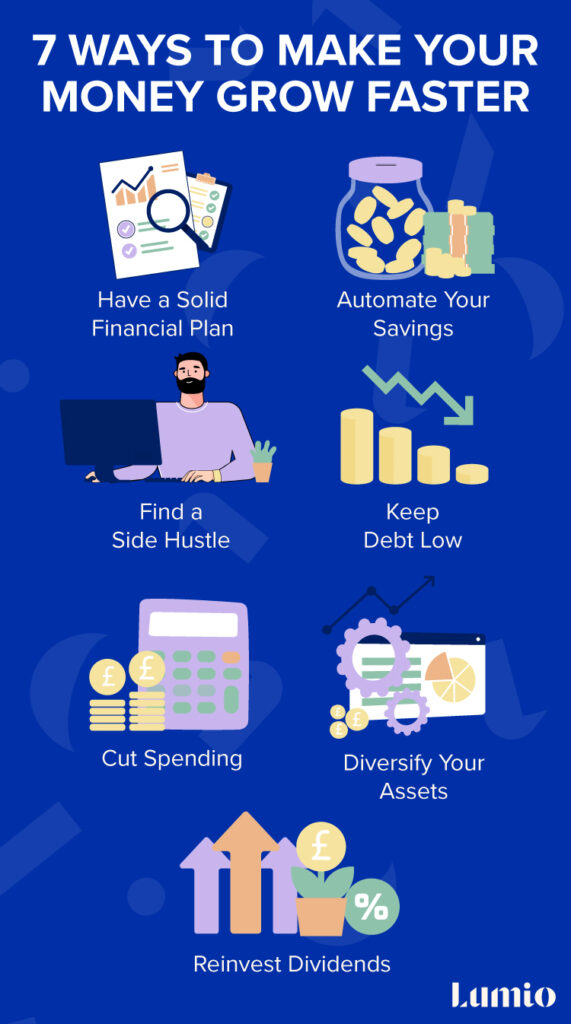
While the stock market is a pillar of wealth, truly making your money grow often requires looking beyond traditional equities. Diversification into alternative assets can provide a hedge against market volatility and open new avenues for capital appreciation.
Real Estate as a Wealth Multiplier
Real estate is a unique asset class because it offers four distinct ways to make your money grow: cash flow (rental income), appreciation (the property value increasing), debt paydown (the tenant paying off your mortgage), and tax benefits (depreciation and expense write-offs). Furthermore, real estate allows for the use of “leverage.” By putting down 20% and borrowing the remaining 80%, a 5% increase in the property’s total value results in a 25% return on your invested cash. For those who do not wish to be landlords, Real Estate Investment Trusts (REITs) offer a way to invest in large-scale commercial or residential portfolios through the stock market.
Exploring the World of Private Equity and Startups
For more sophisticated investors, private equity or venture capital—often accessible now through crowdfunding platforms—offers the potential for astronomical returns. While the risk of total loss is higher than with public stocks, the “upside” of getting in early on a disruptive company can be life-changing. This should generally occupy a small, “high-risk” sleeve of a well-balanced portfolio, but it represents the cutting edge of how capital is grown in a modern economy.
Commodities and Precious Metals
While commodities like gold and silver do not “produce” anything in the way a company or a rental property does, they serve as a store of value. During periods of high inflation or geopolitical instability, these assets often retain their value better than fiat currency. Including a small percentage of commodities in a portfolio can act as a “volatility dampener,” protecting your total wealth so that you have the confidence to stay invested in higher-growth, higher-risk assets.
Scaling Income: The Engine of Investment Capital
It is difficult to make your money grow if you are not consistently adding new capital to the pot. Scaling your income is the most effective way to shorten the timeline to financial independence. In the digital age, the barriers to starting a “side hustle” or a secondary business have never been lower.
Leveraging the Creator Economy and Digital Assets
The internet has democratized the ability to create and sell value. Whether it is through a niche blog, a YouTube channel, or a digital course, creating “content assets” can generate passive income long after the initial work is completed. This income can then be funneled directly into your investment portfolio. The scalability of digital products—where the cost of selling to the 1,000th customer is virtually zero—makes this one of the most efficient ways to increase your investable surplus.
Specialized Freelancing and Consulting
If you possess a high-value skill—such as software development, financial analysis, or strategic marketing—freelancing allows you to break away from the fixed salary of a 9-to-5. By charging project-based rates rather than hourly ones, you can significantly increase your earning power. This “active” growth strategy provides the fuel for your “passive” investment strategy, creating a virtuous cycle of wealth accumulation.
Financial Defense: Protecting and Optimizing Your Capital
Finally, making your money grow is as much about what you keep as it is about what you earn. Managing the “leaks” in your financial bucket is essential for long-term success.
Minimizing Fees and “Wealth Drag”
High management fees in mutual funds or excessive trading commissions can quietly siphon off a massive percentage of your wealth over several decades. A 1% fee might seem small, but over 30 years, it can reduce your final portfolio value by hundreds of thousands of dollars. Always opt for low-cost index funds and be wary of financial products with complex fee structures.
Strategic Debt Management
Not all debt is created equal. While high-interest consumer debt (like credit cards) is a “wealth killer” that should be eliminated immediately, low-interest debt can actually be a tool for growth. For instance, a low-rate mortgage allows you to keep your cash invested in higher-returning assets. Understanding the difference between “productive debt” and “destructive debt” is a hallmark of sophisticated financial management.

The Discipline of Rebalancing
As different assets grow at different rates, your portfolio can become skewed. If stocks have a great year, they might make up 90% of your portfolio when you intended them to be 70%. Rebalancing involves selling high and buying low to return to your target allocation. This disciplined approach ensures that you are systematically locking in gains and reinvesting them in undervalued areas, further optimizing the growth trajectory of your total net worth.
The journey to making your money grow is not a sprint, but a marathon of consistent, informed decisions. By building a strong foundation, participating in the growth of the global economy, diversifying into physical and digital assets, and ruthlessly protecting your gains from fees and taxes, you can transform your financial future from one of scarcity to one of enduring abundance.
aViewFromTheCave is a participant in the Amazon Services LLC Associates Program, an affiliate advertising program designed to provide a means for sites to earn advertising fees by advertising and linking to Amazon.com. Amazon, the Amazon logo, AmazonSupply, and the AmazonSupply logo are trademarks of Amazon.com, Inc. or its affiliates. As an Amazon Associate we earn affiliate commissions from qualifying purchases.