
Understanding how to calculate percentages is not merely a mathematical exercise; it is a fundamental pillar of financial literacy. Whether you are calculating the interest on a high-yield savings account, determining the impact of inflation on your purchasing power, or analyzing the performance of an investment portfolio, percentages serve as the universal language of money. In the realm of personal and business finance, the ability to manipulate these figures accurately allows for better decision-making, more precise budgeting, and a clearer vision of long-term wealth accumulation.
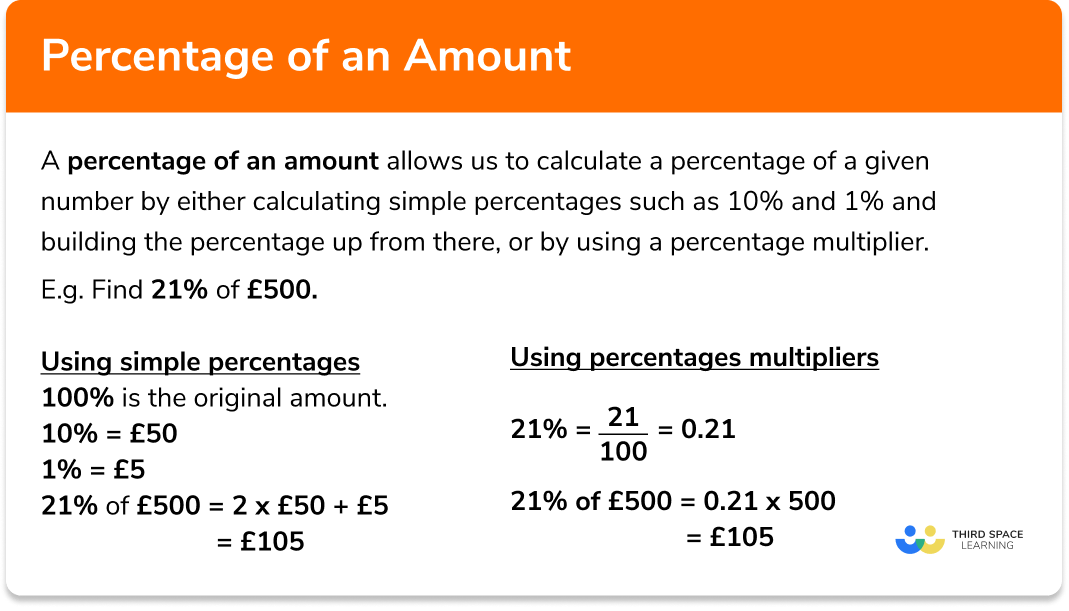
To figure the percentage of a number, the basic mathematical formula is simple: multiply the number by the percentage expressed as a decimal. For example, to find 20% of $500, you convert 20% to 0.20 and multiply ($500 x 0.20 = $100). However, in the context of finance, the application of this formula becomes more nuanced as we move from simple discounts to complex yields and compounding structures.

The Mathematical Foundation: Percentages in the World of Finance
At its core, a percentage is a ratio or a fraction where the denominator is always 100. The term “percent” stems from the Latin per centum, meaning “by the hundred.” In financial terms, this allows us to standardize different values so they can be compared easily. For instance, comparing a $50 profit on a $500 investment to a $1,000 profit on a $20,000 investment is difficult until we convert them to percentages (10% vs. 5%).
The Basic Formula for Financial Calculation
In most financial scenarios, you are looking for one of three variables: the percentage itself (the rate), the part (the dollar amount of interest or tax), or the whole (the principal or total cost).
-
Finding the Part: To find a specific dollar amount based on a percentage, use:
Formula: Total × Percentage (as a decimal) = Part
Example: If a state sales tax is 7% and you purchase a laptop for $1,200, you calculate $1,200 × 0.07 = $84.
-
Finding the Percentage: To find what percent one number is of another, use:
Formula: (Part ÷ Total) × 100 = Percentage
Example: If you earned $200 in dividends on a $4,000 investment, the calculation is (200 ÷ 4,000) × 100 = 5%.
-
Finding the Total: If you know the part and the percentage, you can find the original whole:
Formula: Part ÷ Percentage (as a decimal) = Total
Example: If a $30 discount represents 15% off the original price, the original price was $30 ÷ 0.15 = $200.
Decimals and Fractions: The Mental Math of Money
In professional financial settings, speed is often an asset. Understanding the relationship between common percentages, decimals, and fractions can streamline mental calculations. 25% is 0.25 or 1/4; 33.3% is 0.33 or 1/3; 10% is 0.10 or 1/10. When a financial advisor speaks of a “basis point,” they are referring to one-hundredth of a percentage point (0.01%). Understanding these micro-measurements is essential when dealing with mortgage rates or bond yields, where a fraction of a percent can represent thousands of dollars over time.
Practical Applications in Personal Finance and Budgeting
Percentages are the primary tool used to create a sustainable household budget and to manage debt. Without a firm grasp of how these numbers move, a consumer is at the mercy of lenders and marketers.
Calculating Sales Tax, Gratuity, and Discounts
The most frequent use of percentages occurs at the point of sale. While modern POS systems calculate these for us, verifying them is a key habit of the financially disciplined. When a retailer offers “30% off,” the calculation is straightforward. However, “stacked” discounts (an extra 10% off an already discounted 20% item) are often misunderstood. You do not simply add the percentages to get 30%. Instead, you apply the first discount, then apply the second percentage to the new total. This is a common trap in retail finance that leads consumers to believe they are saving more than they actually are.
The 50/30/20 Rule and Income Allocation
In budgeting, percentages help maintain a balance between current needs and future security. The popular 50/30/20 rule suggests that:
-
50% of net income should go to Needs (housing, utilities, groceries).
-
30% of net income should go to Wants (entertainment, dining out).
-
20% of net income should go to Savings and Debt Repayment.
By calculating these percentages against your monthly take-home pay, you create a scalable framework. If your income increases, the dollar amounts change, but the percentage-based strategy remains intact, preventing “lifestyle creep.”
Understanding Credit Card Interest (APR)
The Annual Percentage Rate (APR) is perhaps the most critical percentage for a consumer to understand. Unlike simple interest, credit card interest is often compounded daily. If you carry a balance of $5,000 at a 24% APR, you are not simply paying $1,200 a year in interest. The daily periodic rate is 24% divided by 365 days (approximately 0.065%). Every day, that percentage is applied to your balance, and that interest is added to the total, meaning you pay interest on your interest. Knowing how to figure these percentages reveals the true cost of carrying debt.
Percentages in Investing and Wealth Building
In the world of investing, percentages represent the velocity of your money. They allow investors to measure risk, reward, and the efficiency of their capital.
Calculating Return on Investment (ROI)
The ROI is the gold standard for measuring financial success. It is calculated by taking the net profit of an investment, dividing it by the original cost, and multiplying by 100.
- ROI Formula: [(Current Value – Original Cost) / Original Cost] x 100
If you buy shares in a company for $1,000 and sell them for $1,250, your profit is $250. Your ROI is (250 / 1,000) x 100 = 25%. This percentage allows you to compare the performance of your stock portfolio against other benchmarks, such as the S&P 500, which historically averages about a 10% annual return.
Dividend Yields and Portfolio Allocation
For income-focused investors, the “dividend yield” is a vital percentage. It is calculated by dividing the annual dividend payment by the current stock price. A stock priced at $100 paying a $4 annual dividend has a 4% yield.
Furthermore, “asset allocation” is entirely a percentage-based strategy. A classic “Moderate” portfolio might consist of 60% stocks and 40% bonds. As markets fluctuate, the dollar values will shift, causing these percentages to drift (e.g., to 65%/35%). Rebalancing involves selling a portion of the outperforming asset to return to the target percentages, a disciplined “sell high, buy low” strategy dictated by math.
The Power of Compound Interest
Albert Einstein reportedly called compound interest the “eighth wonder of the world.” The formula for compound interest involves percentages raised to the power of time.
- A = P(1 + r/n)^nt
Where r is the annual interest rate (as a percentage). Even a small percentage difference—such as the difference between a 0.05% interest rate in a standard savings account and a 4.5% rate in a high-yield account—can result in tens of thousands of dollars in difference over a decade. Figuring these percentages is the difference between stagnant capital and exponential growth.
Advanced Business Finance: Margin vs. Markup
For entrepreneurs and business owners, the distinction between “margin” and “markup” is a frequent source of financial error. While both involve percentages, they serve different purposes and use different denominators.
Determining Profit Margins
Gross Profit Margin represents the percentage of total sales revenue that the company retains after incurring the direct costs associated with producing the goods it sells.
- Margin Formula: [(Revenue – Cost of Goods Sold) / Revenue] x 100
If a product costs $70 to make and you sell it for $100, your profit is $30. Your margin is ($30 / $100) = 30%. Margin is used to measure the health of a business and its ability to cover operating expenses.
Calculating Markup
Markup, on the other hand, is the percentage added to the cost price to get the selling price.
- Markup Formula: [(Selling Price – Cost) / Cost] x 100
Using the same example (Cost $70, Sale $100), the markup is ($30 / $70) = 42.8%.
A common business mistake is wanting a 30% profit margin but applying a 30% markup. As the numbers show, a 30% markup only yields a 23% margin. Professional financial management requires knowing which percentage calculation to apply to ensure the business remains solvent.
Leveraging Digital Tools for Financial Accuracy
While manual calculation is a necessary skill, precision in finance often requires digital tools. Modern software automates percentage calculations to minimize human error in complex spreadsheets and financial models.
Spreadsheet Functions for Percentage Calculations
In tools like Microsoft Excel or Google Sheets, figuring a percentage is integrated into the cell formatting. To find the percentage of a number in a spreadsheet:
-
Enter the formula
=A1*B1(where A1 is the total and B1 is the percentage expressed as a decimal). -
Alternatively, you can type the percentage directly (e.g.,
=A1*20%). -
To find the percentage change between two years of revenue, use:
=(New Value - Old Value) / Old Value.

The Importance of the “Percent Change” Calculation
In financial reporting, the “percentage change” is more descriptive than the absolute change. If a company’s revenue grows from $1 million to $1.1 million, that is a 10% increase. If it grows from $100 million to $101 million, it is only a 1% increase. For an investor or a CFO, the 10% growth is far more significant, even though the $100,000 increase is the same in both scenarios. Understanding how to figure the percentage of growth versus the percentage of the whole allows for a more sophisticated analysis of financial trends.
By mastering the various ways to figure the percentage of a number, individuals and businesses can navigate the complexities of the financial landscape with confidence. From the simplicity of a retail discount to the intricacies of compound interest and corporate margins, percentages are the tools that transform raw data into actionable financial intelligence.
aViewFromTheCave is a participant in the Amazon Services LLC Associates Program, an affiliate advertising program designed to provide a means for sites to earn advertising fees by advertising and linking to Amazon.com. Amazon, the Amazon logo, AmazonSupply, and the AmazonSupply logo are trademarks of Amazon.com, Inc. or its affiliates. As an Amazon Associate we earn affiliate commissions from qualifying purchases.