
In the realm of personal finance and professional business management, the ability to calculate percentages is not merely a mathematical skill—it is a foundational pillar of financial literacy. Whether you are calculating the return on an investment, determining the impact of inflation on your purchasing power, or analyzing the profit margins of a startup, percentages provide the standardized language required to measure growth, risk, and value. Understanding how to figure the percent of a number allows you to move beyond raw data and begin interpreting the narrative behind your money.

Mastering the Core Formula for Financial Literacy
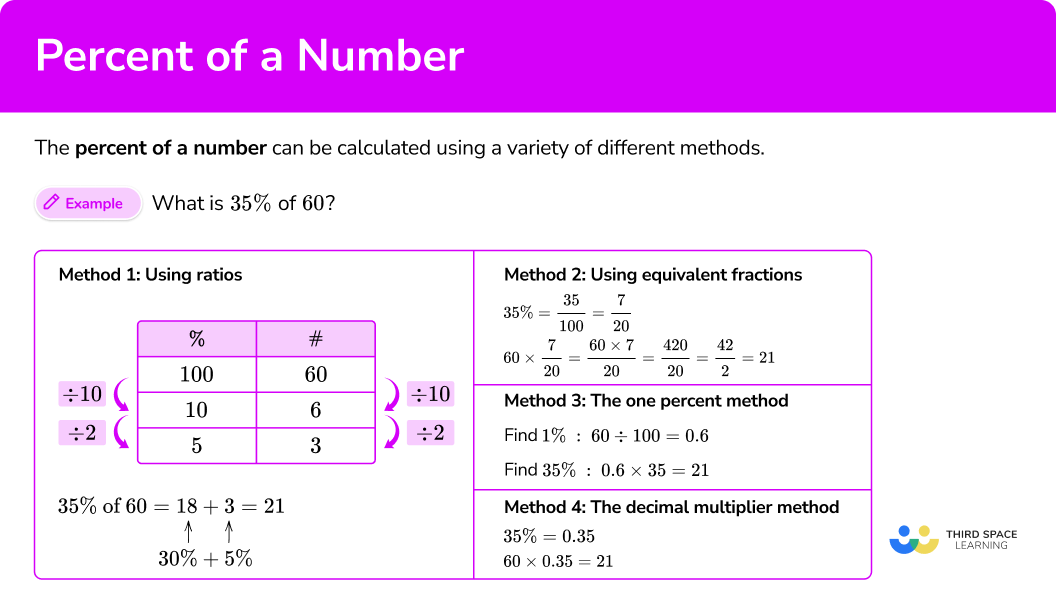
At its most basic level, a percentage represents a part of a whole, expressed as a fraction of 100. The word “percent” literally translates to “per one hundred.” In a financial context, this allows us to compare disparate figures on an even playing field. To figure the percent of a number, the primary formula is straightforward: multiply the whole number by the percentage expressed as a decimal.
The Decimal Conversion Method
To convert any percentage into a decimal, you simply move the decimal point two places to the left. For instance, if you are trying to calculate a 15% contribution to a 401(k) based on a $5,000 monthly salary, you convert 15% to 0.15. The calculation becomes $5,000 times 0.15 = 750$. This method is the backbone of most financial modeling and is the quickest way to perform calculations on a standard calculator or within a spreadsheet.
The Division Method for Ratios
Sometimes, you aren’t looking for a piece of a number, but rather trying to determine what percentage one number represents of another. This is common when tracking expenses. If your housing costs are $2,000 and your total income is $6,000, you divide the part by the whole ($2,000 / $6,000 = 0.333). Multiplying by 100 gives you 33.3%. In personal finance, these ratios are critical for maintaining a healthy debt-to-income ratio or ensuring that your “wants” do not exceed a specific percentage of your take-home pay.
Mental Math Shortcuts for Quick Estimates
In high-stakes business meetings or while shopping, you may not always have a calculator at hand. Mastering the “10% rule” can simplify most calculations. To find 10% of any number, simply move the decimal point one place to the left. Once you have 10%, you can easily find 5% (by halving the result) or 20% (by doubling it). For example, finding 15% of a $120 business lunch involves finding 10% ($12) and adding half of that ($6) to reach a total of $18.
Percentage Calculations in the World of Investing
In the investment landscape, percentages are the primary metric for performance. Investors rarely focus on the dollar amount of a gain in isolation; instead, they look at the percentage return relative to the capital deployed. This allows an investor to compare the performance of a high-priced stock like Berkshire Hathaway with a lower-priced ETF.
Calculating Return on Investment (ROI)
The most common application of percentages in investing is the Return on Investment (ROI). The formula is: (Current Value – Original Cost) / Original Cost. If you purchase shares for $1,000 and sell them for $1,250, your profit is $250. To find the percentage, you divide $250 by the original $1,000 investment to get 0.25, or 25%. Understanding this allows you to determine if your capital is being utilized efficiently compared to “risk-free” assets like Treasury bonds.
Dividend Yields and Income Streams
For income-focused investors, calculating the dividend yield is essential for comparing different dividend-paying stocks. The yield is the annual dividend payment divided by the stock’s current price. If a stock pays $2.00 in dividends annually and is trading at $50.00, the yield is 4%. This percentage is vital because it tells the investor how much cash flow they are generating for every dollar “locked” in the asset, providing a clear comparison against savings account interest rates or bond coupons.
Portfolio Allocation and Rebalancing
Modern Portfolio Theory emphasizes the importance of asset allocation—the percentage of your total portfolio dedicated to different asset classes like stocks, bonds, and real estate. If your target allocation is 70% stocks and a market rally pushes that figure to 80%, you must figure the percent of the total portfolio to determine how much to sell to return to your target. This disciplined approach to percentages helps mitigate risk and prevents an investor from becoming over-exposed to a single sector.
Strategic Business Math: Margins and Markups

For business owners and financial managers, the distinction between “markup” and “margin” is one of the most critical applications of percentage calculations. Confusing these two can lead to significant pricing errors that erode profitability.
Gross and Net Profit Margins
A profit margin is a percentage that expresses how much of every dollar of sales a company keeps as profit. To calculate the gross profit margin, you subtract the Cost of Goods Sold (COGS) from total revenue, then divide that result by the revenue. If a product sells for $100 and costs $60 to produce, the gross profit is $40, and the margin is 40%. The net profit margin takes this further by subtracting all operating expenses, taxes, and interest, providing the ultimate percentage of efficiency for the enterprise.
The Markup Trap
While margin is calculated based on the selling price, markup is calculated based on the cost. Using the same example, if a product costs $60 and you want a 40% markup, you calculate 40% of $60 ($24) and add it to the cost for a selling price of $84. However, a $24 profit on an $84 sale is only a 28.5% margin. Business owners must be adept at calculating these percentages to ensure their “markup” actually results in the “margin” required to cover overhead and generate net income.
Break-Even Analysis
Figure the percent of capacity a business must operate at to break even is a fundamental survival calculation. By understanding fixed costs versus variable costs, a business can determine what percentage of projected sales is required to reach a zero-profit, zero-loss state. This “Break-Even Point” is often expressed as a percentage of total market share or production capacity, providing a clear goal for sales teams and operational managers.
The Impact of Percentages on Debt and Credit
In personal finance, percentages work as a double-edged sword. While they can grow your wealth through compound interest, they can also accelerate financial ruin through high-interest debt.
Understanding APR and Effective Interest
The Annual Percentage Rate (APR) is the standard way to express the cost of borrowing. However, figuring the percent of interest you actually pay often requires looking at the “Effective Annual Rate,” which accounts for compounding. If a credit card has an APR of 24% compounded monthly, the monthly interest rate is 2% (24/12). Because interest is charged on the previous month’s interest, the effective rate is actually higher than 24%. Calculating the real percentage cost of debt is the first step in prioritizing which balances to pay off first.
Debt-to-Income (DTI) Ratios
Lenders use the DTI ratio to determine creditworthiness. This is the percentage of your gross monthly income that goes toward paying debts. If your monthly income is $5,000 and your debt payments (mortgage, car loan, student loans) total $1,800, your DTI is 36%. Most mortgage lenders prefer a DTI below 43%. Knowing how to calculate this percentage allows individuals to see themselves through the eyes of a financial institution before applying for a major loan.
The Power of “Basis Points”
In the world of high finance and mortgages, you will often hear the term “basis points” (BPS). One basis point is equal to one-hundredth of one percent (0.01%). If a mortgage rate drops from 6.50% to 6.25%, it has dropped by 25 basis points. While this seems like a small percentage, on a $500,000 loan, a 25-basis-point difference can result in tens of thousands of dollars in interest savings over the life of the loan.
Advanced Tools and the Psychology of Percentages
As financial landscapes grow more complex, the tools we use to figure percentages have evolved, but the underlying logic remains the same. Furthermore, understanding the psychology of how percentages are presented can prevent costly financial mistakes.
Leveraging Spreadsheets for Complex Modeling
While manual calculations are good for quick checks, financial professionals use software like Excel or Google Sheets for heavy lifting. Functions like =PERCENTIF or simply formatting cells as percentages allow for dynamic modeling. For example, you can create a “what-if” scenario to see how a 1% increase in interest rates would affect the net present value of a future cash flow. Learning to automate percentage calculations is a high-value skill in any finance-related career.
The “Percent Off” vs. “Percent Of” Trap
In marketing and consumer finance, percentages are often used to manipulate perception. A “50% increase” followed by a “50% decrease” does not bring you back to your starting point. If you have $100 and it grows by 50%, you have $150. If that $150 then decreases by 50%, you are left with $75. This is a common trap in volatile investment markets. Understanding how to figure the percent of a number accurately ensures that you aren’t misled by promotional math or market volatility.
Percentages as a Tool for Long-term Planning
Ultimately, figuring the percent of a number is about perspective. Whether you are following the 50/30/20 budgeting rule (50% needs, 30% wants, 20% savings) or calculating the safe withdrawal rate for retirement (often cited as 4%), these percentages serve as the guardrails for a stable financial life. By mastering these calculations, you gain the ability to strip away the noise of fluctuating dollar amounts and focus on the structural health of your financial future. Success in money is rarely about the absolute numbers; it is about the percentages and the trends they reveal.
aViewFromTheCave is a participant in the Amazon Services LLC Associates Program, an affiliate advertising program designed to provide a means for sites to earn advertising fees by advertising and linking to Amazon.com. Amazon, the Amazon logo, AmazonSupply, and the AmazonSupply logo are trademarks of Amazon.com, Inc. or its affiliates. As an Amazon Associate we earn affiliate commissions from qualifying purchases.