
Understanding how to calculate interest earned is more than just a mathematical exercise; it is a fundamental pillar of financial literacy. Whether you are tucking money away in a high-yield savings account, purchasing certificates of deposit (CDs), or investing in corporate bonds, knowing exactly how your capital generates returns allows you to make informed decisions about your future. Interest is essentially the “rent” paid to you for allowing a financial institution or entity to use your money. However, the way that rent is calculated can vary significantly depending on the financial vehicle you choose.
To master your personal finances, you must distinguish between the two primary methods of calculation: simple interest and compound interest. While the former is straightforward, the latter is often described as the “eighth wonder of the world” because of its ability to turn modest savings into substantial wealth over time.
Simple Interest: The Fundamentals of Linear Growth
Simple interest is the most basic form of calculating returns on an investment. It is determined solely by applying the interest rate to the principal amount—the initial sum of money you deposited or invested. In this model, you do not earn interest on the interest that has already been paid out. While simple interest is less common in modern savings accounts, it is frequently used in short-term personal loans, certain types of bonds, and specific consumer credit products.
The Simple Interest Formula
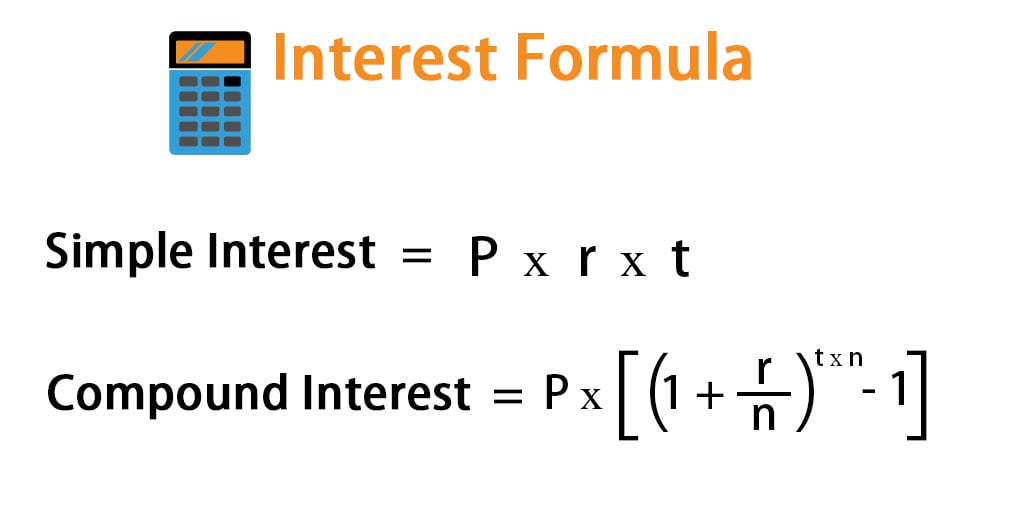
To calculate simple interest, you use the formula:
Interest = P × r × t
In this equation:
-
P (Principal): The original amount of money you invested or deposited.
-
r (Annual Interest Rate): The interest rate expressed as a decimal (e.g., 5% becomes 0.05).
-
t (Time): The time the money is invested, expressed in years.
A Practical Example
Imagine you invest $10,000 into a five-year fixed-income security that pays 4% simple interest annually. To find the total interest earned over the life of the investment, you would multiply $10,000 by 0.04, then multiply that result by 5.
-
$10,000 × 0.04 = $400 per year.
-
$400 × 5 years = $2,000 total interest.
At the end of five years, your total account balance would be $12,000. Simple interest is predictable and easy to track, but it lacks the exponential acceleration that most long-term investors seek.
Compound Interest: The Engine of Wealth Creation
Unlike simple interest, compound interest is calculated on the principal amount plus any accumulated interest from previous periods. This creates a “snowball effect” where your money begins to work for you with increasing efficiency. As your balance grows, the interest payments themselves become larger, which in turn increases the balance even faster.
The Compound Interest Formula
The formula for compound interest is slightly more complex because it must account for the frequency of compounding:
A = P(1 + r/n)^(nt)
In this equation:
-
A: The final amount in the account, including interest.
-
P: The principal amount.
-
r: The annual interest rate (decimal).
-
n: The number of times interest is compounded per year.
-
t: The number of years the money is invested.
The Impact of Compounding Frequency
The frequency with which interest is compounded (the “n” in our formula) has a dramatic impact on your total earnings. Common compounding intervals include:
-
Annually (n=1): Interest is calculated once a year.
-
Quarterly (n=4): Interest is calculated every three months.
-
Monthly (n=12): Interest is calculated every month (common for savings accounts).
-
Daily (n=365): Interest is calculated every single day.
The more frequently interest compounds, the higher your total return will be. For example, $10,000 at a 5% interest rate compounded annually for 10 years results in $16,288.95. If that same $10,000 were compounded daily at the same rate, the final balance would be $16,486.64. While a $200 difference might seem minor over a decade, when scaled to larger balances and longer timeframes, the difference becomes monumental.
Understanding APY vs. APR: Knowing Your True Return

When comparing financial products, you will often see two different acronyms: APR (Annual Percentage Rate) and APY (Annual Percentage Yield). Understanding the difference between these two is critical for accurately calculating your interest earned.
APR: The Nominal Rate
APR represents the annual rate of interest without taking compounding into account. It is a “nominal” rate. In the context of earning interest, the APR tells you the base rate, but it doesn’t tell the whole story of what your actual pocketed return will be at the end of the year.
APY: The Effective Rate
APY is the “effective” annual rate of return. It takes the effect of compounding into account. If a bank says their high-yield savings account offers an APY of 4.5%, they have already done the compounding math for you. The APY tells you exactly how much your balance will grow in one year, inclusive of all compounding periods.
When you are the one earning interest, you want the highest APY possible. Conversely, when you are borrowing money, you want the lowest APR possible. Always ensure you are comparing apples to apples by looking at the APY when evaluating different savings or investment vehicles.
Factors That Influence Your Net Interest Earnings
Calculating interest earned isn’t just about the mathematical formulas; it’s about understanding the external factors that can erode or enhance those earnings. In a real-world financial environment, your “nominal” interest is rarely what you actually get to keep.
The Impact of Inflation
Inflation is the silent killer of purchasing power. If your savings account earns 3% interest, but the annual inflation rate is 4%, you are technically losing 1% of your purchasing power every year, despite having a larger numerical balance. To find your “Real Rate of Return,” you must subtract the inflation rate from your nominal interest rate. High-interest environments often coincide with high inflation, meaning your “earned” interest may simply be keeping you level with the rising cost of goods.
Taxation on Interest
In most jurisdictions, interest earned in a standard savings account or on a bond is considered taxable income. At the end of the fiscal year, financial institutions typically issue documents (such as Form 1099-INT in the United States) reporting your interest earnings to the authorities. Depending on your tax bracket, you may lose 10% to 37% of your interest earnings to federal and state taxes. To maximize interest, many investors look toward tax-advantaged accounts like IRAs or 401(k)s, where interest can grow tax-deferred or even tax-free.
The Rule of 72: A Mental Shortcut
For those who want to estimate their interest earnings without a calculator, the Rule of 72 is an invaluable tool. It allows you to estimate how long it will take for your money to double at a given interest rate. You simply divide 72 by your annual interest rate.
-
At a 6% interest rate: 72 / 6 = 12 years to double.
-
At a 10% interest rate: 72 / 10 = 7.2 years to double.
This shortcut highlights why even a 1% or 2% difference in interest rates is so significant over a long-term investment horizon.
Practical Applications: Where to Earn Interest
Now that you understand how to calculate these figures, the final step is identifying where to apply this knowledge to maximize your returns.
High-Yield Savings Accounts (HYSA)
Traditional “big box” banks often offer interest rates as low as 0.01%. In contrast, online-only banks frequently offer high-yield options that are 10 to 50 times higher. Because these accounts typically compound monthly or daily, they are excellent vehicles for emergency funds where liquidity is required but growth is still a priority.
Certificates of Deposit (CDs)
CDs offer a fixed interest rate for a specific term, ranging from a few months to several years. Because you agree to leave your money untouched for that duration, banks generally offer higher rates than standard savings accounts. Calculating interest on a CD is straightforward because the rate is locked in, protecting you from market fluctuations.
Dividend Reinvestment Plans (DRIPs)
While dividends are technically a distribution of company profits rather than “interest,” they function similarly when reinvested. By using a DRIP, you use your dividend payments to buy more shares of the stock, which in turn produces more dividends. This mimics the mechanics of compound interest and is one of the most effective ways to build wealth in the equity markets.

Bonds and Fixed-Income Securities
When you buy a bond, you are essentially lending money to a government or corporation. The “coupon rate” is the interest rate paid to the bondholder. Most bonds pay simple interest semi-annually. However, if you reinvest those coupon payments into other interest-bearing assets, you effectively transform that simple interest into compound growth.
By mastering these calculations and understanding the nuances of compounding, inflation, and taxation, you move from being a passive saver to an active manager of your wealth. Interest is the reward for patience and capital preservation; knowing exactly how to measure it ensures that you are always getting the best possible return on your hard-earned money.
aViewFromTheCave is a participant in the Amazon Services LLC Associates Program, an affiliate advertising program designed to provide a means for sites to earn advertising fees by advertising and linking to Amazon.com. Amazon, the Amazon logo, AmazonSupply, and the AmazonSupply logo are trademarks of Amazon.com, Inc. or its affiliates. As an Amazon Associate we earn affiliate commissions from qualifying purchases.