
In the intricate world of finance, where numbers tell the story of growth, decline, and potential, understanding how to calculate the percentage of increase is not just a mathematical exercise—it’s a fundamental superpower. Whether you’re tracking the growth of your investments, assessing the impact of a salary raise, analyzing business performance, or simply understanding economic indicators like inflation, the ability to accurately determine a percentage increase provides invaluable insights. It transforms raw numbers into meaningful metrics, enabling individuals and businesses alike to make informed decisions, set realistic goals, and strategically navigate their financial landscapes.
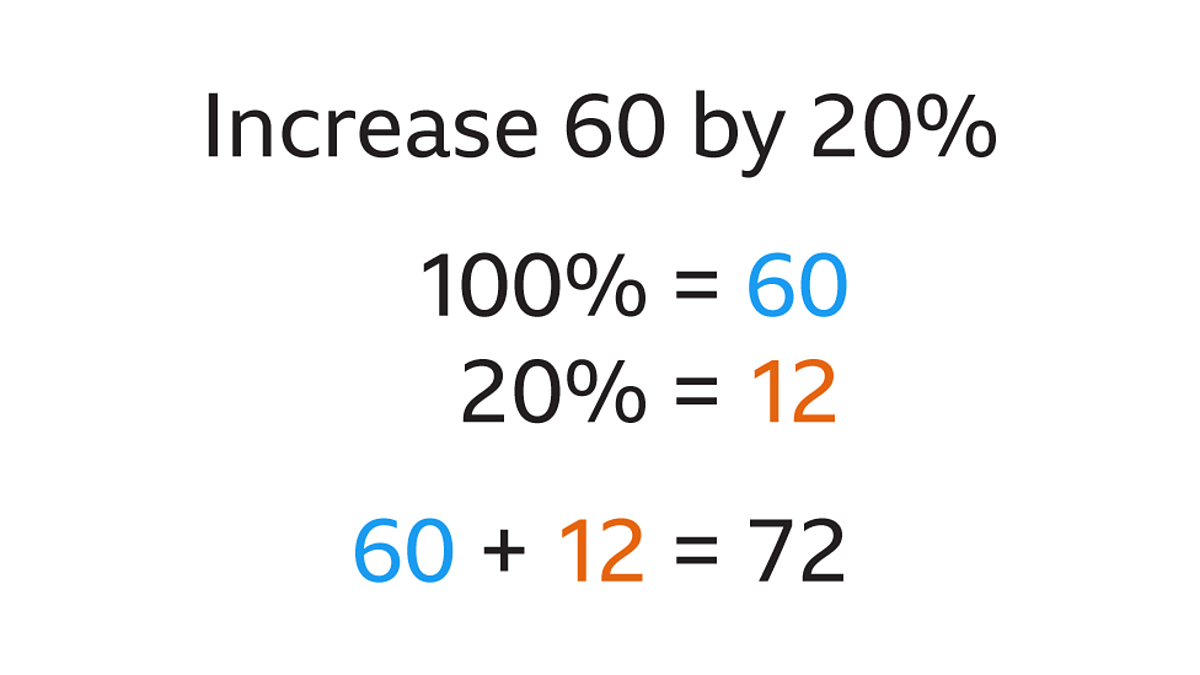
This guide will demystify the calculation of percentage increase, illustrating its core formula, exploring its myriad applications across personal finance and business, and offering best practices to ensure accuracy and contextual understanding. By the end, you’ll not only know how to find a percentage increase but also why it’s an indispensable tool in your financial toolkit.
The Fundamental Formula: Unlocking Growth Metrics
At its heart, finding the percentage of increase is about quantifying the relative change between two values, expressing that change as a proportion of the original amount, and then converting it into a percentage. It allows us to compare growth across different scales, making a 10-dollar increase on a 100-dollar investment comparable to a 10,000-dollar increase on a 100,000-dollar investment, both representing a 10% rise.
Deconstructing the Percentage Increase Formula
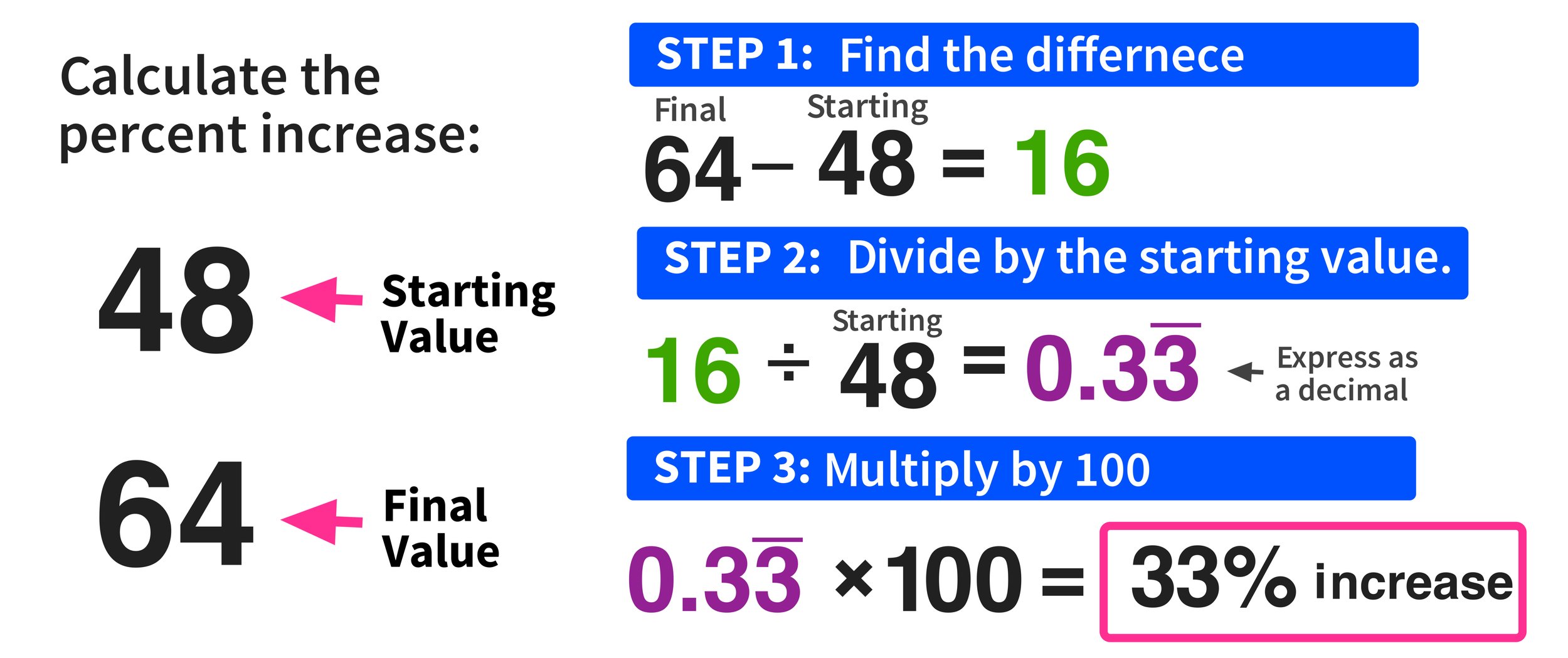
The formula for calculating percentage increase is straightforward and universally applicable:
Percentage Increase = ((New Value - Original Value) / Original Value) * 100
Let’s break down each component to understand its role:
-
Original Value: This is your starting point, the baseline against which you are measuring growth. In financial terms, it could be your initial investment, last year’s revenue, your previous salary, or the price of an asset at an earlier date.
-
New Value: This is the current or subsequent value, the end point of your measurement. It represents the value after the increase has occurred.
-
New Value – Original Value: This calculation gives you the absolute difference or the amount of increase in real terms. It tells you exactly how much the value has gone up.
-
Divided by Original Value: By dividing the amount of increase by the original value, you are converting the absolute increase into a relative proportion or a decimal. This step is crucial because it contextualizes the increase. A $10 increase on $100 is far more significant than a $10 increase on $1,000.
-
Multiplied by 100: Finally, multiplying the resulting decimal by 100 converts it into a percentage, making it easier to understand and communicate.
Example: Imagine your favorite coffee shop increased the price of a latte from $4.00 to $4.50.
-
Original Value = $4.00
-
New Value = $4.50
-
Amount of Increase = $4.50 – $4.00 = $0.50
-
Proportion = $0.50 / $4.00 = 0.125
-
Percentage Increase = 0.125 * 100 = 12.5%
So, the price of your latte increased by 12.5%.
Step-by-Step Calculation Guide
To ensure accuracy, follow these steps meticulously:
-
Identify the Original Value: Clearly define the starting point of your measurement. This is your baseline.
-
Identify the New Value: Pinpoint the ending value after the period of change.
-
Calculate the Difference: Subtract the Original Value from the New Value. Make sure the New Value is indeed greater than the Original Value for an increase. If it’s less, you’re calculating a percentage decrease.
Difference = New Value - Original Value
-
Divide by the Original Value: Take the difference you calculated in step 3 and divide it by the Original Value (from step 1).
Proportion = Difference / Original Value
-
Multiply by 100: Convert the decimal or fraction from step 4 into a percentage by multiplying it by 100.
Percentage Increase = Proportion * 100
Mastering this sequence ensures you can confidently apply the formula to any scenario involving financial growth.
Practical Applications in Personal Finance: Tracking Your Wealth Journey
For individuals, the percentage of increase is a powerful metric that brings clarity to personal financial decisions and helps in charting a course toward financial goals. It moves beyond raw numbers to give you a true sense of progress or impact.
Monitoring Investment Returns
Perhaps one of the most common applications of percentage increase in personal finance is in evaluating investment performance. Whether you’re tracking stocks, bonds, mutual funds, or real estate, understanding the percentage return is crucial for assessing growth and making informed decisions.
-
Stock Growth: If you bought a stock at $50 per share and it’s now trading at $65 per share, your percentage increase is
(($65 - $50) / $50) * 100 = (15 / 50) * 100 = 0.3 * 100 = 30%. -
Portfolio Appreciation: Tracking the overall growth of your investment portfolio over a quarter, year, or decade. A diversified portfolio that grew from $100,000 to $112,000 in a year shows a
(($112,000 - $100,000) / $100,000) * 100 = 12%increase. This metric allows you to compare your portfolio’s performance against market benchmarks or your own financial goals. -
Real Estate Value: If you purchased a home for $300,000 and it’s now appraised at $360,000, your property has seen a
(($360,000 - $300,000) / $300,000) * 100 = 20%increase in value.
Analyzing Income and Expense Fluctuations
Understanding how your income changes and how your expenses are evolving is fundamental to effective budgeting and financial planning.
-
Salary Increases: Receiving a raise is exciting, but knowing the percentage increase helps you understand its real impact. If your annual salary goes from $60,000 to $63,000, that’s a
(($63,000 - $60,000) / $60,000) * 100 = 5%increase. This helps you factor it into your budget and savings plans. -
Tracking Rising Costs: Unfortunately, expenses often increase over time due to inflation or lifestyle changes. Monitoring these increases in percentage terms can be an eye-opener. If your monthly grocery bill went from $500 to $575, that’s a
(($575 - $500) / $500) * 100 = 15%increase, which might prompt you to look for ways to economize. -
Evaluating Asset Appreciation: Beyond traditional investments, this concept applies to other assets. For collectors, if a rare item bought for $2,000 is now valued at $2,500, it represents a
(($2,500 - $2,000) / $2,000) * 100 = 25%increase in value.
Strategic Uses in Business & Investing: Driving Informed Decisions
For businesses and serious investors, the percentage of increase is far more than a simple calculation; it’s a critical analytical tool used for strategic planning, performance evaluation, and risk assessment. It enables comparisons across different scales, industries, and timeframes, providing a standardized measure of growth.
Measuring Business Performance and Sales Growth
Businesses constantly track growth metrics to gauge health, set targets, and attract investment.
-
Revenue Growth: A company might report an increase in quarterly revenue from $1 million to $1.2 million. This signifies a
(($1.2M - $1M) / $1M) * 100 = 20%revenue growth, a key indicator of market success and operational efficiency. -
Customer Base Expansion: If a SaaS company increased its subscriber base from 10,000 to 13,000 in a year, that’s a
(($13,000 - $10,000) / $10,000) * 100 = 30%growth, signaling strong market penetration and product appeal. -
Profit Margin Improvement: An increase in net profit from $500,000 to $600,000 indicates a
(($600,000 - $500,000) / $500,000) * 100 = 20%growth in profitability, a vital sign of financial health. These percentage increases are frequently used in investor reports and strategic presentations to showcase progress.
Valuating Investment Opportunities
Investors use percentage increase to compare potential returns and understand the historical growth trajectory of assets.
-
Projecting Potential Returns: When evaluating a startup, an investor might analyze projected growth rates in sales or market share. A startup forecasting a 50% year-over-year revenue increase is perceived differently than one projecting 10%.
-
Comparing Growth Rates: An investor looking at two different stocks might find that Stock A increased by 15% last year, while Stock B increased by 22%. This direct percentage comparison helps in deciding which investment has historically offered stronger growth, though past performance is not indicative of future results.
-
Understanding Compound Annual Growth Rate (CAGR): While a slightly more complex calculation, CAGR (which is essentially an annualized percentage increase) is used to smooth out volatile growth rates over multiple periods, providing a more representative average annual growth. This is crucial for long-term investment analysis.
Understanding Economic Indicators
Macroeconomic trends are often communicated through percentage increases, influencing financial markets and business planning.
-
Inflation Rates: Inflation is typically reported as a percentage increase in the Consumer Price Index (CPI) over a period. If the CPI increases by 3%, it means the average price of goods and services has risen by 3%, impacting purchasing power and interest rates.
-
GDP Growth: Gross Domestic Product (GDP) growth, reported as a percentage increase, indicates the health and expansion of a country’s economy. A 2% GDP growth signifies a growing economy, which can influence business investment and employment.
-
Interest Rate Hikes: Central banks often increase interest rates by a certain percentage point (e.g., from 0.25% to 0.50%), which represents a
((0.50% - 0.25%) / 0.25%) * 100 = 100%increase in the rate itself, even if the absolute change is small. This has profound implications for borrowing costs and savings returns.
Common Pitfalls and Best Practices for Accuracy
While the formula for percentage increase is simple, misapplication or a lack of context can lead to misleading conclusions. Adhering to best practices ensures your calculations are not only accurate but also insightful.
Avoiding Common Calculation Errors
-
Using the Wrong ‘Original Value’: A frequent mistake is using the ‘New Value’ or an incorrect baseline as the denominator. Always ensure you are dividing by the starting or original value. For example, if calculating the percentage increase in rent, use last year’s rent, not this year’s.
-
Confusing Increase with Decrease: The formula
((New Value - Original Value) / Original Value) * 100specifically yields a positive percentage for an increase. IfNew Value < Original Value, the result will be negative, indicating a percentage decrease. Be mindful of the context. -
Rounding Errors: Excessive rounding during intermediate steps can skew your final percentage. While presenting the final percentage, rounding to one or two decimal places is usually acceptable, try to maintain higher precision during calculations.
-
Percentage Points vs. Percentage Increase: Be careful when talking about changes in percentages themselves. If a market share goes from 20% to 25%, that’s a 5 percentage point increase, but a
((25 - 20) / 20) * 100 = 25%percentage increase in market share.
Leveraging Tools for Efficiency
Manually calculating percentage increases for multiple items or over extended periods can be tedious and prone to error.
-
Spreadsheets (Excel, Google Sheets): These are invaluable. You can set up columns for Original Value, New Value, and then apply the formula
=(B2-A2)/A2*100(assuming Original Value is in A2 and New Value in B2) to thousands of rows instantly. -
Online Calculators: Numerous websites offer quick percentage increase calculators for one-off calculations.
-
Financial Software: Many personal finance apps and business accounting software automatically track and display percentage changes for various financial metrics.
Contextualizing Your Findings
A percentage increase, while powerful, rarely tells the complete story in isolation.
-
Consider the Timeframe: A 50% increase in stock value over one month is phenomenal, but over ten years, it’s rather modest. Always specify the period over which the increase occurred.
-
Compare to Benchmarks: Is a 10% investment return good? It depends. If the overall market (your benchmark) returned 20% during the same period, your 10% looks less impressive. If the market lost 5%, then 10% is outstanding.
-
Understand Absolute vs. Relative Change: A 100% increase on $1 (resulting in $2) is numerically smaller than a 10% increase on $10,000 (resulting in $11,000), even though the percentage is higher. Both absolute and relative figures offer distinct insights.
-
Account for Inflation: A salary increase of 3% might sound good, but if inflation was 4% during the same period, your real purchasing power actually decreased.

Conclusion
The ability to calculate and interpret the percentage of increase is an indispensable financial literacy skill. From managing your personal budget and strategizing investment moves to analyzing business performance and understanding economic news, this fundamental concept empowers you to make sense of the financial world around you. It transforms raw numbers into actionable intelligence, allowing for meaningful comparisons, insightful trend analysis, and smarter decision-making.
By mastering the simple formula—((New Value - Original Value) / Original Value) * 100—and applying it with precision and contextual awareness, you unlock a deeper understanding of financial dynamics. Embrace this crucial skill, integrate it into your financial habits, and watch as your ability to track growth, identify opportunities, and navigate financial complexities becomes significantly sharper, paving your way to greater financial mastery.