
In an ever-fluctuating economic landscape, understanding price changes isn’t merely an academic exercise; it’s a critical skill for prudent personal finance management, astute business strategy, and informed investment decisions. Prices rarely remain static. Whether it’s the cost of your morning coffee, the raw materials for your business, or the rent for your apartment, price adjustments are an inevitable facet of economic life. The ability to precisely calculate the percentage by which a price has increased empowers individuals and organizations to make data-driven choices, anticipate future financial impacts, and effectively plan for stability and growth.
This comprehensive guide will demystify the process of calculating price increase percentages, providing you with the formulas, practical examples, and real-world applications necessary to confidently navigate the dynamics of a changing market. From understanding the underlying economic forces to leveraging financial tools, we’ll equip you with the knowledge to not just observe price changes, but to truly comprehend and react to them.
The Indispensable Value of Understanding Price Hikes
Before diving into the mechanics, it’s crucial to appreciate why grasping price increase percentages is so profoundly important across various financial domains. It’s more than just a number; it’s a key indicator of economic health, inflationary pressures, and the shifting landscape of supply and demand.
Why Price Increases Matter: A Multi-faceted Perspective
For individuals, businesses, and investors alike, price increases can have ripple effects that significantly alter financial trajectories. For the average consumer, an increase in the cost of living directly impacts disposable income, necessitating budget adjustments and potentially altering purchasing power. Imagine the impact of a 15% increase in your weekly grocery bill – without understanding the percentage, it’s harder to compare against your income growth or make informed choices about where to cut back.
From a business standpoint, a sudden increase in the cost of inputs (raw materials, labor, utilities) can erode profit margins if not accurately calculated and strategically addressed. A manufacturer must know the percentage increase in steel prices to determine if they need to adjust their product pricing, renegotiate supplier contracts, or explore alternative materials. Similarly, for service providers, a rise in operational costs dictates whether they can maintain their current service fees or if a price adjustment is necessary to remain viable.
Investors, on the other hand, look at price increases through the lens of inflation and its impact on asset values and returns. A 5% annual return on an investment might sound good, but if inflation (which is essentially a generalized increase in prices) is running at 7%, then in real terms, your purchasing power has actually decreased. Understanding price increase percentages helps investors gauge the real yield of their portfolios and make decisions to protect their capital from inflationary erosion.
Common Triggers for Price Adjustments
Price increases don’t happen in a vacuum. They are typically driven by a confluence of economic factors. Understanding these triggers provides context for the calculations you perform:
-
Inflation: This is perhaps the most common and pervasive reason. Inflation refers to the sustained increase in the general price level of goods and services in an economy over a period of time, resulting in a fall in the purchasing value of money.
-
Increased Cost of Production: When the cost of raw materials, labor, transportation, or energy rises, businesses often pass these increases onto consumers to maintain their profit margins.
-
Supply and Demand Dynamics: If demand for a product or service outstrips its supply, prices naturally tend to rise. Conversely, an oversupply can lead to price decreases.
-
Enhanced Value Proposition: Businesses might increase prices when they add new features, improve quality, or provide a superior customer experience, justifying a higher price point.
-
Taxes and Regulations: Government taxes, tariffs, or new regulatory compliance costs can be factored into the final price of goods and services.
The Core Calculation: Deconstructing the Formula
At its heart, calculating a price increase percentage is a straightforward mathematical exercise. It involves comparing the new price to the original price to determine the magnitude of the change relative to the starting point.
The Basic Price Increase Percentage Formula Explained
The formula is elegantly simple and universally applicable:
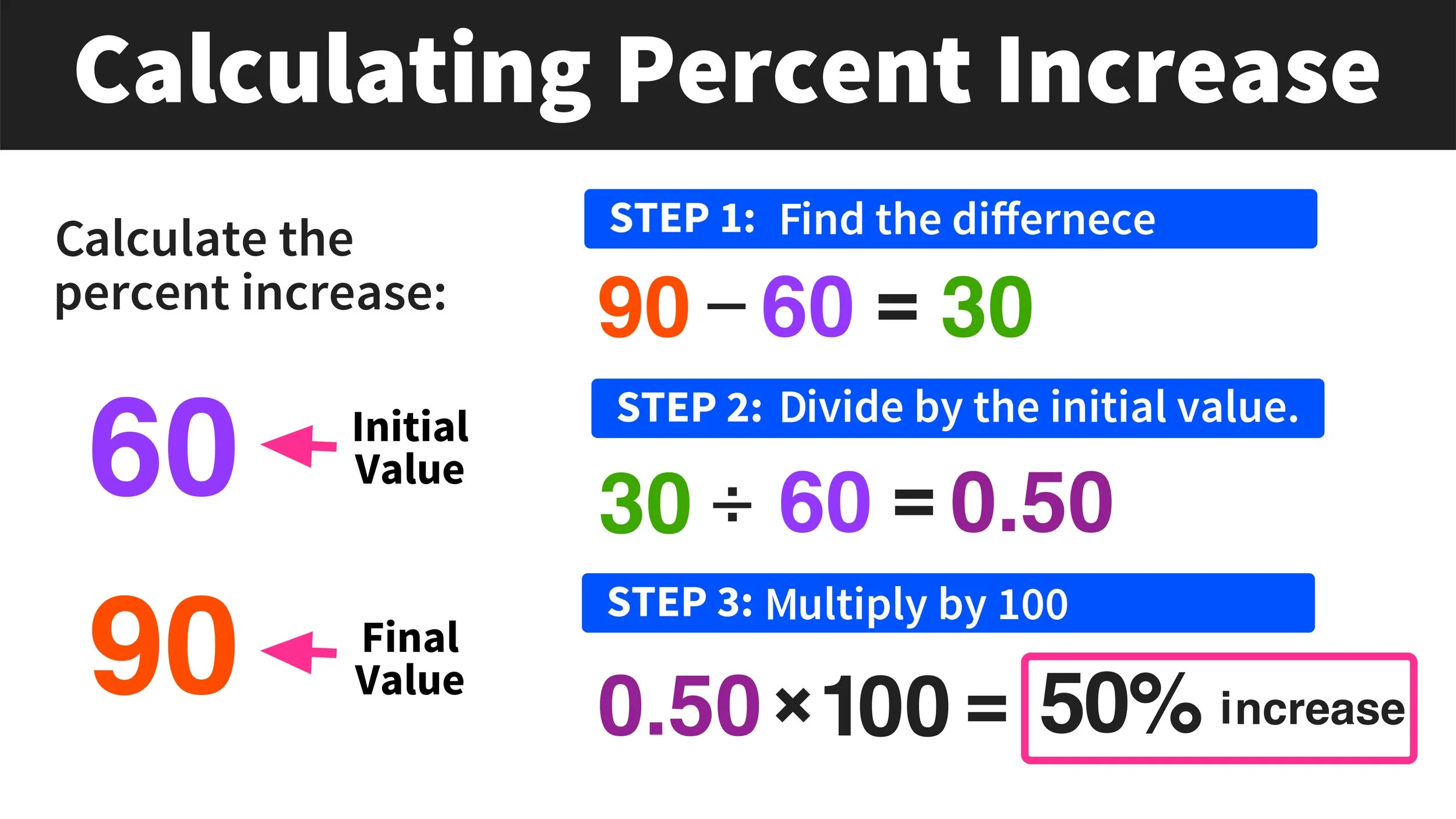
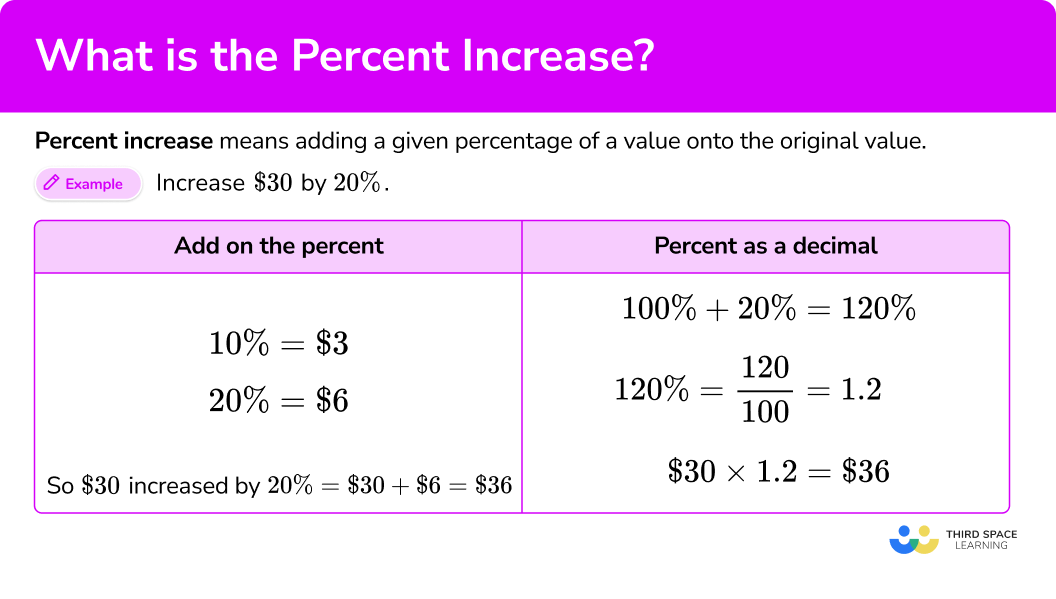
Price Increase Percentage = ((New Price – Original Price) / Original Price) * 100
Let’s break down each component:
-
New Price: This is the current, higher price of the good or service.
-
Original Price: This is the initial, lower price of the good or service before the increase.
-
New Price – Original Price: This step calculates the absolute amount of the price increase.
-
(New Price – Original Price) / Original Price: This step expresses the absolute increase as a decimal fraction of the original price. This is crucial as it standardizes the change, making it comparable regardless of the initial price point.
-
* 100: Multiplying by 100 converts the decimal fraction into a percentage, making it easier to interpret and communicate.
Step-by-Step Guide to Manual Calculation
Let’s walk through an example to solidify your understanding:
Scenario: The price of a popular streaming service was $9.99 per month. It has now increased to $11.99 per month. What is the percentage increase?
Step 1: Identify the Original Price and the New Price.
*   Original Price = $9.99


*   New Price = $11.99
Step 2: Calculate the Absolute Price Increase.
*   Price Increase Amount = New Price - Original Price


*   Price Increase Amount = $11.99 - $9.99 = $2.00
Step 3: Divide the Price Increase Amount by the Original Price.
*   Fractional Increase = Price Increase Amount / Original Price


*   Fractional Increase = $2.00 / $9.99 ≈ 0.2002002
Step 4: Multiply the Result by 100 to Express as a Percentage.
*   Percentage Increase = Fractional Increase * 100


*   Percentage Increase = 0.2002002 * 100 ≈ 20.02%
So, the streaming service’s price has increased by approximately 20.02%.
Illustrative Examples Across Financial Scenarios
Let’s consider another example, this time from a business perspective:
Scenario: A small bakery purchases a 50lb bag of flour for $25.00. The supplier notifies them that due to supply chain issues, the next shipment will cost $29.50 per bag.
Calculation:
-
Original Price = $25.00
-
New Price = $29.50
-
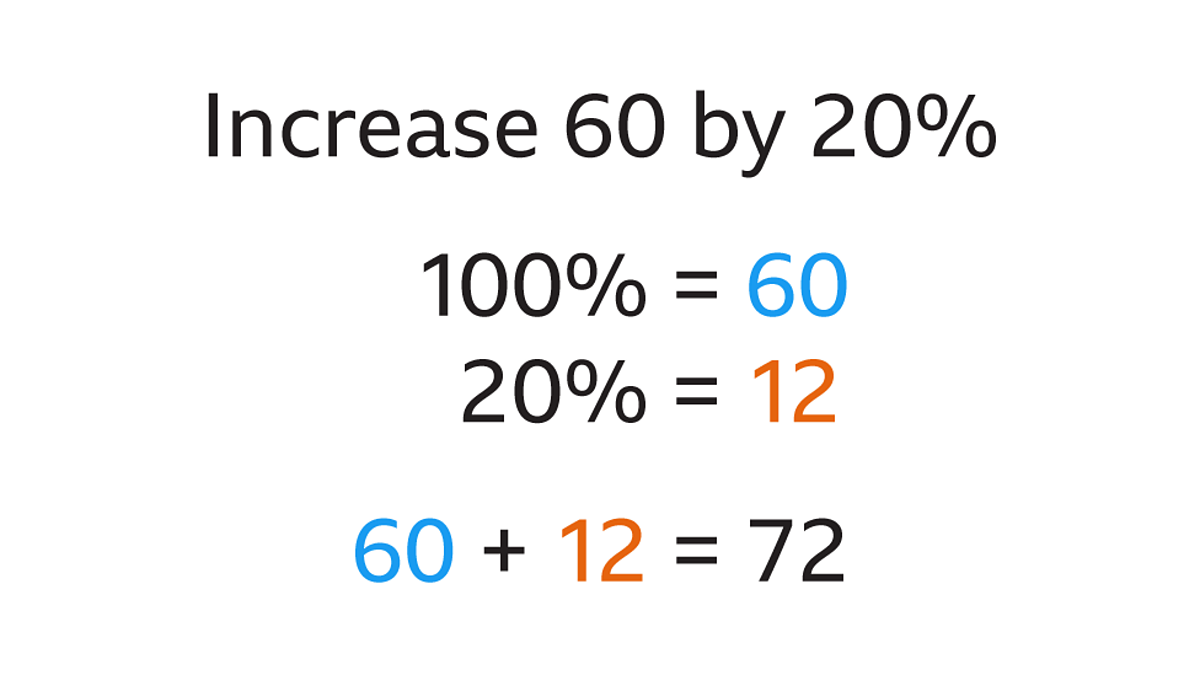
Price Increase Amount = $29.50 – $25.00 = $4.50
-
Percentage Increase = ($4.50 / $25.00) * 100
-
Percentage Increase = 0.18 * 100 = 18%
The bakery is facing an 18% increase in the cost of a key ingredient, a figure that is crucial for recalculating their product pricing to maintain profitability.
Real-World Applications Across Financial Domains
The ability to calculate price increase percentages isn’t just a theoretical skill; it has profound practical implications across various aspects of personal and business finance.
For Personal Finance: Managing Household Budgets and Expenses
As consumers, we constantly face price changes. From groceries and utilities to housing and transportation, our expenditures are in flux. Calculating price increases helps you:
-
Track Inflationary Impact: See how much your cost of living is truly rising compared to official inflation figures or your income growth.
-
Adjust Budgets: If your insurance premium goes up by 10%, you can quickly adjust your monthly budget to accommodate this, perhaps by finding savings elsewhere.
-
Evaluate Deals: When comparing different products or services, understanding past price increases can give you insight into potential future costs. For instance, if a subscription service consistently raises its prices by 15% annually, you can factor that into your long-term commitment.
-
Negotiate Better: Knowing the percentage increase in your rent or a service fee can empower you to negotiate with landlords or providers, armed with data.
For Businesses: Strategic Pricing and Profitability Analysis
For business owners and financial managers, precise calculation of price increases is fundamental to sustained operation and growth:
-
Cost Management: By knowing the percentage increase in raw materials, manufacturing costs, or shipping fees, businesses can quickly assess the impact on their production costs and overall profitability.
-
Strategic Pricing: When input costs rise, businesses must decide whether to absorb the cost, pass it on to customers, or find efficiencies. Calculating the percentage increase helps determine how much to adjust selling prices to maintain desired profit margins.
-
Supplier Negotiations: Armed with specific percentage increases, businesses can negotiate more effectively with suppliers for better rates or explore alternative vendors.
-
Financial Forecasting: Understanding historical price increase percentages for various expenses allows for more accurate financial projections and budgeting for future periods.
-
Competitive Analysis: Businesses can track competitors’ price changes to understand market dynamics and adjust their own strategies accordingly.
For Investors: Assessing Inflation’s Impact on Returns
Investors, particularly those focused on long-term wealth accumulation, must account for the corrosive effect of inflation (generalized price increases) on their purchasing power:
-
Real vs. Nominal Returns: Calculating price increases helps differentiate between nominal returns (the actual percentage gain from an investment) and real returns (the return after accounting for inflation). A stock that gains 8% in a year when inflation is 3% has a real return of approximately 5%.
-
Portfolio Protection: Investors can use this understanding to choose assets that historically perform well during periods of high inflation, such as real estate, commodities, or inflation-protected securities.
-
Retirement Planning: Accurate retirement planning requires factoring in the future cost of living, which will undoubtedly be higher due to cumulative price increases. Understanding these percentages helps in projecting future expenses and required savings.
Leveraging Financial Tools and Technology
While manual calculation is essential for understanding the underlying principles, financial tools and technology can streamline the process, especially when dealing with numerous data points or complex scenarios.
Spreadsheet Software: Excel and Google Sheets for Automation
Spreadsheets are incredibly powerful for financial analysis. They allow you to:
-
Automate Calculations: Set up formulas once, and they will automatically update as you input new prices. For example, if you have a column for “Original Price” and another for “New Price,” you can have a third column automatically calculate the percentage increase using the formula
=(B2-A2)/A2*100. -
Track Multiple Items: Easily monitor price changes for dozens or hundreds of different items, services, or budget categories in one place.
-
Visualize Data: Create charts and graphs to visualize price trends over time, making it easier to identify patterns and significant increases.
-
Conditional Formatting: Use conditional formatting to highlight price increases above a certain percentage, drawing immediate attention to critical changes.
Online Calculators and Financial Apps
For quick, one-off calculations or for individuals who prefer a simplified interface, a plethora of online calculators and financial apps are available. Many budgeting apps, personal finance software, and even basic web search tools can perform these calculations instantly. These tools are excellent for:
-
Instant Results: Get the answer without setting up formulas.
-
Accessibility: Available on various devices, often with user-friendly interfaces.
-
Specialized Features: Some financial apps might offer additional features like tracking historical price data or comparing prices across different vendors.
Understanding Financial Reports and Price Indices
Beyond individual calculations, understanding how larger entities track price changes is beneficial. Financial reports often include details on cost of goods sold (COGS) increases, which implicitly reflects price hikes from suppliers. Macroeconomic indicators, such as the Consumer Price Index (CPI), are essentially aggregated price increase percentages for a basket of goods and services, providing a broad measure of inflation. Regularly reviewing these indices can give you a larger economic context for the individual price changes you observe.
Strategic Responses to Rising Costs
Knowing how to calculate price increases is the first step; the next is to formulate a strategic response. This varies significantly for consumers versus businesses.
For Consumers: Smart Budgeting and Negotiation Tactics
-
Prioritize Spending: Identify essential expenses and areas where you can cut back if core costs rise significantly.
-
Seek Alternatives: Explore cheaper brands, alternative services, or generic options for frequently purchased items.
-
Bulk Buying (Strategically): For non-perishables, buying in larger quantities when prices are stable or on sale can hedge against future increases.
-
Negotiate: Don’t hesitate to contact service providers (internet, insurance, phone) to discuss rates, especially if you’ve been a long-term customer or if competitors offer better deals. Knowing how much their prices have increased gives you leverage.
-
Increase Income: If price increases consistently outpace your income, explore options for salary negotiation, side hustles, or investing to grow your capital.
For Businesses: Cost Management and Value Communication
-
Supplier Relationship Management: Maintain strong relationships with suppliers, but also actively seek competitive bids and explore new vendors to mitigate cost increases.
-
Operational Efficiency: Implement lean practices to reduce waste, optimize production processes, and lower internal costs, thereby absorbing some of the external price increases.
-
Strategic Price Adjustments: If passing on costs to customers is necessary, do so strategically. Consider smaller, more frequent increases rather than one large jump. Communicate the value proposition clearly to justify the higher price.
-
Product Diversification/Bundling: Introduce new products or bundle existing ones to offer different price points and perceived value, catering to various customer segments.
-
Technology Investment: Invest in automation and technology to reduce labor costs and improve efficiency, offsetting other rising expenses.
Conclusion
The ability to accurately calculate price increase percentages is an indispensable financial skill in today’s dynamic economic environment. It transcends simple arithmetic, serving as a powerful tool for informed decision-making in personal finance, robust business strategy, and intelligent investing. By mastering the fundamental formula, understanding its real-world applications, and leveraging available financial tools, you empower yourself to navigate inflationary pressures, optimize spending, safeguard profitability, and protect your financial future. In a world where prices are always on the move, knowing how to measure that movement is the key to staying ahead.
aViewFromTheCave is a participant in the Amazon Services LLC Associates Program, an affiliate advertising program designed to provide a means for sites to earn advertising fees by advertising and linking to Amazon.com. Amazon, the Amazon logo, AmazonSupply, and the AmazonSupply logo are trademarks of Amazon.com, Inc. or its affiliates. As an Amazon Associate we earn affiliate commissions from qualifying purchases.