
For many investors, discovering that the stock market is closed on an unexpected day can be a minor inconvenience or, for those with urgent transactions, a source of frustration. Whether you’re a seasoned trader or a new investor, understanding the reasons behind market closures and how to navigate them is a crucial aspect of responsible financial management. The stock market, a complex ecosystem of buyers and sellers, doesn’t operate 24/7, nor does it necessarily align with every local holiday. Its scheduled pauses are a deliberate part of its design, aimed at ensuring fair and orderly trading, allowing for critical behind-the-scenes operations, and honoring national observances.

This article will demystify the common reasons for stock market closures, particularly focusing on the U.S. markets like the New York Stock Exchange (NYSE) and NASDAQ, which typically follow a standardized holiday calendar. We’ll delve into the practical implications for investors, offering insights into how to prepare for these breaks and what to expect when trading resumes. Far from being random occurrences, market closures are predictable events that, with proper awareness, can be integrated seamlessly into your investment strategy, offering moments for reflection and recalibration rather than surprise.
Understanding Market Closures: More Than Just a Day Off
Stock market closures are not merely arbitrary pauses; they are integral to the functioning and integrity of the financial system. These planned breaks serve multiple purposes, ranging from operational efficiency to ensuring market fairness and allowing participants to observe significant national events.
The Rationale Behind Holiday Trading Halts
The primary reason for stock market closures, particularly on specific holidays, dates back to historical practices and the need for a standardized approach. Historically, before digital trading, market operations involved a vast physical infrastructure and a large workforce. Closing for holidays provided necessary breaks for these personnel and allowed for maintenance of physical trading floors and systems. In the modern era, while much of trading is electronic, closures still serve crucial functions. They prevent trading on days when market participation might be significantly reduced due to national holidays, which could lead to illiquid markets and unfair price volatility. A uniform closure ensures that all participants, from individual investors to institutional traders, are operating under the same conditions, or lack thereof, simultaneously. This standardization helps maintain market integrity and reduces the potential for market manipulation or undue influence from a few active participants on a sparsely traded day.
Key Market Calendars and Their Importance
For investors, understanding the market calendar is paramount. The major U.S. exchanges, the NYSE and NASDAQ, generally follow the U.S. federal holiday schedule, with a few notable exceptions. These calendars are publicly available and typically published well in advance, often for several years ahead. It’s important to note that while U.S. stock markets might be closed, other financial markets, even within the U.S., might have different schedules. For example, bond markets (like the Securities Industry and Financial Markets Association – SIFMA) sometimes observe different holidays or have early closures. Moreover, international stock markets operate on their own national holiday schedules. An investor with a globally diversified portfolio needs to be aware of the closure calendars for the exchanges where their assets are held, as global events can still impact U.S. markets upon reopening.
Differentiating Between Full Closures and Early Closures
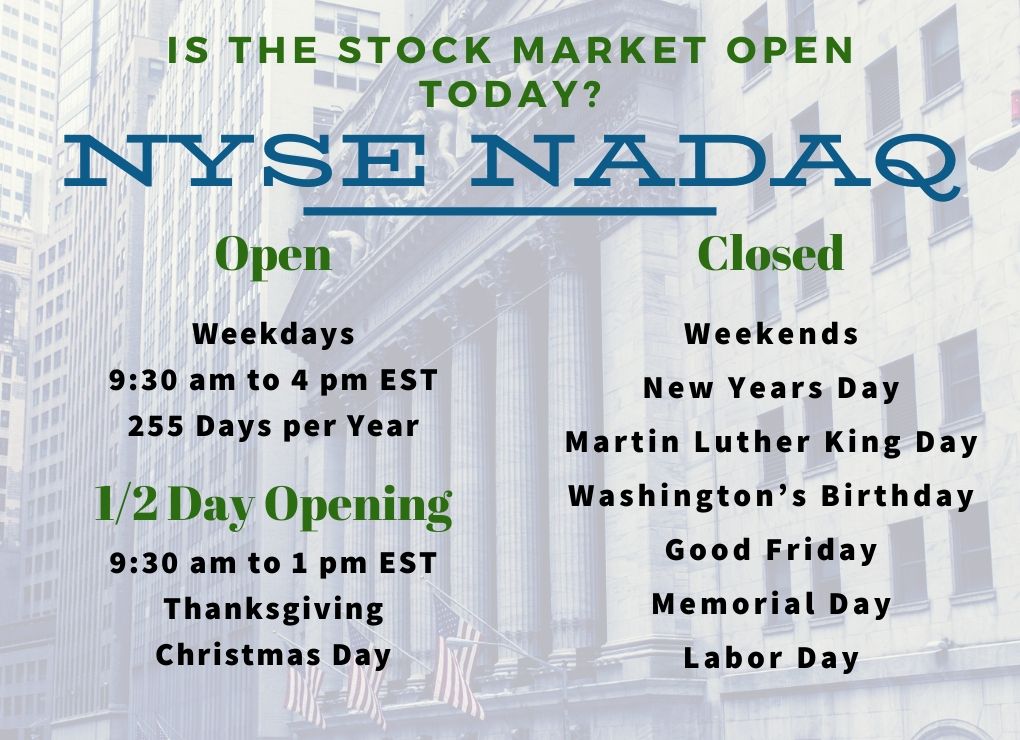
It’s also important to distinguish between full market closures and early closures. A full closure means no regular trading activity occurs on the specified day. Early closures, on the other hand, mean the market opens as usual but closes significantly earlier than the standard time, often at 1:00 PM ET instead of 4:00 PM ET. These early closures are typically scheduled around major holidays like the day before Independence Day or Black Friday (the day after Thanksgiving). While less impactful than a full closure, an early closure still necessitates awareness, especially for day traders or those managing time-sensitive transactions, as it shortens the window for executing trades and reacting to intraday news.
Common Reasons for Stock Market Closures
The vast majority of stock market closures are pre-scheduled and related to national holidays. In the U.S., these typically align with federal holidays, but there are specific nuances to be aware of.
Federal Holidays in the U.S.
The U.S. stock markets generally observe the following federal holidays, resulting in a full day of closure:
-
New Year’s Day (January 1st): Kicks off the new year with a market pause. If January 1st falls on a weekend, the market observes the holiday on the nearest weekday (e.g., Friday if Jan 1st is Saturday, or Monday if Jan 1st is Sunday).
-
Martin Luther King, Jr. Day (Third Monday in January): Honoring the civil rights leader.
-
Presidents’ Day (Third Monday in February): Observing Washington’s Birthday, though commonly known as Presidents’ Day.
-
Good Friday (Variable Date in March or April): A unique closure as it is not a federal holiday, but a significant observance for many, and traditionally the market has closed.
-
Memorial Day (Last Monday in May): Commemorating fallen service members, marking the unofficial start of summer.
-
Juneteenth National Independence Day (June 19th): Observed since 2021, commemorating the end of slavery in the U.S. Like New Year’s Day, if it falls on a weekend, it is observed on the nearest weekday.
-
Independence Day (July 4th): Celebrating U.S. independence. If July 4th falls on a weekend, the market observes it on the nearest weekday, and there may be an early closure on the day before.
-
Labor Day (First Monday in September): Honoring American workers.
-
Thanksgiving Day (Fourth Thursday in November): A day of gratitude; the market also has an early closure the following day (Black Friday).
-
Christmas Day (December 25th): Celebrating Christmas. Similar to New Year’s and Independence Day, if it falls on a weekend, it is observed on the nearest weekday, and there may be an early closure on Christmas Eve.
It is crucial for investors to consult the official NYSE or NASDAQ calendars annually, as the exact observation day can shift when a holiday falls on a weekend.
Non-Holiday Closures and Contingencies
While rare, markets can close for reasons other than scheduled holidays. These are usually extraordinary circumstances:
-
National Emergencies/Disasters: Events like major hurricanes, blizzards, or other widespread natural disasters that could impact market operations or the safety of personnel. For example, the NYSE was closed for several days in 2012 due to Hurricane Sandy.
-
Acts of Terrorism: Following the September 11, 2001, attacks, U.S. markets were closed for several trading days.
-
Technical Malfunctions: While incredibly rare for a full day, widespread technical outages could theoretically force a closure. More often, these result in temporary trading halts for specific securities or systems, not a full market shutdown.
-
National Days of Mourning: Very occasionally, markets may close to observe a national day of mourning for a significant national figure, though this is not a regular occurrence.
These non-holiday closures are highly unusual and typically announced with little to no advance warning, presenting a unique challenge for investors compared to the predictable holiday schedule.
International Market Variations
It’s also worth noting that global markets operate on their own distinct calendars. While the U.S. market might be closed for Thanksgiving, European or Asian markets will likely be open. Conversely, the London Stock Exchange observes Boxing Day, while U.S. markets are open. For investors holding international stocks or exchange-traded funds (ETFs) that track global indices, understanding these varied schedules is essential. Global news and economic data can still emerge when U.S. markets are closed, potentially influencing how U.S. stocks trade when they reopen.
The Impact of Market Closures on Investors
For investors, a market closure is more than just a day off; it’s a period of enforced idleness that can have several practical implications for their portfolios and trading strategies.
Liquidity and Trading Implications
The most immediate impact is the complete halt of trading in listed securities. Investors cannot buy or sell stocks, options, or most ETFs on the major exchanges. This means:
-
Inability to React: If significant news breaks (e.g., a major corporate announcement, a geopolitical event, or unexpected economic data) while the market is closed, investors cannot react by adjusting their positions. This can lead to anxiety or missed opportunities/losses that could have been mitigated.
-
Frozen Liquidity: Your capital tied up in the market is effectively frozen. You cannot access funds by selling shares, nor can you deploy new capital into opportunities that may arise during the closure.
Order Placement During Closures
Most brokerage platforms allow investors to place orders (buy or sell) even when the market is closed. However, these orders will not be executed until the market reopens.
-
Pending Orders: Any orders placed during a closure are typically held as “pending” or “queued.”
-
Market Orders: A market order placed during a closure will execute at the prevailing market price when the market reopens. This can be risky if there’s significant news or volatility overnight, leading to a “gap” in price.
-
Limit Orders: A limit order specifies a maximum buy price or minimum sell price. These are generally safer during closures as they only execute if the stock hits your specified price or better upon reopening. However, there’s no guarantee they will execute if the price gaps beyond your limit.
It’s crucial for investors to review any pending orders before a market closure, ensuring they are comfortable with the potential execution price given any anticipated news.
Economic Data Releases and Announcements
Economic data and corporate earnings reports are sometimes scheduled for release on market holidays. For example, the Bureau of Economic Analysis or the Department of Labor might still publish reports like GDP figures or employment data. While these won’t immediately impact trading, they are critical inputs that will inform market sentiment and potentially influence prices when trading resumes. Savvy investors monitor these releases even during closures to formulate their strategy for the next trading day.
Derivatives and Futures Markets
While the main stock exchanges are closed, some related markets, particularly futures and options on broad indices (like S&P 500 futures, e.g., E-mini S&P 500 futures), often operate on a modified schedule. These markets can provide a barometer for what might happen when the stock market reopens. However, liquidity in these markets can be significantly reduced during stock market holidays, and their movements may not perfectly predict stock market behavior.
Strategies for Managing Your Portfolio During Market Holidays
Market holidays are an unavoidable part of the investment landscape. Rather than viewing them as disruptions, smart investors can leverage these periods for strategic portfolio management and planning.
Planning Ahead: Reviewing Your Portfolio
The best defense is a good offense. Knowing the market holiday schedule in advance allows you to:
-
Review Open Positions: Assess any positions that might be particularly sensitive to news or market swings during the closure. Consider if you need to adjust stop-loss orders or take profits before the closure, especially if you foresee potential volatility.
-
Check Order Status: Confirm any open orders are set appropriately, particularly market orders that could execute at unexpected prices upon reopening.
-
Cash Management: Ensure you have adequate cash reserves if you anticipate needing to make purchases immediately upon market reopening or if you need to cover margin calls.
Staying Informed: Monitoring Global Markets and News
Even though your primary market is closed, the world keeps turning.
-
Global Market Performance: Keep an eye on how international markets are performing. Significant movements in Asia or Europe can indicate potential sentiment shifts that will affect your local market.
-
Economic & Geopolitical News: Stay updated on major economic announcements, political developments, and any corporate news related to your holdings. This information will be crucial for formulating your strategy for the next trading day.
-
Company-Specific News: Check for any press releases or announcements from companies in your portfolio that might occur during the holiday.
Utilizing After-Hours and Pre-Market Trading
While the regular trading session is closed, some investors with access to advanced brokerage platforms can engage in after-hours and pre-market trading, typically occurring before the market opens and after it closes on regular trading days. However, during a full market holiday, these sessions are also typically halted. On days with early closures, after-hours trading may still proceed. It’s crucial to remember that liquidity in these extended sessions is significantly lower, leading to wider bid-ask spreads and potentially more volatile price movements. This strategy is generally suitable for experienced traders who understand the associated risks.
Reassessing Long-Term Goals
Market holidays provide an excellent opportunity to step back from the daily grind of trading and focus on the bigger picture.
-
Portfolio Rebalancing: Use the downtime to review your asset allocation and determine if it still aligns with your risk tolerance and long-term financial goals.
-
Research and Education: Dedicate time to researching new investment opportunities, learning about market trends, or enhancing your financial literacy.
-
Financial Planning: Consider reviewing your overall financial plan, including savings goals, retirement planning, and debt management, without the immediate pressure of market movements.
Looking Beyond the Closure: What to Expect on Reopening Day
The day the market reopens after a holiday can often be distinct from a regular trading day, bringing with it specific dynamics that investors should be prepared for.
Potential for Volatility and Gap Ups/Downs
One of the most common occurrences after a market holiday is increased volatility, particularly in the opening minutes or hours. If significant news or economic data was released during the closure, the market may “gap up” (open higher than the previous close) or “gap down” (open lower than the previous close). This is the market’s way of catching up and pricing in all the information that accumulated over the break. Individual stocks, especially those with company-specific news, can experience dramatic movements.
Catch-Up Trading and Price Discovery
The reopening day is a period of “price discovery,” where investors collectively adjust their valuations based on new information. There might be a flurry of activity as delayed orders execute and investors react to developments. This catch-up trading can lead to higher trading volumes and more pronounced price swings as the market finds its new equilibrium.
Reviewing Economic Reports and Corporate News Released During the Break
Before making any trades on reopening day, thoroughly review any economic reports, corporate earnings, or major news items that were released while the market was closed. These will be key drivers of market sentiment and individual stock performance. Understanding the context of these announcements is critical to making informed decisions.
The Role of Investor Sentiment
Investor sentiment plays a significant role in determining market behavior after a holiday. If the news during the break was largely positive, a wave of optimism might drive prices higher. Conversely, negative news could trigger widespread selling. Large institutional investors often have well-defined strategies for managing positions around holidays, and their collective actions can heavily influence the market’s direction upon reopening. Monitoring financial news headlines and market analysts’ commentary can provide insights into prevailing sentiment.
In conclusion, understanding why the stock market is closed tomorrow, or any other day, is more than just knowing a date on a calendar; it’s about appreciating the underlying mechanisms of financial markets and preparing for their intermittent pauses. Market holidays are predictable, essential features of the financial landscape, offering investors a chance to reset, strategize, and ensure their portfolios are resilient to periods of inactivity. By staying informed, planning ahead, and adapting your strategy, you can transform potential disruptions into opportunities for thoughtful and deliberate financial management.
aViewFromTheCave is a participant in the Amazon Services LLC Associates Program, an affiliate advertising program designed to provide a means for sites to earn advertising fees by advertising and linking to Amazon.com. Amazon, the Amazon logo, AmazonSupply, and the AmazonSupply logo are trademarks of Amazon.com, Inc. or its affiliates. As an Amazon Associate we earn affiliate commissions from qualifying purchases.