
For investors, traders, and anyone engaged with the financial world, understanding the operational hours of stock exchanges is not merely a matter of trivia; it’s a fundamental component of strategy, risk management, and opportunity identification. The rhythm of the stock market, defined by its opening and closing bells, dictates the periods during which assets can be bought and sold, prices fluctuate, and capital is actively deployed. While the concept seems simple on the surface, the reality is a complex tapestry of global time zones, regulatory frameworks, historical precedents, and technological advancements that shape when and how these pivotal financial institutions operate. This article delves into the intricacies of stock exchange closing times, exploring the global landscape, the significance for various market participants, and the less obvious aspects like extended trading hours and market holidays. Grasping these dynamics is crucial for making informed decisions in an increasingly interconnected and fast-paced financial ecosystem.

Understanding Stock Market Hours: A Global Perspective
The closing time of a stock exchange is not a universal constant but rather a localized phenomenon, deeply influenced by geography, culture, and the specific regulatory environment of each nation. While many major exchanges adhere to a general pattern of operating for about six to eight hours a day, the exact timing varies significantly, creating a continuous, albeit fragmented, global trading day.
North American Markets: NYSE and Nasdaq
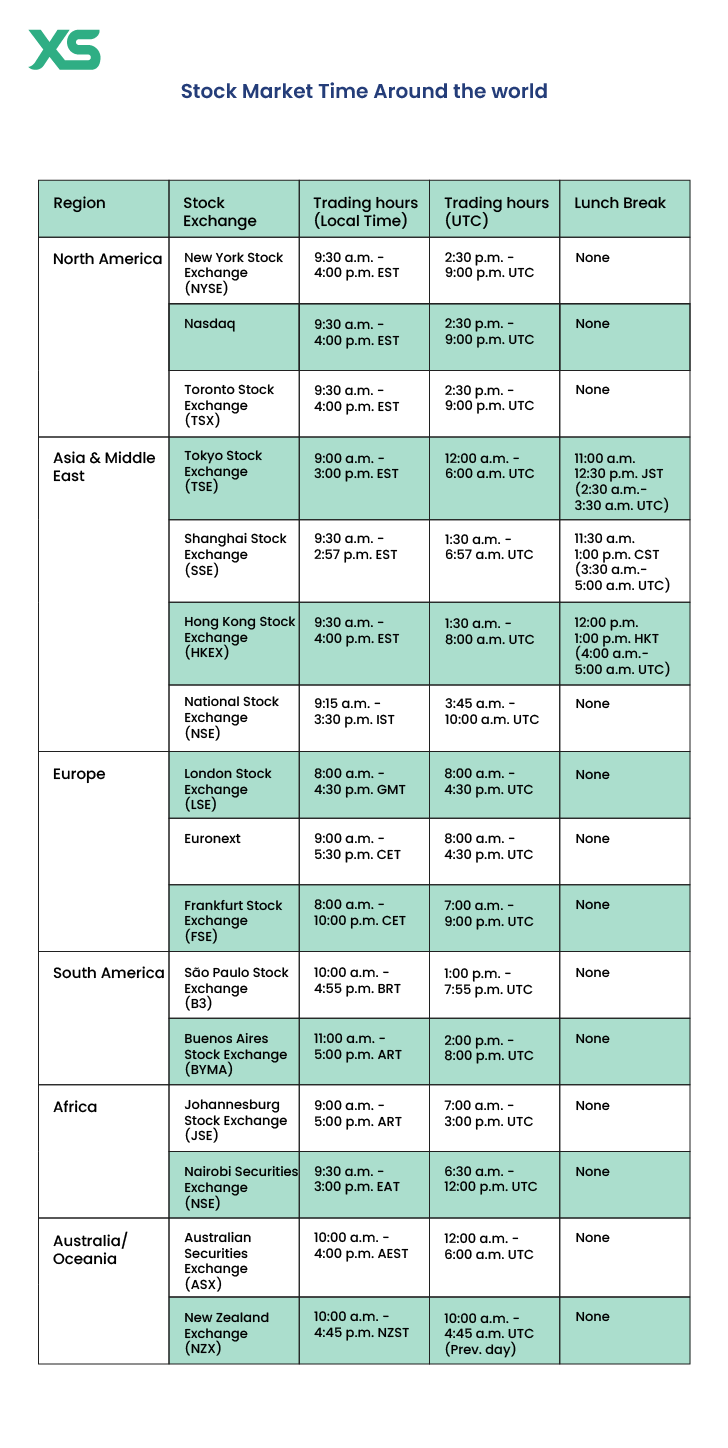
In the United States, the New York Stock Exchange (NYSE) and the Nasdaq Stock Market are the two most prominent exchanges. Both operate on a standard schedule from 9:30 AM to 4:00 PM Eastern Time (ET), Monday through Friday. This 6.5-hour window is considered the “regular trading session.” These hours are meticulously observed, shaping the daily routine for millions of investors and financial professionals across North America and beyond. Canada’s primary exchange, the Toronto Stock Exchange (TSX), generally follows a similar schedule, from 9:30 AM to 4:00 PM ET.
European Markets: LSE, Euronext, and Deutsche Börse
Europe presents a slightly more varied picture due to its multiple financial hubs and time zones. The London Stock Exchange (LSE), a crucial gateway for international capital, typically operates from 8:00 AM to 4:30 PM Greenwich Mean Time (GMT), which translates to 8.5 hours of trading. On the European mainland, Euronext – which encompasses exchanges in Paris, Amsterdam, Brussels, Lisbon, and Oslo – generally runs from 9:00 AM to 5:30 PM Central European Time (CET). Germany’s Deutsche Börse (Frankfurt Stock Exchange) adheres to a similar 9:00 AM to 5:30 PM CET schedule. These hours are designed to align with the typical European workday, while also allowing for some overlap with Asian market closes and North American market opens.
Asian Markets: SSE, TSE, and HKEX
Asia’s exchanges are often the first to open the global trading day. The Tokyo Stock Exchange (TSE) in Japan operates from 9:00 AM to 3:00 PM Japan Standard Time (JST), with a lunch break between 11:30 AM and 12:30 PM. This split session is a common feature in several Asian markets. The Shanghai Stock Exchange (SSE) and Shenzhen Stock Exchange (SZSE) in mainland China operate from 9:30 AM to 3:00 PM China Standard Time (CST), also including a lunch break from 11:30 AM to 1:00 PM. Hong Kong’s Stock Exchange (HKEX), a major international financial center, generally runs from 9:30 AM to 4:00 PM Hong Kong Time (HKT), with a lunch break from 12:00 PM to 1:00 PM. These schedules reflect the unique rhythms of their respective economies and provide a distinct start to the trading week.
Emerging Markets Considerations
Beyond these major exchanges, emerging markets present a diverse range of trading hours. For instance, the Bombay Stock Exchange (BSE) and National Stock Exchange (NSE) in India operate from 9:15 AM to 3:30 PM Indian Standard Time (IST). Brazil’s B3 exchange typically runs from 10:00 AM to 5:00 PM Brasilia Standard Time (BRT). These variations underscore the importance of precise knowledge when dealing with international assets. Each market’s schedule is a product of its local business culture, regulatory environment, and its position within the global economic framework, all contributing to the 24-hour cycle of global capital movement.
Why Trading Hours Matter for Investors
The specific times an exchange opens and closes are not arbitrary; they have profound implications for market dynamics, investor behavior, and overall financial strategy. Understanding these impacts is critical for both retail and institutional investors seeking to maximize returns and mitigate risks.
Impact on Liquidity and Volatility
Trading hours directly influence market liquidity and volatility. During regular trading hours, when the exchange is open, there is a continuous flow of buy and sell orders. This high volume of activity ensures liquidity, meaning that assets can be bought or sold quickly without significantly affecting their price. When an exchange closes, liquidity dries up. While some trading may occur in extended sessions (as discussed below), the bulk of market participants are inactive. This reduction in liquidity can lead to higher volatility when the market reopens, as pent-up orders and new information accumulated overnight can cause significant price gaps and rapid movements. Traders often refer to “opening gaps” or “closing imbalances” as phenomena directly related to the transition between open and closed market states.
Decision-Making and Information Flow
Market closures create periods of information asymmetry. News, economic reports, and corporate announcements released outside of trading hours cannot be immediately acted upon by the broader market. This can lead to a surge of activity at the open, as investors react simultaneously to overnight developments. For investors, this means that holding positions overnight carries inherent risks, as unforeseen events could impact asset values before they have an opportunity to react. Conversely, sophisticated investors and institutional players often leverage this by analyzing after-hours news to position themselves for the next trading session. The closing bell serves as a temporary pause in collective price discovery, allowing for reflection but also creating potential for rapid repricing upon resumption.
Risk Management Strategies
Effective risk management is inextricably linked to trading hours. Traders employing strategies that rely on rapid execution, such as day trading or high-frequency trading, are entirely confined to regular market hours. Positions held overnight expose investors to “gap risk” – the risk that an asset’s price will open significantly higher or lower than its previous close due to after-hours news. To mitigate this, many active traders close out their positions before the market closes, avoiding exposure to overnight events. Longer-term investors, while less concerned with daily fluctuations, still need to be aware of how market closures affect their ability to adjust portfolios, especially around major economic announcements or geopolitical events. Understanding these periods of reduced liquidity and potential volatility is fundamental to setting stop-loss orders, managing margin accounts, and overall portfolio protection.
Opportunity Cost of Being Out of Hours
For active traders, being unable to trade during off-hours represents an opportunity cost. Significant price movements, often driven by news events, can occur when the main exchanges are closed. If an investor cannot react to these movements, they may miss out on potential profits or be unable to limit losses. This is particularly relevant in a globally interconnected market where major news from one region can impact asset prices worldwide even while local exchanges are shut. While extended trading offers some recourse, its limitations mean that the bulk of market activity and opportunity remains concentrated within the regular trading session. Investors must balance the desire for continuous engagement with the practical realities of market hours and the increased risks associated with less liquid trading environments.
Beyond Standard Hours: Extended Trading and Its Implications
While the regular trading session dictates the primary hours of market operation, the financial landscape has evolved to include mechanisms for trading outside these traditional windows. Extended trading hours – encompassing pre-market and after-hours sessions – offer additional flexibility but come with their own set of characteristics and risks.
Pre-Market Trading
Pre-market trading refers to the period before the official market open. In the U.S., for instance, pre-market trading can begin as early as 4:00 AM ET and run until 9:30 AM ET. This session allows institutional investors, hedge funds, and increasingly, retail traders, to react to news released overnight or early in the morning, such as earnings reports or economic data. It provides an early opportunity to place orders and gauge market sentiment before the main session begins. The activity during pre-market can often hint at the likely direction or volatility of a stock when the regular market opens.
After-Hours Trading
Conversely, after-hours trading occurs following the official market close. For U.S. exchanges, this session typically runs from 4:00 PM ET until 8:00 PM ET. Similar to pre-market, after-hours trading allows market participants to respond to news breaks that occur post-market close, such as late-day corporate announcements or global events. It provides a window for investors to adjust their positions or capitalize on immediate reactions to fresh information without waiting for the next day’s open. The ability to trade after hours is largely facilitated by electronic communication networks (ECNs) rather than the traditional exchange floor.
Risks and Opportunities of Extended Hours
Extended trading hours present both unique opportunities and significant risks. The primary opportunity lies in the ability to react quickly to breaking news, potentially capitalizing on price movements before the wider market reacts during regular hours. This can be particularly advantageous for highly volatile stocks or during periods of significant market events. However, the risks are substantial. The most significant concern is lower liquidity. With fewer participants actively trading, bid-ask spreads tend to be wider, and it can be more challenging to execute large orders without impacting the price. This reduced liquidity also contributes to increased volatility, as even small orders can cause disproportionately large price swings. Additionally, price discovery can be less efficient, meaning the prices observed in extended hours may not accurately reflect the true consensus value of a stock.
Impact on Retail vs. Institutional Investors
Historically, extended trading was primarily the domain of institutional investors with direct access to ECNs and the resources to navigate lower liquidity. However, advancements in online brokerage platforms have made pre-market and after-hours trading accessible to retail investors. While this democratization offers retail traders more flexibility, it also exposes them to the aforementioned risks without necessarily having the same analytical tools or capital reserves as institutional players. Retail investors engaging in extended trading must exercise extreme caution, use limit orders to control prices, and understand that price movements can be erratic and quickly reversed when the regular session begins. For institutional investors, these sessions are a crucial part of their continuous risk management and portfolio adjustment strategies, allowing them to hedge positions or enter/exit large blocks more discreetly.
Navigating Market Closures: Weekends, Holidays, and Special Events
Beyond the daily open and close, stock exchanges also observe various scheduled and unscheduled closures, each carrying its own implications for market participants. Understanding these non-trading days is just as important as knowing the regular hours.
Weekend Closures and Monday Gaps
All major stock exchanges worldwide are closed on Saturdays and Sundays. This two-day break creates a significant “gap” in trading activity. During this time, news and events continue to unfold globally, leading to the phenomenon of “Monday gaps.” A Monday gap occurs when a stock’s opening price on Monday is significantly different from its closing price on the previous Friday. These gaps are a direct result of market participants reacting to weekend news all at once at the start of the new trading week. For investors, weekend closures mean that any positions held are exposed to two days of potential news impact without the ability to react, making the Monday open often a volatile and unpredictable period.
Public Holidays and Bank Holidays
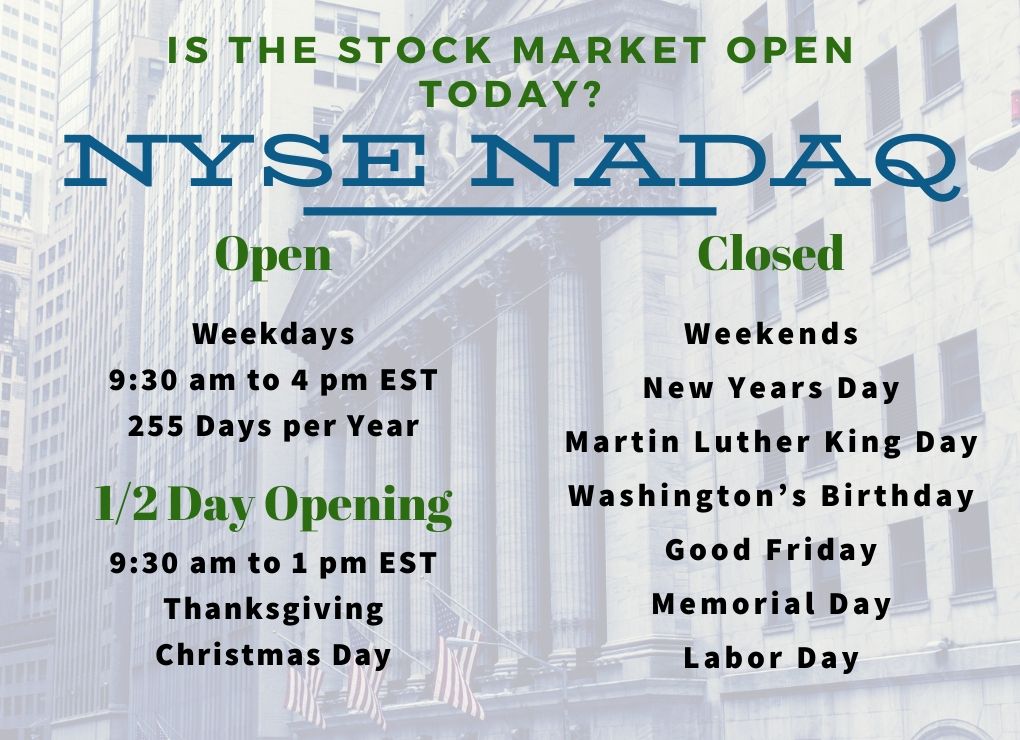
Stock exchanges typically observe a range of public and bank holidays specific to their respective countries. In the U.S., for example, the NYSE and Nasdaq close for federal holidays such as New Year’s Day, Martin Luther King, Jr. Day, Presidents’ Day, Good Friday, Memorial Day, Juneteenth, Independence Day, Labor Day, Thanksgiving Day, and Christmas Day. Many exchanges also have early closes on the day before or after certain holidays. European and Asian exchanges similarly observe their national holidays, which can include religious festivals, national independence days, or labor days. These scheduled closures are known well in advance, allowing investors to plan accordingly. However, they reduce the number of trading days in a given year and can, much like weekend closures, lead to concentrated activity before and after the holiday period, potentially increasing volatility.
Unexpected Closures and Circuit Breakers
While rare, exchanges can also experience unexpected closures or trading halts. These can be due to severe weather conditions (e.g., hurricanes that affect the physical infrastructure of an exchange city), technical malfunctions, or extraordinary market events. For instance, after the September 11, 2001 attacks, U.S. markets remained closed for four trading days. More commonly, exchanges employ “circuit breakers” – pre-defined thresholds that trigger temporary trading halts across the entire market to curb excessive volatility during sharp downturns. These halts are designed to give investors a chance to process information and prevent panic selling, but they represent an abrupt interruption to normal trading activity. Understanding the conditions that can trigger such halts is crucial for managing extreme market risk.
Planning for Non-Trading Days
Effective financial planning inherently involves accounting for non-trading days. For investors, this means being aware of holiday schedules well in advance, especially when managing portfolios with international exposure. Traders might adjust their strategies, perhaps reducing position sizes or avoiding overnight holdings before long weekends or holidays to minimize gap risk. For businesses, non-trading days can impact treasury operations, foreign exchange transactions, and the timing of corporate actions. Financial news outlets and brokerage platforms typically publish comprehensive calendars of market holidays, serving as essential resources for all market participants to navigate the periods when the world’s stock exchanges temporarily dim their lights, only to roar back to life with the next opening bell.
aViewFromTheCave is a participant in the Amazon Services LLC Associates Program, an affiliate advertising program designed to provide a means for sites to earn advertising fees by advertising and linking to Amazon.com. Amazon, the Amazon logo, AmazonSupply, and the AmazonSupply logo are trademarks of Amazon.com, Inc. or its affiliates. As an Amazon Associate we earn affiliate commissions from qualifying purchases.