
For investors, traders, and financial professionals worldwide, the opening and closing bells of the New York Stock Exchange (NYSE) and NASDAQ are not merely ceremonial chimes; they represent critical junctures that set the rhythm for global financial markets. Understanding the exact hours of operation, alongside the nuances of pre-market, after-hours trading, and holiday schedules, is fundamental for anyone looking to navigate the complex world of equities effectively. It’s a core piece of knowledge that underpins investment strategies, risk management, and the execution of financial decisions.
At its core, the New York stock market operates on a straightforward schedule, yet its implications are far-reaching. This guide delves into the standard operating hours, the opportunities and challenges presented by extended trading sessions, the vital role of market holidays, and the strategic considerations for investors aligning their activities with these pivotal timestamps.

The Standard Trading Hours of the NYSE and NASDAQ
The heart of the American equity market beats to a consistent drum, setting the standard for trading activity each weekday. These fixed hours provide a predictable framework that has governed financial transactions for decades, allowing for concentrated liquidity and efficient price discovery.
Core Operating Schedule: 9:30 AM to 4:00 PM ET
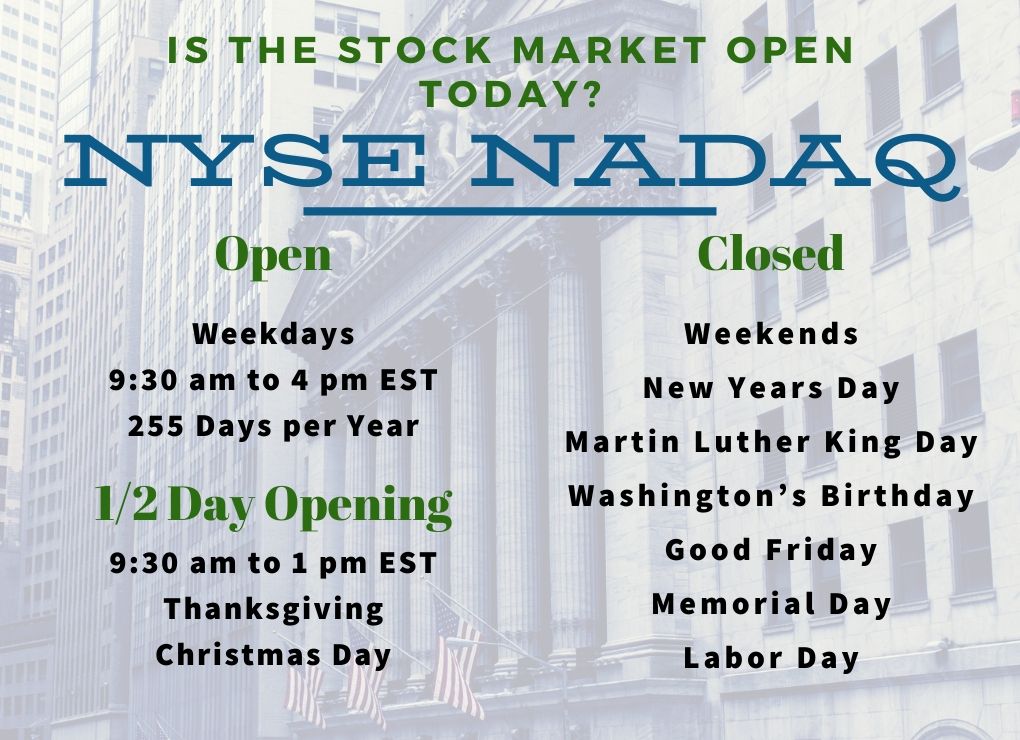
The primary trading session for both the New York Stock Exchange (NYSE) and the NASDAQ Stock Market runs from 9:30 AM Eastern Time (ET) to 4:00 PM ET on weekdays. This seven-and-a-half-hour window is considered the “regular” or “core” trading session. During these hours, the vast majority of stock transactions occur, market makers are actively facilitating trades, and liquidity is typically at its highest. The opening moments, often marked by the iconic opening bell ceremony, and the final hour leading up to the closing bell, are frequently characterized by heightened volatility and trading volume as investors react to overnight news, economic data releases, and position themselves for the next trading day.
The synchronized schedule between the NYSE, which primarily lists older, larger companies, and the NASDAQ, known for its technology and growth stocks, ensures a unified market environment. This consistency helps prevent arbitrage opportunities that could arise from staggered openings and closings and provides a level playing field for market participants. The precision of these hours is not arbitrary; it’s a carefully balanced system designed to optimize market efficiency, protect investors, and facilitate orderly capital allocation.
Understanding Eastern Time (ET) and Global Implications
The use of Eastern Time (ET) as the benchmark for New York market hours has significant global implications. ET refers to either Eastern Standard Time (EST) or Eastern Daylight Time (EDT), depending on the time of year. During daylight saving time, the market operates on EDT, which is UTC-4. During standard time, it operates on EST, which is UTC-5. This distinction is crucial for international investors and traders who must constantly convert these hours to their local time zones.
For instance, an investor in London (GMT/BST) needs to account for a 5-hour difference during EST and a 6-hour difference during EDT. A trader in Tokyo (JST) faces a 14-hour difference during EST and a 13-hour difference during EDT. This time zone disparity means that for many international investors, the U.S. market opens in their late afternoon or evening, and closes in the early morning of the following day. This necessitates sophisticated planning, automated trading systems, or dedicated overnight trading desks for institutions looking to actively participate during the core U.S. market hours. The dominance of the U.S. market means that these time conversions are a daily ritual for financial professionals across every continent, highlighting the interconnectedness of global finance.
The Rationale Behind These Hours
The current trading hours are largely a legacy of historical practices, but they persist due to several practical considerations. Historically, before electronic trading, market operations involved significant manual processes, from order matching to settlement. The limited hours were necessary to allow clerks and brokers to process the day’s transactions accurately and prepare for the next. While technology has drastically reduced the need for such manual interventions, the 9:30 AM to 4:00 PM ET window has proven to be an effective compromise that balances market access with the need for downtime.
One primary rationale is the concentration of liquidity. By limiting the trading window, buy and sell orders are funneled into a specific period, leading to higher trading volumes and tighter bid-ask spreads. This enhanced liquidity makes it easier for investors to execute trades at fair prices, reducing transaction costs and improving market efficiency. Furthermore, the concentrated trading window allows market participants to step away and digest information, analyze market movements, and formulate strategies without the pressure of continuous, live trading. This downtime is crucial for research, risk assessment, and maintaining work-life balance for those working within the financial sector.
Beyond Standard Hours: Pre-Market and After-Hours Trading
While the 9:30 AM to 4:00 PM ET window defines the core market day, technological advancements have extended the possibilities for trading beyond these traditional confines. Pre-market and after-hours sessions offer investors greater flexibility but come with their own distinct characteristics and risks.
Pre-Market Trading: Opportunities and Risks
Pre-market trading typically occurs between 4:00 AM ET and 9:30 AM ET, leading up to the opening bell. During this period, investors can place buy and sell orders through electronic communication networks (ECNs) or directly with brokers who offer these services. The primary drivers of pre-market activity are often significant news releases that occur outside of standard market hours, such as quarterly earnings reports, mergers and acquisitions announcements, or major economic data. Early reactions to these events can cause substantial price movements before the regular session even begins.
The opportunity in pre-market trading lies in reacting quickly to new information, potentially capitalizing on price discrepancies before broader market participation. However, this early access comes with significant risks. Liquidity is generally much lower than during regular hours, meaning there are fewer buyers and sellers for any given stock. This reduced liquidity can lead to wider bid-ask spreads, making it more expensive to execute trades, and increased volatility. A large order, which might be easily absorbed during the core session, could have a disproportionate impact on a stock’s price in pre-market. Furthermore, institutional investors and sophisticated traders often dominate pre-market activity, potentially putting individual investors at a disadvantage due to information asymmetry and superior trading infrastructure.
After-Hours Trading: Extending the Day
Following the closing bell at 4:00 PM ET, after-hours trading extends the market day, typically from 4:00 PM ET to 8:00 PM ET. Similar to pre-market, this session is facilitated by ECNs and allows investors to react to news that breaks immediately after the market closes. Earnings calls often take place in the hours following the market close, and the information gleaned from these calls can lead to significant price adjustments in after-hours trading.
The dynamics of after-hours trading largely mirror those of pre-market. It provides an avenue for immediate response to late-breaking news, offering flexibility for investors who may not be available during regular hours or who wish to adjust their positions based on new developments. However, like pre-market, after-hours sessions are characterized by lower liquidity and higher volatility. Spreads can be wider, and prices can move dramatically on relatively small volumes. This environment can be perilous for inexperienced traders, as prices established in after-hours may not hold once the regular market reopens, leading to potential gaps at the next day’s open. Investors must exercise caution and be aware of the inherent risks when participating in these extended trading sessions.
The Dynamics of Extended-Hours Trading
Both pre-market and after-hours trading represent a fundamental shift towards a more continuous, if less liquid, trading environment. The emergence of these sessions is a direct consequence of technological advancements and the increasing demand for instant access to markets. They offer crucial flexibility for institutional investors, who may need to adjust large positions quickly, and for retail investors who wish to react to global events or domestic news outside of the traditional trading window.
However, the core challenge remains liquidity. While institutional players might find enough depth for their trades, retail investors often encounter wider spreads and greater price impact for their orders. The lower volume means that price discovery is less robust, and a single large order can create significant price swings that might not reflect fundamental value. Information flow also plays a critical role; news released during these hours can have an amplified effect due to fewer participants to absorb and interpret the information. Therefore, while extended-hours trading provides convenience, it demands a higher degree of vigilance, risk awareness, and often, more sophisticated trading strategies.
Market Holidays and Special Closures
While the New York stock market largely adheres to its Monday-to-Friday schedule, there are crucial exceptions that all investors must be aware of: market holidays and occasional special closures. These breaks in trading are vital for operational reasons, national observance, and allowing market participants a respite from the constant flow of information.
Recognizing Official Stock Market Holidays
The New York Stock Exchange and NASDAQ observe a set of federal holidays, during which the markets are completely closed for trading. These include:
-
New Year’s Day: January 1st
-
Martin Luther King, Jr. Day: Third Monday in January
-
Presidents’ Day (Washington’s Birthday): Third Monday in February
-
Good Friday: Friday before Easter
-
Memorial Day: Last Monday in May
-
Juneteenth National Independence Day: June 19th
-
Independence Day: July 4th
-
Labor Day: First Monday in September
-
Thanksgiving Day: Fourth Thursday in November
-
Christmas Day: December 25th
When one of these holidays falls on a weekend, the market typically observes it on the closest weekday. For example, if Independence Day (July 4th) falls on a Saturday, the market will close on Friday, July 3rd. If it falls on a Sunday, the market will close on Monday, July 5th. This practice ensures that the market consistently takes the intended day off, irrespective of the calendar.
It’s important to note that while the stock markets are closed, other financial services might still operate. For example, banks often remain open on some federal holidays that the stock market observes, and vice versa. Investors should always consult the official holiday schedule published by the NYSE and NASDAQ at the beginning of each year to plan their trading and financial activities accordingly.
Early Closures and Irregular Schedules
In addition to full-day holidays, the New York stock market occasionally has early closures or abbreviated trading sessions. These typically occur on days surrounding major holidays, such as the day after Thanksgiving (Black Friday) or the day before Independence Day. On these days, the market might close at 1:00 PM ET, significantly shortening the trading window.
These irregular schedules are less common than full holidays but are equally important for investors to track. Early closures can create a compressed trading environment, potentially leading to increased volatility or reduced liquidity during the shortened session. Market participants need to adjust their strategies, order placements, and risk management protocols to account for these changes. For instance, traders relying on end-of-day price movements might find their windows significantly curtailed. Furthermore, the settlement cycles for trades executed on these shortened days remain largely unchanged, which can affect cash flow planning for institutional players.
Impact on Trading Strategies and Financial Planning
Market holidays and irregular schedules have a tangible impact on various aspects of financial planning and trading strategies. For active traders, understanding these closures is paramount for managing open positions, setting stop-loss orders, and planning for potential overnight risks. Holding positions over a long holiday weekend means being exposed to any news or global events that occur while the market is closed, which can lead to significant price gaps at the next open.
For long-term investors, holidays primarily affect the timing of transactions and the accumulation of dividends or interest. However, even for passive investors, being aware of market closures is important for tasks like rebalancing portfolios or initiating new investments, especially if they are tied to specific deadlines or tax implications. Financial planners also incorporate holiday schedules into their client communication and wealth management strategies, particularly when advising on liquidity needs or timing of withdrawals. In essence, while the market may be quiet on these days, the need for informed financial decision-making never rests.
The Significance of Market Open and Close for Investors
The moments surrounding the opening and closing bells of the New York Stock Market are often the most dynamic and telling periods of the trading day. Understanding the forces at play during these times is crucial for all market participants, from day traders to long-term institutional investors.
The Opening Bell: Symbolism and Volatility
The “opening bell” at 9:30 AM ET is more than just a symbolic tradition; it marks the culmination of overnight activity and the release of pent-up demand and supply. During the pre-market hours, traders and investors digest news, earnings reports, economic data, and global market movements that occurred while the U.S. market was closed. The moment the market opens, all these reactions converge, often leading to a surge in trading volume and significant price volatility.
For day traders, the first 30 to 60 minutes after the opening bell, sometimes referred to as the “power hour” or “opening drive,” can present prime opportunities due to exaggerated price swings and high liquidity. However, this period also carries heightened risk, as price movements can be erratic and difficult to predict. Long-term investors, while not actively trading minute-by-minute, often monitor the market open to gauge initial sentiment and to observe how their holdings react to the day’s fresh information. Large institutional orders are sometimes executed at the open, using algorithms designed to capture specific prices, further contributing to the initial volatility.
The Closing Bell: Price Discovery and Overnight Positioning
The “closing bell” at 4:00 PM ET signifies the end of the regular trading session and is equally significant. The final hour of trading, often called the “closing print,” is characterized by increased activity as investors try to execute trades before the market shuts down. Portfolio managers may adjust their positions to meet specific end-of-day targets, institutional traders might unwind or initiate positions to manage overnight risk, and algorithms often target the closing price for various benchmarks.
The closing price of a stock is particularly important as it is often used as a reference point for valuations, portfolio performance calculations, and the starting point for pre-market trading the next day. The price discovery process at the close can be intense, as market participants attempt to establish a final consensus on value based on the day’s events. For investors holding positions overnight, the closing price provides a critical data point for assessing their portfolio’s value and for anticipating potential gaps at the next day’s open, particularly if significant news is expected after market close.
Strategic Considerations for Different Investor Types
The timing of market open and close influences different investor types in distinct ways:
-
Day Traders: Are highly attuned to the opening and closing hours, leveraging the increased volatility and liquidity to execute short-term trades. They often avoid holding positions overnight to mitigate news risk.
-
Swing Traders: Who hold positions for a few days to a few weeks, pay close attention to closing prices and after-hours news to anticipate the next day’s open and adjust their entry/exit strategies.
-
Long-Term Investors: While less concerned with minute-by-minute fluctuations, they still consider the market open and close for significant portfolio rebalancing, dividend reinvestment decisions, or to enter/exit large positions, often seeking greater liquidity during regular hours. They are more exposed to overnight risks but less impacted by daily volatility.
-
Algorithmic Traders: Rely heavily on precise timing, with sophisticated algorithms designed to execute trades at specific moments during the open, close, or in response to real-time data within milliseconds of its release.
Understanding the dynamics of these critical periods allows investors to align their strategies with market behavior, manage risk effectively, and make more informed decisions, regardless of their investment horizon.
Navigating Global Markets and Time Zones
While the New York Stock Market occupies a central position in global finance, it is part of a much larger, interconnected ecosystem. For modern investors, understanding how the NYSE’s hours fit into the broader global trading landscape is increasingly important.
Synchronizing with International Exchanges
The world’s major stock exchanges operate on their own distinct schedules, creating an almost continuous cycle of trading activity across different time zones. As the New York market closes, Asian markets like Tokyo and Shanghai are often preparing for their open, or are already well into their trading day. When New York opens, European markets like London and Frankfurt are typically in their mid-day session. This staggered schedule means that news and economic data from one region can ripple across other markets, influencing prices even when a specific exchange is closed.
For globally diversified investors, synchronizing with international exchanges is crucial. For example, a U.S. investor holding shares in a European company might see their U.S.-listed ADR (American Depositary Receipt) react to news from the European market even before the NYSE opens. Similarly, developments in Asian economies can affect U.S. company stocks that have significant exposure to those regions. Financial institutions with global operations maintain 24-hour trading desks to manage portfolios and execute trades across different time zones, highlighting the constant interplay between markets.
The 24/7 Nature of Forex and Crypto Markets
In stark contrast to the fixed hours of equity markets, foreign exchange (forex) and cryptocurrency markets operate on a near 24/7 basis. The forex market, driven by the global network of banks, never truly closes during the week, moving seamlessly from the Asian session to Europe, then to North America, and back again. Cryptocurrency markets, being decentralized and digital, similarly run continuously, reflecting a constant global demand and supply.
This continuous operation in forex and crypto offers different opportunities and challenges compared to equity markets. While it allows for immediate reactions to any global event at any time, it also means that there is no “closing bell” to signal a pause or allow for overnight risk assessment. Traders in these markets must be constantly vigilant or employ sophisticated automated systems to manage their positions. Understanding this distinction is vital for investors who diversify across different asset classes, as the operational rhythm and risk profiles are fundamentally different. The fixed hours of equity markets, in this context, provide a period of reflection and respite that is absent in the always-on nature of digital and currency trading.
Tools and Resources for Tracking Market Hours Globally
Given the complexities of different time zones and holiday schedules, a variety of tools and resources are available to help investors keep track of global market hours:
-
Financial News Websites and Apps: Most major financial news outlets (e.g., Bloomberg, Reuters, Wall Street Journal, Financial Times) provide comprehensive market calendars and real-time updates on opening and closing times for major exchanges.
-
Brokerage Platforms: Many online brokerage platforms integrate global market hours and holiday schedules directly into their trading interfaces, offering convenient access for their clients.
-
Specialized Time Zone Converters: Websites and apps specifically designed for time zone conversion can be invaluable for international investors, allowing them to quickly translate U.S. market hours into their local time.
-
Exchange Websites: The official websites of the NYSE, NASDAQ, and other global exchanges provide the most accurate and up-to-date information on their operating hours and holiday closures.
Leveraging these resources ensures that investors, regardless of their location or the complexity of their portfolio, can stay informed about when the New York stock market opens and closes, as well as the operational status of other key markets worldwide. This diligence is a cornerstone of effective global investment strategy and risk management in an increasingly interconnected financial world.
aViewFromTheCave is a participant in the Amazon Services LLC Associates Program, an affiliate advertising program designed to provide a means for sites to earn advertising fees by advertising and linking to Amazon.com. Amazon, the Amazon logo, AmazonSupply, and the AmazonSupply logo are trademarks of Amazon.com, Inc. or its affiliates. As an Amazon Associate we earn affiliate commissions from qualifying purchases.