
For anyone involved in the world of finance, from individual investors and day traders to institutional portfolio managers and financial advisors, knowing the precise operating hours of the New York stock market is not merely a detail—it’s a foundational requirement. The opening and closing bells of Wall Street symbolize the start and end of daily economic activity, setting the pace for global markets and influencing investment decisions worldwide. Understanding these hours, along with the nuances of pre-market and after-hours trading, is critical for strategic planning, risk management, and capitalizing on market opportunities. This comprehensive guide delves into the specifics of when the New York stock market opens, why these timings are important, and how various factors influence market accessibility.

Understanding Standard Trading Hours: The Core of Market Activity
The New York stock market, primarily represented by two major exchanges – the New York Stock Exchange (NYSE) and the NASDAQ Stock Market – adheres to a consistent schedule for its regular trading sessions. These hours are meticulously observed, providing a predictable framework for millions of transactions daily.
The New York Stock Exchange (NYSE) and NASDAQ: Dual Pillars of US Markets
Both the NYSE, renowned for its physical trading floor and traditional auction-based system, and NASDAQ, a fully electronic exchange known for its technology and growth stocks, share identical regular trading hours. This standardization ensures a unified market window for the vast majority of publicly traded securities in the United States.
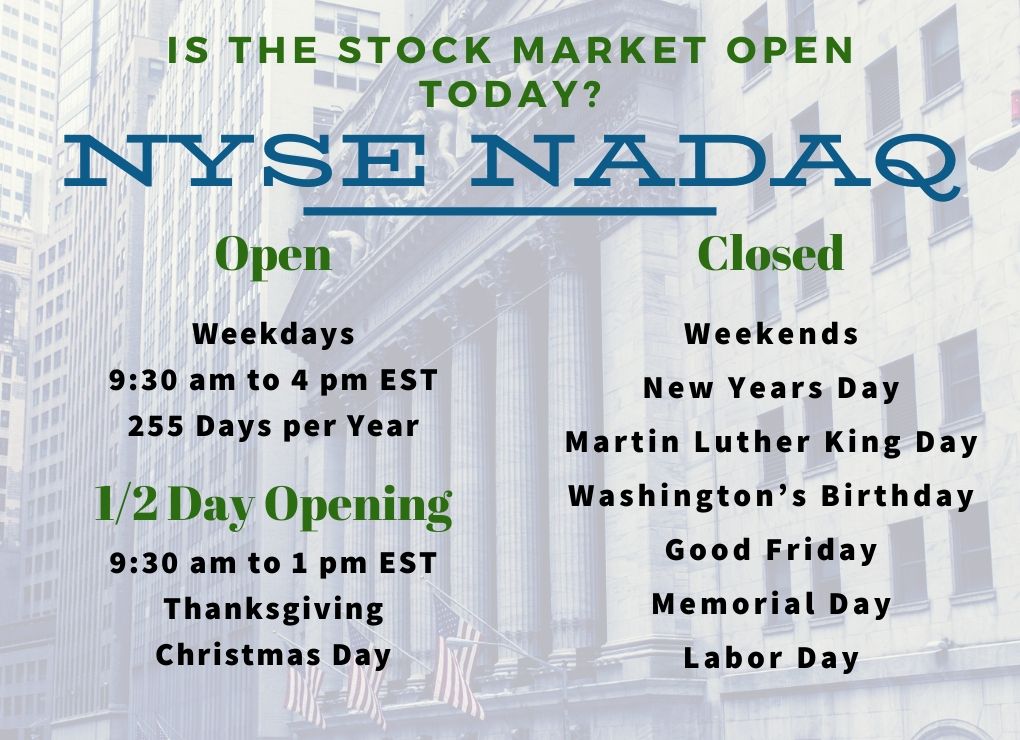
The standard trading hours for both the NYSE and NASDAQ are:
-
Opening Time: 9:30 AM Eastern Time (ET)
-
Closing Time: 4:00 PM Eastern Time (ET)
This 6.5-hour window constitutes the core of the trading day, during which liquidity is highest and price discovery mechanisms are most robust. For investors and traders, this period represents the primary opportunity to execute orders, react to news, and participate in the broader market’s collective assessment of asset values.
Eastern Time Zone (ET) Explained: A Crucial Geographic Anchor
It is paramount to remember that all market hours for the New York stock market are quoted in Eastern Time (ET). This often means adjusting for your local time zone if you are located elsewhere in the United States or internationally. For instance, if you are on the West Coast of the US (Pacific Time, PT), the market opens at 6:30 AM PT. For those in London (GMT), the market opens at 2:30 PM GMT. This time zone difference is not just a matter of convenience; it directly impacts when you need to be active and attentive to market movements from your specific location. Tools and platforms often provide time zone conversions, but a clear understanding of ET is non-negotiable for serious market participants.
Impact of Weekends and Public Holidays: Market Closures
The New York stock market observes all weekends (Saturdays and Sundays) as non-trading days. Additionally, a set of federal holidays dictates market closures throughout the year. These holidays typically include:
-
New Year’s Day
-
Martin Luther King, Jr. Day
-
Presidents’ Day
-
Good Friday
-
Memorial Day
-
Juneteenth National Independence Day
-
Independence Day
-
Labor Day
-
Thanksgiving Day
-
Christmas Day
On occasion, if a holiday falls on a weekend, the market may observe it on the preceding Friday or following Monday. Furthermore, the market sometimes operates on an abbreviated schedule on days preceding or following certain holidays, such as the day after Thanksgiving (Black Friday) or Christmas Eve, typically closing early at 1:00 PM ET. Staying informed about the annual holiday schedule is crucial for planning trades and managing portfolios effectively, as it affects liquidity, news flow, and the settlement of transactions.
Beyond Standard Hours: Pre-Market and After-Hours Trading
While the regular 9:30 AM to 4:00 PM ET window defines standard trading, modern electronic trading platforms have extended market accessibility well beyond these core hours. Pre-market and after-hours trading provide opportunities for participants to react to news and execute trades before the opening bell and after the closing bell.
What is Pre-Market Trading? An Early Glimpse
Pre-market trading refers to the period before the regular trading session begins. For the NYSE and NASDAQ, this typically starts as early as 4:00 AM ET and runs until 9:30 AM ET. This window allows investors to place orders and react to overnight news, earnings reports released before market open, or global economic developments. Key characteristics of pre-market trading include:
-
Purpose: To allow participants to react to significant news or events that occur outside of regular hours.
-
Participants: Primarily institutional investors, professional traders, and sophisticated retail investors.
-
Risks: Lower liquidity compared to regular hours, which can lead to wider bid-ask spreads and increased price volatility. Orders may be harder to fill at desired prices.
Exploring After-Hours Trading: Extending the Trading Day
After-hours trading commences immediately after the regular trading session closes at 4:00 PM ET and can extend as late as 8:00 PM ET. Similar to pre-market, this period is driven by the need to respond to breaking news, company announcements, or earnings reports that are often released after the market close.
-
Purpose: To enable prompt reactions to post-market news, such as quarterly earnings calls or major geopolitical announcements.
-
Participants: Like pre-market, it’s typically dominated by institutional players, but many retail brokers now offer after-hours access.
-
Risks: Similar to pre-market, after-hours trading is characterized by reduced liquidity and higher volatility, making price discovery more challenging and potentially increasing slippage for executed orders.
Why Trade Outside Standard Hours? Opportunities and Challenges
Trading outside standard hours offers several distinct advantages, primarily the ability to react quickly to time-sensitive information. For companies reporting earnings after market close, pre-market and after-hours trading allow immediate price adjustments based on the news, rather than waiting for the next regular session. This can be crucial for investors seeking to mitigate risk or capitalize on immediate opportunities.
However, these extended hours come with inherent challenges:
-
Lower Liquidity: Fewer participants mean fewer buyers and sellers, which can make it difficult to execute large orders without significantly impacting the price.
-
Wider Spreads: The difference between the bid (highest price a buyer is willing to pay) and ask (lowest price a seller is willing to accept) can be much larger, increasing trading costs.
-
Increased Volatility: Prices can swing dramatically on relatively small trading volumes, making it a riskier environment for less experienced traders.
-
Limited Order Types: Some brokers may offer a more restricted range of order types during extended hours.
Prudent investors often exercise caution during these periods, limiting trade sizes and focusing on highly liquid stocks if they choose to participate.
The Significance of Market Open and Close: Psychological and Strategic Dimensions
The opening and closing bells of the New York stock market are more than mere time markers; they are pivotal moments that often dictate the day’s market sentiment and present unique trading dynamics.
Volatility and Liquidity at the Bell: The Opening Rush
The first 30 to 60 minutes of the trading day (9:30 AM to 10:30 AM ET) are typically characterized by heightened volatility and high trading volumes. This “opening rush” occurs as traders and investors react to:
-
Overnight News: Developments from global markets, economic data releases, and corporate announcements made before the open.
-
Pent-Up Orders: A backlog of buy and sell orders accumulated overnight, including limit orders, market orders, and stop orders.
-
Market Sentiment: The initial price movements often reflect the prevailing sentiment, setting the tone for the rest of the day.
For active traders, this period can present significant profit opportunities due to rapid price swings, but it also carries increased risk. Similarly, the final hour leading up to the 4:00 PM ET close can also see increased activity as institutional investors rebalance portfolios, settle positions, and execute “window dressing” trades to improve their reported holdings.
Market Psychology and Daily Trends: Interpreting the Momentum
The opening and closing periods are rich in psychological significance. A strong opening can foster bullish sentiment, while a weak opening might trigger initial selling pressure. Daily trends are often established early on, and while they can reverse, the initial momentum can heavily influence intra-day trading strategies. Investors frequently analyze opening gaps (the difference between yesterday’s close and today’s open) as indicators of significant overnight news or changes in market perception. Understanding these psychological undercurrents can help investors anticipate short-term movements, though fundamental analysis remains paramount for long-term decision-making.
Strategic Considerations for Different Investors: Tailoring Your Approach
Different types of investors approach market hours with varying strategies:
-
Day Traders: Focus heavily on the opening and closing hours, leveraging high volatility and liquidity for quick profits. They rely on technical analysis and rapid execution.
-
Swing Traders: May use the opening and closing momentum to identify trends that can last a few days or weeks, but are less focused on intra-day fluctuations.
-
Long-Term Investors: While aware of market hours, their primary concern is fundamental analysis and the long-term growth prospects of their investments. They are less impacted by short-term volatility and typically place orders without extreme urgency.
-
Institutional Investors: Often execute large block trades that require deep liquidity, making the regular trading hours—especially the opening and closing periods—crucial for minimizing market impact.
Each strategy requires a distinct approach to monitoring market hours and leveraging the opportunities (and mitigating the risks) presented by different trading windows.
Factors Influencing Market Hours and Operations: Beyond the Clock
While the standard schedule is generally consistent, several external factors can influence or temporarily alter the New York stock market’s operational framework.
Daylight Saving Time Adjustments: A Bi-Annual Shift
The United States observes Daylight Saving Time (DST), which begins in March and ends in November. During these periods, the local time shifts by one hour. Critically, the market open and close always remain fixed at 9:30 AM ET and 4:00 PM ET, regardless of DST. This means that for international traders or those in regions that do not observe DST, the market’s opening and closing times relative to their local time zones will shift twice a year. For example, if you are in the UK, the market might open at 2:30 PM GMT during standard time and 1:30 PM BST during DST. Always confirm your local time conversion when DST changes.
Emergency Closures and Circuit Breakers: Protecting Market Integrity
In rare but critical circumstances, the New York stock market may implement emergency closures or trading halts. These are typically triggered by:
-
National Emergencies: Events like major natural disasters (e.g., hurricanes impacting NYC infrastructure), terrorist attacks, or significant national security threats.
-
Extreme Market Volatility (Circuit Breakers): Designed to prevent panic selling or buying, circuit breakers automatically halt trading across US exchanges if the S&P 500 index falls by specific percentages (7%, 13%, and 20%) during a single trading day. These halts provide a cooling-off period, allowing investors to reassess conditions.
While infrequent, awareness of these protective mechanisms is important for understanding the resilience and regulatory oversight of the financial markets.
Global Market Interconnectedness: A 24/5 Ecosystem
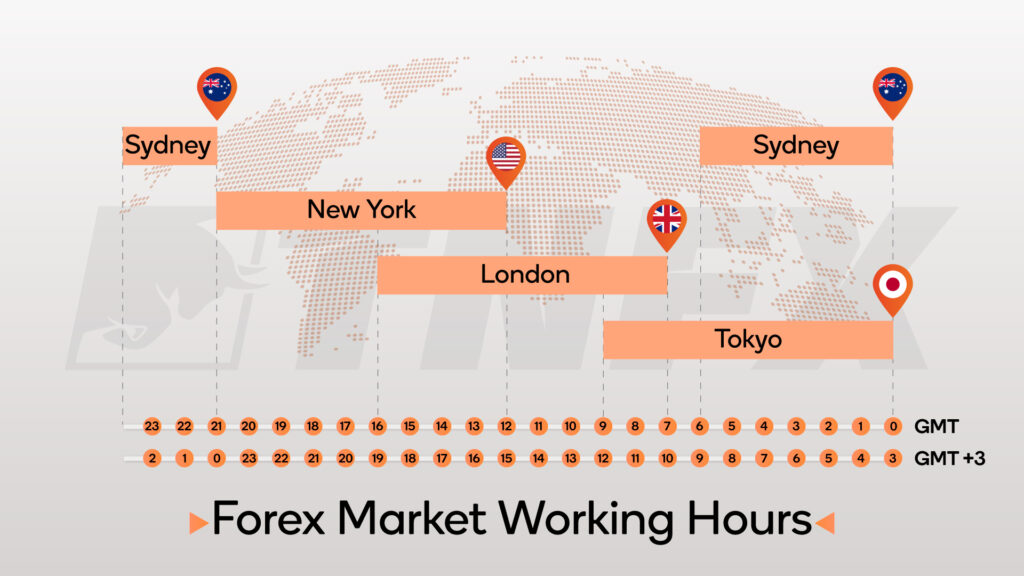
The New York stock market doesn’t operate in isolation. It is a critical component of a 24-hour global trading ecosystem. When New York closes, markets in Asia (e.g., Tokyo, Hong Kong) are already well into their trading day, or European markets (e.g., London, Frankfurt) are about to open or are closing. News and economic data released during these global trading sessions often influence how the New York market will open. For sophisticated investors, monitoring major global indices and futures markets even when the NYSE and NASDAQ are closed can provide valuable insights into potential price movements once Wall Street reopens.
Practical Implications for Investors: Leveraging Market Hours Effectively
Understanding the nuances of market hours is not just theoretical knowledge; it has direct practical implications for every investor’s strategy and daily routine.
Planning Your Trading Day: Structure and Discipline
For active investors, structuring your trading day around market hours is essential. This includes:
-
Pre-Market Preparation: Reviewing overnight news, economic calendars, earnings reports, and futures markets before 9:30 AM ET.
-
During Market Hours: Monitoring real-time price action, executing trades during periods of high liquidity, and adjusting positions as necessary.
-
Post-Market Review: Analyzing the day’s performance, reviewing individual stock movements, and preparing for the next trading session.
Disciplined adherence to a structured approach, informed by market hours, can significantly enhance decision-making and performance.
Monitoring News and Economic Events: Timing is Everything
Many critical economic reports (e.g., inflation data, employment figures, GDP reports) and corporate earnings announcements are strategically released either before the market opens (e.g., 8:30 AM ET) or after it closes (e.g., 4:05 PM ET). This timing is designed to allow market participants to absorb and react to the information in a structured manner. Investors must be acutely aware of these release schedules, as they often trigger significant price volatility and present both risks and opportunities.
Leveraging Financial Tools and Platforms: Staying Connected
Modern financial tools, trading platforms, and news services are indispensable for navigating market hours effectively. These tools offer:
-
Real-time Data: Live quotes, charts, and news feeds.
-
Customizable Alerts: Notifications for price movements, news events, or specific stock triggers.
-
Extended Hours Trading Access: Many brokerage platforms provide direct access to pre-market and after-hours trading.
-
Time Zone Conversion: Built-in features to display market hours in your local time.
Mastering these tools ensures that investors can stay connected to the market and execute their strategies seamlessly, regardless of their physical location.
The Importance of a Well-Defined Strategy: Beyond the Bells
Ultimately, while knowing when the NY stock market opens and closes is crucial, it serves as a framework for a more comprehensive investment strategy. Whether you’re a long-term investor, a swing trader, or a day trader, your success hinges on:
-
Clear Goals: Defining what you aim to achieve.
-
Risk Management: Understanding and mitigating potential losses.
-
Thorough Research: Making informed decisions based on fundamentals and technical analysis.
-
Emotional Discipline: Avoiding impulsive actions driven by fear or greed.
The rhythm of the market, dictated by its opening and closing bells, is a constant, but how you dance to that rhythm with your investments is what truly defines your financial journey.
Conclusion
The New York stock market’s operating hours are far more than mere temporal markers; they are the pulsating heart of the financial world, dictating when billions of dollars change hands and economic value is redefined. From the predictable rhythm of the 9:30 AM to 4:00 PM ET standard session to the extended opportunities and risks of pre-market and after-hours trading, understanding these timings is indispensable for anyone seeking to engage with public markets. By appreciating the specific opening and closing times, accounting for time zone differences and holidays, and recognizing the dynamics of various trading periods, investors can better plan their strategies, manage their exposure, and ultimately, navigate the complex yet rewarding landscape of global finance with greater precision and confidence. The bells of Wall Street ring daily, signaling both opportunity and challenge, and for the astute investor, knowing precisely when they chime is the first step towards a well-informed financial journey.
aViewFromTheCave is a participant in the Amazon Services LLC Associates Program, an affiliate advertising program designed to provide a means for sites to earn advertising fees by advertising and linking to Amazon.com. Amazon, the Amazon logo, AmazonSupply, and the AmazonSupply logo are trademarks of Amazon.com, Inc. or its affiliates. As an Amazon Associate we earn affiliate commissions from qualifying purchases.