
In the fast-paced world of finance, timing is often just as critical as the assets themselves. For the modern investor, understanding when trading markets open and close is fundamental to executing a successful strategy. Whether you are a day trader looking to capitalize on morning volatility or a long-term investor monitoring global economic shifts, the “opening bell” represents more than just a start time; it signifies the injection of liquidity, the reaction to overnight news, and the beginning of price discovery.
Because we operate in a globalized economy, the financial markets never truly sleep. As one exchange closes in New York, another is preparing to open in Tokyo or Sydney. This continuous cycle provides opportunities around the clock, but it also requires a sophisticated understanding of various time zones, market sessions, and the specific behaviors of different asset classes.
The Global Trading Clock: Understanding Major Equity Market Sessions
Equity markets are the heartbeat of the financial world. Unlike the decentralized nature of some digital assets, stock exchanges have rigid operating hours that dictate when the majority of trading volume occurs. These hours are typically set to align with the local business day of the host city.
The North American Powerhouses: NYSE and NASDAQ
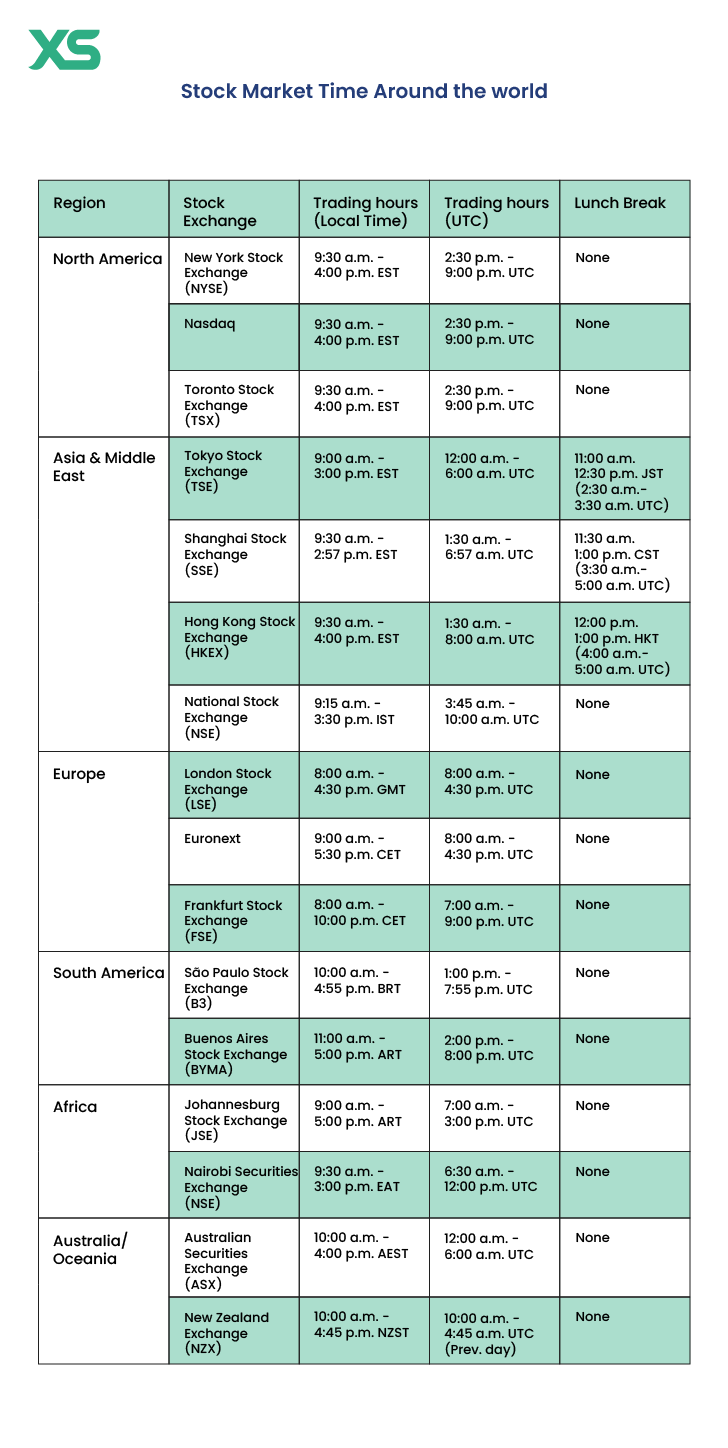
The New York Stock Exchange (NYSE) and the NASDAQ are the two largest stock exchanges in the world. For most investors, these are the primary focus. Both exchanges operate on Eastern Time (ET).
-
Standard Trading Hours: 9:30 AM to 4:00 PM ET, Monday through Friday.
-
The Significance: The 9:30 AM opening is characterized by high volatility as the market absorbs news that broke after the previous day’s close. This period is often referred to as the “opening cross,” where buy and sell orders are matched to determine the opening price.
The European Hubs: London, Frankfurt, and Euronext
Europe serves as a vital bridge between the Asian and American sessions. The London Stock Exchange (LSE) is the most prominent, but the Frankfurt Stock Exchange (Xetra) and Euronext (Paris, Amsterdam, Brussels) are equally critical for global price action.
-
London Stock Exchange (LSE): 8:00 AM to 4:30 PM GMT (Greenwich Mean Time).
-
Euronext and Frankfurt: 9:00 AM to 5:30 PM CET (Central European Time).
-
The Overlap: One of the most important periods for liquidity occurs between 8:00 AM and 11:30 AM ET, when both the European and North American markets are open simultaneously. This overlap often sees the highest trading volumes of the day.
The Asian-Pacific Frontier: Tokyo, Hong Kong, and Sydney
The trading day technically begins in the East. These markets often set the tone for the European and American sessions to follow.
-
Tokyo Stock Exchange (TSE): 9:00 AM to 3:00 PM JST (Japan Standard Time), with a lunch break from 11:30 AM to 12:30 PM.
-
Hong Kong Stock Exchange (HKEX): 9:30 AM to 4:00 PM HKT, with a lunch break from 12:00 PM to 1:00 PM.
-
Australian Securities Exchange (ASX): 10:00 AM to 4:00 PM AEST.
Unlike Western markets, many Asian exchanges still observe a mid-day break, which pauses trading and allows participants to recalibrate before the afternoon session.
Beyond Regular Hours: Pre-Market and After-Hours Trading
While the “official” bells ring at specific times, electronic trading has made it possible to trade stocks outside of standard hours. This is known as extended-hours trading, and it plays a massive role in how markets react to earnings reports and geopolitical events.
The Mechanics of Extended Trading
Extended trading occurs through Electronic Communication Networks (ECNs), which match buyers and sellers directly without a traditional exchange floor.
-
Pre-Market Trading: In the U.S., this can begin as early as 4:00 AM ET, though the bulk of activity starts around 8:00 AM ET.
-
After-Hours Trading: This typically runs from 4:00 PM to 8:00 PM ET.
Risks and Rewards of the Extended Sessions
For the retail investor, trading during these hours offers the chance to react immediately to news. If a major tech company releases a positive earnings report at 4:05 PM, those in the after-hours market can buy before the general public has access the following morning.
However, there are significant risks:
-
Lower Liquidity: Far fewer participants trade during these hours, making it harder to enter or exit positions.
-
Wider Spreads: Because there is less volume, the difference between the “bid” (buy) and “ask” (sell) price is often much wider, leading to higher transaction costs.
-
Extreme Volatility: Small trades can cause large price swings due to the lack of depth in the order book.
Specialized Markets: Forex, Crypto, and Commodities
Not every financial instrument follows the 9-to-5 schedule of the stock market. Some of the world’s most liquid assets operate on entirely different timelines.
The 24/5 Foreign Exchange (Forex) Market
The Forex market is the largest and most liquid financial market in the world. It does not have a central physical exchange; instead, it is a global network of banks and brokers.
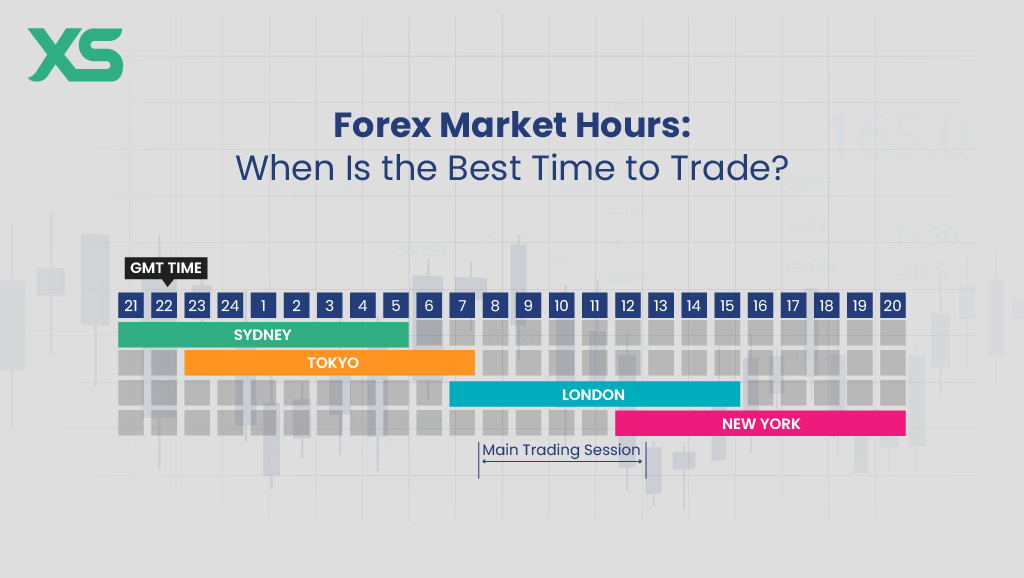
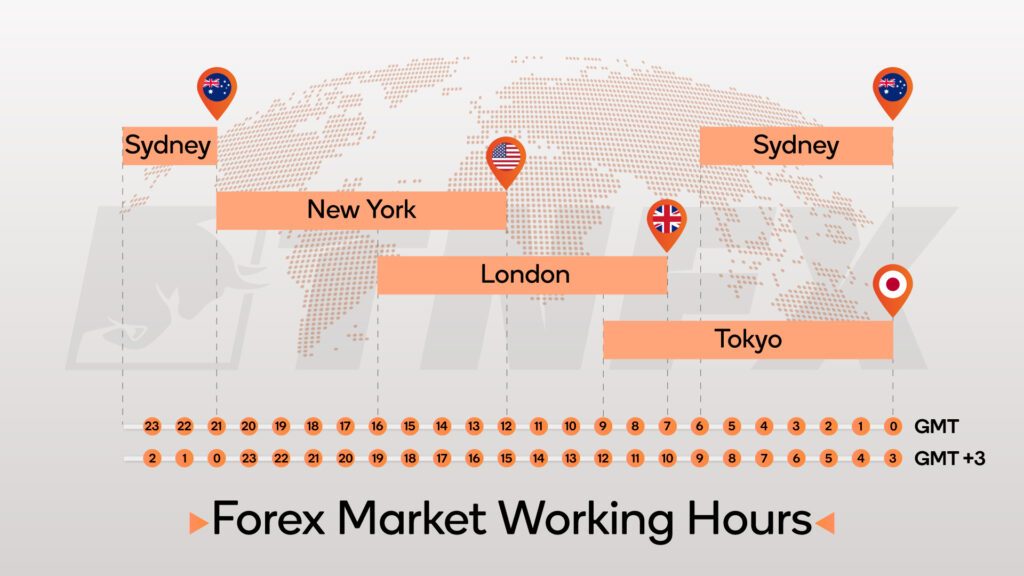
Forex trading begins on Sunday at 5:00 PM ET (as the Sydney market opens) and runs continuously until Friday at 5:00 PM ET (as the New York market closes). Within this 24-hour cycle, there are four major sessions: Sydney, Tokyo, London, and New York. The most active times are during session overlaps, particularly the London/New York overlap, where the world’s two largest financial centers are transacting simultaneously.
Cryptocurrency: The Market That Never Sleeps
Cryptocurrency is unique in that it is the only major asset class that trades 24 hours a day, 7 days a week, 365 days a year. There are no opening or closing bells for Bitcoin or Ethereum.
While this provides unparalleled accessibility, it also means that market-moving news can happen at 3:00 AM on a Sunday. For investors, this requires a different approach to risk management, often involving the use of automated “stop-loss” orders to protect capital while they are away from their screens.
Futures and Commodities
Futures markets, such as those for gold, oil, and stock indices (like the S&P 500 E-minis), operate nearly 24 hours a day during the workweek. For example, the CME Group (Chicago Mercantile Exchange) typically opens on Sunday evening and closes Friday afternoon, with brief daily breaks for maintenance. This allows traders to hedge their positions against overnight risks in the equity markets.
Navigating Time Zones and Holiday Closures
For an investor managing a diversified global portfolio, the calendar is just as important as the clock. Time zone shifts and local holidays can create “dead zones” in trading or unexpected bouts of volatility.
Daylight Savings Time Complications
One of the most confusing aspects of global trading is the transition to and from Daylight Savings Time (DST). Not all countries shift their clocks on the same day, and some do not observe DST at all. For a few weeks in March and October, the time difference between New York and London may shift from five hours to four hours, or vice versa. Traders must be hyper-aware of these shifts to avoid missing the opening of a specific session.
Major Market Holidays
Market closures for holidays can lead to “thin” trading days. Even if one market is open, if a major partner is closed, volume will likely be low.
-
U.S. Closures: Thanksgiving, Independence Day, and Labor Day often see global volume drop.
-
Lunar New Year: This can result in week-long closures or significantly reduced activity across major Asian hubs like Hong Kong and Shanghai.
-
Boxing Day: While U.S. markets are open on December 26th, the UK, Canada, and Australia are typically closed, impacting liquidity in Commonwealth-related assets.
Strategic Timing: When is the Best Time to Trade?
Simply knowing when the markets are open is the first step. The second is knowing when within those hours to execute your trades. Market behavior changes drastically throughout the day.
The “Power Hour” and Opening Volatility
The first and last hours of the trading day are generally the most active.
-
The Opening Hour (9:30 AM – 10:30 AM ET): This is often driven by retail sentiment and the execution of orders placed overnight. It is a period of high discovery and can be dangerous for novice traders due to rapid price reversals.
-
The Closing Hour (3:00 PM – 4:00 PM ET): Known as the “Power Hour,” this is when institutional investors—pension funds, mutual funds, and ETFs—rebalance their positions. Huge blocks of shares move during this time, often determining the trend for the following day.
The Mid-Day Lull
Between 12:00 PM and 2:00 PM ET, the markets often experience a “mid-day lull.” Traders in New York take lunch, and the European markets begin to close. During this time, volume thins out, and prices may drift sideways. Many professional traders avoid taking new positions during this window because the lack of volume makes price movements less reliable.
Impact of Economic Reports
Regardless of the exchange’s opening time, specific scheduled events can override standard market behavior. In the U.S., the Bureau of Labor Statistics and the Federal Reserve often release data at 8:30 AM ET or 2:00 PM ET. These releases can cause massive spikes in activity before or during the session, and smart investors always check the economic calendar before the opening bell rings.
In conclusion, understanding when trading markets open is a fundamental component of financial literacy. By mastering the global clock, acknowledging the nuances of extended-hours trading, and respecting the unique schedules of different asset classes, investors can better position themselves to catch opportunities and avoid the pitfalls of low-liquidity environments. Whether you are trading the London/New York overlap or monitoring the 24/7 world of crypto, timing remains one of the most powerful tools in your investment arsenal.
aViewFromTheCave is a participant in the Amazon Services LLC Associates Program, an affiliate advertising program designed to provide a means for sites to earn advertising fees by advertising and linking to Amazon.com. Amazon, the Amazon logo, AmazonSupply, and the AmazonSupply logo are trademarks of Amazon.com, Inc. or its affiliates. As an Amazon Associate we earn affiliate commissions from qualifying purchases.