
In the fast-paced world of global finance, timing is often as critical as the assets themselves. For the modern investor, the stock market is not a single, monolithic entity that operates on a universal clock; rather, it is a sophisticated network of international exchanges, each governed by its own regional time zones, cultural norms, and economic schedules. Understanding when stock markets open and close is fundamental to executing a successful investment strategy, managing risk, and capitalizing on the periods of highest liquidity and volatility.
Whether you are a day trader looking to scalp profits in the first hour of trading or a long-term investor monitoring your portfolio’s performance, the schedule of the markets dictates the flow of capital across the globe. This guide explores the operating hours of major global exchanges, the nuances of extended-hours trading, and the strategic importance of market timing in the context of personal finance and professional investing.
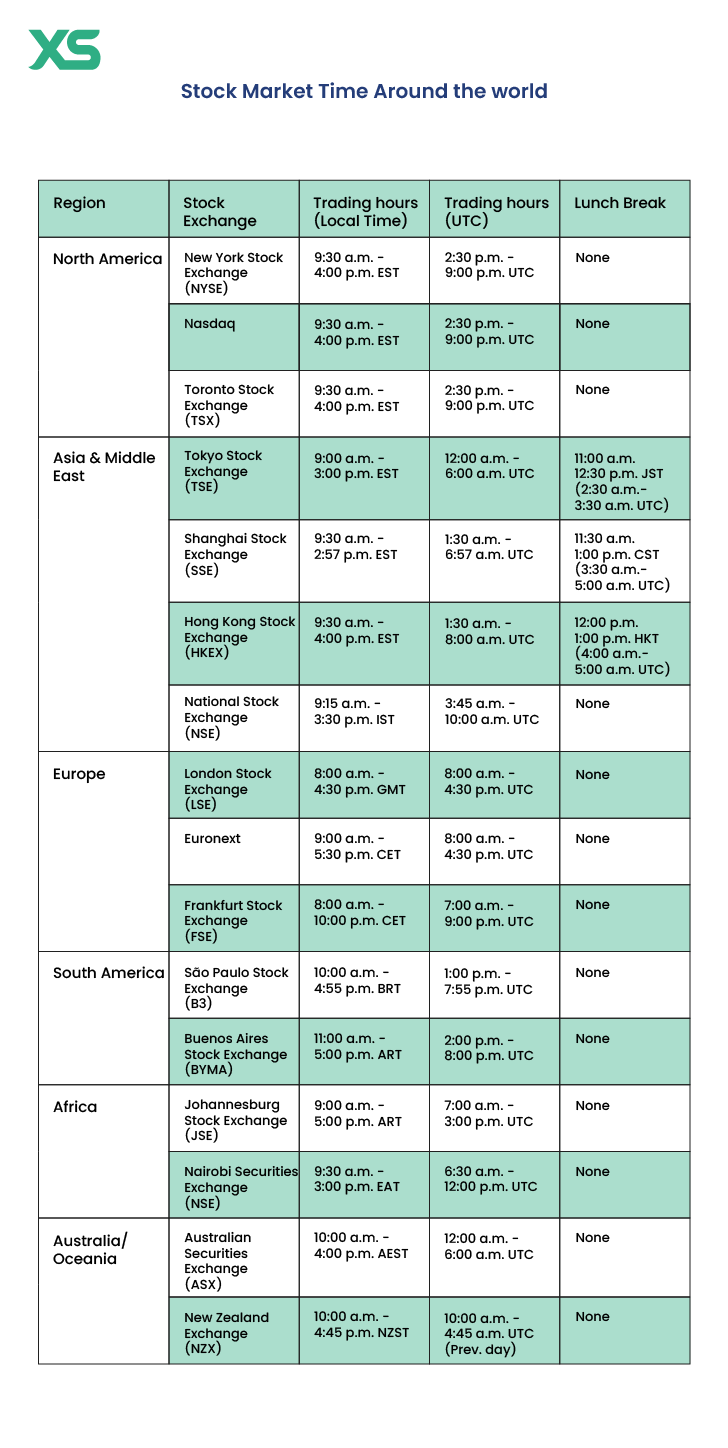
The Standard Operating Hours of Major Global Exchanges
The “opening bell” is a symbolic event that marks the beginning of the regular trading session. While digital platforms have made it possible to place orders at any time of day, the period during which the actual exchange floor (or its primary servers) matches buyers and sellers is strictly defined.
The North American Markets
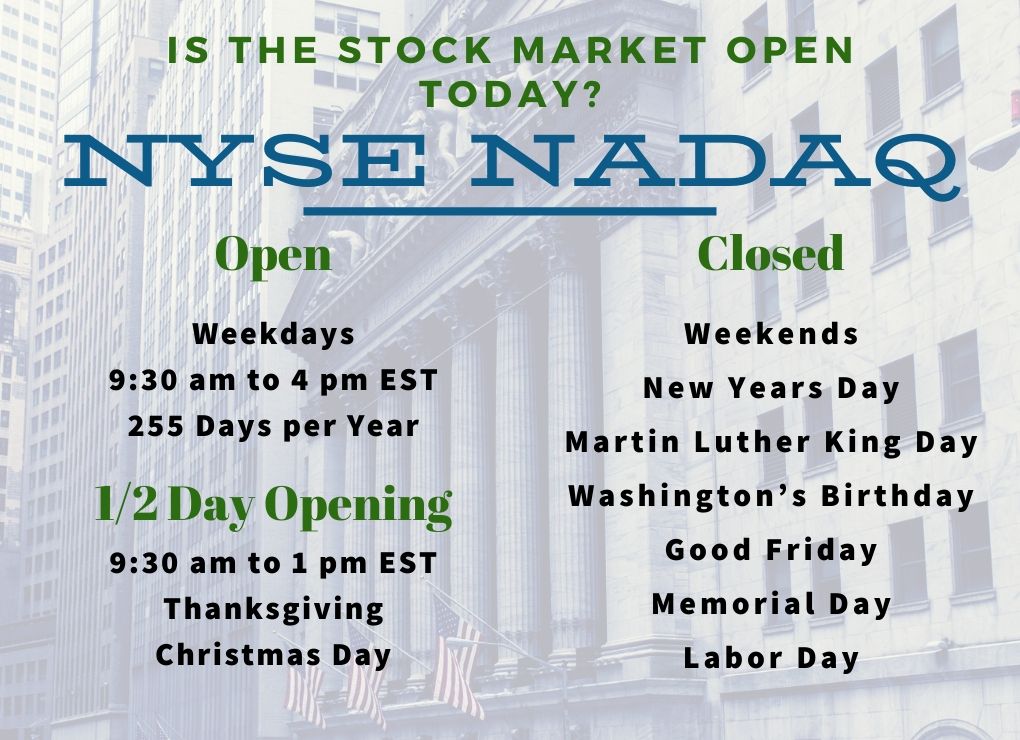
The New York Stock Exchange (NYSE) and the Nasdaq are the two largest stock exchanges in the world. Both are located in New York City and operate on Eastern Time (ET). Their regular trading hours are Monday through Friday, from 9:30 AM to 4:00 PM ET. Unlike some international counterparts, the major US exchanges do not close for a lunch break. This continuous seven-and-a-half-hour session is where the bulk of US equity volume occurs.
In Canada, the Toronto Stock Exchange (TSX) follows the same schedule as the US markets, operating from 9:30 AM to 4:00 PM ET. This synchronization allows for seamless cross-border trading between the two largest North American economies.
The European Markets
European markets typically operate on a longer schedule than those in North America. The London Stock Exchange (LSE), one of the world’s oldest and most influential, opens at 8:00 AM and closes at 4:30 PM local time (GMT or BST).
Other major European hubs, such as the Euronext Paris and the Frankfurt Stock Exchange (DAX) in Germany, generally operate from 9:00 AM to 5:30 PM Central European Time (CET). Investors should note that while many European markets stay open during lunch, liquidity may dip slightly as local traders step away.
The Asian and Oceanic Markets
The Asian markets present a different structure, often including a mandatory midday break. The Tokyo Stock Exchange (TSE) in Japan operates from 9:00 AM to 11:30 AM, closes for lunch, and then resumes from 12:30 PM to 3:00 PM local time.
Similarly, the Hong Kong Stock Exchange (HKEX) trades from 9:30 AM to 12:00 PM, followed by a break, and then reopens from 1:00 PM to 4:00 PM. The Shanghai Stock Exchange follows a comparable split-session model. These breaks are a vestige of traditional trading floor operations but remain a standard part of the region’s financial landscape.
Beyond the Bell: Pre-Market and After-Hours Trading
For many, the trading day begins long before 9:30 AM and ends long after 4:00 PM. Electronic Communication Networks (ECNs) allow for “extended-hours trading,” which provides a window for investors to react to news that breaks outside of regular session hours.
Pre-Market Trading
In the United States, pre-market trading can begin as early as 4:00 AM ET, although the majority of activity occurs between 8:00 AM and 9:30 AM. This period is often characterized by lower liquidity and higher spreads between the bid and ask prices. Investors use this time to react to overnight geopolitical news or early-morning corporate earnings releases.
After-Hours Trading
After-hours trading begins immediately following the 4:00 PM ET close and can run until 8:00 PM ET. This is perhaps the most volatile time for individual stocks, as most companies release their quarterly earnings reports shortly after the closing bell. A stock might close the regular session at $100 but jump to $110 in after-hours trading within minutes of a positive earnings report.
Risks and Considerations of Extended Hours
While extended-hours trading offers flexibility, it carries significant risks:
-
Lower Liquidity: Fewer participants mean it may be harder to enter or exit a position at a desired price.
-
Increased Volatility: With fewer shares being traded, a single large order can cause dramatic price swings.
-
Wide Spreads: The gap between what a buyer is willing to pay and what a seller wants can be much wider than during the regular day, leading to higher transaction costs in the form of price slippage.

Market Holidays and Early Closures
Stock markets do not operate every day. In addition to being closed on Saturdays and Sundays, exchanges observe national holidays. These closures are vital for investors to track, as a “market holiday” in one country does not necessarily mean the rest of the world has stopped trading.
US Market Holidays
The NYSE and Nasdaq observe several federal holidays, including New Year’s Day, Martin Luther King Jr. Day, Washington’s Birthday (Presidents’ Day), Good Friday, Memorial Day, Juneteenth, Independence Day, Labor Day, Thanksgiving, and Christmas.
On certain days, such as the day after Thanksgiving (Black Friday) or Christmas Eve, the market may observe an “early close,” typically at 1:00 PM ET. During these shortened sessions, trading volume is usually thin, and many institutional traders remain on the sidelines.
The Impact of Global Time Zones
Because of the rotation of the earth, the global “trading day” actually begins in New Zealand and Australia, moves through Tokyo and Hong Kong, transitions to London and Frankfurt, and finally reaches New York. When the US market closes on a Friday evening, the cycle pauses until the New Zealand markets open on Monday morning (which is Sunday evening in New York).
This 24-hour cycle (excluding weekends) is most prominent in the Foreign Exchange (Forex) market, which operates 24 hours a day, five days a week. However, for stock investors, this means that a major event in Asia on Sunday night can set the tone for the US market opening on Monday morning.
The Strategic Importance of Market Timing
In the realm of personal finance and active investing, when you trade can be as impactful as what you trade. The market day is not uniform in its behavior; different “windows” of time offer different opportunities.
The Opening Hour: Price Discovery and Volatility
The first 30 to 60 minutes of the trading day (9:30 AM to 10:30 AM ET in the US) are often the most volatile. This is the period of “price discovery,” where the market absorbs all the news that occurred since the previous day’s close.
Many professional traders refer to this as “Amateur Hour” because it is driven by emotional reactions and a rush of retail orders. However, for experienced investors, this period provides the highest liquidity and the greatest opportunity for profit—if one can navigate the swings.
The Midday Doldrums
From approximately 11:30 AM to 2:00 PM ET, the market often enters a “lunchtime lull.” Volume tends to dry up as institutional traders take breaks and the initial morning momentum fades. Prices may drift sideways during this period. For long-term investors, this can be a stable time to execute trades without the high-speed volatility of the open or close.
The Power Hour
The final hour of trading (3:00 PM to 4:00 PM ET) is known as the “Power Hour.” This is when institutional investors, hedge funds, and mutual fund managers rebalance their positions. Volume surges, and the direction of the market during this hour often indicates the sentiment for the following day. The “Closing Cross,” a final auction process that happens at exactly 4:00 PM, determines the official closing price for the day—a figure used by index funds and retirement accounts worldwide to value their holdings.
Technology and the Future of Market Hours
As we move deeper into the digital age, the concept of fixed market hours is being challenged. The rise of 24/7 cryptocurrency markets has set a new precedent for “always-on” finance. While traditional stock exchanges remain tethered to the 9:30-4:00 model to ensure concentrated liquidity and provide human oversight, there is growing pressure to extend these hours.
Financial technology (FinTech) apps have democratized access to extended-hours trading for retail investors, once the exclusive domain of institutional players. Furthermore, the development of “overnight” trading sessions for certain ETFs and blue-chip stocks suggests a future where the distinction between “open” and “closed” may become increasingly blurred.
However, for now, the discipline of the opening and closing bell serves a vital function. It provides a structured environment for capital formation, ensures that information is disseminated fairly, and allows the world’s financial systems to reset and prepare for the next day of commerce. Understanding these hours is not just a matter of logistics; it is an essential component of financial literacy that empowers investors to navigate the global economy with confidence.
aViewFromTheCave is a participant in the Amazon Services LLC Associates Program, an affiliate advertising program designed to provide a means for sites to earn advertising fees by advertising and linking to Amazon.com. Amazon, the Amazon logo, AmazonSupply, and the AmazonSupply logo are trademarks of Amazon.com, Inc. or its affiliates. As an Amazon Associate we earn affiliate commissions from qualifying purchases.