
In the world of high-stakes finance, timing is often as critical as the assets themselves. For the modern investor, knowing what time trading closes is not merely a matter of checking a clock; it is about understanding the windows of liquidity, the volatility of the “closing cross,” and the global relay race that occurs as one market hands off the baton to the next. While the digital age has made the concept of a “closing bell” feel somewhat symbolic, the structural reality of the financial markets remains tethered to specific operating hours that dictate how and when capital flows across the globe.
To navigate the complexities of personal finance and institutional investing, one must master the schedule of the markets. Whether you are a day trader looking for the final scalp of the session or a long-term investor monitoring your portfolio’s end-of-day valuation, the closing time represents a pivotal moment in price discovery.
Understanding Standard Market Hours in the United States
The epicenter of global equity trading resides in New York City. For the vast majority of retail investors in North America, the trading day is defined by the operating hours of the two largest exchanges in the world: the New York Stock Exchange (NYSE) and the NASDAQ.
The New York Stock Exchange (NYSE) and NASDAQ
Standard trading hours for the NYSE and the NASDAQ are from 9:30 a.m. to 4:00 p.m. Eastern Time (ET), Monday through Friday. This six-and-a-half-hour window is known as the “regular trading session.” During these hours, liquidity is at its peak, bid-ask spreads are generally at their narrowest, and the full force of institutional participation is felt.
The 4:00 p.m. close is signaled by the iconic ringing of the bell—a tradition that persists even in an era of algorithmic execution. This closing time is critical because it determines the “closing price” for the day, which is the benchmark used by mutual funds to calculate their Net Asset Value (NAV) and by investors to track historical performance.
The Dynamics of the Regular Trading Session
The trading day is often characterized by a “U-shaped” pattern of activity. The opening hour (9:30 a.m. to 10:30 a.m.) and the closing hour (3:00 p.m. to 4:00 p.m.) typically see the highest volume. As the clock approaches 4:00 p.m., volatility often spikes as institutional players rebalance their portfolios and traders settle their intraday positions. This final push toward the close is where some of the most significant price movements occur, driven by “Market on Close” (MOC) orders that must be executed at the official closing price.
Early Closures and Market Holidays
Investors must also be aware of the “early close” schedule. On certain days, usually preceding or following major holidays like Thanksgiving or Independence Day, the U.S. markets close at 1:00 p.m. ET. Furthermore, the markets are closed entirely on federal holidays such as Christmas Day, New Year’s Day, and Martin Luther King Jr. Day. Tracking the holiday calendar is essential for avoiding the “liquidity traps” that can occur during shortened sessions.
The Mechanics of After-Hours and Pre-Market Trading
While the “closing bell” suggests the end of the day, the reality of modern finance is that the markets rarely truly sleep. Electronic Communication Networks (ECNs) allow for trading outside of the standard 9:30 a.m. to 4:00 p.m. window. This is known as extended-hours trading.
Pre-Market and After-Hours Windows
In the United States, pre-market trading typically begins as early as 4:00 a.m. ET and runs until the market opens at 9:30 a.m. ET. Conversely, after-hours trading begins at 4:00 p.m. ET and can continue until 8:00 p.m. ET.
These extended sessions are particularly significant during “earnings season.” Publicly traded companies almost always release their quarterly financial results either before the market opens or after it closes to avoid causing erratic price swings during the regular session. If a major tech giant releases a blockbuster earnings report at 4:05 p.m., the stock price can move drastically in the after-hours market before the general public has a chance to react during the next day’s regular session.
Risks and Volatility in Extended Sessions
While trading after the close offers opportunities, it comes with substantial risks. The primary concern is low liquidity. Since most retail and many institutional investors do not participate in extended hours, there are fewer buyers and sellers. This leads to wider bid-ask spreads, meaning you might have to pay a significantly higher price to buy or accept a lower price to sell than you would during the day.
Furthermore, price movements in the after-hours market can be deceptive. A stock might jump 5% on low volume after 4:00 p.m., only to open flat or even down the following morning once the full weight of the market’s liquidity is applied at 9:30 a.m.
Why Investors Trade After the Close
Despite the risks, the after-hours market is a vital tool for reacting to breaking news. Whether it is a CEO resignation, a geopolitical event, or a sudden economic data release, the ability to trade after the close allows investors to manage their risk in real-time rather than waiting for the following morning’s open.

Global Market Trading Times: A 24-Hour Cycle
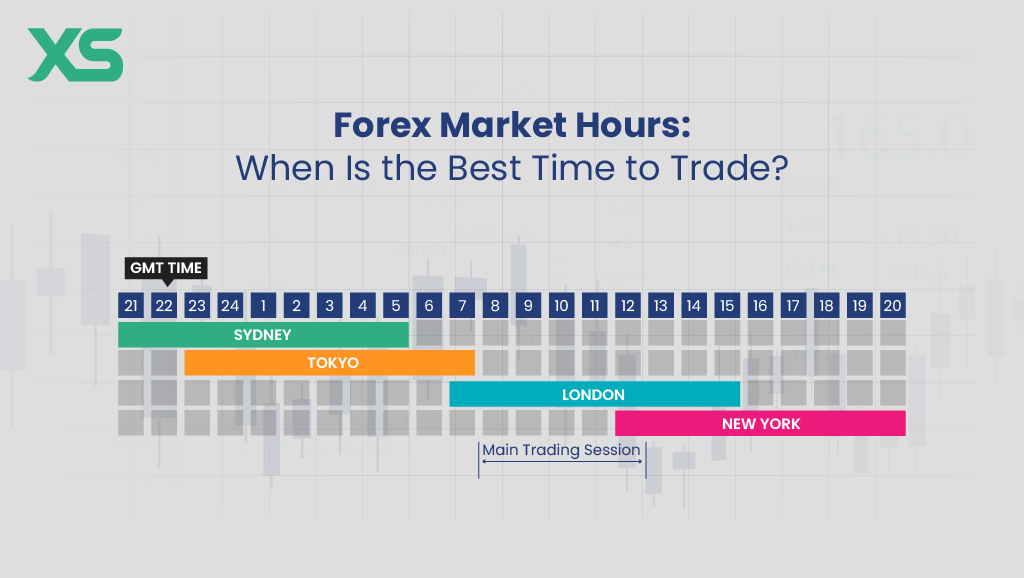
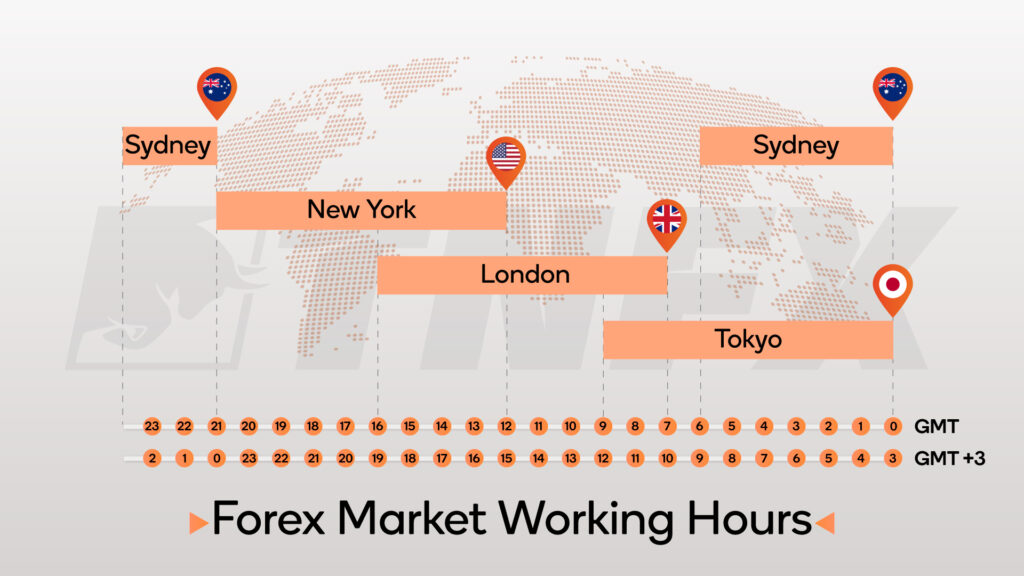
For the diversified investor, the close of the U.S. market is merely the transition point to other global hubs. The financial world operates on a “follow the sun” model, where liquidity moves from the Americas to Asia, then to Europe, and back to the Americas.
Asian Markets: The First to Open
The trading day effectively begins in Asia. The Tokyo Stock Exchange (TSE) generally operates from 9:00 a.m. to 3:00 p.m. Japan Standard Time (JST). Notably, many Asian markets, including Tokyo and the Hong Kong Stock Exchange, observe a lunch break—a practice that has largely disappeared in Western markets. The Hong Kong exchange typically closes its morning session at 12:00 p.m. and resumes at 1:00 p.m., finally closing for the day at 4:00 p.m. local time.
European Markets: The Mid-Day Bridge
As the Asian markets are winding down, the European markets begin their sessions. The London Stock Exchange (LSE), one of the world’s most influential hubs, opens at 8:00 a.m. and closes at 4:30 p.m. Greenwich Mean Time (GMT). Because of the time zone difference, the European close often overlaps with the U.S. open. This “overlap” (typically between 9:30 a.m. and 11:30 a.m. ET) is often the most liquid period of the entire 24-hour cycle, as traders in both London and New York are active simultaneously.
The Concept of the “Overnight” Market
For a U.S.-based investor, what happens in the “overnight” market—while the NYSE is closed—can dictate the “gap” at which U.S. stocks open the next morning. If the Nikkei in Japan or the FTSE in London experiences a sharp sell-off, U.S. futures will likely trade lower, causing the NYSE to open at a lower price than it closed at 4:00 p.m. the previous day.
Asset-Specific Trading Windows: Forex, Crypto, and Commodities
While equities follow a relatively strict schedule, other asset classes have their own rules regarding when trading “closes.”
The 24/5 Forex Market
The Foreign Exchange (Forex) market is the largest and most liquid financial market in the world. It does not have a centralized exchange and therefore does not “close” in the traditional sense during the work week. It operates 24 hours a day, five days a week, starting on Sunday evening (when the Asian sessions open) and closing on Friday afternoon (when the New York session ends). For the currency trader, the “close” is a weekend-only phenomenon.
The 24/7/365 Cryptocurrency Landscape
Cryptocurrency has redefined the concept of market hours. Unlike stocks or bonds, Bitcoin, Ethereum, and other digital assets trade 24 hours a day, 365 days a year. There is no closing bell in the crypto world. This creates a unique environment where price discovery is continuous, and volatility can strike at 3:00 a.m. on a Sunday morning just as easily as it can on a Tuesday afternoon. For investors transitioning from traditional finance to crypto, the lack of a “close” requires a different approach to risk management and automated trading tools.
Futures and Commodities
Futures markets, such as those for gold, oil, or the S&P 500 E-mini, also operate on a nearly 24-hour basis. For example, CME Group futures typically trade from Sunday evening to Friday afternoon, with a brief one-hour break each day. These markets are essential for “after-hours” price discovery, as they allow investors to hedge their positions when the main stock exchanges are closed.
Strategy and Execution: Navigating the Closing Bell
The final minutes of the trading day are often referred to as the “Closing Cross.” This is a highly choreographed process where the exchange matches buy and sell orders to determine the single official closing price for each security.
Managing Orders Near the Deadline
If you are looking to execute a trade near the close, you must be precise with your order types. A “Market” order placed at 3:59:59 p.m. might be filled at a price significantly different from what you saw seconds earlier due to the influx of late-day volatility. Many professional traders use “Limit” orders to ensure they don’t get caught on the wrong side of a closing spike.
The Significance of the Closing Price
Why does everyone care so much about the 4:00 p.m. price? Beyond just performance tracking, many derivative contracts, such as options and swaps, are settled based on the closing price. Furthermore, technical analysts look at “closing basis” charts to determine if a stock has broken through a support or resistance level. A stock might trade above a resistance level midday, but if it fails to close above that level, the breakout is often considered “unconfirmed.”
Tools for Monitoring the Clock
In today’s market, every major brokerage platform provides a countdown to the close. However, sophisticated investors also monitor “closing imbalances.” These are reports released in the final 30 minutes of trading that indicate whether there is a significant surplus of buy orders or sell orders waiting to be executed at the bell. Understanding these imbalances can provide a hint as to whether the stock will tick up or down in those final seconds.
Ultimately, “what time trading closes” is a question with multiple layers. For the casual observer, it is 4:00 p.m. ET. For the global strategist, it is a rolling deadline that moves across time zones. For the crypto enthusiast, the question is irrelevant. By mastering these schedules, an investor moves from being a passive participant to a strategic operator, capable of navigating the ebbs and flows of global capital with precision and confidence. Whether you are closing out a profitable position or preparing for the next day’s open, the clock is just as important as the ticker symbol.
aViewFromTheCave is a participant in the Amazon Services LLC Associates Program, an affiliate advertising program designed to provide a means for sites to earn advertising fees by advertising and linking to Amazon.com. Amazon, the Amazon logo, AmazonSupply, and the AmazonSupply logo are trademarks of Amazon.com, Inc. or its affiliates. As an Amazon Associate we earn affiliate commissions from qualifying purchases.