
The New York Stock Exchange (NYSE) stands as a monumental pillar of global finance, a symbol of capitalist enterprise where fortunes are made and lost, and the economic pulse of the world is often felt. For anyone involved in investing, from seasoned institutional traders to budding retail participants, understanding the operational hours of this iconic institution is not merely a matter of trivia; it is fundamental to strategic planning, risk management, and seizing market opportunities. The NYSE’s trading schedule dictates when orders can be executed, when prices fluctuate, and when the collective wisdom (and occasional panic) of millions of investors converges. Navigating these hours effectively is key to successful engagement with the stock market.
While the notion of “market hours” might seem straightforward, the reality is a nuanced landscape encompassing standard sessions, pre-market activity, and after-hours trading, each with its own characteristics and implications. Furthermore, special circumstances like holidays and early closures introduce complexities that demand careful attention. This article will delve into the intricacies of the NYSE’s trading day, explore why these hours are so crucial for investors, examine the exceptions to the rule, consider the evolution of trading hours, and offer practical advice for optimizing your market engagement.
Understanding the NYSE Trading Day
The core of the NYSE’s operation revolves around its standard trading session, bookended by the famous opening and closing bells. However, the market’s influence extends beyond these defined times, offering avenues for trading before and after the main event.
Standard Trading Session: Opening and Closing Bells
The traditional trading day on the New York Stock Exchange runs from 9:30 AM Eastern Time (ET) to 4:00 PM ET, Monday through Friday. This 6.5-hour window is where the vast majority of trading volume and price discovery occurs. The opening bell, a momentous occasion often broadcast live, signifies the start of the trading day, kicking off with a flurry of activity as orders accumulated overnight are executed. This initial period is frequently characterized by high volatility and significant price movements as the market reacts to overnight news and economic data.
Conversely, the closing bell at 4:00 PM ET marks the end of the standard session. The final moments of trading, often referred to as the “close,” can also be volatile as traders attempt to square positions, execute end-of-day orders, and influence closing prices. The daily close provides a benchmark for performance and serves as a reference point for subsequent trading sessions. For many, these 6.5 hours are the quintessential “stock market hours,” embodying the dynamic and often unpredictable nature of equity trading.
Pre-Market Trading: Early Opportunities
Before the official opening bell, the NYSE facilitates pre-market trading, allowing investors to place orders and execute trades as early as 4:00 AM ET. This extended period, which runs until the 9:30 AM ET open, offers a crucial window for investors to react to news released overnight or early in the morning, such as corporate earnings reports, economic data, or global political developments.
Pre-market trading is typically characterized by lower liquidity compared to the standard session, meaning fewer buyers and sellers are present, and individual trades can have a more significant impact on stock prices. Spreads (the difference between bid and ask prices) can also be wider. While it provides an opportunity for early birds to get a jump on the market, the reduced liquidity can also lead to increased volatility and less favorable execution prices. Sophisticated traders and institutional investors often leverage pre-market activity to position themselves ahead of the official opening.
After-Hours Trading: Extended Market Activity
Once the closing bell rings at 4:00 PM ET, the market doesn’t completely shut down. The NYSE supports after-hours trading, which typically extends until 8:00 PM ET. Similar to pre-market trading, this session allows investors to react to news that breaks after the standard market close, such as late-day earnings announcements or sudden geopolitical events.
Like pre-market, after-hours trading is marked by reduced liquidity and potentially wider bid-ask spreads. The volume of shares traded is significantly lower than during the regular session, making it more challenging to execute large orders without affecting the price. While it offers flexibility and an avenue to react quickly to late-breaking news, individual investors must approach after-hours trading with caution due to the amplified price fluctuations and potential for less optimal trade execution. It’s a realm often dominated by institutional players and those with a high tolerance for risk.
Key Time Zones and Their Impact (EST)
It is critical to remember that all NYSE trading hours are quoted in Eastern Time (ET), which alternates between Eastern Standard Time (EST) and Eastern Daylight Time (EDT) with the observance of daylight saving time. For investors situated outside the Eastern Time Zone, accurate conversion is paramount. For instance, an investor on the West Coast of the United States (Pacific Time) would need to subtract three hours from ET, meaning the market opens at 6:30 AM PT and closes at 1:00 PM PT.
Similarly, international investors must meticulously convert ET to their local time to avoid missing key market movements or placing orders outside operational hours. Misunderstanding time zones can lead to missed opportunities, unexpected trade executions, or even failed orders. Most modern trading platforms automatically display market hours in the user’s local time, but it’s always wise to double-check and understand the underlying ET schedule.
Why Market Hours Matter for Investors
Understanding the nuances of NYSE trading hours is not just about knowing when to trade; it profoundly impacts liquidity, volatility, information flow, and ultimately, an investor’s strategic approach and risk management.
Liquidity and Volatility
The standard trading session (9:30 AM to 4:00 PM ET) is the period of highest liquidity, meaning there is a high volume of buyers and sellers, making it easier to buy or sell a stock without significantly moving its price. High liquidity generally leads to tighter bid-ask spreads and more efficient price discovery. Conversely, pre-market and after-hours sessions are characterized by significantly lower liquidity. This reduced activity can lead to larger price swings on relatively small trading volumes, making stocks more volatile.
For active traders, the opening and closing hours of the standard session are often the most volatile periods, offering significant opportunities for quick gains but also carrying heightened risk. Long-term investors, while less focused on intraday swings, still need to be aware of how liquidity affects the price at which their orders are executed, especially for larger transactions. Attempting to buy or sell a large block of shares during low-liquidity hours can result in “slippage,” where the actual execution price is worse than the quoted price.
Information Flow and Price Discovery
Market hours are directly tied to the flow of information that drives stock prices. Major corporate announcements, economic reports from government agencies, and analyst upgrades/downgrades are often strategically released either before the market opens, during the lunch hour, or after the market closes. This timing is deliberate, designed to allow investors time to digest the news without immediate, chaotic market reactions, or to influence the next day’s opening price.
During the standard session, continuous information flow, combined with high liquidity, facilitates rapid price discovery. This is the process by which market participants collectively determine the fair value of a security based on all available information. In less liquid pre-market or after-hours sessions, price discovery can be less efficient, leading to temporary price dislocations that may or may not persist into the regular session. Investors must be vigilant in monitoring news sources that can impact their holdings, understanding how the timing of that news relates to market hours.
Impact on Trading Strategies (Day Trading vs. Long-Term)
The significance of market hours varies dramatically depending on an investor’s strategy. Day traders, who aim to profit from short-term price movements and close all positions before the market closes, are acutely focused on the regular session’s volatility and liquidity. They often employ strategies that capitalize on the opening and closing hour surges. The pre-market and after-hours sessions, with their lower liquidity and wider spreads, present both opportunities for outsized gains and increased risks that might not suit typical day trading models.
Long-term investors or those engaged in swing trading (holding positions for days or weeks) are generally less concerned with intraday fluctuations but still need to consider market hours when executing trades. Placing limit orders to buy or sell at specific prices can mitigate risks associated with sudden price movements, especially during volatile periods. They might also use pre-market and after-hours to react to significant news that could impact their long-term thesis, though they might opt to wait for the regular session for better execution prices.
Risk Management Considerations
Market hours play a critical role in risk management. Holding positions overnight, especially if significant news is expected or released after hours, exposes an investor to “gap risk”—where a stock’s opening price the next day is significantly different from its previous day’s close. This can lead to substantial losses (or gains) before an investor even has a chance to react.
During pre-market and after-hours trading, stop-loss orders might not be as effective due to lower liquidity. A sudden price drop could bypass a stop-loss order, leading to execution at a much lower, less favorable price. Furthermore, the wider bid-ask spreads mean that even executing a market order can result in an unfavorable price compared to what was expected. Prudent investors consider these factors, adjusting their position sizing, order types, and overall exposure based on the market session and their risk tolerance.
Special Circumstances and Exceptions
While the standard 9:30 AM to 4:00 PM ET schedule is generally reliable, the NYSE, like all major exchanges, observes specific holidays and occasionally implements abbreviated trading sessions. Awareness of these exceptions is crucial for uninterrupted market engagement.
Market Holidays: When the NYSE is Closed
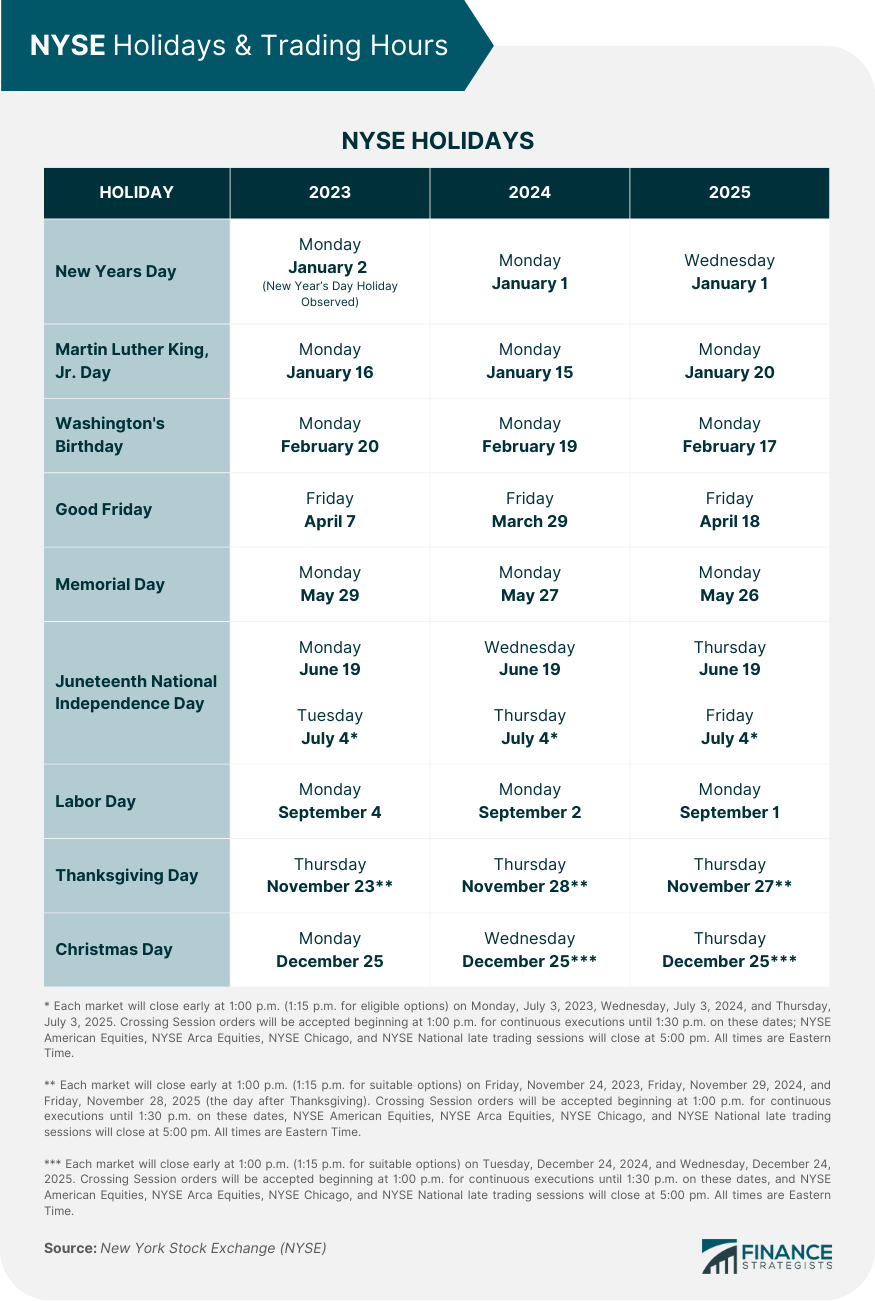
The NYSE observes a fixed set of holidays throughout the year, during which the exchange is completely closed, and no trading takes place. These holidays generally align with federal holidays in the United States, including:
-
New Year’s Day
-
Martin Luther King, Jr. Day
-
Washington’s Birthday (Presidents’ Day)
-
Good Friday
-
Memorial Day
-
Juneteenth National Independence Day
-
Independence Day (July 4th)
-
Labor Day
-
Thanksgiving Day
-
Christmas Day
It’s imperative for investors to consult the official NYSE holiday schedule, typically published well in advance, to plan their trading activities. Trades cannot be executed on these days, and any orders placed will simply remain pending until the next trading day. Missing a holiday can lead to unexpected delays in trade execution or failure to react to news that might break on a non-trading day.
Early Closures: Abbreviated Trading Days
In addition to full holidays, the NYSE occasionally operates on an abbreviated schedule, closing early on certain days. These early closures are typically observed in conjunction with major holidays, such as the day after Thanksgiving (Black Friday) or the day before Christmas. On these days, the market might close at 1:00 PM ET instead of the usual 4:00 PM ET.
While less common, other unforeseen events, such as severe weather or major national emergencies, could also prompt an early closure or even a full suspension of trading, though such events are rare and usually communicated broadly by the exchange and financial news outlets. Investors should always verify the NYSE’s official schedule, especially around major holiday periods, to avoid being caught off guard by an unexpected early close. Trading volume and liquidity can also be significantly lower on these shortened days.
Technical Glitches and Force Majeure
Though rare due to robust systems and extensive redundancies, the NYSE is not entirely immune to technical glitches or system outages. In the event of a significant technical malfunction that impedes fair and orderly trading, the exchange may temporarily halt trading in specific stocks or even across the entire market. Such halts are typically accompanied by official announcements explaining the issue and expected resumption time.
Furthermore, extreme, unforeseen circumstances classified as force majeure, such as a natural disaster affecting Wall Street infrastructure or a widespread power outage, could also lead to trading halts or closures. While these events are exceptional, they underscore the importance of diversified investment strategies and not relying solely on immediate market access for critical financial decisions. The exchange’s primary goal is to maintain market integrity and investor confidence, and trading halts are implemented to ensure a level playing field.
Differences from Other Exchanges (NASDAQ, International Markets)
It’s important to note that while the NYSE’s hours are widely recognized, they are not universally applied across all financial markets. The NASDAQ Stock Market, for example, shares the same standard trading hours (9:30 AM to 4:00 PM ET, with similar pre-market and after-hours sessions). However, other exchanges, even within the U.S., might have different schedules. Options and futures markets, for instance, often have distinct, sometimes much longer, trading hours.
Internationally, market hours vary significantly based on time zones and local holidays. The London Stock Exchange, Tokyo Stock Exchange, and Hong Kong Stock Exchange all operate on their own local schedules, and their market opens and closes contribute to the concept of a 24-hour global trading cycle. Investors with diversified international portfolios must manage positions across multiple time zones and holiday calendars, adding another layer of complexity to monitoring their investments.
The Evolution of Trading Hours and Future Trends
The NYSE’s trading hours, while seemingly fixed, have evolved over time, reflecting technological advancements and shifts in global finance. The dialogue around extending these hours continues, driven by the rise of 24/7 global markets.
Historical Context: From Manual to Electronic
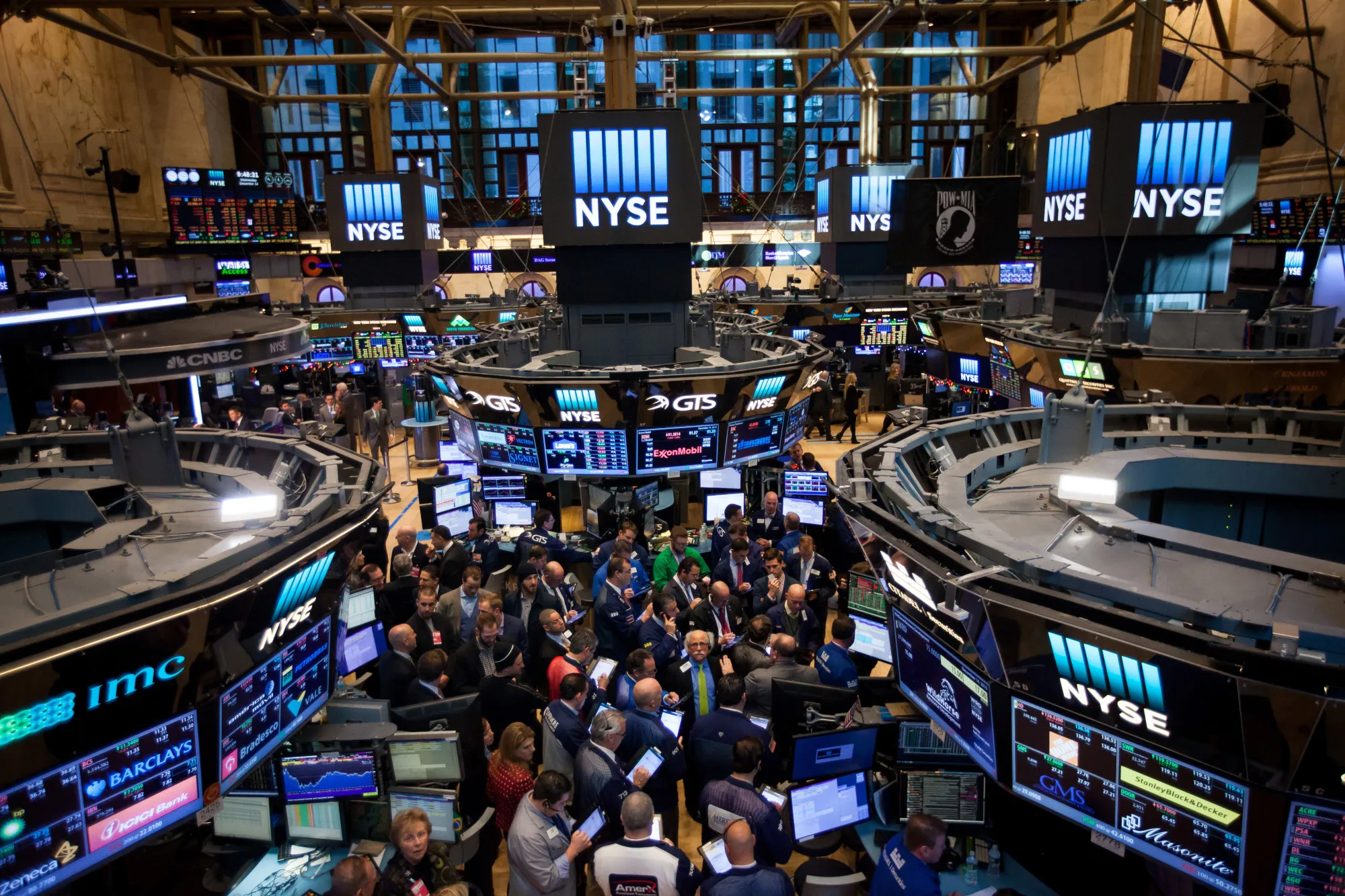
In its early days, the New York Stock Exchange was a physical trading floor, where brokers manually executed orders. Trading hours were constrained by logistical necessities, primarily the ability to physically open and close the floor, and the need for traders to rest. The advent of electronic trading platforms, however, drastically altered this landscape. Technology removed many of the physical limitations, allowing for quicker order execution, greater market access, and the gradual introduction of pre-market and after-hours trading.
This shift from a purely manual, floor-based system to a hybrid model with significant electronic trading has made market access more democratized and efficient. The 9:30 AM to 4:00 PM ET standard session, however, remains a legacy of this earlier era, now supported by a vast technological infrastructure that allows it to manage immense trading volumes.
The Rise of 24/7 Global Trading (Forex, Crypto)
The concept of a fixed trading day is increasingly being challenged by the advent of truly 24/7 markets. The Forex (foreign exchange) market, for example, operates around the clock from Sunday evening to Friday evening ET, driven by currency trading centers across different time zones (Sydney, Tokyo, London, New York). More recently, cryptocurrency markets like Bitcoin and Ethereum exchanges operate 24 hours a day, 7 days a week, without breaks for weekends or holidays, mirroring their decentralized nature.
This continuous global trading provides immediate liquidity and reaction to news at any time, eliminating “gap risk” to a large extent. The success and growing popularity of these always-on markets are exerting pressure on traditional equity exchanges to reconsider their operating models.
Debate Over Extended Market Hours for Equities
The comparison with 24/7 markets has fueled an ongoing debate about whether major stock exchanges like the NYSE should extend their trading hours or even transition to an always-on model. Proponents argue that longer hours would:
-
Reduce Gap Risk: Allow investors to react immediately to overnight news, potentially smoothing out market openings.
-
Increase Liquidity: Distribute trading volume more evenly, potentially reducing volatility during peak hours.
-
Enhance Global Competitiveness: Better serve international investors who struggle with U.S. time zone differences.
-
Modernize Market Structure: Align with technological capabilities and the demands of a globalized economy.
Opponents, however, raise concerns about:
-
Trader Burnout: Extended hours could lead to increased stress and burnout for market professionals.
-
Reduced Liquidity Sprawl: Spreading trading volume over more hours might simply result in lower liquidity during the extended periods, rather than increasing overall liquidity.
-
Operational Costs: Significant costs for exchanges and market participants to maintain 24/7 operations.
-
Family Life/Work-Life Balance: Negative impact on the personal lives of those working in the industry.
While some exchanges have experimented with slight extensions, a full 24/7 equity market for the NYSE remains a distant, complex, and highly debated prospect.
Impact of Technology on Market Access
Regardless of whether official trading hours are extended, technology has already profoundly impacted market access. Retail investors, through user-friendly online brokerage platforms and mobile apps, can monitor markets, research stocks, and place orders at any time of day or night. While orders placed outside market hours are typically queued for the next standard session (unless specifically marked for pre- or after-hours trading), the perception of constant market availability has changed.
Algorithmic trading and high-frequency trading (HFT) systems operate continuously, leveraging speed and complex mathematical models to execute trades within microseconds, often during the most volatile periods. This technological backbone ensures that even within fixed hours, market activity is incredibly dynamic and efficient, providing instant data dissemination and near-instantaneous trade execution capabilities that were unimaginable in the past.
Practical Tips for Navigating NYSE Trading Hours
Successfully engaging with the NYSE requires more than just knowing the hours; it demands strategic execution and careful planning. Here are some practical tips for investors.
Setting Up Alerts and Notifications
For investors who cannot constantly monitor the market, setting up price alerts and news notifications is invaluable. Most brokerage platforms offer features to alert you via email or push notification when a stock hits a certain price point or when significant news breaks concerning your holdings. This ensures you’re aware of critical developments even when you’re not actively watching the market, allowing you to decide whether to intervene during available trading hours.
Understanding Order Types (Market vs. Limit)
The choice of order type is especially critical when trading around the edges of market hours or during periods of low liquidity.
-
Market Orders: These instruct your broker to buy or sell a stock immediately at the best available current price. While offering immediate execution, in volatile or low-liquidity environments (like pre-market or after-hours), the executed price might be significantly different (worse) than what you saw moments before, leading to “slippage.”
-
Limit Orders: These instruct your broker to buy or sell a stock only at a specific price or better. This provides control over the execution price, but there’s no guarantee that the order will be filled if the market never reaches your specified price. For pre-market and after-hours trading, and indeed for any trade where price certainty is paramount, limit orders are generally recommended to protect against unfavorable price execution due to low liquidity.
Leveraging Pre- and After-Market Data
Even if you choose not to actively trade during pre-market or after-hours sessions, monitoring the price action and news during these periods can provide valuable insights into potential movements during the upcoming standard session. A significant price swing in a stock during pre-market, perhaps due to an unexpected earnings announcement, can signal a likely volatile opening and inform your strategy for the day. Many financial news outlets and brokerage platforms provide real-time pre- and after-hours quotes and news feeds.

Seeking Professional Financial Advice
The intricacies of market hours, combined with the complexities of investing, can be overwhelming. For those who are unsure about how best to navigate these dynamics, especially in relation to their personal financial goals and risk tolerance, seeking advice from a qualified financial advisor is highly recommended. A professional can help develop a tailored investment strategy that accounts for market hours, liquidity concerns, and your individual circumstances, ensuring a more informed and disciplined approach to the stock market.
In conclusion, the New York Stock Exchange’s hours are a cornerstone of its operation, defining the rhythm and flow of capital markets. From the bustling standard session to the more subdued pre-market and after-hours activities, each period presents unique characteristics and demands a specific approach from investors. Understanding these hours, along with the exceptions and the broader context of global 24/7 trading, is indispensable for anyone seeking to engage effectively and profitably with the stock market. By mastering this fundamental aspect, investors can better manage risk, optimize their trading strategies, and ultimately, enhance their journey toward financial success.
aViewFromTheCave is a participant in the Amazon Services LLC Associates Program, an affiliate advertising program designed to provide a means for sites to earn advertising fees by advertising and linking to Amazon.com. Amazon, the Amazon logo, AmazonSupply, and the AmazonSupply logo are trademarks of Amazon.com, Inc. or its affiliates. As an Amazon Associate we earn affiliate commissions from qualifying purchases.