
The stock market, with its ebb and flow of prices, offers both a tantalizing promise of wealth creation and the sobering reality of potential losses. For many, the idea of “trading” conjures images of fast-paced screens, complex charts, and high-stakes decisions. While Hollywood might glamorize the extremes, successful stock market trading is, in reality, a disciplined pursuit demanding knowledge, strategy, and emotional fortitude. It’s not merely about picking the “next big stock” but understanding market dynamics, managing risk, and adhering to a well-defined plan. This comprehensive guide will demystify the process, providing a structured approach for aspiring traders to navigate the exciting, yet challenging, world of stock market trading.
Understanding the Fundamentals of Stock Market Trading
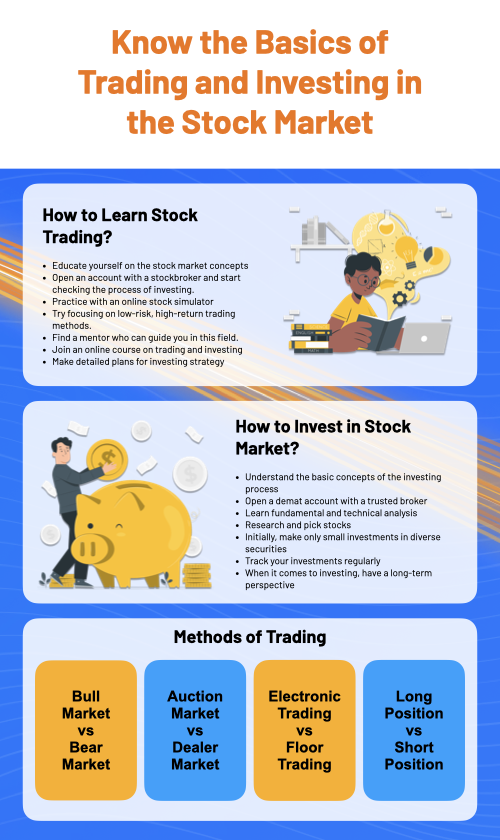
Before diving into the practicalities, it’s crucial to grasp the foundational concepts that underpin stock market trading. A solid understanding of these basics will serve as your bedrock, enabling you to make informed decisions rather than relying on guesswork or hype.
What is Stock Trading?
At its core, stock trading involves buying and selling shares of publicly traded companies with the primary goal of profiting from short-term price fluctuations. Unlike long-term investing, which focuses on accumulating assets for growth over years or decades, trading typically involves positions held for much shorter durations—from minutes (day trading) to weeks or months (swing trading). Traders aim to capitalize on market inefficiencies, news events, or technical patterns that suggest a stock’s price will move in a predictable direction. This dynamic approach requires constant monitoring, quick decision-making, and a keen eye for market trends.
Stocks vs. Investing: A Key Distinction
While both involve buying shares, trading and investing serve fundamentally different objectives. Investing is generally a long-term strategy, characterized by buying and holding assets like stocks, bonds, or mutual funds for an extended period, often years or decades. Investors focus on a company’s fundamental value, its long-term growth prospects, and often seek to benefit from dividends and compounding returns. Their goal is wealth accumulation over time, riding out short-term market volatility. Trading, conversely, is a short-to-medium-term strategy focused on profiting from market volatility itself. Traders are less concerned with a company’s intrinsic long-term value and more interested in its price momentum and chart patterns. They execute frequent transactions, often using leverage, and employ sophisticated risk management techniques to protect capital. Understanding this distinction is vital, as it dictates the strategies, mindset, and tools you will employ.
Basic Market Terminology
To effectively communicate and comprehend market analyses, familiarity with key terminology is indispensable:
-
Bulls and Bears: A “bull market” signifies rising prices and investor optimism, while a “bear market” indicates falling prices and pessimism. A “bull” is a trader who believes prices will rise, and a “bear” anticipates a decline.
-
Bid and Ask: The “bid” price is the highest price a buyer is willing to pay for a stock, while the “ask” (or offer) price is the lowest price a seller is willing to accept. The difference between the two is the “spread.”
-
Volatility: This refers to the degree of variation of a trading price series over time. High volatility means a stock’s price can change dramatically in a short period, presenting both greater opportunity and greater risk.
-
Liquidity: A liquid market allows assets to be bought or sold quickly without significantly impacting their price. Highly liquid stocks are easier to trade, as there are always buyers and sellers.
-
Margin: Borrowing money from your broker to buy securities. While it can amplify gains, it also significantly increases potential losses.
-
Leverage: Using borrowed capital to increase potential returns from an investment. A common feature in forex and CFD trading, allowing traders to control large positions with a relatively small amount of capital.
Essential Preparations Before You Start Trading
Embarking on stock market trading without proper preparation is akin to sailing without a compass. Success hinges on laying a robust foundation through clear goal setting, financial discipline, and continuous learning.
Define Your Trading Goals and Risk Tolerance
Before making your first trade, ask yourself: What do I hope to achieve through trading? Are you aiming for supplemental income, early retirement, or purely a challenging intellectual pursuit? Your goals will influence your choice of trading style, capital allocation, and risk management strategy. Equally important is assessing your risk tolerance. How much money are you willing to lose without significantly impacting your financial stability or emotional well-being? Trading inherently involves risk, and understanding your comfort level with potential losses will prevent impulsive decisions and emotional distress during market downturns. Never trade with money you cannot afford to lose.
Capital Allocation and Budgeting
Trading requires dedicated capital, distinct from your emergency fund or long-term investments. Determine a specific amount of capital that you are prepared to risk. This should be discretionary income, not funds earmarked for essential living expenses. Furthermore, it’s prudent to start small. Many successful traders begin with a modest sum, scaling up their capital only after demonstrating consistent profitability. Budgeting for trading also includes understanding and accounting for various costs such as brokerage commissions, exchange fees, data subscriptions, and potential capital gains taxes. Ignoring these costs can significantly erode your net profits.
Choosing the Right Brokerage Account
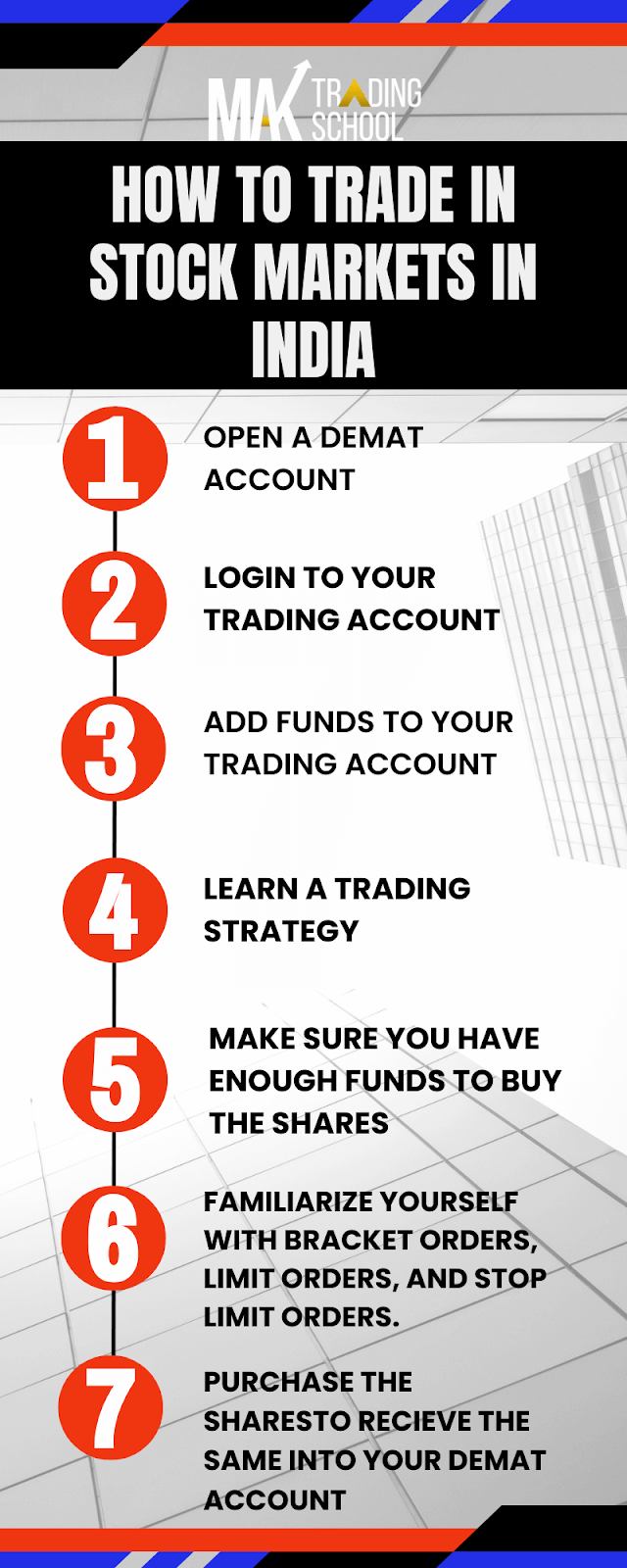
Your brokerage account is your gateway to the stock market. Selecting the right broker is a critical decision based on your trading style, budget, and geographical location. Consider the following factors:
-
Commissions and Fees: Compare trading fees, account maintenance fees, and any hidden charges. Some brokers offer commission-free trading for stocks and ETFs.
-
Trading Platform and Tools: Does the platform offer intuitive navigation, advanced charting tools, real-time data, and order types suitable for your strategy? Test drive demo accounts if available.
-
Available Markets and Assets: Ensure the broker offers access to the markets (e.g., U.S. stocks, international markets, options, futures) and asset classes you intend to trade.
-
Customer Service and Support: Reliable and responsive customer service is crucial, especially when technical issues or urgent questions arise.
-
Regulation and Security: Choose a broker regulated by reputable financial authorities (e.g., SEC and FINRA in the U.S.) to ensure the security of your funds and adherence to fair practices.
The Importance of Education and Continuous Learning
The stock market is a dynamic, ever-evolving entity. Continuous education is not just an advantage; it’s a necessity. Immerse yourself in learning about market mechanics, economic indicators, financial news, and different trading strategies. Read books, attend webinars, follow reputable financial news sources, and consider taking online courses. Start with paper trading (simulated trading with virtual money) to test strategies and gain experience without risking real capital. The goal is to build a robust knowledge base and develop an informed perspective, allowing you to adapt to changing market conditions and refine your approach over time.
Developing a Trading Strategy
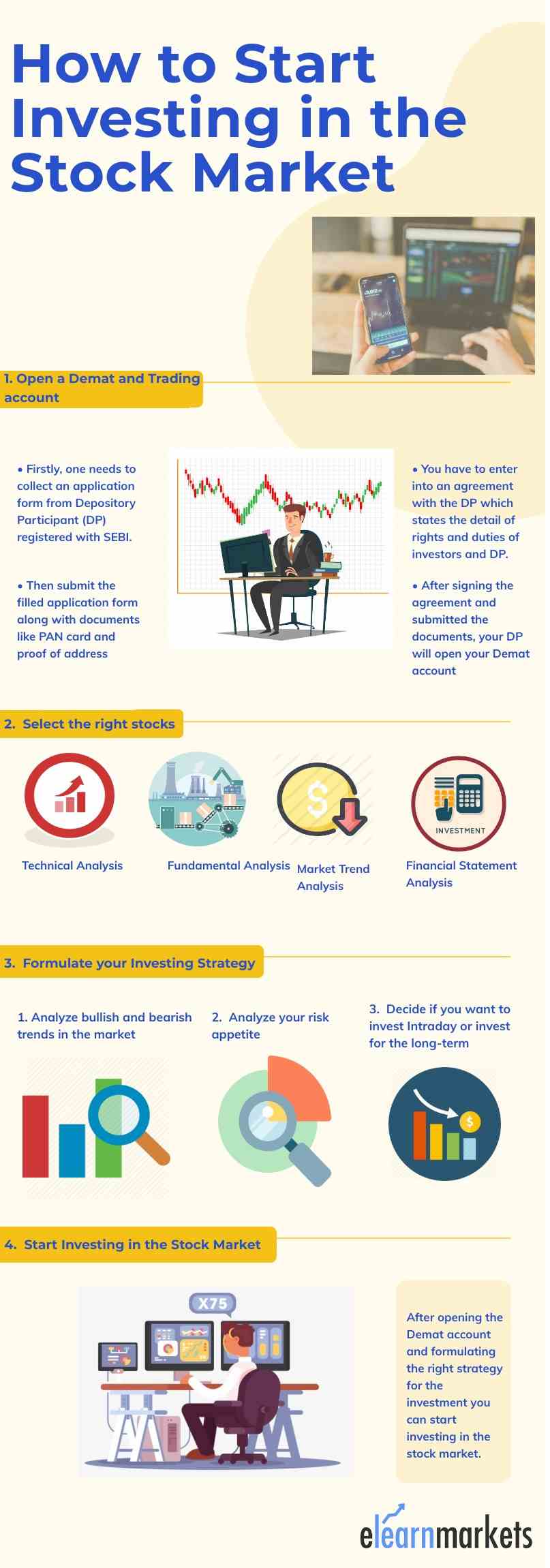
A trading strategy is your blueprint for navigating the market. It dictates what to buy or sell, when to enter and exit trades, and how much capital to allocate. Without a defined strategy, trading becomes mere gambling.
Technical Analysis vs. Fundamental Analysis
These are the two primary methodologies for analyzing securities:
-
Fundamental Analysis: This involves evaluating a company’s intrinsic value by examining its financial statements (income statement, balance sheet, cash flow statement), management, industry outlook, and macroeconomic factors. Fundamental analysts believe that a stock’s market price will eventually reflect its true value. This approach is more common among long-term investors but can also inform longer-term trading decisions.
-
Technical Analysis: This method focuses on studying past market data, primarily price and volume, to predict future price movements. Technical analysts use charts, indicators (like Moving Averages, RSI, MACD), and patterns (e.g., head and shoulders, double tops) to identify trends, support and resistance levels, and potential entry/exit points. Technical analysis is the preferred method for most short-term traders as it provides actionable signals derived directly from market sentiment. Many traders combine elements of both to gain a more comprehensive market view.
Common Trading Styles
Your chosen trading style will largely depend on your personality, available time, and risk tolerance:
-
Day Trading: Involves opening and closing all positions within the same trading day. Day traders aim to profit from small price movements, leveraging high volumes and quick decisions. It requires intense focus, quick reflexes, and significant time commitment, often full-time.
-
Swing Trading: Positions are held for several days or weeks to profit from “swings” in price. Swing traders typically use technical analysis to identify stocks with short-term momentum or clear chart patterns. It requires less constant monitoring than day trading but still demands regular attention.
-
Position Trading: A longer-term trading style where positions are held for weeks to several months, sometimes even a year. Position traders often combine fundamental analysis with technical analysis to ride major trends. This style suits those who prefer less frequent trading and can tolerate larger drawdowns.
-
Scalping: An even shorter-term strategy than day trading, where traders aim to make tiny profits on small price changes, often holding positions for mere seconds or minutes. It requires extremely fast execution and very tight risk management.
Crafting a Robust Trading Plan
A comprehensive trading plan is non-negotiable for consistent success. It should be a written document outlining every aspect of your trading activity. Key components include:
-
Specific Goals: Your desired profit targets and acceptable loss limits.
-
Market Selection: Which stocks, sectors, or indices will you trade?
-
Entry Criteria: What specific conditions (e.g., indicator signals, price patterns, news events) must be met before you enter a trade?
-
Exit Criteria: How will you determine when to take profit (take-profit target) and when to cut losses (stop-loss)?
-
Position Sizing: How much capital will you commit to each trade?
-
Risk Management Rules: Maximum loss per trade, per day, per week.
-
Performance Review Schedule: How often will you review your trades and adjust your plan?
Stick to your plan rigorously. Deviating from it, especially under emotional stress, is a common pitfall for new traders.
Risk Management and Emotional Discipline
No trading strategy is foolproof. Therefore, managing risk and maintaining emotional discipline are paramount to long-term survival and success in the stock market. These elements often differentiate profitable traders from those who ultimately fail.
Implementing Stop-Loss Orders
A stop-loss order is an instruction to your broker to sell a security when it reaches a certain price. This is arguably the most critical risk management tool. It automatically limits your potential loss on a position by closing it out if the market moves against you beyond a predefined point. Setting a stop-loss order before entering a trade is a fundamental discipline. Without it, a single bad trade can wipe out a significant portion of your capital. Different types of stop-loss orders exist, such as market stop, limit stop, and trailing stop, each serving specific purposes. Understanding how to place and effectively use them is crucial.
Position Sizing and Diversification
Position sizing refers to determining the appropriate amount of capital to allocate to any single trade. A common rule of thumb for beginners is to risk no more than 1-2% of your total trading capital on any given trade. For example, if you have $10,000 in your trading account, you would risk a maximum of $100-$200 per trade. This rule ensures that no single loss, even if significant, can cripple your account. Diversification, while more commonly associated with investing, also has a place in trading. While traders often concentrate on a few high-conviction trades, avoiding over-concentration in a single stock or sector can mitigate idiosyncratic risks. For instance, having exposure to a few different uncorrelated assets or sectors can protect against a sudden downturn in one specific area.
Overcoming Psychological Biases (Fear, Greed, FOMO)
The human mind is often its own worst enemy in trading. Emotions like fear, greed, and FOMO (Fear Of Missing Out) can lead to irrational decisions that override a well-thought-out trading plan:
-
Fear: Can cause you to exit profitable trades too early or hold onto losing trades for too long, hoping they will recover.
-
Greed: May lead you to take excessive risks, over-leverage, or refuse to take profits, hoping for even larger gains, only to see them evaporate.
-
FOMO: Can tempt you to jump into trades late, after a significant price move has already occurred, often at the peak, leading to immediate losses.
Developing emotional discipline involves sticking to your trading plan regardless of market noise, avoiding impulsive actions, and understanding that losses are an inevitable part of trading. A trading journal, where you document your trades and the emotions surrounding them, can be an invaluable tool for self-reflection and improvement.
Tools and Resources for Effective Trading
The modern trading landscape is rich with technology and information. Utilizing the right tools and resources can significantly enhance your analysis, execution, and overall trading performance.
Trading Platforms and Their Features
A robust trading platform is your command center. Modern platforms offer a plethora of features designed to aid traders:
-
Real-time Data and Charts: Essential for technical analysis, providing up-to-the-minute price movements and customizable charting tools with various indicators.
-
Order Types: Beyond basic market and limit orders, advanced orders like stop-limit, trailing stop, OCO (One Cancels the Other), and OTO (One Triggers the Other) offer greater control and automation.
-
Watchlists and Alerts: Allowing you to monitor specific stocks and receive notifications when certain price levels or conditions are met.
-
Paper Trading Accounts: Critical for beginners to practice strategies without financial risk.
-
Algorithmic Trading Capabilities: For advanced traders, some platforms offer the ability to automate strategies based on predefined rules.
Choose a platform that aligns with your trading style and offers the features you need without being overly complex or expensive.
Research Tools and Market Data
Access to timely and accurate market data is critical for informed decision-making:
-
Financial News Sources: Reputable outlets like Bloomberg, Reuters, The Wall Street Journal, and CNBC provide crucial news, economic reports, and company-specific updates that can move markets.
-
Earnings Calendars: Keep track of companies reporting earnings, as these events often trigger significant price volatility.
-
Economic Calendars: Monitor key economic indicators (e.g., interest rate decisions, inflation data, employment reports) that can influence broader market sentiment.
-
Stock Screeners: Tools that allow you to filter stocks based on specific criteria (e.g., market capitalization, industry, technical indicators, fundamental ratios) to identify potential trading opportunities.
-
Analyst Ratings and Reports: While not to be blindly followed, these can offer additional perspectives on a company’s prospects.
The Role of Financial News and Economic Calendars
Staying updated on financial news and economic calendars is not about reacting impulsively to every headline, but rather about understanding the broader market context and potential catalysts. Major news events, such as central bank announcements, geopolitical developments, or unexpected earnings reports, can significantly impact stock prices. By understanding the potential implications of these events, traders can better anticipate market movements, adjust their strategies, or even decide to sit on the sidelines during periods of extreme uncertainty. A good practice is to review the economic calendar at the start of each trading week to identify high-impact events and plan accordingly.
In conclusion, trading in the stock market is a marathon, not a sprint. It demands dedication, continuous learning, and an unwavering commitment to discipline. By understanding the fundamentals, preparing diligently, developing a robust strategy, mastering risk management, and leveraging the right tools, you can position yourself for a more confident and potentially profitable journey in the dynamic world of stock market trading. Remember, patience, persistence, and a willingness to adapt are your greatest assets.
aViewFromTheCave is a participant in the Amazon Services LLC Associates Program, an affiliate advertising program designed to provide a means for sites to earn advertising fees by advertising and linking to Amazon.com. Amazon, the Amazon logo, AmazonSupply, and the AmazonSupply logo are trademarks of Amazon.com, Inc. or its affiliates. As an Amazon Associate we earn affiliate commissions from qualifying purchases.