
The New York Stock Exchange (NYSE) stands as an enduring symbol of global capitalism and a linchpin of the world’s financial markets. For centuries, its iconic trading floor, now largely electronic but still resonant with history, has been the epicenter where capital meets enterprise, where innovative companies seek funding, and where investors place their trust and capital. Often referred to as “The Big Board,” the NYSE is more than just a marketplace; it’s a barometer of economic health, a nexus of corporate governance, and a wealth creator for millions worldwide.
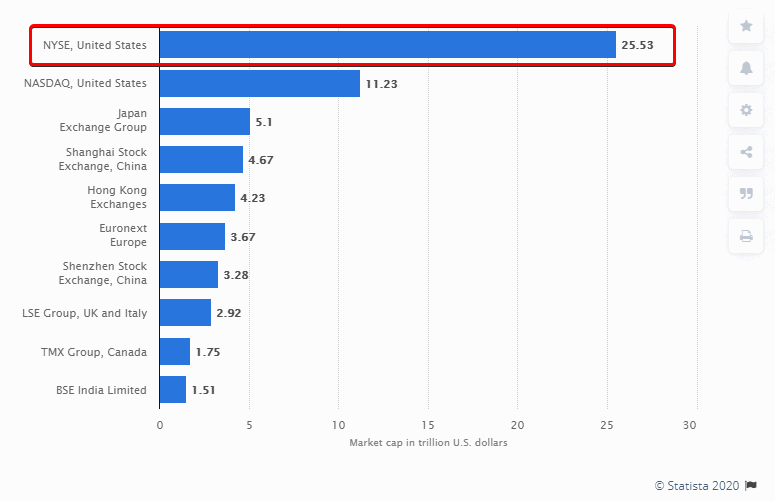
A fundamental question for investors, economists, and market enthusiasts alike is: “How many companies are listed on the NYSE?” While seemingly a straightforward query, the answer is far from static. The number of companies calling the NYSE home is a fluid metric, constantly shifting due to a dynamic interplay of new listings, delistings, mergers, and market forces. Understanding this dynamic figure offers deep insights into the vitality of the capital markets and the broader economic landscape.
The New York Stock Exchange: A Cornerstone of Global Finance
The NYSE’s role in shaping global finance cannot be overstated. From its humble beginnings under a buttonwood tree to its current status as a fully integrated global exchange group, it has facilitated countless transactions, funded innumerable innovations, and mirrored the triumphs and tribulations of the global economy.
A Brief History and Its Enduring Legacy
The story of the NYSE officially begins in 1792 with the Buttonwood Agreement, signed by 24 stockbrokers and merchants, establishing rules for trading securities in New York City. This foundational moment laid the groundwork for a formal marketplace that would grow to become the largest and most influential in the world. Throughout the 19th and 20th centuries, the NYSE fueled America’s industrial revolution, providing the capital needed for railroads, factories, and groundbreaking inventions. It navigated economic booms, panics, and two World Wars, evolving with the times while maintaining its core mission of providing an orderly and efficient market for securities.
Its enduring legacy lies not just in its age, but in its continued relevance. Despite the rise of electronic trading and alternative exchanges, the NYSE remains synonymous with prestige, stability, and liquidity. It serves as a global benchmark for corporate governance and transparency, attracting some of the world’s most established and aspiring companies.
What It Means to Be NYSE-Listed
For a company, listing on the NYSE is a significant milestone that confers numerous advantages and responsibilities. It is a declaration of corporate maturity and a commitment to stringent standards.
-
Prestige and Credibility: A NYSE listing carries a global reputation for credibility and financial strength. It signifies that a company has met rigorous financial and governance standards, often boosting investor confidence and brand image internationally.
-
Access to Capital: Listing provides access to a vast pool of institutional and retail investors, enabling companies to raise significant capital through initial public offerings (IPOs) and subsequent secondary offerings. This capital is crucial for expansion, research and development, and strategic acquisitions.
-
Liquidity: The NYSE provides an incredibly liquid market, meaning that there are always buyers and sellers for a company’s shares. This liquidity is beneficial for both the company (allowing for easier future capital raises) and investors (allowing them to buy and sell shares efficiently).
-
Visibility and Analyst Coverage: Public listing significantly increases a company’s visibility, attracting media attention, analyst coverage, and broader public awareness, which can be invaluable for business development and investor relations.
-
Shareholder Value: For company founders and early investors, going public offers an exit strategy and a way to realize returns on their investment, while also providing employees with equity-based compensation opportunities.
However, listing also entails significant obligations, including increased regulatory scrutiny, ongoing reporting requirements, and the pressure of quarterly earnings performance. It’s a trade-off that successful companies willingly embrace for the benefits it brings.
The Dynamic Landscape of NYSE Listings
The specific number of companies trading on the NYSE is not a fixed statistic to be memorized, but rather a constantly evolving figure. It fluctuates daily, even hourly, reflecting the vibrant ebb and flow of the capital markets. While exact real-time figures are dynamic, historical data and current approximations suggest the number generally hovers between 2,400 and 2,800 companies. This range encompasses a vast array of businesses, from multinational conglomerates to rapidly growing mid-cap enterprises.
The Ever-Fluctuating Number
Several factors contribute to the variability of the NYSE’s company count. This dynamism is a fundamental characteristic of a healthy, efficient market where capital is continually reallocated based on performance and economic conditions.
-
Initial Public Offerings (IPOs): When a private company decides to “go public” and offer its shares for sale to the general public for the first time, it undergoes an IPO. If it chooses the NYSE as its listing venue, it adds to the total count. IPOs are often seen as indicators of market confidence and economic growth, bringing new blood and innovation to the exchange.
-
Delistings: Companies can be delisted from the NYSE for various reasons. This can be voluntary, such as when a company is acquired by another entity, decides to go private, or transfers its listing to another exchange (like Nasdaq, although less common for larger NYSE firms). Involuntary delistings occur when a company fails to meet the NYSE’s continued listing standards, which can include minimum share price, market capitalization, or corporate governance requirements. Bankruptcy or severe financial distress can also lead to delisting.
-
Mergers and Acquisitions (M&A): When two NYSE-listed companies merge, the combined entity typically continues under one listing, effectively reducing the total number by one. Similarly, if a private company acquires a public NYSE-listed company, the acquired company’s listing will be removed. M&A activity is a consistent driver of change in listing numbers.
-
Spin-offs: Less frequently, a large company might spin off a division into an independent, publicly traded entity. If this new entity lists on the NYSE, it would add to the count, though the parent company’s listing remains.
Key Drivers of Listing Changes
These fluctuations are not random; they are driven by strategic corporate decisions, market sentiment, and regulatory compliance.
-
Market Conditions and Economic Cycles: Bull markets and periods of economic expansion tend to encourage more IPOs as companies seek to capitalize on high valuations and investor enthusiasm. Conversely, bear markets or recessions might see fewer new listings and potentially more delistings due to financial difficulties or a lack of appetite for public offerings.
-
Industry Trends: The prominence of certain industries shifts over time. For example, during the dot-com boom, many technology companies listed, while today, sectors like renewable energy or biotechnology might see increased IPO activity. The NYSE aims to represent a broad cross-section of the economy, adapting to these evolving trends.
-
Competitive Landscape among Exchanges: While the NYSE and Nasdaq are the two primary exchanges in the U.S., companies occasionally weigh the advantages of each. Nasdaq is often perceived as more tech-friendly, while the NYSE is seen as the home for more traditional, large-cap industrials and financials. Companies may strategically choose one over the other based on their industry, size, and investor base.
-
Global Events: Geopolitical events, shifts in international trade, and global economic crises can all impact listing decisions, influencing both the desire of companies to go public and their ability to meet ongoing listing requirements.
This constant churn ensures that the NYSE remains a dynamic, rather than static, representation of the global corporate landscape.
Beyond the Numbers: The Diverse Ecosystem of NYSE Companies
While the sheer number of companies is impressive, the true strength of the NYSE lies in the remarkable diversity and scale of its listed entities. It’s a marketplace that offers investors exposure to virtually every sector of the global economy.
Sectoral Representation
The NYSE hosts a broad spectrum of industries, providing a snapshot of the global economic structure. This extensive sectoral representation allows investors to diversify their portfolios across various economic drivers.
-
Financials: Major banks, insurance companies, and investment firms (e.g., JPMorgan Chase, Berkshire Hathaway).
-
Industrials: Manufacturing giants, aerospace companies, and heavy equipment manufacturers (e.g., General Electric, Boeing).
-
Consumer Discretionary & Staples: Retailers, automotive companies, hospitality firms, and everyday consumer goods manufacturers (e.g., Walmart, Coca-Cola, Starbucks).
-
Healthcare: Pharmaceutical companies, medical device manufacturers, and healthcare service providers (e.g., Johnson & Johnson, Pfizer).
-
Energy: Oil and gas producers, refiners, and alternative energy companies (e.g., ExxonMobil, Chevron).
-
Technology: While Nasdaq is known for tech, the NYSE hosts established tech behemoths and innovative leaders (e.g., IBM, Salesforce, Visa).
-
Utilities: Power, gas, and water utilities, known for their stable dividends.
-
Materials: Mining companies, chemical producers, and construction material suppliers.
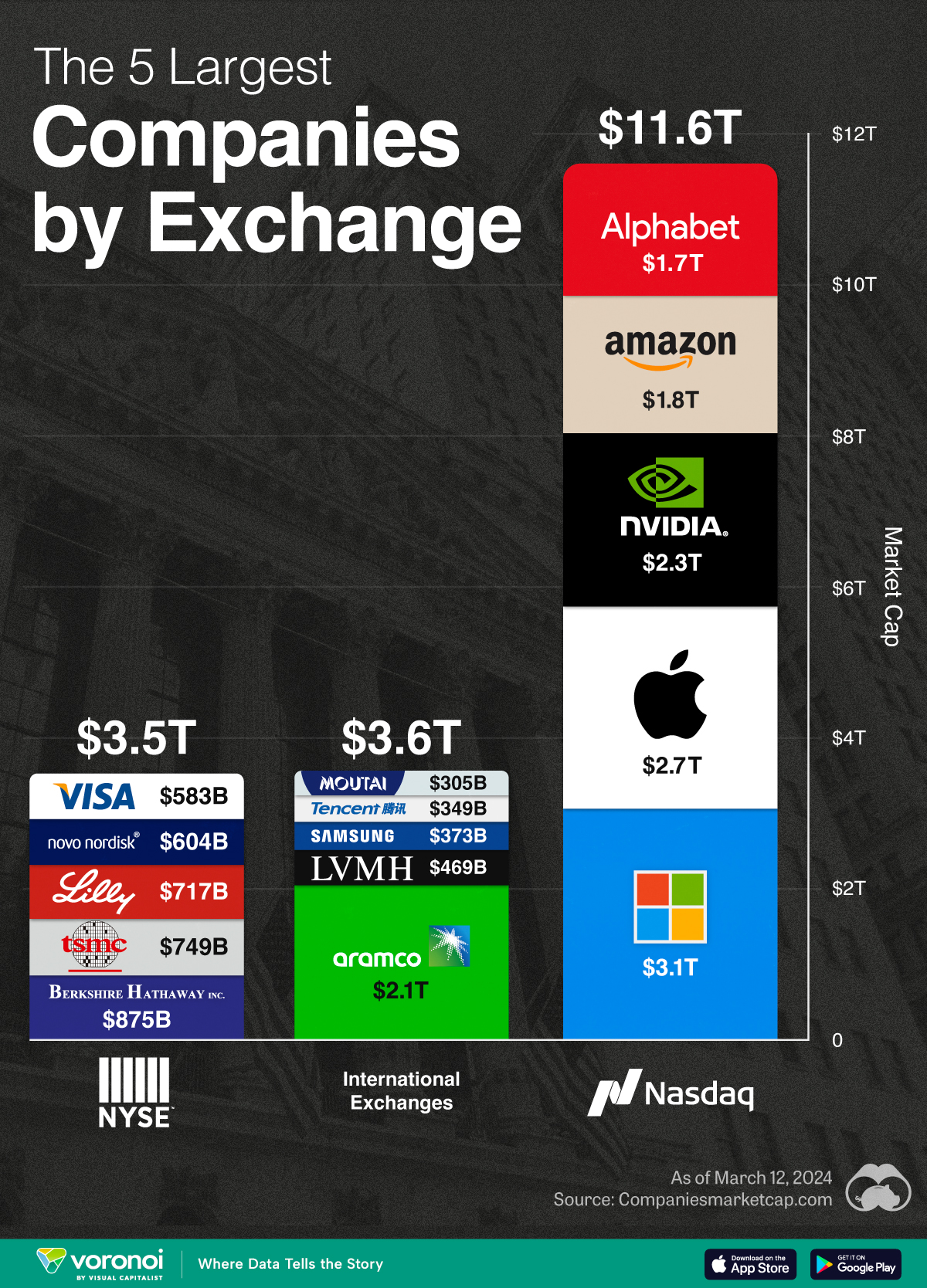
This diversity means that market performance is rarely dictated by a single industry, contributing to the overall resilience and stability of the NYSE as an investment platform.
Market Capitalization Spectrum
The companies listed on the NYSE span a vast range of market capitalizations, from colossal blue-chip companies with hundreds of billions in market value to smaller, yet well-established, mid-cap firms.
-
Mega-Cap & Large-Cap: These are the titans of industry, often household names with established market leadership, global operations, and significant financial resources. Their size often provides a degree of stability and resilience to economic downturns (e.g., Visa, Home Depot, Disney). They often form the core of many institutional portfolios.
-
Mid-Cap: These companies are typically more mature than small-caps but still have substantial growth potential. They represent a significant portion of the innovation and employment within the economy and offer a balance of growth potential and established operations for investors.
The presence of companies across this capitalization spectrum ensures that the NYSE caters to various investment strategies, from conservative income investing to growth-oriented approaches.
Global Reach: Domestic and International Issuers
The NYSE is not exclusively for U.S.-based companies. Its global prestige and access to deep capital markets make it an attractive listing destination for international firms.
-
American Companies: The vast majority of NYSE listings are American companies, reflecting the breadth and depth of the U.S. economy.
-
International Companies (ADRs): Many non-U.S. companies choose to list on the NYSE through American Depositary Receipts (ADRs). ADRs are certificates issued by a U.S. bank that represent shares in a foreign stock. This allows foreign companies to tap into the U.S. investor base without having to fully comply with all U.S. regulatory standards that apply to domestic listings, making it easier for American investors to buy shares of overseas companies. This global representation adds another layer of diversification and international exposure for investors.
This blend of domestic and international giants underscores the NYSE’s role as a truly global financial marketplace, linking economies and capital across continents.
Implications for Investors and the Economy
The sheer number and diversity of companies on the NYSE have profound implications for both individual investors and the broader economy. It is not merely a quantitative figure but a qualitative indicator of economic health, opportunity, and stability.
Investment Opportunities and Diversification
For investors, the NYSE represents a sprawling universe of investment opportunities. Its extensive list of companies allows for:
-
Portfolio Diversification: Investors can construct highly diversified portfolios across various sectors, market capitalizations, and geographies, helping to mitigate risk and capture growth from different economic drivers.
-
Income Generation: Many established NYSE-listed companies are known for paying consistent dividends, providing income streams for investors.
-
Growth Potential: While often seen as home to mature companies, the NYSE also lists firms with significant growth prospects, particularly in mid-cap segments and emerging industries.
-
Liquidity and Transparency: The highly liquid nature of NYSE-listed stocks means investors can typically buy and sell shares easily, and the stringent reporting requirements provide a high degree of transparency into company financials.
Successful investing, however, requires more than just access. It demands thorough research, understanding individual company fundamentals, assessing market trends, and aligning investments with personal financial goals and risk tolerance.
Market Health as an Economic Barometer
The collective performance and activity of NYSE-listed companies serve as a powerful barometer for the health of the U.S. and global economies.
-
Leading Economic Indicator: Trends in IPOs, earnings reports, and M&A activity among NYSE firms can often signal future economic shifts. Strong corporate earnings, for instance, typically point to a robust economy.
-
Capital Formation: The NYSE’s ability to facilitate capital raising is critical for economic growth. It channels savings into productive investments, enabling companies to innovate, expand, create jobs, and contribute to GDP.
-
Consumer Confidence: The stock market’s performance, heavily influenced by NYSE companies, often impacts consumer confidence. A rising market can create a “wealth effect,” encouraging spending, while a declining market can have the opposite effect.
Thus, tracking the NYSE is not just about financial performance; it’s about understanding the pulse of the economy and the collective sentiment of businesses and investors.
Regulatory Oversight and Investor Protection
The integrity and reliability of the NYSE are underpinned by robust regulatory oversight, crucial for maintaining investor confidence and ensuring fair markets.
-
Securities and Exchange Commission (SEC): As a U.S. exchange, the NYSE operates under the direct oversight of the SEC, which enforces federal securities laws. The SEC’s role is to protect investors, maintain fair, orderly, and efficient markets, and facilitate capital formation.
-
NYSE Rules and Listing Standards: The NYSE itself has stringent listing and continued listing requirements, as well as rules governing trading practices. These standards relate to financial performance, corporate governance (e.g., independent directors, audit committees), and disclosure.
-
Transparency and Disclosure: Listed companies are required to regularly disclose financial results, material events, and other information to the public, ensuring that all investors have access to critical data for making informed decisions. This transparency is a cornerstone of investor protection.
These layers of regulation work in tandem to foster a trading environment characterized by fairness, transparency, and accountability, which are essential for attracting and retaining both companies and investors.

Conclusion
The question of “how many companies in the NYSE” reveals a dynamic and complex picture, far beyond a simple numerical answer. While the exact figure is in constant flux, generally ranging between 2,400 and 2,800 companies, this number represents a diverse and globally significant ecosystem. It signifies a marketplace where innovation meets capital, where established giants maintain their leadership, and where new ventures seek the resources to grow.
The NYSE’s enduring role as a cornerstone of global finance, its robust listing requirements, the sheer diversity of its listed entities, and its stringent regulatory environment collectively underscore its importance. For investors, it offers a vast and liquid landscape for portfolio construction and wealth creation. For the economy, it remains a vital engine of capital formation, growth, and a critical indicator of economic health. The “Big Board” continues to be a powerful symbol of economic opportunity and a testament to the enduring power of well-regulated, efficient capital markets.
aViewFromTheCave is a participant in the Amazon Services LLC Associates Program, an affiliate advertising program designed to provide a means for sites to earn advertising fees by advertising and linking to Amazon.com. Amazon, the Amazon logo, AmazonSupply, and the AmazonSupply logo are trademarks of Amazon.com, Inc. or its affiliates. As an Amazon Associate we earn affiliate commissions from qualifying purchases.