
The share market often appears as a complex labyrinth of numbers, flashing green and red tickers, and incomprehensible jargon. However, at its core, the stock market is one of the most effective vehicles for wealth creation ever devised. Trading in the share market is no longer a privilege reserved for Wall Street elites or institutional bankers; with the advent of digital technology, anyone with a smartphone and a modest amount of capital can participate in the global economy. To trade successfully, however, requires more than just an app; it demands a blend of discipline, technical knowledge, and a robust understanding of financial ecosystems.
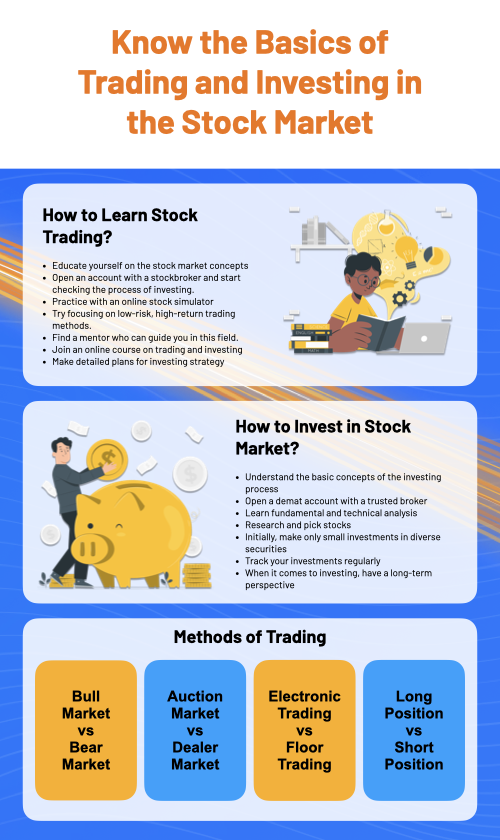
Understanding the Foundations: Demystifying the Share Market
Before placing your first trade, it is essential to understand what the share market actually represents. When you buy a “share,” you are purchasing a fractional ownership stake in a corporation. If the company prospers, the value of your stake increases. If the company fails or underperforms, the value of your stake diminishes.
The Role of Stock Exchanges
Stock exchanges, such as the New York Stock Exchange (NYSE), the Nasdaq, or the National Stock Exchange (NSE), act as regulated marketplaces. Think of them as the platform where buyers and sellers meet. These exchanges ensure transparency, liquidity, and fair pricing. When you trade, you aren’t buying directly from the company (unless it is an Initial Public Offering); you are buying from another investor who wishes to sell.
How Prices are Determined
The price of a stock is governed by the law of supply and demand. If more people want to buy a stock (demand) than sell it (supply), the price moves up. Conversely, if bad news breaks and everyone wants to sell, the price drops. This demand is driven by factors ranging from corporate earnings and economic data to geopolitical events and investor sentiment.
The Ecosystem of Market Participants
The market is composed of various players, including retail investors (individuals like you), institutional investors (pension funds and insurance companies), and “market makers” who provide liquidity. Understanding that you are competing in a global arena is the first step toward adopting a professional mindset.
Setting Up for Success: The Infrastructure of Trading
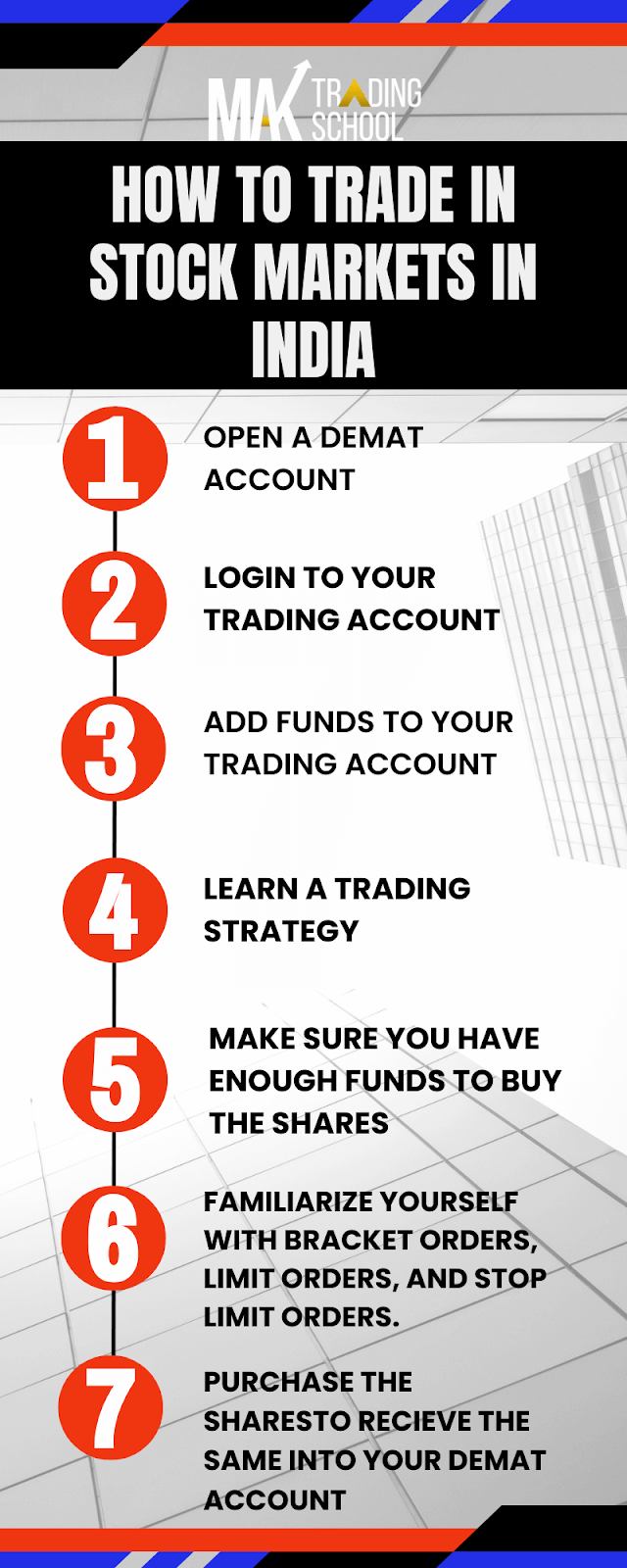
Trading cannot happen in a vacuum. You need a specific technological and legal framework to interface with the stock exchanges. This infrastructure is your gateway to the financial world.
Choosing the Right Broker
Your broker is your intermediary. Broadly, brokers are categorized into two types:
-
Discount Brokers: These provide a platform for executing trades at a very low cost. They are ideal for self-directed traders who do not require personalized investment advice.
-
Full-Service Brokers: These offer a suite of services, including research reports, tax planning, and dedicated relationship managers. While their fees are higher, they provide a “hand-holding” experience for those with significant capital or limited time.
The Three Pillars: Savings, Demat, and Trading Accounts
To trade effectively, you need a trio of interconnected accounts:
-
The Savings Account: This is where your liquid cash resides.
-
The Trading Account: This is the interface where you execute buy and sell orders. It acts as the bridge between your bank and the stock exchange.
-
The Demat Account: Short for “dematerialized,” this account acts like a digital locker. When you buy shares, they are stored here in electronic form.
Navigating Trading Terminology
Before hitting the ‘buy’ button, you must understand the types of orders you can place. A Market Order executes your trade immediately at the current market price. A Limit Order allows you to specify the maximum price you are willing to pay (or the minimum you are willing to accept), giving you greater control over your entry and exit points.
Choosing Your Style: Different Approaches to Market Participation
Not all trading is created equal. Your strategy should align with your financial goals, risk tolerance, and the amount of time you can dedicate to the screens.
Day Trading: The High-Intensity Path
Day trading involves buying and selling securities within the same trading day. The goal is to capitalize on small price movements using high frequency. This style requires constant monitoring of charts, a deep understanding of technical indicators, and a high tolerance for stress. It is a full-time job rather than a passive income stream.
Swing Trading: Capturing the Momentum
Swing trading is a medium-term strategy where positions are held for several days or weeks. Swing traders look for “swings” in stock prices caused by changes in momentum or news cycles. This approach is popular among working professionals because it does not require second-by-second monitoring but still offers higher turnover than long-term investing.
Value and Growth Investing
This is the “Warren Buffett” approach. Investors look for companies with strong fundamentals—solid earnings, low debt, and competitive advantages—and hold them for years or even decades. Growth investors focus on companies expected to grow at an above-average rate, while value investors look for companies that the market has unfairly undervalued.
Scalping and Options Trading
Scalping is an ultra-short-term strategy involving hundreds of trades a day for tiny profits. Options trading, on the other hand, involves trading contracts that give you the right to buy or sell a stock at a specific price. Options provide leverage, allowing for massive gains, but they also carry the risk of total capital loss if the market moves against you.
The Tools of the Trade: Technical and Fundamental Analysis
To decide what to trade, you need a methodology. Professional traders generally lean on two primary schools of thought.
Fundamental Analysis: Evaluating the Business
Fundamental analysis is the study of the underlying business. If you were buying a local bakery, you would look at its revenue, its expenses, and its competition. In the share market, this involves:
-
Earnings Reports: Quarterly updates on a company’s profit and loss.
-
P/E Ratio (Price-to-Earnings): A metric used to determine if a stock is overvalued or undervalued relative to its peers.
-
Debt-to-Equity: A measure of a company’s financial health and its reliance on borrowed money.
-
Macroeconomic Factors: Interest rates, inflation, and GDP growth.
Technical Analysis: Evaluating the Chart
Technical analysis ignores the “why” and focuses on the “what.” It assumes that all known information is already reflected in the stock price. Traders use historical price charts and mathematical indicators to predict future movements. Key tools include:
-
Support and Resistance: Identifying price levels where a stock historically struggles to fall below or rise above.
-
Moving Averages: Smoothing out price data to identify the overall trend.
-
RSI (Relative Strength Index): An indicator that suggests whether a stock is “overbought” (too expensive) or “oversold” (too cheap).
-
Candlestick Patterns: Visual representations of price action that signal potential reversals or continuations in the trend.
Risk Management and the Psychology of Trading
The difference between a successful trader and a failed one is rarely a matter of who has the better “hot tip.” It is almost always a matter of risk management and emotional control.
The Golden Rule: Capital Preservation
In trading, your capital is your “inventory.” If you lose your inventory, you are out of business. Professional traders never risk more than 1% to 2% of their total account value on a single trade. This ensures that even a string of losses—which is inevitable—will not result in financial ruin.
Utilizing Stop-Loss Orders
A stop-loss order is an automated instruction to sell a security when it reaches a certain price. It is your ultimate safety net. By pre-defining your “exit point” for a losing trade, you remove the emotional temptation to “wait for it to come back,” a habit that has liquidated countless trading accounts.
Managing the Two Dragons: Fear and Greed
The share market is a psychological battleground. Greed drives investors to stay in a winning trade too long, only to watch their profits evaporate. Fear drives investors to sell at the bottom of a temporary dip. Successful trading requires a “mechanical” mindset. You must stick to your pre-defined plan regardless of how you feel in the heat of the moment.
Diversification: The Only Free Lunch
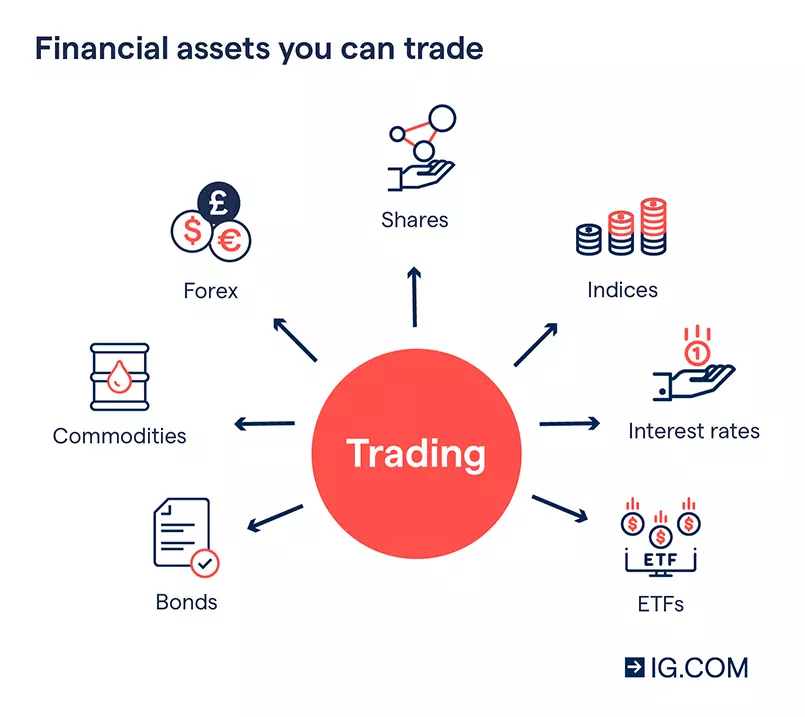
“Don’t put all your eggs in one basket” is the most practical advice in finance. By spreading your capital across different sectors (Tech, Healthcare, Energy) and different asset classes (Stocks, Bonds, ETFs), you reduce the impact of a single company’s failure on your overall portfolio.
Trading in the share market is a journey of continuous learning. It offers the potential for financial independence and a deeper understanding of how the world works. However, it requires a commitment to education, the humility to admit when you are wrong, and the discipline to follow a structured system. By treating trading as a business rather than a gamble, you position yourself to capture the immense wealth-generating power of the global financial markets.
aViewFromTheCave is a participant in the Amazon Services LLC Associates Program, an affiliate advertising program designed to provide a means for sites to earn advertising fees by advertising and linking to Amazon.com. Amazon, the Amazon logo, AmazonSupply, and the AmazonSupply logo are trademarks of Amazon.com, Inc. or its affiliates. As an Amazon Associate we earn affiliate commissions from qualifying purchases.