
The New York Stock Exchange (NYSE) stands as an enduring symbol of global capitalism, a bustling marketplace where fortunes are made and economic trends are forged. Often referred to as “the Big Board,” its iconic facade on Wall Street represents more than just a physical location; it embodies a vast, complex ecosystem of companies, investors, and financial instruments. For many, the sheer scale of the NYSE is a source of fascination and, at times, confusion. One of the most common questions inquisitive minds pose is, “How many stocks are actually listed on the New York Stock Exchange?” The answer, while seemingly straightforward, belies a dynamic reality influenced by market forces, regulatory requirements, and the continuous evolution of corporations.

Understanding the precise number of listed stocks isn’t merely an exercise in trivia; it offers crucial insights into the health of the global economy, the breadth of investment opportunities, and the operational intricacies of the world’s largest stock exchange by market capitalization. This article will delve into the figures, explore the factors that cause these numbers to fluctuate, examine the NYSE’s pivotal role in the financial landscape, and explain why these metrics hold significant weight for investors and economists alike. Far from a static ledger, the NYSE’s roster of companies is a living, breathing testament to innovation, growth, and the relentless march of commerce.
Demystifying the Numbers: Understanding the NYSE’s Scale
Pinpointing an exact, immutable number of stocks listed on the New York Stock Exchange at any given second is challenging, primarily because the exchange’s population is in constant flux. Companies are continually joining through initial public offerings (IPOs), while others depart due to mergers, acquisitions, bankruptcies, or voluntary delistings. However, broadly speaking, the NYSE typically hosts between 2,400 to 2,800 listed companies at any given time. This range provides a useful benchmark for grasping the exchange’s immense scale.
Historically, the number of listed companies has seen significant variations. In its heyday, particularly during the late 1990s and early 2000s, the NYSE boasted over 3,000 listed entities. More recently, a trend of consolidation, coupled with fewer large-scale IPOs and an increase in private equity activity, has somewhat moderated these figures. Nevertheless, each of these listed companies represents a distinct investment opportunity, contributing to a combined market capitalization that frequently exceeds tens of trillions of dollars, dwarfing many national economies. This aggregate value underscores the critical role the NYSE plays in capital formation and wealth creation globally. The sheer volume of assets traded daily through these listings facilitates liquidity and price discovery, essential functions for any robust financial market.
The Dynamic Nature of Listings
The ebb and flow of company listings on the NYSE are driven by a confluence of economic and corporate activities. IPOs are the most celebrated form of entry, marking a company’s transition from private to public ownership, often accompanied by significant media attention and investor excitement. These events inject fresh capital into the companies, fueling expansion and innovation. Conversely, companies may exit the exchange for various reasons. Mergers and acquisitions frequently result in one company being absorbed by another, leading to the delisting of the acquired entity’s stock. Bankruptcies, while unfortunate, also remove companies from the trading floor as they cease to be viable investment options. Furthermore, some companies may opt for a voluntary delisting, perhaps choosing to go private or to list on a different exchange that better suits their strategic objectives. This continuous churn ensures that the NYSE remains a dynamic, rather than static, representation of the market’s evolving landscape. The ability of the exchange to adapt to these changes while maintaining stringent listing standards is crucial to its enduring credibility and operational efficiency.
Beyond Just Common Stock: Other Securities
While the term “stocks” often conjures images of common shares, it’s important to recognize that the NYSE also trades a variety of other securities. These include preferred stocks, which offer different rights and dividend structures compared to common shares; exchange-traded funds (ETFs), which are baskets of securities that trade like individual stocks; and various types of bonds and other derivatives. While the primary count of “stocks” typically refers to the number of distinct common equity listings, the broader range of tradable instruments on the NYSE significantly expands the universe of investment options and contributes to the market’s overall depth and liquidity. Each of these security types serves different investment objectives, from income generation to speculative growth, catering to a diverse range of investor needs and risk appetites. The robust infrastructure of the NYSE supports the efficient trading of all these instruments, reinforcing its position as a comprehensive financial marketplace.
The Lifecycle of a NYSE Listing: From IPO to Delisting
Becoming a listed company on the New York Stock Exchange is a significant milestone, a public declaration of corporate maturity and financial transparency. It’s a process fraught with rigorous scrutiny and substantial commitment, reflecting the NYSE’s stature as a premier global exchange. The lifecycle of a NYSE listing is not merely a bureaucratic procedure; it’s a journey that mirrors a company’s strategic evolution, market performance, and adherence to stringent governance standards. From the initial aspiration of going public to the eventual departure from the “Big Board,” each stage is critical for both the company and the integrity of the market. This journey is overseen by a complex interplay of regulatory bodies, investment banks, and the exchange itself, all working to ensure fair and orderly markets. Understanding this lifecycle provides deeper insight into what it means for a company to be publicly traded and why certain numbers fluctuate.
The Rigorous Path to Public Offering
The journey for a company to become a NYSE-listed entity is exhaustive and multi-faceted. It typically begins with an Initial Public Offering (IPO), a complex process that involves investment banks underwriting the offering, extensive legal and financial disclosures, and a “roadshow” to garner investor interest. To qualify for a NYSE listing, companies must meet stringent financial and governance requirements. These include minimum thresholds for earnings, market capitalization, number of publicly held shares, and shareholder equity. Furthermore, the NYSE mandates high standards for corporate governance, requiring independent boards of directors, audit committees, and ethical conduct. These rigorous standards are designed to protect investors by ensuring that only financially sound and transparent companies are accessible on the exchange. The IPO process, therefore, is not just about raising capital; it’s about validating a company’s long-term viability and its commitment to public accountability, setting the foundation for its tenure on the exchange.
Reasons for Delisting: A Company’s Evolution
Just as companies join the NYSE, they can also leave it, and the reasons for delisting are as varied as the companies themselves. The most common reasons include mergers and acquisitions, where one company’s stock is absorbed into another. This often represents a successful outcome for shareholders of the acquired company. Another significant reason is going private, where a company’s shares are bought back by a smaller group of investors, often for strategic reasons such as reducing regulatory burdens or undertaking significant restructuring away from public scrutiny.
Unfortunately, delistings can also occur due to adverse circumstances, such as bankruptcy or failure to meet the NYSE’s ongoing listing standards. If a company’s stock price consistently falls below a certain threshold, or its market capitalization dwindles, or if it fails to maintain corporate governance requirements, the NYSE may initiate delisting procedures. These actions are designed to protect investors from investing in non-compliant or financially distressed entities. Voluntary delistings, though less common, can also occur if a company decides to list on another exchange or if it believes the costs and complexities of public trading outweigh the benefits. Each delisting, regardless of the reason, marks an important point in a company’s lifecycle and reflects the continuous dynamic adjustments within the broader market.
The NYSE’s Role in the Global Financial Ecosystem
The New York Stock Exchange is far more than just a venue for buying and selling shares; it is a critical artery within the global financial ecosystem, influencing economies and shaping investment strategies across continents. Its sheer size, liquidity, and prestige attract companies and investors from around the world, making it a powerful engine for capital formation and wealth distribution. The NYSE’s operational efficiency and robust regulatory framework provide a level of trust and stability that underpins significant economic activity. From daily price discovery to the allocation of capital for corporate expansion, the impact of the NYSE resonates globally, affecting everything from pension funds to individual savings accounts. Its presence profoundly impacts how businesses are funded, how economies grow, and how financial risk is managed on an international scale.
A Bellwether of Economic Health
The collective performance of companies listed on the NYSE serves as a powerful barometer for the health of the U.S. and, by extension, the global economy. Major indices like the Dow Jones Industrial Average (DJIA), which tracks 30 significant NYSE-listed companies, and the broader S&P 500 (many of whose constituents are NYSE-listed), are closely watched indicators of economic prosperity. When these indices rise, it often signals investor confidence in corporate profits, economic growth, and stability. Conversely, declines can signal impending economic slowdowns or recessions. Beyond the indices, the daily trading volumes, the frequency of IPOs, and the sectors experiencing growth or contraction on the NYSE all provide granular insights into economic trends, consumer sentiment, and industrial shifts. Analysts and policymakers scrutinize these metrics to gauge the efficacy of economic policies and forecast future conditions. The NYSE, therefore, acts as a real-time feedback loop, providing continuous data points that are vital for informed decision-making across various economic sectors.
Attracting Global Capital
The NYSE’s reputation for deep liquidity, transparent operations, and strong regulatory oversight makes it a magnet for global capital. International companies frequently choose to list on the NYSE, often through American Depositary Receipts (ADRs), to gain access to the vast pool of U.S. and international investors. This access provides these companies with significant capital-raising capabilities, helping them fund expansion, research and development, and strategic acquisitions. For investors, the NYSE offers unparalleled diversification opportunities, allowing them to invest in leading companies across virtually every industry sector, both domestically and internationally. The ability to easily buy and sell shares of diverse companies, from multinational tech giants to emerging market innovators, provides investors with flexibility and efficiency in managing their portfolios. This global attractiveness strengthens the NYSE’s position, ensuring it remains at the forefront of financial innovation and market development, further solidifying its critical role in facilitating worldwide economic integration.
Key Metrics and What They Really Tell Us
Understanding the number of stocks on the NYSE is a starting point, but truly comprehending the exchange’s significance requires delving into other critical metrics. These numbers provide a more nuanced picture of market depth, investor activity, and the overall economic impact of the listed companies. Focusing solely on the count of listings can be misleading without considering the broader context of market capitalization and trading volume. These intertwined metrics offer distinct yet complementary insights, helping investors and analysts to gauge the true scale and vitality of the exchange. By looking beyond superficial counts, one can develop a more sophisticated understanding of how the NYSE functions as a powerhouse of global finance and what these operational details mean for capital allocation and investment performance.
Market Capitalization vs. Number of Listings
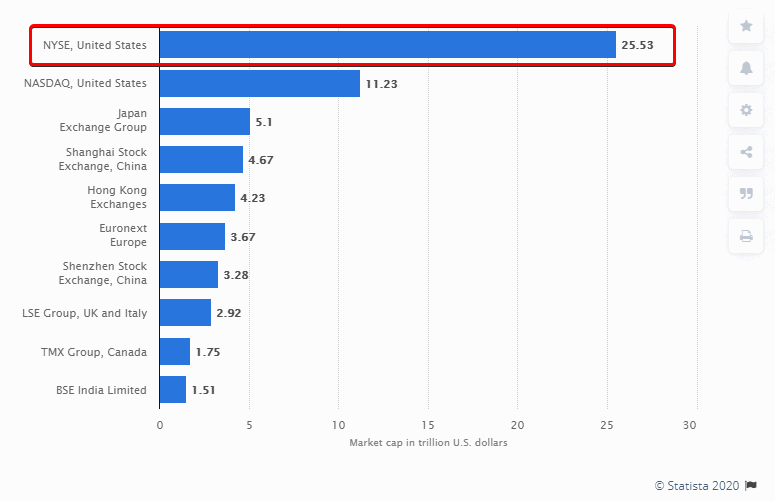
While the number of listings provides a count of individual companies, market capitalization offers a measure of their collective value. Market capitalization is calculated by multiplying a company’s share price by the total number of its outstanding shares. The total market capitalization of all NYSE-listed companies is a far more impactful figure than just the raw count of companies. It often exceeds $30 trillion, making the NYSE the largest stock exchange in the world by this metric. This enormous aggregate value indicates the vast wealth concentrated within the exchange and reflects the economic heft of its constituent companies. A few large, highly valued companies can contribute disproportionately to this total market capitalization, even if the absolute number of listings remains constant or even declines. Therefore, while a rising number of listings indicates breadth, a rising market capitalization signifies increasing wealth and confidence in the underlying businesses. It’s a measure of actual economic power rather than just the roster size.
Trading Volume and Liquidity Indicators
Trading volume, which measures the total number of shares exchanged between buyers and sellers over a specific period, is another crucial indicator of the NYSE’s vitality. High trading volumes indicate strong investor interest, active price discovery, and ample liquidity. Liquidity refers to the ease with which an asset can be converted into cash without affecting its market price. The NYSE is renowned for its deep liquidity, meaning that large orders to buy or sell stocks can generally be executed without significant price fluctuations. This is a critical factor for institutional investors and large fund managers who need to move substantial capital efficiently. High liquidity also reduces transaction costs for all investors, as there are always ready buyers and sellers. Beyond daily volume, metrics such as the bid-ask spread—the difference between the highest price a buyer is willing to pay and the lowest price a seller is willing to accept—also serve as liquidity indicators. A narrow bid-ask spread suggests high liquidity and efficient markets, reinforcing the NYSE’s role as a primary venue for capital allocation.
Why These Numbers Matter to Investors
For individual and institutional investors, the dynamics of the NYSE, including the number of listed stocks, their collective market capitalization, and trading volumes, are far from academic curiosities. These metrics directly impact investment strategies, risk management, and the potential for portfolio growth. A comprehensive understanding of the NYSE’s operational landscape empowers investors to make more informed decisions, navigate market volatility, and capitalize on opportunities. The choices made by investors, in turn, contribute to the ongoing evolution of the exchange, creating a symbiotic relationship that fuels economic progress. Ultimately, the significance of these numbers translates directly into the practical realities of building and managing a successful investment portfolio within the world’s most influential stock market.
Diversification Opportunities
The vast number of stocks listed on the NYSE, coupled with its diverse range of sectors and industries, provides investors with unparalleled opportunities for diversification. Diversification is a fundamental principle of sound investing, aimed at spreading risk across various assets to minimize the impact of poor performance from any single investment. With thousands of companies available, investors can construct portfolios that are well-balanced across different economic sectors—from technology and healthcare to energy and finance—and across companies of varying sizes and growth profiles. This extensive choice allows investors to align their portfolios with their risk tolerance and investment goals, whether they seek stable income from mature dividend-paying companies or high growth from innovative startups. The breadth of the NYSE market is a significant advantage, enabling investors to mitigate idiosyncratic risks and build resilient portfolios capable of weathering various market conditions.
Research and Due Diligence Imperatives
The sheer volume of companies listed on the NYSE underscores the critical importance of thorough research and due diligence for investors. With so many options available, a disciplined approach to evaluating potential investments is paramount. This involves scrutinizing a company’s financial statements, management team, competitive landscape, industry trends, and future growth prospects. While the NYSE’s strict listing requirements provide a baseline level of confidence, they do not guarantee investment success. Investors must actively engage in understanding the specific businesses they are investing in, rather than merely following market sentiment. The abundance of information, from analyst reports to news articles and regulatory filings, is readily available but requires diligent effort to synthesize and interpret. For both seasoned professionals and novice investors, the expansive universe of NYSE stocks demands a commitment to continuous learning and informed decision-making to navigate the complexities and unlock the potential rewards of this premier financial marketplace.
aViewFromTheCave is a participant in the Amazon Services LLC Associates Program, an affiliate advertising program designed to provide a means for sites to earn advertising fees by advertising and linking to Amazon.com. Amazon, the Amazon logo, AmazonSupply, and the AmazonSupply logo are trademarks of Amazon.com, Inc. or its affiliates. As an Amazon Associate we earn affiliate commissions from qualifying purchases.