
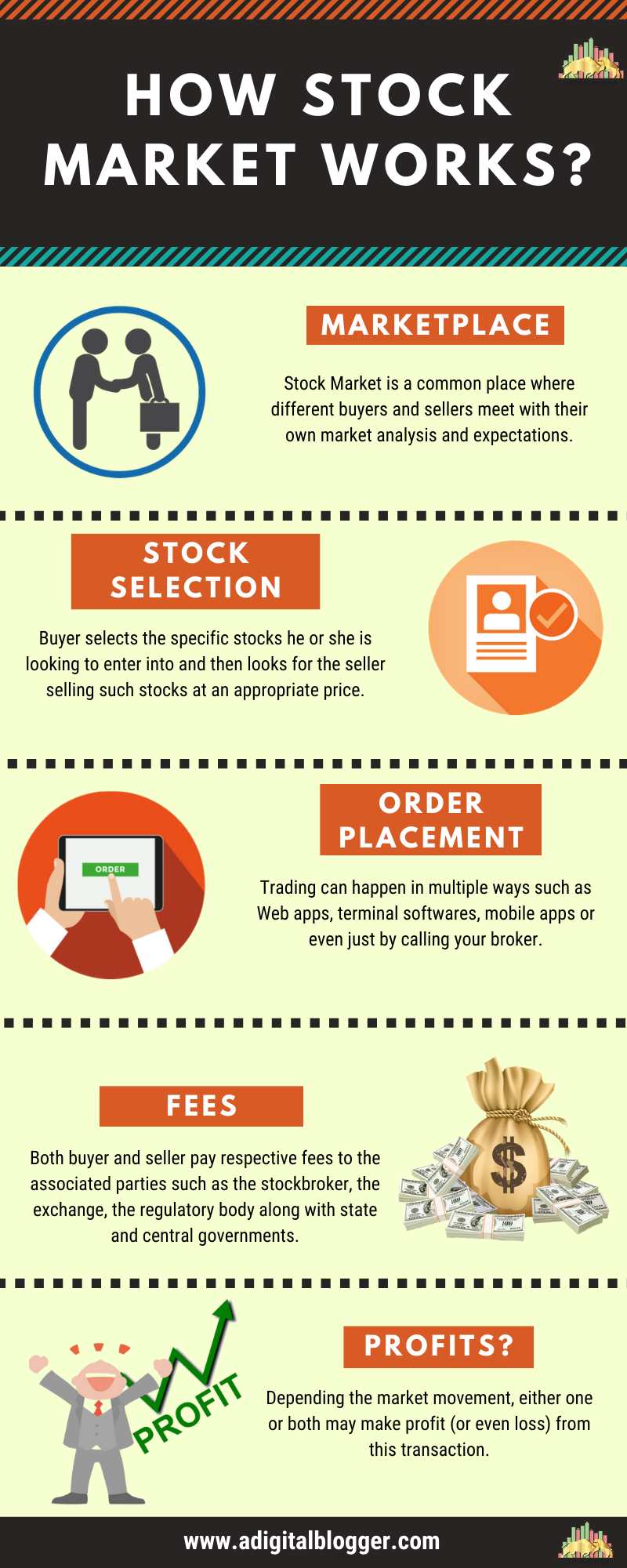
The stock market can appear to be a complex, intimidating beast, filled with jargon, fast-paced trading, and the looming specter of risk. For many beginners, it’s an enigma, a world reserved for financial gurus and high-rolling investors. However, demystifying the stock market is the first crucial step toward harnessing its potential for personal wealth creation. At its core, the stock market is simply a marketplace where ownership in public companies (stocks) is bought and sold. It’s a fundamental pillar of modern economies, providing businesses with capital to grow and offering individuals a pathway to participate in that growth.

This comprehensive guide is designed to peel back the layers of complexity, presenting the foundational concepts of the stock market in clear, accessible language for anyone just starting their investment journey. We’ll explore what makes the stock market tick, the types of investments available, the key principles every beginner should grasp, and practical steps to begin investing with confidence and a sound strategy. Understanding these basics isn’t just about making money; it’s about gaining financial literacy and empowering yourself to make informed decisions that can secure your financial future.
Understanding the Fundamentals: What is the Stock Market?
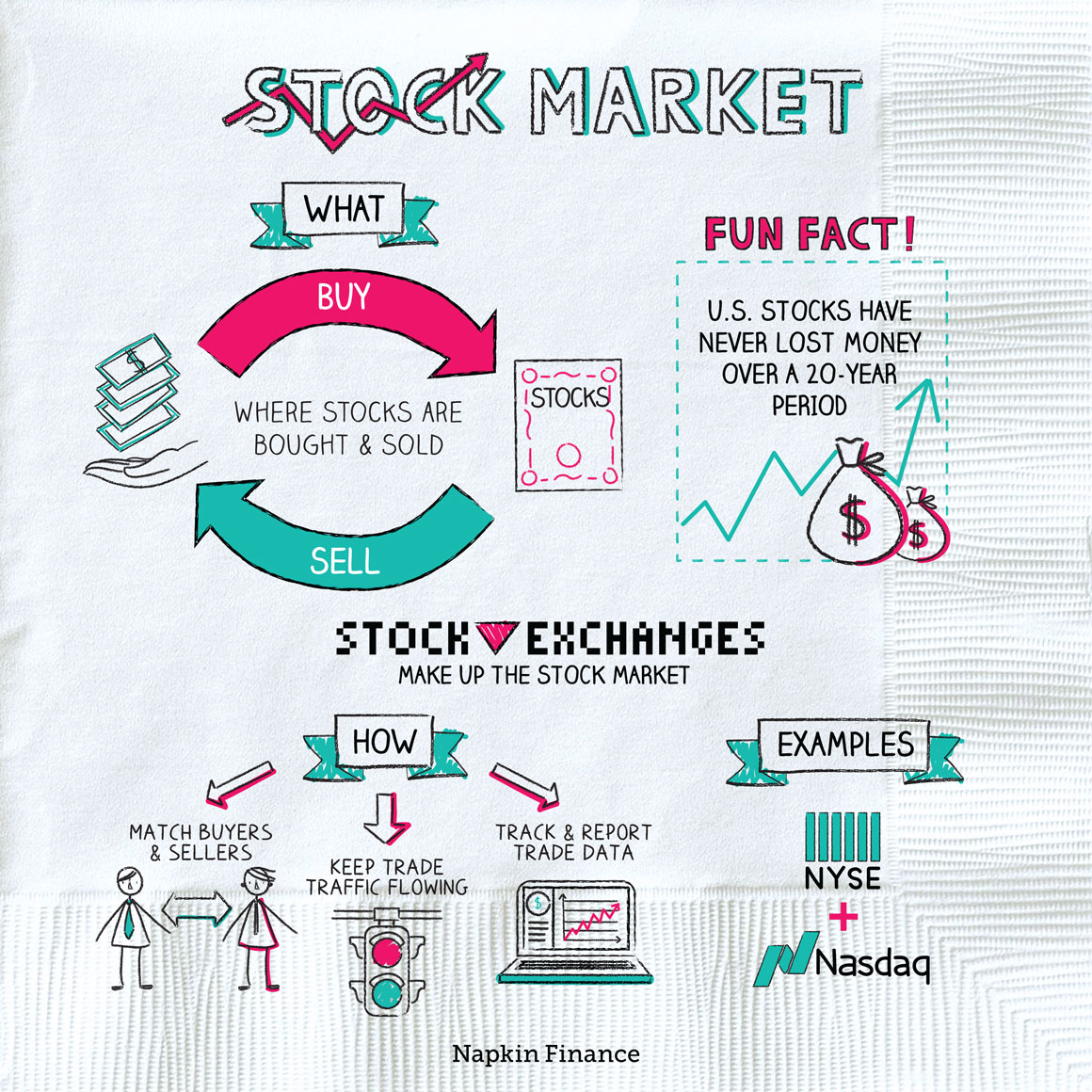
Before diving into the mechanics of buying and selling, it’s essential to grasp what the stock market truly represents and its purpose within the broader financial ecosystem. Far from a singular entity, the “stock market” is a collective term for the various exchanges and over-the-counter markets where financial instruments, primarily stocks, are traded.
What is a Stock?
A stock, also known as equity, represents a fractional ownership interest in a company. When you buy a share of stock, you literally become a part-owner of that company. As a shareholder, you gain certain rights, which often include the right to vote on company matters (like electing the board of directors) and the potential to receive a share of the company’s profits in the form of dividends. The value of your stock typically fluctuates based on the company’s performance, industry trends, economic conditions, and investor sentiment. If the company performs well and investors are optimistic about its future, demand for its shares may increase, driving up the stock price. Conversely, poor performance or negative sentiment can lead to a decrease in price.
Primary vs. Secondary Market
The stock market operates in two main phases: the primary market and the secondary market. The primary market is where companies first sell their shares to the public to raise capital. This usually happens through an Initial Public Offering (IPO), where a private company transforms into a public entity by offering its shares for sale for the first time. The proceeds from these sales go directly to the issuing company.
Once shares have been sold in the primary market, they can then be traded among investors in the secondary market. This is what most people think of when they talk about the “stock market” – exchanges like the New York Stock Exchange (NYSE) or Nasdaq. In the secondary market, the company whose stock is being traded typically does not receive any direct funds from these transactions; money changes hands between buyers and sellers. The secondary market provides liquidity, allowing investors to buy and sell shares easily, which is crucial for making stocks an attractive investment. Without a robust secondary market, investors would find it difficult to sell their holdings, reducing the incentive to buy them in the first place.
Who Are the Key Players?
A complex ecosystem of participants makes the stock market function. At the heart are companies that issue stocks to raise capital. Then there are investors, ranging from individual retail investors (like you) to large institutional investors (like pension funds, mutual funds, and hedge funds) who buy and sell these stocks. Brokers act as intermediaries, executing buy and sell orders on behalf of investors; they can be full-service, offering advice and research, or discount brokers, providing platforms for self-directed trading. Stock exchanges (e.g., NYSE, Nasdaq) provide the organized marketplace for trading, establishing rules and facilitating transactions. Finally, regulators like the Securities and Exchange Commission (SEC) in the U.S. oversee the market to ensure fairness, transparency, and investor protection, preventing fraud and manipulation.
Exploring Investment Vehicles Beyond Individual Stocks
While individual stocks are the quintessential example of stock market investing, the market offers a diverse range of other investment vehicles, each with its own characteristics, risks, and potential returns. For beginners, understanding these options is crucial for building a diversified and robust portfolio.
Common Stocks vs. Preferred Stocks
Most investors are familiar with common stocks, which represent ordinary ownership and voting rights, and typically offer higher long-term growth potential. However, companies can also issue preferred stocks. Preferred shares typically do not carry voting rights but often pay a fixed dividend, similar to a bond. They also have a higher claim on a company’s assets and earnings than common stockholders, meaning if the company goes bankrupt, preferred stockholders are paid before common stockholders. This makes them less volatile but also limits their growth potential compared to common stocks.
Bonds: The Debt Instrument
While not stocks, bonds are a vital part of the broader financial market and often form a cornerstone of a diversified investment portfolio, especially for risk-averse investors. When you buy a bond, you are essentially lending money to a government or a corporation. In return, the issuer promises to pay you regular interest payments (coupon payments) over a specified period, and then return your principal investment (face value) on a maturity date. Bonds are generally considered less risky than stocks because their returns are often more predictable, and in the event of bankruptcy, bondholders are paid before stockholders. They play a crucial role in balancing the risk profile of a portfolio.
ETFs: Diversification Made Easy
Exchange-Traded Funds (ETFs) are baskets of securities—like stocks, bonds, or commodities—that trade on stock exchanges, much like individual stocks. ETFs offer instant diversification because a single ETF share represents a small portion of many different underlying assets. For example, an S&P 500 ETF holds shares of all 500 companies in the S&P 500 index. They are popular among beginners due to their low costs, ease of trading, and ability to provide broad market exposure or target specific sectors or asset classes. Unlike mutual funds, ETFs can be bought and sold throughout the trading day at market prices.
Mutual Funds: Professionally Managed Portfolios
Mutual funds are another popular investment choice, especially for those seeking professional management. They are investment vehicles that pool money from multiple investors to invest in a diversified portfolio of securities (stocks, bonds, money market instruments, etc.) based on a stated investment objective. Each mutual fund is managed by a professional fund manager who actively buys and sells securities with the goal of generating returns for investors. While they offer diversification and professional expertise, mutual funds typically have higher expense ratios (management fees) than ETFs and are only priced once a day after the market closes.
Essential Concepts Every Beginner Should Know
Navigating the stock market successfully requires more than just knowing what to buy; it demands an understanding of the fundamental principles that govern market behavior and investment outcomes. These concepts are the bedrock of informed decision-making for any new investor.
Risk and Return: The Inseparable Pair
In investing, risk and return are inextricably linked. Generally, higher potential returns come with higher levels of risk. Risk refers to the possibility that your actual return will differ from your expected return, potentially resulting in a loss of capital. Return is the profit or loss you make on your investment. A beginner’s critical task is to understand their personal risk tolerance – how much financial risk they are comfortable taking – and align their investment choices accordingly. Low-risk investments like government bonds offer modest returns, while higher-risk investments like individual growth stocks or emerging market funds have the potential for greater gains but also larger losses.
Diversification: Don’t Put All Your Eggs in One Basket
Diversification is perhaps the most fundamental risk management strategy in investing. It involves spreading your investments across various asset classes, industries, geographic regions, and company sizes to reduce the impact of poor performance by any single investment. For instance, instead of putting all your money into one company’s stock, you might invest in a mix of stocks from different sectors (tech, healthcare, energy), bonds, and perhaps some international equities. The idea is that if one investment performs poorly, others might perform well, cushioning the overall impact on your portfolio. ETFs and mutual funds inherently offer diversification, making them excellent starting points for beginners.
Market Volatility and Why It Matters
Market volatility refers to the degree of variation of a trading price series over time. In simpler terms, it’s how much and how quickly stock prices fluctuate. High volatility means prices are changing rapidly and unpredictably, while low volatility suggests more stable prices. Volatility is a normal part of the stock market. For beginners, understanding volatility is key to managing expectations and emotions. During periods of high volatility, it’s common to see significant price swings, which can be unsettling. However, for long-term investors, volatility can sometimes present opportunities to buy quality assets at lower prices. The key is to resist panic selling during downturns and to maintain a long-term perspective.
The Power of Compounding
Albert Einstein reportedly called compounding the “eighth wonder of the world.” Compounding is the process where the returns you earn on your initial investment also start earning returns themselves. For example, if you invest $1,000 and earn a 10% return, you now have $1,100. In the next period, you earn 10% on $1,100, not just the original $1,000. This snowball effect means that over long periods, even modest consistent returns can grow into substantial wealth. The earlier you start investing, the more time compounding has to work its magic, highlighting the importance of starting early, even with small amounts.
How to Get Started Investing
Once you have a grasp of the basics, the next step is to translate that knowledge into action. Getting started in the stock market is more accessible today than ever before, thanks to technological advancements and a growing number of user-friendly investment platforms.
Choosing a Brokerage Account
The first practical step is to open a brokerage account, which is your gateway to the stock market. You’ll need to decide between a full-service broker and a discount broker (or robo-advisor). Full-service brokers offer comprehensive financial planning, personalized advice, and a wide range of products, often at higher fees. They are suitable for investors who prefer hands-on guidance. Discount brokers, on the other hand, provide online platforms for self-directed trading with lower commissions and fees. Robo-advisors are automated platforms that use algorithms to build and manage diversified portfolios based on your financial goals and risk tolerance, making them an excellent choice for beginners who want a low-cost, hands-off approach. When choosing, consider fees, minimum deposit requirements, available investment products, research tools, and customer service.
Opening Your Account
The process of opening a brokerage account is similar to opening a bank account. You’ll need to provide personal information such as your Social Security number, address, and employment details. Most online brokers allow you to complete the application process digitally, which typically takes only a few minutes. You’ll then need to fund your account, which can usually be done via an electronic transfer from your bank account, a wire transfer, or by mailing a check. Many brokers have no minimum deposit, allowing you to start with as little as $50 or $100.
Researching Companies and Investments
Before placing a trade, thorough research is paramount. For beginners, this doesn’t mean becoming a financial analyst overnight. Start by researching companies you know and use their products or services. Look at their financial health (revenue, profit, debt), competitive landscape, and future growth prospects. Most brokerage platforms offer a wealth of research tools, financial news, company reports, and analyst ratings. For diversified investments like ETFs and mutual funds, research their expense ratios, historical performance, and the underlying assets they hold. Focus on understanding what you are investing in and why. Avoid investing in something simply because you heard a tip or saw it trending.
Placing Your First Trade
Once your account is funded and you’ve identified an investment, placing an order is relatively straightforward on most online platforms. You’ll typically navigate to a “Trade” or “Invest” section. You’ll then input the ticker symbol of the stock or ETF, the number of shares you wish to buy, and the order type. Common order types include:
-
Market Order: Buys or sells immediately at the best available current price. While quick, the execution price might differ slightly from what you see due to rapid market changes.
-
Limit Order: Specifies the maximum price you’re willing to pay to buy or the minimum price you’re willing to accept to sell. Your order will only be executed if the market price reaches your specified limit. This gives you more control over the price but may not be executed if the market doesn’t hit your limit.
For beginners, starting with small, manageable amounts and using limit orders for greater price control can be a prudent approach. Always review your order details carefully before submitting.
Building a Beginner’s Investment Strategy
Successful investing isn’t about getting rich quick; it’s about disciplined execution of a well-thought-out strategy over the long term. For beginners, establishing a clear strategy is crucial to navigate market fluctuations and avoid impulsive decisions.
Defining Your Financial Goals
Before you even think about specific investments, define what you’re saving and investing for. Are you planning for retirement, a down payment on a house, your children’s education, or simply building general wealth? Your goals will dictate your investment horizon (how long you plan to invest) and, consequently, the level of risk you can comfortably take. Short-term goals (under 5 years) are generally better suited for lower-risk investments, while long-term goals (10+ years) can tolerate higher-risk, higher-growth assets like stocks. Clearly defined goals provide motivation and a framework for your investment decisions.
Assessing Your Risk Tolerance
Understanding your personal risk tolerance is paramount. This isn’t just about financial capacity to absorb losses but also your emotional comfort with market volatility. A conservative investor might prioritize capital preservation and stable, albeit lower, returns, leaning towards bonds and dividend stocks. An aggressive investor might seek higher growth and be comfortable with greater fluctuations, favoring growth stocks or sector-specific ETFs. Most people fall somewhere in the middle. Many brokerage platforms offer risk assessment questionnaires that can help you determine your profile. Be honest with yourself about how you would react to a significant market downturn – panic selling can derail even the best long-term plans.
The Benefits of Dollar-Cost Averaging
Dollar-cost averaging (DCA) is a simple yet powerful strategy particularly well-suited for beginners. It involves investing a fixed amount of money at regular intervals (e.g., $100 every month) regardless of the stock price. When prices are high, your fixed amount buys fewer shares; when prices are low, it buys more shares. Over time, this strategy helps to average out your purchase price, reducing the risk of investing a large sum at an unfavorable peak. DCA takes the emotion out of timing the market and promotes consistent, disciplined investing, which is a hallmark of successful long-term wealth building.
Long-Term Perspective: A Beginner’s Best Friend
The stock market’s true potential is realized over the long term. While daily or weekly fluctuations can be dramatic and anxiety-inducing, historical data consistently shows that equity markets tend to trend upwards over decades, despite numerous corrections and bear markets. For beginners, cultivating a long-term perspective means resisting the urge to check your portfolio daily, reacting emotionally to short-term news, or trying to “time” the market. Focus on investing in quality assets, diversifying your portfolio, and allowing the power of compounding to work its magic over years, even decades. Patience and discipline are your most valuable assets.
Common Pitfalls to Avoid
As a beginner, be aware of common mistakes that can derail your progress.
-
Chasing hot tips or trendy stocks: These often lead to buying high and selling low.
-
Emotional trading: Panic selling during downturns or buying excessively out of greed can be detrimental. Stick to your strategy.
-
Lack of diversification: Putting all your money into one or two investments significantly increases your risk.
-
Ignoring fees: High fees can eat into your returns over time. Always be aware of expense ratios and trading commissions.
-
Not continuing to learn: The market is dynamic. Continuously educate yourself, read financial news, and adjust your strategy as your life circumstances and goals evolve.
Conclusion
The stock market, initially daunting, is a powerful tool for building wealth and securing your financial future once its fundamental workings are understood. For beginners, the journey starts with grasping what stocks are, exploring various investment vehicles like ETFs and mutual funds, internalizing core concepts like risk, diversification, and compounding, and then taking practical steps to open an account and place your first trade.
Remember, successful investing is a marathon, not a sprint. It demands patience, discipline, and a commitment to continuous learning. By setting clear financial goals, understanding your risk tolerance, consistently investing through dollar-cost averaging, and maintaining a long-term perspective, you can confidently navigate the stock market and harness its potential to achieve your financial aspirations. Start small, stay informed, and let the incredible power of the market work for you.
aViewFromTheCave is a participant in the Amazon Services LLC Associates Program, an affiliate advertising program designed to provide a means for sites to earn advertising fees by advertising and linking to Amazon.com. Amazon, the Amazon logo, AmazonSupply, and the AmazonSupply logo are trademarks of Amazon.com, Inc. or its affiliates. As an Amazon Associate we earn affiliate commissions from qualifying purchases.