
The stock exchange, often perceived as a complex and intimidating financial labyrinth, is, in essence, a marketplace. However, unlike a traditional market where goods are exchanged for currency, a stock exchange facilitates the buying and selling of ownership stakes in publicly traded companies, along with other financial instruments. It is a critical component of the global financial system, serving as a powerful engine for economic growth, capital formation, and wealth distribution. Understanding its fundamental operations is crucial for anyone looking to navigate the world of investing, personal finance, or even corporate finance. This article will demystify the stock exchange, breaking down its core functions, key participants, trading mechanisms, and the broader market dynamics that govern its intricate workings.

Understanding the Core Function of a Stock Exchange
At its heart, a stock exchange provides an organized and regulated environment for financial transactions. It’s not a single entity but rather a network of sophisticated systems and rules that allow for the efficient allocation of capital.
What is a Stock Exchange?
A stock exchange is an organized market where securities, such as stocks, bonds, and exchange-traded funds (ETFs), are bought and sold. It provides the infrastructure—both physical and electronic—for brokers to trade on behalf of their clients, as well as for institutional investors to execute large-scale transactions. Historically, these were physical locations with trading floors, such as the iconic New York Stock Exchange (NYSE) or the London Stock Exchange (LSE). While some physical presence remains, modern stock exchanges are predominantly electronic networks, leveraging sophisticated technology to connect buyers and sellers globally. Examples include Nasdaq, Euronext, and the Japan Exchange Group.
The Primary Purpose: Facilitating Capital Formation and Investment
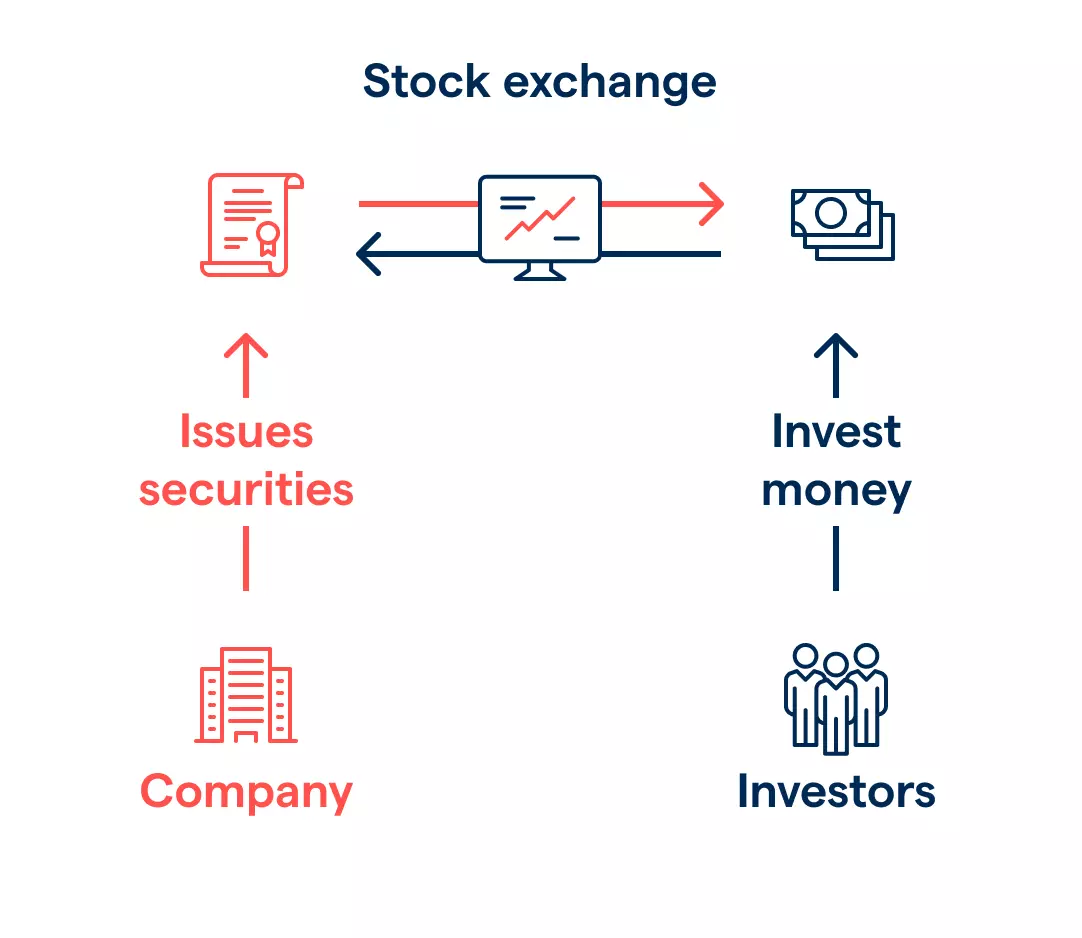
The twin pillars of a stock exchange’s purpose are capital formation and investment. For businesses, the stock market offers a vital avenue for raising capital. When a company “goes public” through an Initial Public Offering (IPO), it sells shares of ownership to investors. This influx of capital allows the company to fund expansion, research and development, pay down debt, or acquire other businesses, thereby fueling economic activity and job creation.
For individuals and institutions, the stock exchange serves as a crucial platform for investment. It allows investors to allocate their savings into productive assets, aiming to generate returns through capital appreciation (when the share price increases) or dividends (a share of the company’s profits). This mechanism enables wealth accumulation over time, provides a hedge against inflation, and diversifies personal finance strategies beyond traditional savings accounts. By linking capital providers with capital seekers, the stock exchange plays an indispensable role in the efficient allocation of financial resources across an economy.
Key Participants and Their Roles
The stock market is a vibrant ecosystem populated by various players, each with distinct roles that contribute to its liquidity, efficiency, and fairness.
Issuers: Companies Going Public
Issuers are the companies that offer their shares to the public for the first time or issue additional shares. When a private company decides to “go public,” it undertakes an IPO, a complex process involving investment banks, regulatory compliance, and a roadshow to attract initial investors. Once listed, a company’s shares can be traded on the secondary market. By listing, companies gain access to a broader pool of capital than private financing allows, enhance their public profile, and provide liquidity for early investors and employees.
Investors: Fueling the Market
Investors are the lifeblood of the stock market. They can be broadly categorized into two groups:
-
Retail Investors: These are individual investors who buy and sell securities for their personal accounts, often through online brokerage platforms. They typically invest smaller amounts but collectively represent a significant portion of market activity. Their motivations range from long-term wealth building for retirement or education to short-term speculative trading.
-
Institutional Investors: This group includes large organizations such as mutual funds, pension funds, hedge funds, insurance companies, and sovereign wealth funds. They manage vast sums of money on behalf of their clients or beneficiaries and often engage in sophisticated trading strategies. Their trading volumes are significant, and their decisions can have a substantial impact on stock prices and market trends.
Brokers and Dealers: The Intermediaries
Brokers and dealers act as intermediaries between investors and the stock exchange.
-
Brokers: They execute trades on behalf of their clients, earning commissions for their services. They provide access to the market, research, and advisory services. In the modern era, discount brokers and online platforms have democratized access, allowing individuals to place trades directly without extensive human interaction.
-
Dealers: Unlike brokers who act as agents, dealers trade for their own accounts, buying and selling securities with the intention of profiting from price differences. They provide liquidity to the market by being willing to buy or sell securities when others are not. Many firms operate as both brokers and dealers.
Regulators: Ensuring Fairness and Transparency
Regulatory bodies are critical for maintaining the integrity and stability of the stock market. In the United States, the Securities and Exchange Commission (SEC) is the primary federal regulator. Its mission is to protect investors, maintain fair, orderly, and efficient markets, and facilitate capital formation. Similar bodies exist globally, such as the Financial Conduct Authority (FCA) in the UK or the Securities and Futures Commission (SFC) in Hong Kong. Regulators establish rules for listing, trading, disclosure, and market conduct, aiming to prevent fraud, manipulation, and insider trading, thereby building investor confidence and fostering a level playing field.
The Mechanics of Trading: How Orders are Executed
The process of buying and selling shares, while seemingly instantaneous on a trading app, involves a sophisticated series of steps and technological infrastructure.
Listing and Initial Public Offerings (IPOs)
Before a stock can be traded on an exchange, the issuing company must meet specific listing requirements, which typically include minimum asset levels, profitability, shareholder equity, and a certain number of publicly held shares. Once these criteria are met, the company prepares for an IPO. An investment bank (or syndicate of banks) underwrites the IPO, helping the company price its shares and market them to institutional investors. On the IPO date, the shares are offered to the public, marking the company’s transition from private to public ownership.
The Secondary Market: Buying and Selling Existing Shares
Once shares have been issued in an IPO, they enter the secondary market. This is where the vast majority of stock trading occurs. In the secondary market, investors trade existing shares among themselves; the proceeds of these trades do not go to the issuing company (unless the company issues new shares in a “secondary offering”). The secondary market is crucial for liquidity, allowing investors to easily convert their stock holdings into cash and vice-versa, which in turn encourages participation in the primary market.
Types of Orders: Market vs. Limit
When an investor decides to buy or sell a stock, they typically place an order through a brokerage firm. The two most common types of orders are:
-
Market Order: This is an instruction to buy or sell a security immediately at the best available current price. Market orders prioritize execution speed over price certainty. While usually executed quickly, the final price might differ slightly from the quoted price at the time of placing the order, especially in volatile markets.
-
Limit Order: This is an instruction to buy or sell a security at a specified price or better. A buy limit order will only execute if the stock’s price falls to the specified limit price or lower. A sell limit order will only execute if the stock’s price rises to the specified limit price or higher. Limit orders prioritize price certainty over immediate execution, meaning they may not be filled if the market price never reaches the specified limit.
Trading Platforms and Technology
Modern stock exchanges are highly automated, relying on sophisticated electronic trading platforms. These platforms utilize complex algorithms and high-speed data networks to match buy and sell orders. When a market order is placed, the system automatically matches it with the best available opposing order (e.g., a buy order with the lowest available sell order). For limit orders, they are placed in an order book, waiting for a matching order to arrive. This electronic matching system ensures efficiency, transparency, and rapid execution, often within milliseconds. The shift from physical trading floors to electronic platforms has dramatically increased market capacity, reduced transaction costs, and enabled global participation.
Market Dynamics and Influencing Factors
Stock prices are not static; they fluctuate constantly in response to a myriad of factors, reflecting the collective beliefs and expectations of millions of market participants.
Supply and Demand: The Price Discovery Mechanism
At its most fundamental level, stock prices are determined by the forces of supply and demand. If more investors want to buy a particular stock than sell it (high demand, low supply), its price will generally rise. Conversely, if more investors want to sell a stock than buy it (low demand, high supply), its price will tend to fall. The stock exchange acts as the mechanism through which this supply and demand are aggregated and prices are “discovered” in real-time. This continuous auction process ensures that, at any given moment, the price reflects the consensus valuation of that particular security.
Economic Indicators and Corporate Earnings
Macroeconomic data plays a significant role in influencing investor sentiment and, consequently, stock prices. Strong economic indicators like GDP growth, low unemployment rates, and positive consumer confidence tend to boost overall market optimism, as they signal a healthy environment for corporate profitability. Conversely, signs of economic slowdown or recession can trigger market downturns.
Individual corporate earnings reports are equally crucial. Companies release quarterly and annual financial results, detailing their revenues, profits, and future outlook. If a company reports earnings that exceed analysts’ expectations, its stock price may surge. If it misses expectations or provides a cautious outlook, its stock price can fall sharply. Investors constantly analyze these reports to assess a company’s financial health and growth prospects.
Geopolitical Events and Investor Sentiment
Global events, from political instability and trade wars to natural disasters and pandemics, can send shockwaves through the stock market. Such events introduce uncertainty, leading investors to re-evaluate risks and potentially shift their capital to safer assets, causing market volatility. Investor sentiment—the overall psychological mood of the market—can also create self-fulfilling prophecies. Widespread optimism can drive prices higher, while pervasive fear or panic can lead to steep declines, often referred to as market corrections or crashes.
The Role of Indices: Gauging Market Performance
Stock market indices are statistical measures that track the performance of a basket of stocks, providing a benchmark for the overall health and direction of a market segment or the entire economy. Popular indices include the Dow Jones Industrial Average (DJIA), S&P 500, and Nasdaq Composite in the U.S., or the FTSE 100 in the UK, Nikkei 225 in Japan, and DAX in Germany. These indices are crucial tools for investors to gauge market trends, compare their portfolio’s performance, and understand broader economic shifts.
Risks, Rewards, and the Future of Exchanges
Investing in the stock market offers compelling opportunities for wealth creation, but it is not without its inherent risks. Understanding both aspects is fundamental to responsible financial planning.
Understanding Investment Risks
The primary risk in stock market investing is the potential loss of capital. Stock prices can decline for various reasons, including poor company performance, adverse economic conditions, industry-specific challenges, or broader market downturns. Volatility, or the degree of price fluctuation, is a constant companion of the stock market. While diversification (spreading investments across different stocks, industries, and asset classes) can help mitigate some risks, it cannot eliminate all of them. Investors must be prepared for fluctuations and have a long-term perspective to weather market downturns. Other risks include liquidity risk (difficulty selling an investment quickly without affecting its price) and systemic risk (the risk of collapse of an entire financial system or market).
Potential for Growth and Wealth Accumulation
Despite the risks, the stock market has historically been one of the most effective vehicles for wealth accumulation over the long term. Companies that grow and innovate tend to increase their earnings, which often translates into higher stock prices and potential dividend payouts. Compounding returns, where earnings from investments are reinvested to generate further earnings, can lead to substantial wealth growth over decades. For many, investing in stocks is a critical component of achieving financial independence, funding retirement, or saving for major life goals.
Technological Advancements and Market Evolution
The evolution of stock exchanges has been dramatically shaped by technology. From manual open-outcry systems to fully automated electronic networks, technology has enhanced efficiency, reduced costs, and expanded global access. The rise of high-frequency trading (HFT), algorithmic trading, and artificial intelligence continues to reshape market structure and execution speed. Blockchain technology also holds potential for revolutionizing settlement processes, enhancing transparency, and reducing intermediaries, though its widespread adoption in traditional exchanges is still nascent.

Global Interconnectivity and Regulation Challenges
Today’s stock markets are profoundly interconnected. Major economic events or policy changes in one region can ripple across global markets in minutes. This interconnectedness presents both opportunities (e.g., global diversification) and challenges (e.g., contagion risks during crises). Regulators constantly face the challenge of keeping pace with technological advancements and global market complexities. Ensuring consistent investor protection, preventing cross-border market manipulation, and harmonizing regulations across different jurisdictions remain ongoing priorities for fostering a stable and fair global financial system.
In conclusion, the stock exchange is far more than just a place to buy and sell stocks; it is a sophisticated, technologically advanced, and highly regulated marketplace that underpins modern economies. By understanding its core functions, the roles of its various participants, the mechanics of trading, and the forces that drive market dynamics, individuals can approach investing with greater confidence and make more informed decisions, leveraging this powerful tool for their financial future.
aViewFromTheCave is a participant in the Amazon Services LLC Associates Program, an affiliate advertising program designed to provide a means for sites to earn advertising fees by advertising and linking to Amazon.com. Amazon, the Amazon logo, AmazonSupply, and the AmazonSupply logo are trademarks of Amazon.com, Inc. or its affiliates. As an Amazon Associate we earn affiliate commissions from qualifying purchases.