
The phrase “stock market” conjures images of bustling trading floors, digital screens flickering with complex algorithms, and headlines dissecting the daily ebb and flow of global economies. It’s a cornerstone of modern capitalism, a mechanism through which companies raise capital and investors seek to grow their wealth. Yet, this sophisticated system, now accessible at our fingertips, is not a recent invention. Its origins are deeply rooted in centuries of economic evolution, innovation, and sometimes, audacious speculation. To truly understand the stock market’s profound impact and intricate workings today, one must journey back in time, tracing its genesis from rudimentary forms of financing to the sophisticated exchanges that now drive global commerce.

The question of “when did the stock market start” doesn’t have a single, definitive answer marked by a specific date on a calendar. Instead, it’s a narrative of gradual development, a mosaic pieced together from various historical antecedents and foundational innovations across different cultures and eras. What we recognize as a stock market today—a centralized, regulated marketplace for trading shares of ownership in companies—is the culmination of a long evolutionary process, with its undeniable birthplace found in the bustling maritime trading centers of the 17th century.
The Proto-Markets: Seeds of Exchange in Antiquity and the Middle Ages
While the modern stock market as we know it is a relatively recent phenomenon, the core concepts of shared ownership and transferable debt have surprisingly ancient roots. Early civilizations, facing the challenges of large-scale projects or complex ventures, intuitively developed systems that foreshadowed aspects of modern finance.
Early Forms of Debt and Shared Ventures
In the Roman Republic, for instance, a system emerged known as the societas publicanorum. These were private companies that contracted with the state to provide services like tax collection, public works construction, or military supply. To finance these often massive undertakings, the publicani would sell “shares” or units of participation to investors, entitling them to a portion of the profits. While these weren’t tradable shares in the modern sense and lacked a formal exchange, they represented an early form of collective investment and risk-sharing, essential for large-scale economic activity.
During the High Middle Ages, particularly in Italian city-states like Venice and Genoa, similar concepts reappeared. Wealthy families and merchants would pool resources to finance long and perilous sea voyages for trade. Investors would buy “parts” of a ship or a specific expedition, sharing in the profits if the venture was successful and bearing the losses if it failed. These were discrete, single-venture partnerships, but they demonstrated the enduring human need for capital formation and the distribution of risk among multiple parties. The idea of commenda contracts, where one party provided capital and another managed the enterprise, further refined these early collaborative financial structures.
The Birth of Commercial Enterprise and Joint-Stock Companies
The true precursor to the modern corporation and, by extension, the stock market, began to take shape in the late 16th and early 17th centuries with the advent of the joint-stock company. The sheer scale and risk of global exploration and long-distance trade necessitated a new financial model. A single merchant or even a group of wealthy individuals simply couldn’t shoulder the enormous capital requirements and protracted timeframes involved in voyages to the Indies or the New World.
The solution was a legal structure that allowed for vast amounts of capital to be raised from numerous investors, each contributing a relatively small sum in exchange for a transferable share of ownership. Crucially, these shares represented a permanent stake in the company, not just a single voyage. The company, in turn, had a continuous existence beyond the lives of its initial investors, a concept known as perpetual succession. The first notable example of this was the Muscovy Company, chartered in England in 1555, followed by the British East India Company (1600) and the Dutch East India Company (Vereenigde Oostindische Compagnie or VOC, 1602). It was with the VOC that the world’s first true stock market was born.
The Dutch Revolution: The World’s First True Stock Exchange
The Netherlands in the 17th century was a burgeoning maritime and commercial power, its cities bustling with trade and innovation. This fertile ground provided the ideal environment for financial evolution, culminating in the creation of the world’s first formal stock exchange.
The Dutch East India Company (VOC) and its Genesis
The Dutch East India Company was an ambitious undertaking. Formed in 1602, it was granted a monopoly by the Dutch government on all trade east of the Cape of Good Hope and west of the Strait of Magellan. Its primary goal was to challenge the Portuguese dominance in the lucrative spice trade. Such an enterprise required unprecedented levels of capital to build and maintain massive fleets, establish trading posts, and sustain military operations thousands of miles away.
To fund this colossal venture, the VOC innovated by issuing shares to the public. These weren’t just shares in a single voyage but perpetual shares in the company itself, making investors part-owners of a powerful, long-lasting enterprise. The shares were offered to anyone with the means, from wealthy merchants to ordinary citizens, democratizing investment to an extent previously unseen.
The Amsterdam Exchange: Formalizing the Trade of Shares
With the widespread issuance of VOC shares, a new challenge arose: how could investors buy and sell these shares efficiently? The answer emerged in Amsterdam, which quickly became the financial epicenter of the world. By 1602, in the city’s bustling financial district, a secondary market began to formalize. Merchants, brokers, and speculators started gathering at fixed times and locations—often the Nieuwe Brug (New Bridge) and later at specific coffee houses or the Bourse building itself—to trade VOC shares. This informal gathering rapidly evolved into the Amsterdam Stock Exchange.
What made this a true stock market, distinct from earlier forms of financing, was the development of a continuous, liquid secondary market. Investors could now buy and sell shares from other investors after the initial issuance by the company. This ability to transfer ownership readily provided liquidity, a crucial feature that encouraged more people to invest. It allowed investors to realize profits or cut losses without having to wait for the company to liquidate, making shares a more attractive and dynamic asset. Furthermore, derivatives like futures and options on shares also emerged, showing the sophistication of this nascent market.
Speculation and Early Market Bubbles
The vibrant activity on the Amsterdam Exchange wasn’t always orderly. The concept of share trading was so novel and the potential for wealth so intoxicating that it naturally led to intense speculation. The most famous example of irrational exuberance in early market history, though not directly a stock market bubble, was the Tulip Mania of the 1630s. While tulips were a commodity, not company shares, the speculative frenzy, rapid price inflation, and subsequent crash perfectly illustrated the volatile nature of unregulated markets and the psychological factors that could drive them. It served as an early, vivid lesson in the dangers of speculative bubbles and the nascent challenges of market psychology.
Spreading Across Continents: From Europe to the New World
The innovations pioneered in Amsterdam didn’t remain confined to the Netherlands. As European colonial empires expanded and trade networks grew, the need for sophisticated financial markets spread, leading to the establishment of exchanges in other major financial hubs.
London’s Coffee Houses and Jonathan’s

In England, the British East India Company, also a joint-stock company, similarly created a need for a secondary market for its shares. By the late 17th and early 18th centuries, London was a burgeoning financial center. Merchants, stock jobbers (early brokers), and investors began to congregate in popular coffee houses like Jonathan’s Coffee-House and Garraway’s Coffee-House in Change Alley. These were informal meeting places where deals were struck, prices were shouted, and news was exchanged.
Over time, this informal trading coalesced into a more structured environment. The dealers at Jonathan’s eventually moved into a more formal building in Sweeting’s Alley in 1773, renaming themselves “The Stock Exchange.” This marked the institutionalization of what would become the London Stock Exchange, a major rival to Amsterdam and eventually a global leader.
Buttonwood Agreement and Wall Street’s Genesis
Across the Atlantic, the young United States, striving for economic independence and growth, also developed its own financial markets. Following the American Revolutionary War, the fledgling nation needed to raise capital, issuing government bonds to finance its debts. These bonds, along with shares in early banks and insurance companies, formed the initial instruments of trade.
The formal birth of the American stock market is traditionally traced to May 17, 1792. On this date, 24 prominent stockbrokers and merchants gathered under a buttonwood tree at 68 Wall Street in New York City. They signed the Buttonwood Agreement, a pact that established a set of rules for trading securities, agreeing to trade only among themselves and to charge a commission of 0.25%. This agreement laid the foundation for what would eventually become the New York Stock Exchange (NYSE), the most iconic symbol of global capitalism. Initially, the NYSE traded a mere handful of securities, but it was the crucial first step toward creating a centralized, orderly marketplace in the US.
Early Regulatory Challenges and Scandals
The growth of these early markets was not without its tumultuous periods. The speculative bubbles seen in Amsterdam found echoes elsewhere. The most infamous was the South Sea Bubble of 1720 in Britain, where shares in the South Sea Company, which held a monopoly on trade with South America, skyrocketed on wild speculation, only to crash spectacularly. This event caused widespread financial ruin and led to the “Bubble Act” of 1720, an early attempt at market regulation aimed at curbing the formation of fraudulent joint-stock companies, though it also stifled legitimate enterprise for a time. These early crises highlighted the inherent risks of unfettered speculation and the burgeoning need for oversight and robust regulatory frameworks to protect investors and maintain market stability.
The Modern Era: Evolution and Accessibility
From its coffee house origins, the stock market has undergone continuous transformation, driven by industrialization, technological advancements, and a persistent drive for efficiency and accessibility.
Industrial Revolution and Capital Formation
The Industrial Revolution in the 18th and 19th centuries provided a powerful impetus for stock market growth. The construction of factories, railroads, canals, and large-scale manufacturing operations required unprecedented amounts of capital that far exceeded the capacity of individual entrepreneurs or even wealthy families. Joint-stock companies, now commonly known as corporations, became the primary vehicle for financing these colossal endeavors. Stock exchanges facilitated the funneling of capital from a broad base of investors into these productive enterprises, fueling economic expansion and innovation on a grand scale.
Technological Advancements and Global Integration
The 20th century witnessed a rapid acceleration in market evolution, largely due to technology. The invention of the telegraph and later the telephone dramatically sped up communication, allowing information and trades to travel across vast distances almost instantly. This reduced geographical barriers and began the process of global market integration.
The latter half of the 20th century and the turn of the millennium brought revolutionary changes with the advent of computers and the internet. Electronic trading systems replaced manual pit trading, increasing efficiency, reducing costs, and significantly speeding up transaction times. The creation of NASDAQ in 1971 as the world’s first electronic stock market heralded a new era. Today, high-frequency trading and algorithmic strategies dominate, executing millions of trades in milliseconds. This technological leap has made markets more interconnected, dynamic, and, at times, more volatile.
Democratization of Investing
Historically, stock market investing was the domain of the wealthy elite. The high cost of transactions, limited access to information, and the perceived complexity kept ordinary individuals at bay. However, the rise of mutual funds, exchange-traded funds (ETFs), and especially online brokerage platforms in the late 20th and early 21st centuries has dramatically democratized investing. Today, with fractional shares and commission-free trading, individuals can invest with relatively small sums, making participation in the stock market more accessible than ever before. This widespread participation is a far cry from the exclusive circles of 17th-century Amsterdam or 18th-century Wall Street.
The Enduring Legacy and Future Outlook
The journey of the stock market, from ancient debt pooling to hyper-connected global exchanges, underscores its fundamental role in economic history and its continued relevance in the modern world.
Role in Economic Growth and Wealth Creation
The stock market’s primary function remains twofold: to provide capital to companies for growth and innovation, and to offer individuals and institutions a mechanism for wealth creation. It acts as an efficient allocator of capital, directing funds towards promising ventures that contribute to economic development, job creation, and technological advancement. For investors, it offers the potential for capital appreciation and dividend income, enabling individuals to save for retirement, education, or other financial goals.
Challenges and Opportunities
Despite its evolution, the stock market continues to face challenges. Market volatility, exemplified by historical crashes and economic crises, remains a constant concern. Regulatory bodies worldwide continuously strive to balance investor protection with market efficiency, adapting to new financial products and technological innovations. The emergence of cryptocurrencies and decentralized finance (DeFi) presents both new opportunities for capital formation and novel regulatory dilemmas that will shape the future landscape of finance.
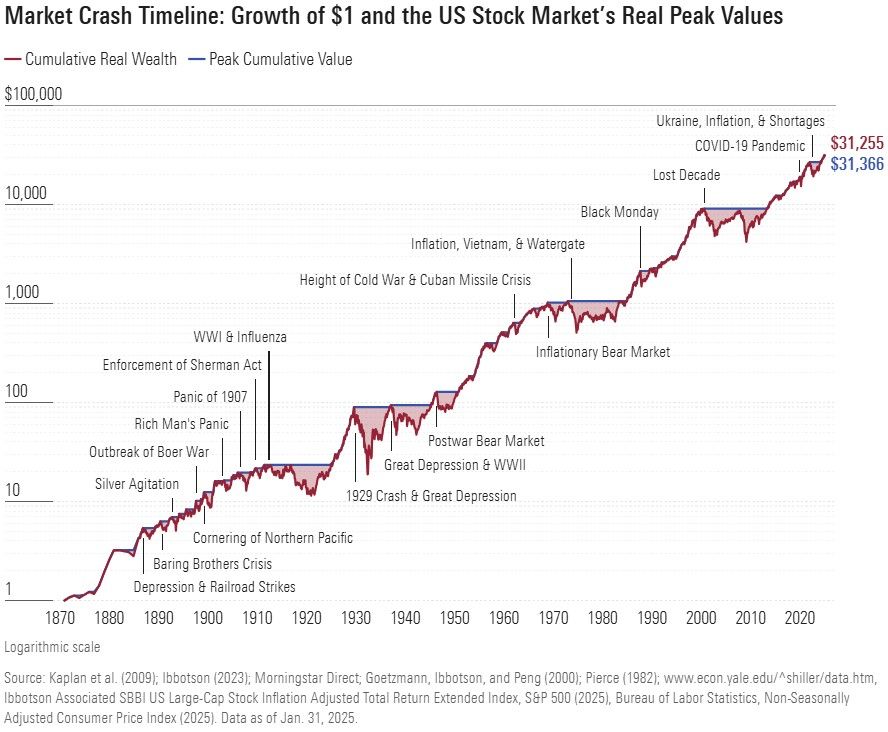
Understanding the Past to Navigate the Future
Understanding when and how the stock market started is more than an academic exercise. It offers crucial insights into the enduring principles of finance, the psychology of crowds, and the iterative nature of economic innovation. The lessons learned from early bubbles, regulatory efforts, and technological shifts continue to inform how we manage and participate in markets today. The stock market is not a static entity; it is a living, breathing testament to human ingenuity, ambition, and the continuous quest for economic progress, adapting and evolving with each passing century. Its origins, rooted in the audacious ventures of global trade, laid the bedrock for the complex, indispensable financial system that governs much of the world’s economy today.
aViewFromTheCave is a participant in the Amazon Services LLC Associates Program, an affiliate advertising program designed to provide a means for sites to earn advertising fees by advertising and linking to Amazon.com. Amazon, the Amazon logo, AmazonSupply, and the AmazonSupply logo are trademarks of Amazon.com, Inc. or its affiliates. As an Amazon Associate we earn affiliate commissions from qualifying purchases.