
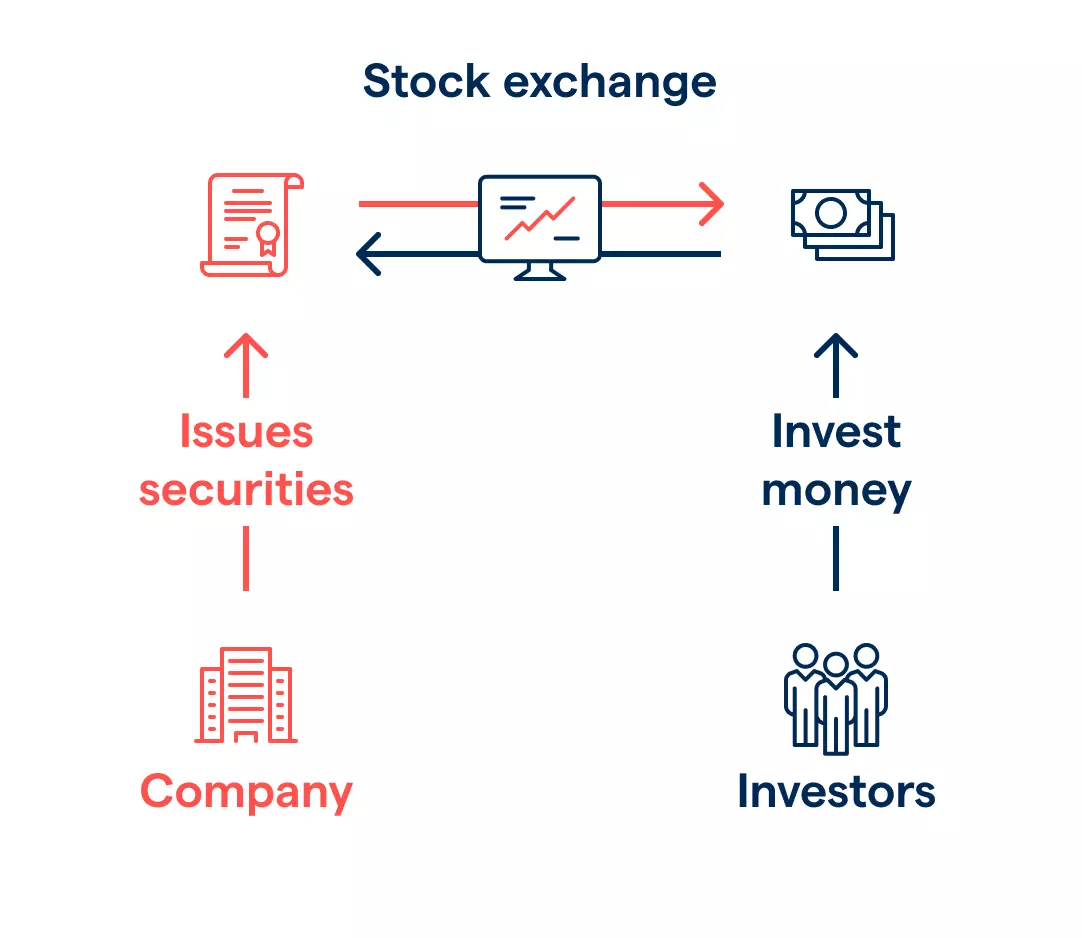
The stock exchange, often perceived as a complex and arcane institution, is in essence a sophisticated marketplace. Far from being a mere abstract concept, it is a vital engine of the global economy, facilitating capital formation, enabling wealth creation, and reflecting the collective confidence and concerns of businesses and investors alike. At its core, the stock exchange provides a regulated and efficient platform where companies can raise capital by issuing shares, and investors can buy and sell those shares, thus participating in the ownership and potential growth of various enterprises. Understanding its intricate mechanisms is crucial for anyone looking to navigate the world of finance, from individual savers to institutional investors. This article will demystify the stock exchange, breaking down its functions, participants, trading processes, and regulatory frameworks, offering a comprehensive look into how this pivotal financial institution operates.

The Core Function of a Stock Exchange
At the heart of the financial system, the stock exchange performs several critical functions that underpin modern economies. It serves as a central hub where the buying and selling of securities are conducted in an organized, transparent, and regulated manner. Without such a centralized system, it would be incredibly difficult for companies to raise the significant capital needed for expansion, innovation, and job creation, and equally challenging for individuals to invest in public companies or divest their holdings efficiently.
What is a Stock Exchange?
A stock exchange is an organized market where securities, primarily stocks, are traded. It provides the infrastructure—both physical and electronic—to bring together buyers and sellers. Historically, this involved physical trading floors where brokers shouted orders. Today, while some symbolic floors remain, the vast majority of trading occurs electronically through sophisticated computer networks. The stock exchange establishes rules for listing companies, ensuring transparency, and maintaining orderly trading. Key exchanges worldwide include the New York Stock Exchange (NYSE), NASDAQ, London Stock Exchange (LSE), Tokyo Stock Exchange (TSE), and many others, each playing a crucial role in its respective region’s economy and contributing to the global financial fabric.
The Primary Market vs. Secondary Market
The operations of a stock exchange are often viewed through the lens of two distinct, yet interconnected, markets: the primary market and the secondary market. The primary market is where new securities are issued for the first time. This typically occurs when a company decides to go public through an Initial Public Offering (IPO), offering its shares to institutional investors and the general public to raise capital directly. In an IPO, the company sells its shares, and the proceeds go directly to the company itself. This is the capital formation phase, enabling businesses to fund operations, expansion, or debt reduction.
Once these newly issued shares have been purchased in the primary market, they can then be traded among investors in the secondary market. This is the market most people refer to when they talk about the stock exchange. Here, investors buy and sell existing shares from each other, not from the company itself. The company does not receive any proceeds from secondary market transactions. The secondary market’s importance lies in providing liquidity to investors, meaning they can easily sell their shares and convert them into cash. Without a liquid secondary market, investors would be reluctant to buy shares in the primary market, fearing they would be unable to sell them later, thus stifling capital raising for companies.
Key Participants in the Exchange
The stock exchange ecosystem involves a diverse range of participants, each playing a distinct role. At the forefront are investors, categorized into retail investors (individual traders) and institutional investors (pension funds, mutual funds, hedge funds, insurance companies). These are the ultimate buyers and sellers of securities. Brokers act as intermediaries, executing buy and sell orders on behalf of investors. They are licensed professionals who provide access to the exchange and often offer advice and research. Market makers are crucial entities that provide liquidity by continuously quoting both buy (bid) and sell (ask) prices for a given security, standing ready to buy or sell from other participants. They profit from the bid-ask spread. Issuers are the companies whose stocks are traded on the exchange, seeking capital and adhering to listing requirements. Finally, regulators (such as the Securities and Exchange Commission in the U.S.) oversee the entire market, ensuring fairness, transparency, and investor protection.
Understanding the Trading Process
The trading process on a modern stock exchange is a sophisticated dance of technology, rules, and human intent, all aimed at efficiently matching buyers and sellers. While it can appear complex, the underlying principles are designed to ensure fair price discovery and swift execution. The shift from physical trading floors to electronic platforms has dramatically increased speed and accessibility, making markets more efficient but also more prone to high-frequency trading strategies.
Order Types: Market, Limit, Stop
Investors communicate their intentions through various order types placed with their brokers. A market order is the simplest: an instruction to buy or sell a security immediately at the best available current price. While it guarantees execution, the exact price might fluctuate slightly, especially in volatile markets. A limit order, in contrast, allows an investor to specify the maximum price they are willing to pay (for a buy order) or the minimum price they are willing to accept (for a sell order). This provides price control but does not guarantee immediate execution; the order will only be filled if the market price reaches or crosses the specified limit.
Stop orders (or stop-loss orders) are designed to limit potential losses or lock in profits. A stop-loss order to sell becomes a market order once the stock price falls to a specified “stop price.” For example, if you own a stock trading at $100 and set a stop-loss at $95, it will trigger a market sell order if the price drops to $95, aiming to prevent further losses. Conversely, a stop-limit order combines features of stop and limit orders: once the stop price is triggered, it becomes a limit order rather than a market order, offering more price control but again, no guarantee of execution. Understanding these order types is fundamental for managing risk and executing trading strategies effectively.
The Role of Brokers and Market Makers
Brokers are the gateway for individual and institutional investors to access the stock exchange. They execute orders placed by their clients, ensuring that transactions adhere to market rules and client instructions. Full-service brokers offer extensive research, advice, and a wide range of financial products, while discount brokers focus primarily on executing trades at lower commission rates. With the rise of online brokerage platforms, direct access to market tools has become widespread, empowering individual investors to manage their portfolios more actively.
Market makers play an absolutely vital role in maintaining the liquidity and efficiency of the secondary market. They continuously post both bid (buy) and ask (sell) prices for a specific set of securities, ready to buy from sellers or sell to buyers. By doing so, they bridge temporary imbalances between buyers and sellers, ensuring that there is always a counterparty available for a trade, even when direct matching is scarce. Market makers essentially act as shock absorbers, taking on inventory risk to keep the market flowing. They profit from the small spread between their bid and ask prices, but also bear the risk of price movements against their inventory.
Matching Buyers and Sellers
The core of the exchange’s function is the efficient matching of buy and sell orders. In today’s electronic markets, this is primarily handled by sophisticated automated trading systems. When an investor places an order through their broker, it is routed to the exchange’s electronic order book. This system aggregates all outstanding buy and sell orders for a particular security, organized by price and time. A buy order at a higher price or a sell order at a lower price will typically be executed first, as they represent more aggressive intentions.

The matching engine continuously scans the order book for potential matches. For instance, if a buyer places a market order to buy 100 shares of Company X, the system will immediately match it with the best available sell orders (lowest ask price) from other participants. If a limit buy order is placed at $50 for Company Y, it will sit in the order book until a sell order for Company Y becomes available at $50 or lower. This continuous matching process, often occurring in milliseconds, ensures that transactions are executed fairly and efficiently, contributing to the principle of “price discovery,” where the market collectively determines the fair value of a security based on supply and demand.
Instruments Traded and Market Dynamics
While “stock exchange” predominantly implies stocks, these markets facilitate the trading of a much broader array of financial instruments. Understanding these various instruments and the dynamics that drive their prices is essential for comprehending the breadth and depth of financial markets.
Beyond Stocks: Bonds, ETFs, and Derivatives
Although stocks represent ownership in a company and are a primary focus, exchanges also list and facilitate the trading of other crucial financial instruments. Bonds are debt instruments where an investor lends money to a corporate or government entity for a defined period at a fixed or variable interest rate. While many bonds are traded over-the-counter (OTC), some are listed on exchanges, providing a market for their secondary trading. Exchange-Traded Funds (ETFs) are investment funds that hold a collection of assets like stocks, bonds, or commodities, but trade like individual stocks on an exchange. They offer diversification and liquidity, tracking specific indexes or sectors. Derivatives, such as options and futures contracts, derive their value from an underlying asset (like a stock, bond, commodity, or index). These complex instruments are used for hedging risks or for speculative purposes and are traded on specialized derivatives exchanges or segments of broader stock exchanges. These varied instruments allow investors to pursue different financial goals, manage risk, or speculate on market movements.
Factors Influencing Stock Prices
Stock prices are a dynamic reflection of countless variables, making their movements a subject of constant analysis. At a fundamental level, prices are driven by the classic economic principles of supply and demand. If more investors want to buy a stock than sell it, its price tends to rise, and vice versa. However, the forces influencing that supply and demand are multifaceted. Company performance is paramount: strong earnings, revenue growth, innovative products, and effective management generally lead to higher stock valuations. Industry trends and competitive landscape also play a significant role; a booming sector can lift all its participants, while disruptive technologies can challenge incumbents.
Beyond company-specific factors, macroeconomic conditions exert immense influence. Interest rates, inflation, GDP growth, unemployment figures, and geopolitical events can sway investor sentiment across entire markets. Positive economic data generally boosts confidence, while uncertainty or recession fears can trigger sell-offs. Investor sentiment itself, often driven by news, rumors, or psychological factors, can create momentum or panic, sometimes decoupling prices from underlying fundamentals in the short term. Finally, regulatory changes, technological advancements, and even natural disasters can have profound impacts, creating a complex web of interconnected factors that continuously reshape stock valuations.
Market Indexes and Their Significance
Market indexes are crucial benchmarks that represent the performance of a specific segment of the stock market or the market as a whole. They are constructed by taking a weighted average of the prices of a selected group of stocks. Examples include the S&P 500 (representing 500 large U.S. companies), the Dow Jones Industrial Average (tracking 30 significant U.S. companies), the NASDAQ Composite (heavily weighted towards technology and growth stocks), the FTSE 100 (U.K. market), and the Nikkei 225 (Japanese market).
The significance of these indexes is multi-fold. Firstly, they provide a simple yet powerful way to gauge the overall health and direction of a market or sector. A rising S&P 500, for instance, generally indicates a strong U.S. stock market. Secondly, they serve as benchmarks against which investment portfolios are measured. Portfolio managers often strive to “beat the index” in their returns. Thirdly, many investment products, such as index funds and ETFs, are designed to replicate the performance of these indexes, offering investors diversified exposure to broad market segments at low costs. Understanding market indexes is therefore fundamental to interpreting market performance and evaluating investment strategies.
Regulation, Transparency, and Investor Protection
The integrity and reliability of stock exchanges are not left to chance; they are underpinned by robust regulatory frameworks designed to foster trust, ensure fairness, and protect investors. Without strong oversight, markets would be vulnerable to manipulation, fraud, and instability, undermining their essential role in capital formation and wealth creation.
The Importance of Regulatory Bodies
Regulatory bodies are the watchdogs of the financial markets. In the United States, the Securities and Exchange Commission (SEC) is the primary federal agency responsible for enforcing federal securities laws, regulating the securities industry, and protecting investors. Similar bodies exist in other countries, such as the Financial Conduct Authority (FCA) in the UK, and the China Securities Regulatory Commission (CSRC) in China. These regulators establish rules for companies seeking to list on exchanges, for brokers facilitating trades, and for the exchanges themselves. Their mandates typically include requiring public companies to disclose material information, preventing insider trading and market manipulation, ensuring fair and orderly trading practices, and overseeing the financial health and conduct of market participants. These efforts are critical for maintaining public confidence in the financial system.
Ensuring Fair and Orderly Markets
A core objective of regulation is to ensure that stock markets operate in a fair and orderly manner. This means that all investors, regardless of their size or influence, have access to the same material information at the same time and are subject to the same rules. Regulations combat practices like insider trading, where individuals trade on non-public information, and market manipulation, such as “pump-and-dump” schemes. Exchanges themselves also enforce their own rules, often stricter than regulatory minimums, covering trading practices, circuit breakers (mechanisms to halt trading during extreme volatility), and listing standards for companies. These measures help prevent sudden, irrational market swings and ensure that prices genuinely reflect publicly available information and genuine supply and demand dynamics, rather than illicit activities.
Technology’s Role in Modern Exchanges
Technology has been a double-edged sword for stock exchanges, simultaneously enhancing efficiency and presenting new regulatory challenges. The advent of electronic trading platforms revolutionized how exchanges operate, replacing physical trading floors with high-speed computer networks. This has dramatically increased trading speed, reduced transaction costs, and expanded market access globally. High-frequency trading (HFT) firms, using sophisticated algorithms, can execute thousands of trades per second, providing immense liquidity but also raising concerns about market stability and fairness for slower participants.
From a regulatory standpoint, technology provides powerful tools for surveillance and enforcement. Advanced analytics can monitor trading patterns for suspicious activity, detect potential market manipulation, and ensure compliance with rules. However, the increasing complexity of algorithms and the sheer volume of data generated by modern trading systems also pose significant challenges for regulators, requiring continuous adaptation and innovation to keep pace with technological advancements and maintain oversight of an increasingly complex and interconnected global financial system.
Conclusion
The stock exchange is far more than just a place to buy and sell shares; it is a meticulously constructed ecosystem that fuels economic growth, facilitates capital allocation, and reflects the collective economic aspirations of millions. From enabling companies to raise vital capital in the primary market to providing liquidity and efficient price discovery in the secondary market, its functions are indispensable. Understanding the roles of various participants, the nuances of different order types, the multitude of factors influencing stock prices, and the critical oversight provided by regulatory bodies offers a clearer perspective on this dynamic arena. In an increasingly interconnected global economy, the stock exchange continues to evolve, driven by technological innovation and shaped by the constant interplay of human psychology, economic fundamentals, and regulatory vigilance, standing as a testament to humanity’s ongoing quest for financial progress and prosperity.
aViewFromTheCave is a participant in the Amazon Services LLC Associates Program, an affiliate advertising program designed to provide a means for sites to earn advertising fees by advertising and linking to Amazon.com. Amazon, the Amazon logo, AmazonSupply, and the AmazonSupply logo are trademarks of Amazon.com, Inc. or its affiliates. As an Amazon Associate we earn affiliate commissions from qualifying purchases.