
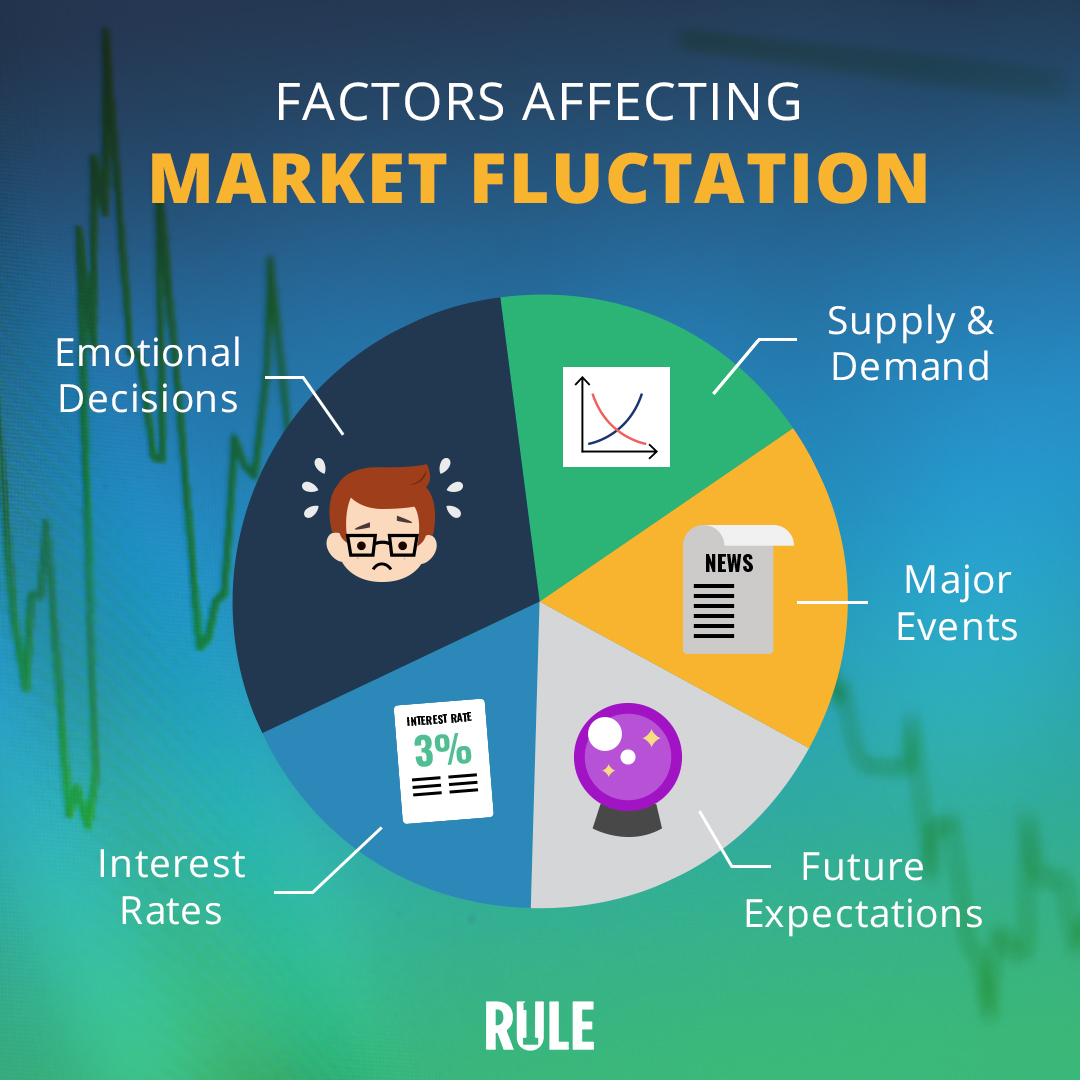
The stock market, a dynamic and often enigmatic entity, is a cornerstone of modern capitalism. It serves as a vital barometer for economic health, reflecting the collective optimism and pessimism of millions of participants. Its perpetual fluctuations—the exhilarating climbs and stomach-churning drops—are not random acts of financial fate but rather the complex interplay of a multitude of factors. Understanding these underlying forces is crucial for anyone seeking to navigate the world of investing, from the novice individual to the seasoned institutional trader. Far from being a simple tug-of-war between buyers and sellers, market movements are orchestrated by a symphony of economic indicators, human psychology, corporate performance, governmental policies, and unpredictable global events. Delving into these drivers reveals the intricate mechanisms that dictate whether the market soars to new highs or retreats into a downturn.
Economic Fundamentals: The Core Drivers of Value
At its heart, the stock market is a forward-looking mechanism that attempts to price the future earnings and growth prospects of companies. Therefore, the prevailing economic conditions and the performance of underlying businesses are paramount in determining market direction.
Corporate Earnings and Growth Prospects
The most direct and often powerful driver of individual stock prices, and consequently the broader market, is corporate performance. Companies that consistently report strong earnings, healthy revenue growth, and positive outlooks tend to see their stock prices rise. Conversely, disappointing results, downward revisions to forecasts, or signs of deteriorating financial health can lead to significant sell-offs. Investors buy stocks with the expectation of future profits, and when those expectations are met or exceeded, confidence grows, attracting more capital. For the overall market, aggregate corporate earnings across major indices provide a robust indicator of economic vitality. If a majority of companies are profitable and growing, it signals a strong economic environment conducive to higher market valuations.
Macroeconomic Indicators: GDP, Inflation, and Employment
Beyond individual company performance, broader macroeconomic data paint a picture of the overall economic landscape. Key indicators like Gross Domestic Product (GDP) growth, inflation rates, and employment figures significantly influence investor sentiment and corporate profitability. A robust GDP indicates a growing economy, which generally translates to higher consumer spending and corporate revenues. Low unemployment rates suggest a healthy labor market and strong consumer purchasing power.
Inflation, however, presents a more nuanced picture. Moderate inflation can be a sign of a growing economy, but high or runaway inflation erodes purchasing power, increases input costs for businesses, and often prompts central banks to raise interest rates, which can dampen economic activity and make equity investments less attractive relative to fixed-income assets. Deflation, while seemingly positive, can be equally damaging as it signals falling demand and declining prices, discouraging corporate investment and consumer spending. Investors constantly analyze these reports, interpreting their implications for future corporate profits and the broader economic trajectory.
Interest Rates and Monetary Policy
Central banks, such as the Federal Reserve in the United States, wield immense power over financial markets through their monetary policy, primarily by adjusting interest rates. Lower interest rates make it cheaper for companies to borrow money for expansion and for consumers to finance purchases, thereby stimulating economic growth. They also make bonds and savings accounts less attractive, pushing investors towards riskier assets like stocks in search of higher returns. This environment, often termed “easy money,” tends to be bullish for the stock market.
Conversely, higher interest rates are implemented to combat inflation or cool an overheating economy. They increase borrowing costs for businesses, potentially slowing growth, and make fixed-income investments more appealing, drawing capital away from stocks. The prospect of rising rates can cause market jitters and lead to sell-offs, as investors re-evaluate the risk-reward profile of equities. The communication and actions of central banks are therefore meticulously scrutinized by market participants, as they directly impact the cost of capital and the attractiveness of various asset classes.
Investor Psychology and Market Sentiment: The Human Element
While economic fundamentals provide a rational framework for valuation, the stock market is ultimately composed of human beings making decisions, often driven by emotion. Investor psychology and collective market sentiment play an enormous, sometimes irrational, role in daily, weekly, and even yearly market movements.
Fear and Greed: The Emotional Rollercoaster
The two most powerful emotions driving human behavior, fear and greed, are amplified in financial markets. Greed often propels bull markets, as investors, seeing prices rise, become increasingly confident and eager to participate, sometimes leading to speculative bubbles. They may ignore warning signs, believing “this time is different” or that they can get out before the inevitable crash.
Fear, on the other hand, is a potent catalyst for bear markets. When prices fall, investors panic, often selling indiscriminately to avoid further losses, even if the underlying fundamentals of their holdings remain sound. This herd behavior can create self-fulfilling prophecies, accelerating both rallies and downturns. Market psychology can detach prices from fundamental value for extended periods, highlighting the irrational component of market behavior.
Herd Mentality and Behavioral Biases
Humans are social creatures, and in financial markets, this often manifests as herd mentality. Investors may follow the actions of a larger group, assuming that the crowd possesses superior information or insight, rather than conducting their own independent analysis. This can lead to phenomena like momentum trading, where stocks continue to rise simply because they are already rising, attracting more buyers, or fall because others are selling.
Behavioral biases further complicate rational decision-making. Confirmation bias leads investors to seek out information that confirms their existing beliefs, while anchoring bias causes them to fixate on initial price points. Loss aversion, the tendency to prefer avoiding losses over acquiring equivalent gains, can lead investors to hold onto losing stocks for too long, hoping for a recovery, or to sell winning stocks too early. These deeply ingrained psychological quirks contribute significantly to market volatility and contribute to cycles of boom and bust.

The Role of News and Media
In today’s interconnected world, news and media play an immediate and profound role in shaping investor sentiment. Breaking news, whether positive or negative, can trigger rapid market reactions. Positive headlines about corporate innovations, economic growth, or political stability can fuel optimism, while negative news—such as geopolitical conflicts, corporate scandals, or disappointing economic data—can quickly erode confidence.
Social media and financial news outlets disseminate information at lightning speed, sometimes leading to overreactions or the spread of misinformation. The constant barrage of updates and analyses can amplify emotional responses, contributing to short-term market fluctuations that may not be justified by long-term fundamentals. The way information is framed and presented can also influence investor perception, making media literacy a crucial skill for market participants.
Monetary Policy and Government Action: The Regulatory Hand
Beyond central banks’ interest rate policies, broader government actions, fiscal policy, and regulatory frameworks exert a significant influence on market dynamics. These decisions can create favorable or challenging environments for businesses and investors.
Fiscal Policy: Taxation and Government Spending
Governments influence the economy through fiscal policy, which involves adjusting taxation levels and government spending. Tax cuts for corporations can boost their profitability, encouraging investment and potentially leading to higher stock prices. Tax breaks for individuals can increase disposable income, stimulating consumer spending. Conversely, tax increases can reduce corporate profits and consumer demand, potentially dampening market enthusiasm.
Government spending on infrastructure projects, defense, or social programs can inject capital into the economy, creating jobs and stimulating demand for goods and services, which can indirectly benefit related industries and the broader market. Deficit spending, however, can raise concerns about future inflation or national debt, potentially causing market unease. Fiscal policy decisions are often politically charged, and their impact on the market can be both direct and indirect, often unfolding over longer periods.
Regulatory Frameworks and Industry Policies
Government regulations significantly impact how businesses operate, their costs, and their potential for growth. Deregulation in certain sectors can spur competition and innovation, leading to increased profitability and market expansion. For example, deregulation in the financial or telecommunications sectors often leads to new opportunities and increased investment.
Conversely, new, stringent regulations related to environmental protection, labor laws, or consumer safety can increase compliance costs for businesses, potentially squeezing profit margins and making certain industries less attractive to investors. Antitrust actions against large corporations can also impact stock prices by altering market structures and competitive landscapes. Industry-specific policies, such as subsidies for renewable energy or restrictions on fossil fuels, can directly influence the fortunes of entire sectors and the companies within them.
Geopolitical Stability and Trade Relations
Government actions on the international stage, particularly concerning geopolitical stability and trade relations, have far-reaching effects on global markets. Wars, sanctions, or diplomatic tensions can disrupt supply chains, increase commodity prices, and create uncertainty, leading to heightened market volatility and risk aversion.
Trade policies, such as tariffs or trade agreements, can significantly impact multinational corporations and industries reliant on international trade. Tariffs imposed on imported goods can increase costs for businesses and consumers, potentially reducing demand. Favorable trade agreements, on the other hand, can open new markets and reduce barriers, boosting corporate revenues and encouraging investment. The interconnectedness of the global economy means that political decisions made in one country can send ripple effects across stock markets worldwide.
Global Events and External Shocks: Unforeseen Influences
Some of the most dramatic and sudden market movements are triggered by unpredictable external events that lie outside the immediate control of economic policies or corporate performance. These “black swan” events, while rare, can have devastating short-term and sometimes long-term consequences.
Natural Disasters and Public Health Crises
Large-scale natural disasters, such as earthquakes, tsunamis, or hurricanes, can cause immense physical damage, disrupt supply chains, and impact economic activity in affected regions. The economic fallout can extend to global markets, particularly if the disaster occurs in a major economic hub or impacts critical resources. For example, a major hurricane affecting oil refineries can send energy prices soaring.
Similarly, public health crises, as evidenced by the COVID-19 pandemic, can bring economies to a grinding halt. Lockdowns, travel restrictions, and widespread illness severely curtail consumer spending, workforce availability, and global trade. The unprecedented uncertainty and economic disruption caused by such events can trigger massive market sell-offs and sustained periods of volatility until a path to recovery becomes clear. These events highlight the vulnerability of highly interconnected global systems to sudden, unforeseen shocks.
Geopolitical Instability and Commodity Price Volatility
Conflicts, political unrest, and acts of terrorism can create profound uncertainty, leading investors to flee riskier assets like stocks in favor of safe havens such as gold or government bonds. The threat or reality of war can disrupt global trade routes, affect resource availability, and increase defense spending, all of which have direct market implications. For instance, conflicts in oil-producing regions can lead to spikes in crude oil prices, impacting transportation costs and manufacturing expenses globally.
Commodity prices, particularly for energy and raw materials, are sensitive to geopolitical events. Significant fluctuations in oil, gas, metals, or agricultural commodity prices can have widespread economic effects. A surge in oil prices can act as a tax on consumers and businesses, reducing discretionary spending and corporate profits, while a collapse can indicate weakening global demand or oversupply. These price swings can ripple through various industries, affecting their profitability and, by extension, their stock valuations.

Technological Disruption and Innovation
While not always a “shock” in the negative sense, rapid technological disruption can profoundly impact markets. New technologies can create entirely new industries, driving massive wealth creation and attracting significant investment, as seen with the internet boom or the rise of artificial intelligence. Companies at the forefront of these innovations can experience explosive growth, pulling the broader market higher.
However, technological disruption can also decimate established industries and render existing business models obsolete, leading to significant declines for companies unable to adapt. The shift from traditional retail to e-commerce, or from landline phones to mobile technology, illustrates how innovation can be a double-edged sword, creating winners and losers on a grand scale and reshaping market leadership. The anticipation and adoption of these innovations are constant factors in how investors evaluate future growth prospects.
In conclusion, the stock market’s relentless dance between upward surges and downward corrections is a testament to its multifaceted nature. It is a complex adaptive system where the rational assessment of economic fundamentals intertwines with the often-irrational impulses of human psychology. Central bank policies, governmental fiscal decisions, and the unpredictable nature of global events further layer this complexity. For investors, understanding these various drivers is not about predicting the unpredictable, but rather about appreciating the forces at play, fostering a robust long-term strategy, and maintaining resilience in the face of inevitable market volatility. It underscores that while individual decisions contribute to the market’s pulse, the collective heartbeat is orchestrated by a symphony of interconnected factors, making it one of the most dynamic and challenging realms of finance.
aViewFromTheCave is a participant in the Amazon Services LLC Associates Program, an affiliate advertising program designed to provide a means for sites to earn advertising fees by advertising and linking to Amazon.com. Amazon, the Amazon logo, AmazonSupply, and the AmazonSupply logo are trademarks of Amazon.com, Inc. or its affiliates. As an Amazon Associate we earn affiliate commissions from qualifying purchases.