
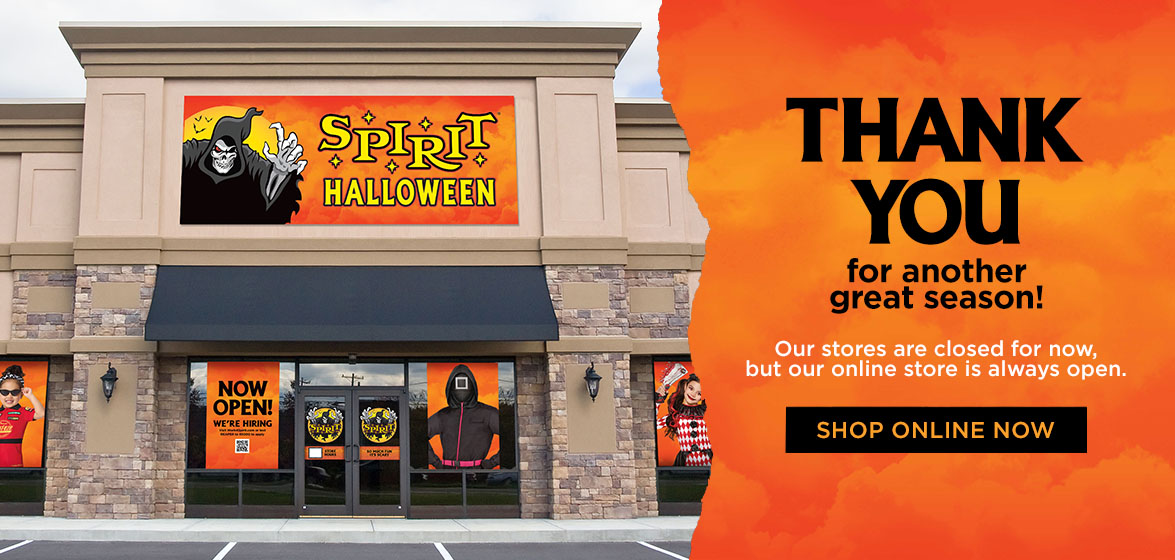
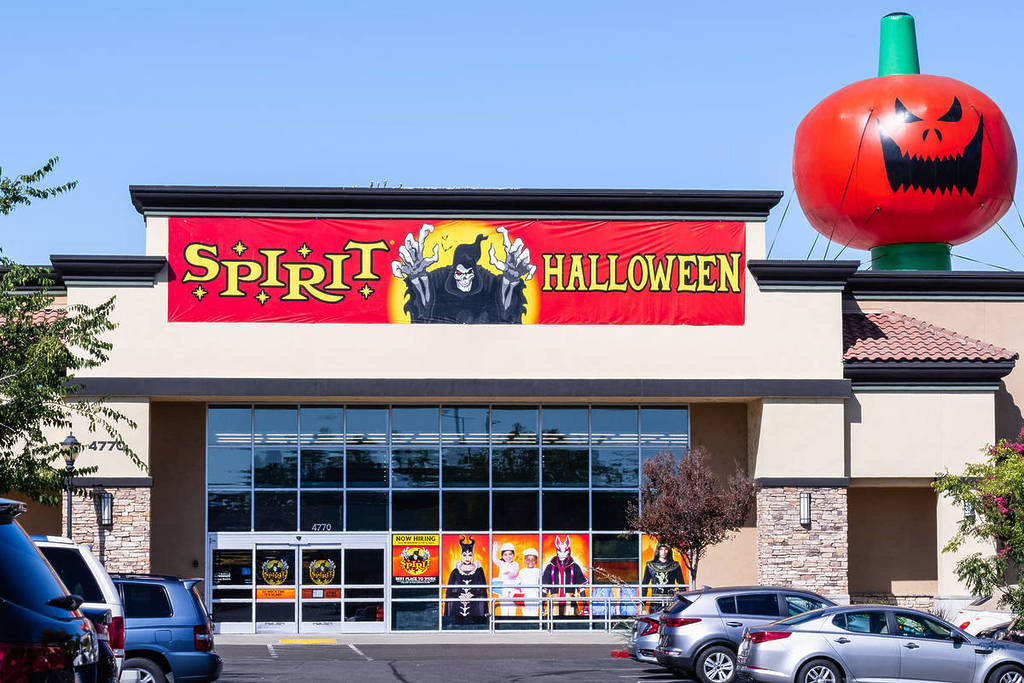
Every autumn, a peculiar retail phenomenon sweeps across North America: the sudden appearance of Spirit Halloween stores. These ephemeral outlets, rising like ghoulish specters from the ashes of defunct big-box stores, defunct pharmacies, or vacant shopping mall units, become a temporary mecca for Halloween enthusiasts. The annual quest for costumes, decorations, and all things spooky often begins with a simple, yet profoundly technologically driven question: “where is the closest Spirit Halloween?” This seemingly straightforward query unlocks a fascinating intersection of modern technology, data analytics, and the unique challenges posed by temporary retail models. In an era dominated by instant gratification and location-based services, the ability to pinpoint these transient storefronts showcases the sophisticated evolution of our digital infrastructure, transforming the annual hunt into a seamless, tech-powered experience.
The Digital Cartographer: Navigating the Ephemeral Retail Landscape
The challenge of locating a Spirit Halloween isn’t merely about finding a static address; it’s about tracking a dynamic, seasonal presence. For decades, finding a new store meant poring over phone books, checking local newspaper ads, or simply driving around until a familiar sign appeared. Today, technology has transformed this scavenger hunt into an efficient, data-driven process, powered by sophisticated mapping and location intelligence.
The Evolution of Location Services: From Static Maps to Dynamic Search
Early digital maps, while revolutionary, were largely static representations of the physical world. They excelled at guiding users to permanent fixtures but struggled with the fluidity of businesses that appear and disappear within months. The rise of pop-up retail, exemplified by Spirit Halloween, necessitated a fundamental shift in how location data is collected, processed, and presented. Modern location services, integrated into virtually every smartphone and web browser, are no longer just repositories of addresses; they are living, breathing databases constantly updated with new information. This dynamic capability is critical for retailers like Spirit Halloween, whose entire business model relies on rapid deployment and efficient customer discovery of their temporary sites. The underlying technology includes complex algorithms that reconcile new geographical data with existing infrastructure, ensuring that even a store that opens for only two months is accurately represented and discoverable.
Harnessing GPS and Geolocation Data for Pop-Up Discovery
At the heart of modern location services lies Global Positioning System (GPS) technology, complemented by Wi-Fi triangulation and cellular tower positioning. These technologies enable precise geolocation, allowing users to accurately pinpoint their own position and, consequently, find the closest points of interest. For Spirit Halloween, this means that once a lease is secured and a store begins setup, its coordinates can be uploaded to various mapping platforms. Beyond raw GPS data, modern geolocation involves sophisticated data aggregation from multiple sources: user-submitted updates, business listings, satellite imagery, and even IoT devices. Search engines and mapping applications leverage this vast ocean of data to provide highly accurate and up-to-date information. When you type “closest Spirit Halloween,” the system doesn’t just look for a predefined list; it actively cross-references your current location with all known, active Spirit Halloween addresses, calculating the optimal route and estimated travel time, all in real-time. This sophisticated interplay of hardware and software transforms the annual search into a trivial task, rather than a significant undertaking.
Beyond Simple Searches: AI and Predictive Analytics in Retail Site Selection
The “where is the closest” query isn’t just a user’s question; it’s also a fundamental business challenge for Spirit Halloween itself. Deciding where to open hundreds of temporary stores each year is an immense logistical and strategic undertaking. This is where advanced technologies like Artificial Intelligence (AI) and predictive analytics play a crucial, often unseen, role, optimizing site selection and enhancing customer reach.
Machine Learning for Optimal Pop-Up Placement
For a retailer like Spirit Halloween, the annual process of securing hundreds of temporary leases is a high-stakes endeavor. Each location must meet specific criteria: high visibility, ample parking, appropriate square footage, and crucially, proximity to target demographics. Manually identifying these optimal sites across hundreds of cities would be an impossible task. This is where machine learning algorithms become indispensable. These algorithms ingest vast datasets including historical sales data from previous Spirit Halloween locations, demographic information (age, income, family size), traffic patterns, competitor locations, real estate availability, and even hyper-local event schedules. By analyzing these multi-dimensional data points, AI can identify patterns and predict which vacant retail spaces are most likely to generate the highest foot traffic and sales volume. This predictive capability minimizes risk and maximizes revenue for a business model that thrives on temporary, high-impact presence. The “closest” store isn’t just geographically near; it’s strategically placed for maximum impact, guided by data-driven insights.
Personalized Recommendations and Hyperlocal Targeting

Beyond identifying physical locations, AI also contributes to making the discovery process more personalized and efficient for consumers. While a user might explicitly search for “Spirit Halloween,” AI can infer intent and preferences based on past search history, location data, and browsing behavior. For instance, if a user frequently searches for Halloween-related content or visits seasonal stores, AI-powered ad platforms can deliver targeted advertisements directly to their devices, announcing nearby Spirit Halloween openings. Furthermore, hyperlocal targeting, enabled by AI, allows retailers to push specific promotions or inventory updates based on a user’s real-time proximity to a store. Imagine driving past a newly opened Spirit Halloween, and your phone receives a notification about a 20% off coupon valid only at that specific location. This level of personalized, context-aware engagement elevates the customer experience, making the discovery of the “closest” store not just a matter of convenience, but an integrated part of a proactive, data-informed interaction.
App Ecosystems and the User Experience: Streamlining the Search
The primary interface for most users seeking a Spirit Halloween is often a dedicated app, a mapping service, or a general search engine. The seamless integration of these tools into a cohesive app ecosystem is what truly streamlines the search, offering immediate, actionable results. These platforms are engineered for intuitive interaction, providing not just directions but also valuable supplementary information.
Dedicated Store Locators and Third-Party Integrations
Most major retailers, including Spirit Halloween, offer dedicated store locator tools on their official websites. These tools are built with sophisticated backend systems that integrate with their real estate and operational databases. When new temporary leases are finalized, the addresses are rapidly uploaded, making them instantly searchable. However, the true power of discovery comes from third-party integrations. Spirit Halloween’s locations are syndicated across popular mapping applications like Google Maps, Apple Maps, and Waze, as well as broader business directories like Yelp and Yellow Pages. This widespread presence ensures that regardless of a user’s preferred platform, the information is readily available. These integrations are not merely static listings; they often include dynamic features like hours of operation (which can vary significantly for temporary stores), phone numbers, and direct links for navigation, all updated in real-time or near real-time. This multi-channel approach maximizes visibility and minimizes friction for the customer.
Real-Time Updates and Community-Driven Intelligence
One of the unique challenges of temporary retail is the fluidity of information. Stores might open slightly later than planned, or unexpected closures could occur. Modern app ecosystems address this through a combination of official updates and community-driven intelligence. Spirit Halloween’s corporate team can push real-time updates directly to their official website and integrated platforms, ensuring that the most current operational status is reflected. Complementing this are features within mapping applications that allow users to report incorrect information, suggest edits, or provide feedback on store status. While these community contributions require moderation, they act as an additional layer of verification and rapid information dissemination. For a phenomenon as anticipated as Spirit Halloween, enthusiastic customers often become invaluable sources of on-the-ground intelligence, quickly sharing new openings or pertinent details, which can then be validated and incorporated into the broader digital mapping infrastructure, making the “closest” store even easier to find.
The Cybersecurity Imperative in Location-Based Services
While the convenience of finding the closest Spirit Halloween is undeniable, the reliance on location-based services (LBS) brings with it significant cybersecurity considerations. The collection and processing of personal geographical data, coupled with the need for accurate and secure information delivery, make security a paramount concern for both users and service providers.
Protecting User Data in Geolocation Apps
Geolocation data is highly sensitive, offering insights into users’ movements, routines, and even their personal habits. Apps that help locate stores like Spirit Halloween collect this data, and ensuring its protection is critical. Service providers must implement robust encryption protocols for data in transit and at rest, securing user locations, search histories, and any associated personal identifiers. Beyond technical safeguards, clear and transparent privacy policies are essential, informing users exactly what data is collected, how it’s used, and with whom it might be shared. Users should also be empowered with granular control over their location permissions, allowing them to choose when and how their location is shared. A breach of this sensitive information could lead to significant privacy violations, making the integrity of these LBS platforms a constant focus of security efforts, ensuring that the convenience of finding a store doesn’t come at the cost of personal security.
Verifying Location Authenticity and Combating Phishing
Another critical cybersecurity aspect for LBS, particularly with temporary businesses, is the verification of location authenticity. Malicious actors could potentially create fake store listings or phishing sites designed to mimic legitimate Spirit Halloween locations, luring unsuspecting customers to fraudulent addresses or tricking them into revealing personal information. Robust validation processes are necessary to confirm that listed addresses correspond to actual, legitimate business operations. This involves cross-referencing official business registrations, validating physical addresses, and monitoring for suspicious activity. Furthermore, phishing attacks often leverage the excitement around seasonal events. Users searching for “closest Spirit Halloween” might encounter scam websites promising exclusive discounts or early access, designed to steal credentials or deploy malware. Education about identifying secure websites (HTTPS), scrutinizing URLs, and avoiding suspicious links is crucial for users, while technology providers must deploy sophisticated threat detection and anti-phishing measures to protect their platforms and users from these evolving digital threats.
In conclusion, the simple question “where is the closest Spirit Halloween” unveils a complex tapestry of technological innovation. From the advanced algorithms powering real-time location services and the predictive power of AI in retail site selection, to the seamless integration of app ecosystems and the critical safeguards of cybersecurity, every aspect of modern tech converges to facilitate the annual pilgrimage to this seasonal retailer. As technology continues to evolve, the discovery of even the most transient businesses will only become more precise, personalized, and securely integrated into our digital lives, transforming the hunt for Halloween essentials into a testament to human ingenuity and algorithmic prowess.
aViewFromTheCave is a participant in the Amazon Services LLC Associates Program, an affiliate advertising program designed to provide a means for sites to earn advertising fees by advertising and linking to Amazon.com. Amazon, the Amazon logo, AmazonSupply, and the AmazonSupply logo are trademarks of Amazon.com, Inc. or its affiliates. As an Amazon Associate we earn affiliate commissions from qualifying purchases.