
In the rapidly evolving landscape of global technology, Super Micro Computer, Inc. (commonly known as Supermicro) has emerged as a cornerstone of the infrastructure that powers the modern digital age. While many consumers are familiar with the brands that create software or consumer electronics, Supermicro operates in the critical “engine room” of the tech world. At its core, Supermicro is a provider of high-performance server and storage solutions, specialized in creating the hardware architecture that allows artificial intelligence, cloud computing, and massive data centers to function.
As enterprises transition from traditional local computing to massive, distributed AI-driven frameworks, the role of Supermicro has shifted from a niche component manufacturer to a primary architect of the hardware stacks that define 21st-century innovation. To understand what Supermicro does is to understand the physical reality of the internet and the computational power behind every AI query generated today.
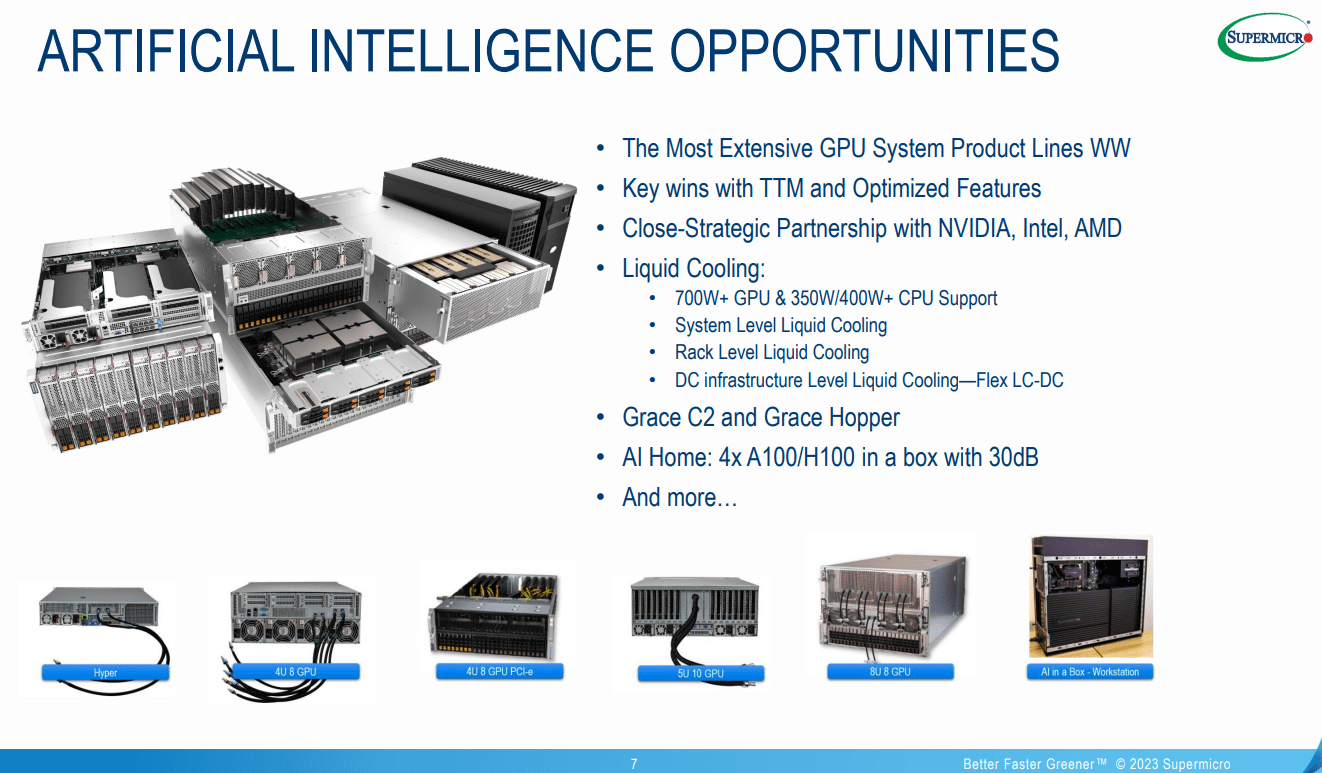
The Architecture of AI: High-Performance Server Solutions
Supermicro’s primary function is the design, development, and manufacturing of high-performance server solutions based on an open-standard modular architecture. Unlike traditional server manufacturers that offer “one-size-fits-all” systems, Supermicro pioneered what they call “Building Block Solutions.” This approach allows for a high degree of customization, ensuring that a data center can be optimized for specific workloads, whether that is high-frequency trading, scientific research, or generative AI training.
Customization through Building Block Solutions
The “Building Block” philosophy is the defining characteristic of Supermicro’s engineering. By designing a wide array of interchangeable components—including motherboards, power supplies, chassis, and cooling systems—the company can rapidly assemble systems tailored to a client’s exact needs. This modularity means that when a new processor or memory standard is released by partners like NVIDIA, Intel, or AMD, Supermicro can integrate that technology into their existing ecosystem faster than many of their competitors.
This agile manufacturing process is critical in a tech environment where hardware becomes obsolete every 18 to 24 months. By offering thousands of combinations of components, Supermicro enables enterprises to optimize for various factors: power consumption, physical footprint, thermal management, or raw computational throughput.
Rack-Scale Integration and Plug-and-Play Systems
In recent years, Supermicro has moved beyond selling individual servers to providing entire “Rack-Scale” solutions. For a modern data center, buying 1,000 individual servers is inefficient. Instead, Supermicro designs, assembles, tests, and optimizes full racks of equipment. These racks are delivered to customers as “plug-and-play” units, complete with integrated networking, power management, and liquid cooling systems. This end-to-end integration reduces the time it takes for a company to scale its computing power from months to weeks, a vital advantage in the competitive AI race.
Cooling the Future: Liquid Cooling and Thermal Management
One of the most significant challenges in modern technology is heat. As processors—especially Graphics Processing Units (GPUs) used for AI—become more powerful, they generate immense amounts of thermal energy. Traditional air cooling, which uses fans to move air across heat sinks, is reaching its physical limits. Supermicro has positioned itself as a leader in solving this “thermal wall” through advanced cooling technologies.
The Shift from Air to Liquid Cooling
Supermicro’s Direct Liquid Cooling (DLC) technology is a game-changer for high-density data centers. Instead of relying on massive air conditioning units to cool entire rooms, DLC uses liquid-filled cold plates placed directly on top of the CPUs and GPUs. This liquid absorbs the heat and carries it away much more efficiently than air.
What Supermicro does in this space is more than just plumbing; it is complex thermal engineering. By implementing liquid cooling at the rack level, they allow data centers to pack more computing power into a smaller space without the risk of hardware failure due to overheating. This is particularly relevant for AI training clusters, where thousands of GPUs work in tandem, generating heat levels that would melt standard server configurations.
Energy Efficiency and Green Computing Initiatives
Beyond performance, Supermicro’s cooling and power technologies are focused on “Green Computing.” Data centers are among the world’s largest consumers of electricity. Supermicro designs their systems to improve Power Usage Effectiveness (PUE), a metric that measures how much power is used by the actual computing equipment versus the overhead (like cooling).
By utilizing high-efficiency power supplies and optimized airflow designs, Supermicro helps organizations reduce their carbon footprint and operational costs. Their “Resource-Saving” architecture allows for the independent upgrade of various components, meaning a company can upgrade its CPU and memory without throwing away the entire chassis and power supply, significantly reducing electronic waste.

The Backbone of the Modern Data Center
While AI grabs the headlines, Supermicro’s broader portfolio supports the entire ecosystem of digital storage and networking. They provide the physical foundation for the “Cloud,” where the world’s data is stored and processed.
Storage Systems and Networking Performance
Supermicro develops sophisticated storage servers that handle everything from “hot” data (information that needs to be accessed instantly) to “cold” data (archival information). Their systems utilize NVMe (Non-Volatile Memory Express) technology to ensure that data transfer speeds don’t become a bottleneck for fast processors.
In a world where video streaming, autonomous driving data, and financial transactions occur in milliseconds, the networking hardware provided by Supermicro is essential. Their high-bandwidth switches and network adapters ensure that data flows seamlessly between servers, preventing the “latency” that can degrade the performance of digital applications.
Edge Computing and IoT Infrastructure
Not all computing happens in massive data centers located in the desert or the arctic. “Edge Computing” involves placing processing power closer to where data is generated—such as in a factory, a hospital, or inside a cell tower. Supermicro designs ruggedized, compact servers specifically for these environments.
These edge devices are built to withstand dust, fluctuating temperatures, and limited space. They allow for real-time data processing, which is critical for technologies like 5G networking, surgical robots, and smart city infrastructure. By bringing high-performance computing to the “edge,” Supermicro enables the Internet of Things (IoT) to function with minimal delay.
Strategic Partnerships and the Silicon Ecosystem
A key part of what Supermicro does involves maintaining deep, collaborative relationships with the world’s leading chipmakers. They do not manufacture the silicon chips (CPUs and GPUs) themselves; instead, they act as the primary platform where that silicon comes to life.
Integrating NVIDIA, Intel, and AMD Technologies
Supermicro is often the first to market with new hardware generations. Because of their “Building Block” approach and close proximity to silicon designers in Silicon Valley, they can develop server motherboards and chassis while the chips are still in the final stages of design.
When NVIDIA releases a new H100 or B200 Blackwell GPU, or when Intel launches a new Xeon processor, Supermicro is typically ready with a fully optimized server chassis to house them. This “First-to-Market” advantage makes them the go-to provider for tech giants and research institutions that need the absolute latest in computational power the moment it becomes available.
Digital Security and Hardware-Root-of-Trust
As a provider of the physical hardware for the world’s most sensitive data, Supermicro also focuses heavily on hardware-level security. They implement a “Hardware-Root-of-Trust” (RoT) on their motherboards. This is a secure chip that verifies the integrity of the server’s firmware before it boots up.
In an era of sophisticated cyberattacks, software security is not enough; the hardware itself must be protected from tampering. Supermicro’s security features ensure that the “BIOS” and other low-level code have not been compromised at the supply chain level or during deployment. This makes their technology suitable for government, military, and high-security enterprise environments.

Conclusion: The Physical Reality of the Digital Age
Super Micro Computer occupies a unique and vital niche in the technology sector. They are the builders of the machines that make the digital world possible. By focusing on modularity, thermal efficiency, and rapid integration of the latest silicon technology, they provide the essential infrastructure for the most demanding applications in human history.
From the massive AI clusters training the next generation of LLMs to the compact edge servers powering 5G networks, Supermicro’s engineering is the silent engine behind the screen. As the demand for computational power continues to grow exponentially, the company’s focus on high-performance, energy-efficient, and highly customizable hardware ensures that they will remain a fundamental player in the ongoing evolution of global technology. What they do, quite simply, is provide the physical capacity for the world to think, store, and communicate in the digital era.
aViewFromTheCave is a participant in the Amazon Services LLC Associates Program, an affiliate advertising program designed to provide a means for sites to earn advertising fees by advertising and linking to Amazon.com. Amazon, the Amazon logo, AmazonSupply, and the AmazonSupply logo are trademarks of Amazon.com, Inc. or its affiliates. As an Amazon Associate we earn affiliate commissions from qualifying purchases.