
In the dynamic world of business, a brilliant idea is merely the tip of the iceberg. The true foundation of any successful venture lies in a well-articulated and financially sound business model. Far from being a mere document for investors, a robust business model is the strategic blueprint that defines how an organization creates, delivers, and captures value, ultimately determining its profitability and long-term financial health. For entrepreneurs, startups, and established companies alike, understanding and meticulously crafting this model is paramount to securing financial stability, attracting investment, and achieving sustainable growth in a competitive marketplace. It’s the framework that translates innovation into income, and vision into financial viability.
Understanding the Core Purpose of a Business Model
At its heart, a business model is an integrated description of how a venture plans to create and sustain itself. It’s a conceptual framework that explains how an organization operates, defining its core activities, target customers, value proposition, and, crucially, how it will generate revenue and manage costs to achieve financial objectives.
Beyond a Business Plan: The Strategic Blueprint
While often confused, a business model differs significantly from a traditional business plan. A business plan is a comprehensive document detailing strategies, operations, and financial projections for a specified period, often used to secure funding. A business model, however, is a more fundamental and concise articulation of the logic of how a company works. It focuses on the mechanisms of value exchange and profit generation. Think of it as the strategic architecture that underpins the operational details of the business plan. It’s about the fundamental economic engine, rather than just the operational roadmap. Understanding this distinction is vital for entrepreneurs, as a flawed business model will undermine even the most meticulously prepared business plan.
Value Creation, Delivery, and Capture: The Triple Play
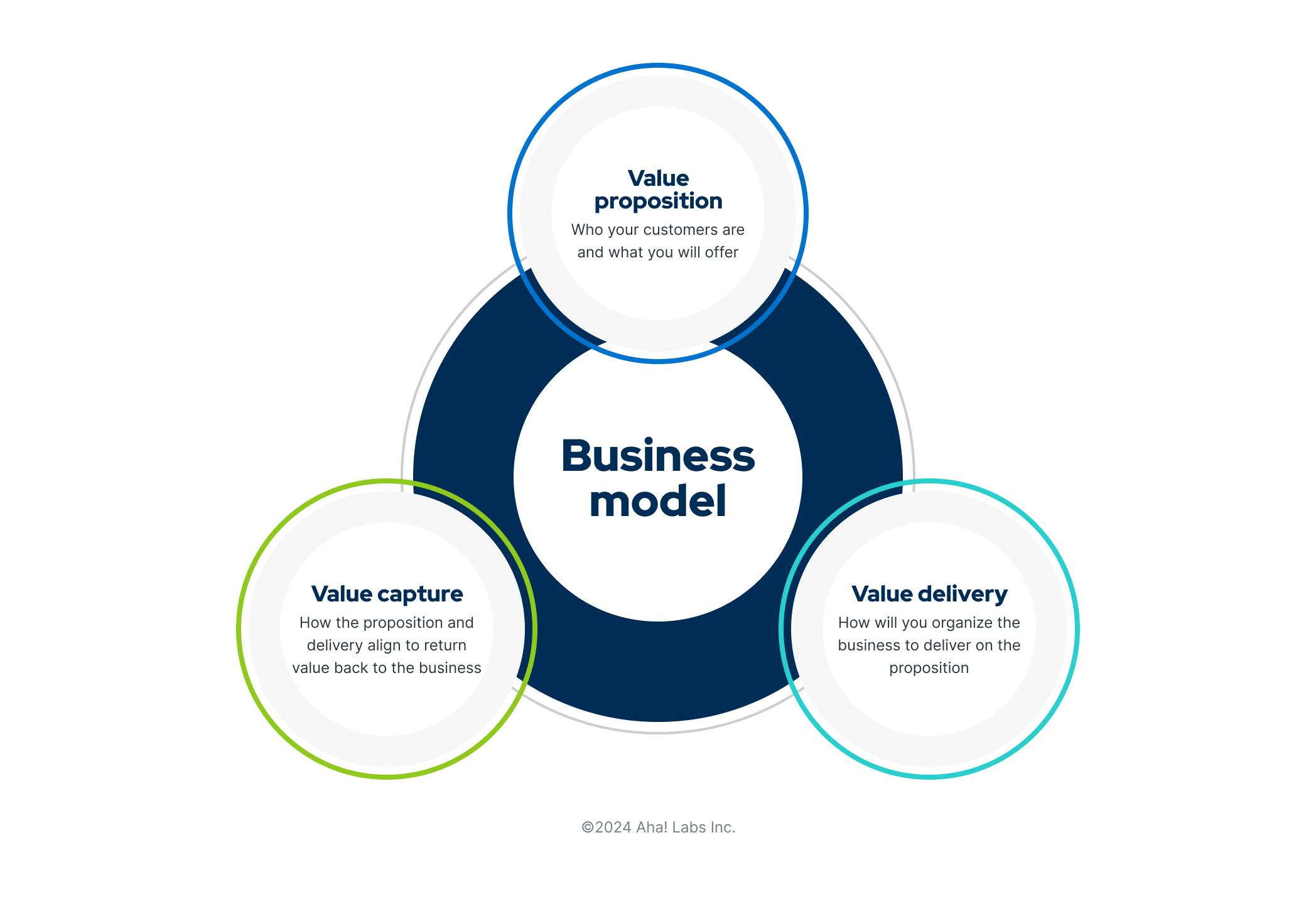
Every successful business model is built around three interdependent pillars:
-
Value Creation: What unique problem does your business solve, or what unique need does it fulfill for a specific customer segment? This is your value proposition – the benefits your product or service offers that differentiate it from alternatives. Financial success hinges on creating value that customers are willing to pay for.
-
Value Delivery: How do you get that value into the hands of your customers? This involves your channels (distribution, sales, marketing) and customer relationships. Efficient and effective delivery mechanisms are crucial for managing costs and ensuring customer satisfaction, directly impacting profitability.
-
Value Capture: How does your business translate the value it creates and delivers into sustainable financial returns? This encompasses your revenue streams and pricing strategies. It’s the ultimate measure of whether your model can convert effort into income, covering costs and generating profits.
A failure in any one of these areas can severely compromise the financial viability of the entire enterprise, leading to unsustainable cost structures or insufficient revenue generation.
Why a Robust Business Model is Critical for Financial Success
A well-defined business model serves multiple crucial financial purposes. It provides clarity on how resources will be allocated, how revenue will be generated, and what the cost structure will look like. This clarity is indispensable for:
-
Predicting Profitability: By outlining revenue streams and cost structures, a business model allows for accurate financial forecasting and helps identify pathways to profitability.
-
Attracting Investment: Investors are fundamentally interested in how a business will make money. A clear, compelling, and financially sound business model is often the most critical factor in securing funding. It demonstrates a credible path to returns on investment.
-
Resource Allocation: It guides decisions on where to invest capital, time, and human resources to maximize financial impact and efficiency.
-
Risk Mitigation: Understanding the financial mechanics of your business helps in identifying potential vulnerabilities, such as over-reliance on a single revenue stream or high fixed costs, allowing for proactive risk management.
-
Strategic Direction: It acts as a compass, ensuring all strategic decisions align with the core financial goals of the organization, from product development to market entry.
Without a robust business model, businesses often find themselves adrift, struggling with inconsistent income, unmanageable costs, and an unclear path to financial solvency.
Key Components of a Winning Business Model (The Business Model Canvas Approach)
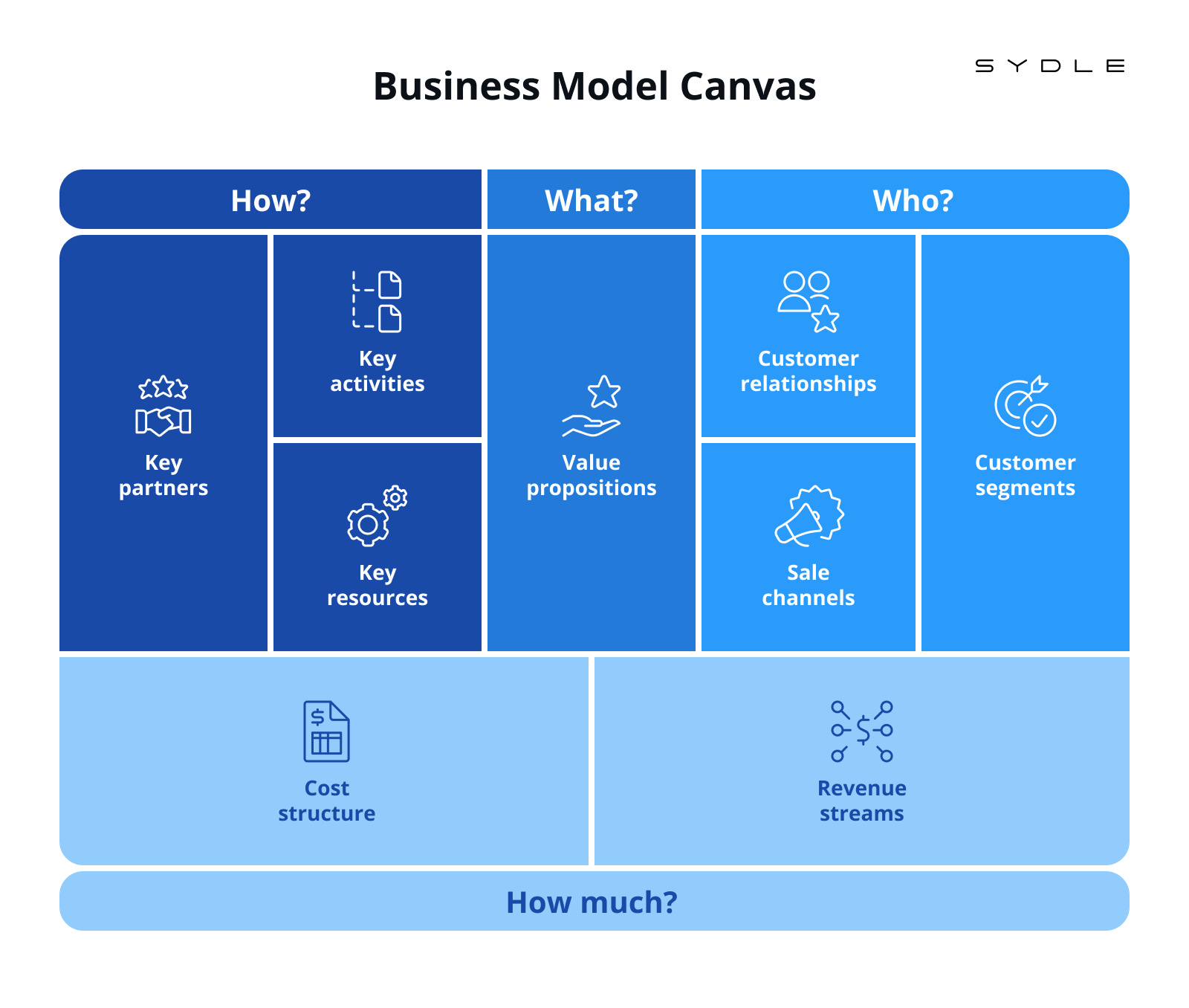
To systematically construct or analyze a business model, many entrepreneurs turn to frameworks like the Business Model Canvas. Developed by Alexander Osterwalder and Yves Pigneur, this tool visually breaks down a business into nine essential building blocks, providing a comprehensive overview of how a company creates, delivers, and captures value from a financial perspective.
Customer Segments: Who Are You Serving?
The first step is to identify the specific groups of people or organizations your business aims to reach and serve. These are your target customers. Understanding their needs, behaviors, and willingness to pay is foundational to defining your revenue streams and cost structure. Without a clear customer segment, your value proposition will be unfocused, and your financial projections will lack precision. Effective segmentation allows for targeted marketing, optimizing acquisition costs and maximizing customer lifetime value.
Value Propositions: What Unique Value Do You Offer?
This block describes the specific bundle of products and services that create value for a specific Customer Segment. It’s the “why” customers choose you over competitors. From a financial perspective, a strong value proposition justifies your pricing and helps secure market share, driving revenue. It could be innovation, performance, customization, design, brand/status, price, cost reduction, risk reduction, accessibility, or convenience.
Channels: How Do You Reach and Deliver Value?
Channels describe how a company communicates with and reaches its Customer Segments to deliver a value proposition. This includes sales forces, web sales, partner stores, or direct distribution. Efficient channels minimize delivery costs and maximize market reach, directly impacting your sales volume and profitability. Choosing the right blend of channels is critical for cost-effective customer acquisition and retention.
Customer Relationships: How Do You Interact?
This block describes the types of relationships a company establishes with specific Customer Segments. These relationships can range from personal assistance to automated services, communities, or co-creation. The type of relationship impacts customer loyalty, repeat purchases, and customer support costs. Strong, cost-effective customer relationships can enhance customer lifetime value and reduce churn, positively affecting your bottom line.
Revenue Streams: How Do You Make Money?
This is arguably one of the most critical financial aspects of the business model, describing how a company generates cash from each Customer Segment. Revenue streams can come from various sources: asset sales, usage fees, subscription fees, lending/renting/leasing, licensing, brokerage fees, or advertising. A clear understanding of your revenue streams and their drivers is essential for forecasting income and setting pricing strategies that ensure financial sustainability. Diversifying revenue streams can also mitigate financial risks.
Key Resources: What Do You Need to Operate?
Key Resources describe the most important assets required to make a business model work. These can be physical (e.g., manufacturing facilities, vehicles), intellectual (e.g., patents, brand, software), human (e.g., skilled employees), or financial (e.g., cash, credit lines). Identifying and securing these resources is crucial for enabling your key activities and delivering your value proposition efficiently, often representing significant capital expenditure or operational costs.
Key Activities: What Must You Do Well?
Key Activities describe the most important things a company must do to make its business model work. These are the actions required to produce a value proposition, reach markets, maintain customer relationships, and earn revenues. Examples include production, problem-solving (consulting), or platform/network management. Efficient execution of key activities directly impacts operational costs and the quality of value delivered, thereby affecting customer satisfaction and revenue potential.
Key Partnerships: Who Can Help You?
Key Partnerships describe the network of suppliers and partners that make the business model work. These alliances can be strategic alliances between non-competitors, coopetition (strategic alliances between competitors), joint ventures, or buyer-supplier relationships. Partnerships can help optimize costs and reduce risks by acquiring particular resources or activities, or by increasing capacity and leveraging economies of scale, thus improving financial efficiency and market reach.
Cost Structure: What Are Your Expenses?
The Cost Structure describes all costs incurred to operate a business model. This includes fixed costs (rent, salaries), variable costs (raw materials, production), and economies of scale. Understanding and managing your cost structure is paramount to profitability. A clear cost structure allows for accurate budgeting, pricing decisions, and identification of areas for cost reduction, directly influencing your profit margins. Businesses often choose between cost-driven (focus on minimizing costs) and value-driven (focus on maximizing value) cost structures.
Strategies for Developing and Innovating Your Business Model
Creating an effective business model isn’t a one-time event; it’s an iterative process that requires continuous adaptation and innovation to maintain financial vitality and competitive advantage.
Research and Analysis: Learning from the Market and Competitors
Before launching or refining a business model, thorough market research is indispensable. Understand your target market’s size, growth potential, pain points, and willingness to pay. Analyze competitors’ business models – what works for them, what doesn’t, and where are the gaps you can exploit? This financial benchmarking provides valuable insights into pricing strategies, cost structures, and potential revenue streams within your industry, minimizing costly trial-and-error. Understanding industry-specific financial metrics and norms can guide your model’s development.
Iteration and Validation: Testing Assumptions and Pivoting
A business model is a hypothesis until proven otherwise. It’s crucial to test your assumptions about customer segments, value propositions, revenue streams, and cost structures through experiments. This can involve minimum viable products (MVPs), pilot programs, surveys, and A/B testing. Early validation helps to identify flaws before significant capital is invested, saving substantial financial resources. Be prepared to iterate and pivot your model based on real-world feedback to find a financially viable and scalable solution. This agility is key to avoiding financial missteps.
Leveraging Technology for Financial Efficiency
In the modern era, technology plays a pivotal role in optimizing business models for financial gain. Automation, data analytics, cloud computing, and AI tools can significantly reduce operational costs, enhance efficiency, improve customer relationship management, and open new revenue channels. For example, using AI for personalized marketing can lower customer acquisition costs, while cloud-based platforms can reduce IT infrastructure expenses. Embracing relevant technologies can lead to superior cost structures and more effective revenue generation, directly impacting profitability.
Diversifying Revenue Streams for Stability
Relying on a single revenue stream can expose a business to significant financial risk. A robust business model often includes diversified income sources. This could involve offering different pricing tiers, subscription models, licensing, advertising, or selling complementary products/services. Diversification provides a buffer against market fluctuations in any single stream, enhancing overall financial stability and resilience. It requires careful analysis to ensure new streams are synergistic and don’t cannibalize existing revenue.
Cost Optimization and Scalability Considerations
A profitable business model not only focuses on generating revenue but also on managing costs effectively. Continuously seek ways to optimize your cost structure without compromising value delivery. This includes negotiating with suppliers, streamlining operations, and leveraging technology. Furthermore, consider the scalability of your business model. Can your model accommodate growth without a proportionate increase in costs? Scalability ensures that as your business expands, its profit margins improve, leading to long-term financial success and making it attractive to investors.
Financial Implications and Long-Term Viability
Ultimately, the strength of a business model is measured by its financial outcomes and its capacity for long-term survival and growth.
Projecting Profitability and Break-Even Analysis
A well-defined business model forms the basis for accurate financial projections, including income statements, balance sheets, and cash flow statements. This allows you to forecast profitability, determine your break-even point (the sales volume at which total revenues equal total costs), and understand the financial sensitivity of your operations. Performing detailed break-even analysis helps to set realistic sales targets and manage risk, providing a clear picture of when the business can expect to become self-sufficient and profitable.
Attracting Investment with a Sound Model
For many new ventures, attracting external investment is critical. Investors scrutinize business models to assess their potential for financial returns. A clear, validated model demonstrates that you understand how to generate revenue, manage costs, and scale the business sustainably. It assures investors that their capital will be deployed in a venture with a credible path to profitability and a return on investment. Financial metrics derived from your business model, such as customer acquisition cost, customer lifetime value, and projected profit margins, are key to investor pitches.
Adapting to Market Shifts and Sustaining Growth
The business world is in constant flux. Economic downturns, technological advancements, new competitors, and shifting consumer preferences can all impact a business model’s effectiveness. A flexible business model allows for adaptation and innovation. Regularly reviewing and, if necessary, reinventing aspects of your model – from revenue streams to value propositions – is essential to maintaining financial relevance and sustaining growth over the long term. This adaptive capacity is a hallmark of financially resilient organizations.

The Business Model as a Living Document for Financial Health
In conclusion, a business model is not a static document but a living, evolving framework that continuously guides financial decisions and strategy. It’s the engine of financial health, enabling a company to navigate challenges, seize opportunities, and achieve enduring success. By meticulously crafting, validating, and continually refining your business model with a keen eye on value creation, cost efficiency, and robust revenue generation, you lay the strongest possible foundation for financial prosperity and a thriving enterprise.
aViewFromTheCave is a participant in the Amazon Services LLC Associates Program, an affiliate advertising program designed to provide a means for sites to earn advertising fees by advertising and linking to Amazon.com. Amazon, the Amazon logo, AmazonSupply, and the AmazonSupply logo are trademarks of Amazon.com, Inc. or its affiliates. As an Amazon Associate we earn affiliate commissions from qualifying purchases.