
Securing funding is often the single most critical hurdle for any aspiring startup founder. The dream of innovation, market disruption, and rapid growth remains just that—a dream—without the necessary capital to transform ideas into reality. In the dynamic world of entrepreneurship, understanding the intricacies of financing is paramount. It’s not merely about asking for money; it’s about strategically aligning your vision with investor expectations, understanding various capital sources, and meticulously preparing to demonstrate your venture’s potential for financial returns. This comprehensive guide delves into the diverse landscape of startup funding, offering insights and actionable strategies for navigating the complex path to securing the capital your startup needs to thrive and scale.
Understanding the Funding Landscape: What Startups Need to Know
Before embarking on the quest for capital, founders must gain a clear understanding of the broader funding ecosystem. This involves recognizing why capital is crucial, the stages of funding a startup typically undergoes, and perhaps most importantly, what drives the decisions of potential investors. A well-informed approach is the cornerstone of a successful funding strategy.
The Importance of Early-Stage Capital
Early-stage capital is the lifeblood of a startup, providing the necessary resources to move from concept to product development, market validation, and initial operations. Without it, even the most groundbreaking ideas can remain unactualized. This initial injection of funds typically covers critical expenses such as prototype development, hiring a foundational team, market research, legal setup, and essential marketing efforts to achieve initial traction. It enables a startup to prove its viability, gain initial customers, and refine its business model, thereby increasing its attractiveness to larger investors in subsequent rounds. For many startups, securing this initial seed capital is a make-or-break moment that dictates whether the venture can take its first tangible steps.
Different Stages of Startup Funding
Startup funding is rarely a one-time event; it’s a journey characterized by distinct stages, each serving a different purpose and attracting different types of investors.
-
Pre-Seed: Often founders’ personal savings (bootstrapping), friends and family, or small angel investments used for ideation, market research, and forming the initial team.
-
Seed Funding: The first official equity round, typically ranging from a few hundred thousand to a couple of million dollars. This capital is used to develop a Minimum Viable Product (MVP), achieve initial product-market fit, and gain early users. Angel investors and micro-VCs are common sources.
-
Series A: After achieving product-market fit and demonstrating significant traction, startups raise Series A funding to optimize their product, expand their team, and scale operations. This round can range from $2 million to $15 million and is usually led by venture capital firms.
-
Series B, C, and Beyond: Subsequent rounds focus on aggressive expansion, entering new markets, acquiring competitors, or further developing new products. The amounts raised can be tens or hundreds of millions, primarily from larger VC firms, private equity, and sometimes corporate venture arms. Each stage demands increasing levels of proof of concept, revenue, and market share.
The Investor Mindset: What They Look For
Investors, regardless of their type, are fundamentally seeking a return on their investment. Their due diligence process is rigorous, focusing on several key areas:
-
Team: The experience, expertise, passion, and cohesion of the founding team are paramount. Investors back people as much as ideas.
-
Market Opportunity: A large, growing, and accessible market with a clear need for the startup’s solution is essential.
-
Problem and Solution: A well-defined problem that the startup’s product or service uniquely and effectively solves.
-
Traction: Evidence of market acceptance, such as user growth, revenue, partnerships, or positive feedback.
-
Business Model: A clear, scalable, and defensible model for generating revenue and achieving profitability.
-
Competitive Advantage: What makes the startup unique and difficult to replicate? This could be proprietary technology, network effects, or unique distribution channels.
-
Financial Projections: Realistic and well-supported financial forecasts demonstrating potential for significant returns. Understanding these criteria allows founders to tailor their pitch and present their venture in the most compelling financial light.
Traditional Funding Avenues for Startups
While the funding landscape continues to evolve, several traditional avenues remain foundational for startups seeking capital. These methods range from self-funding to engaging with institutional investors, each presenting its own set of advantages and requirements.
Bootstrapping: Self-Funding Your Vision
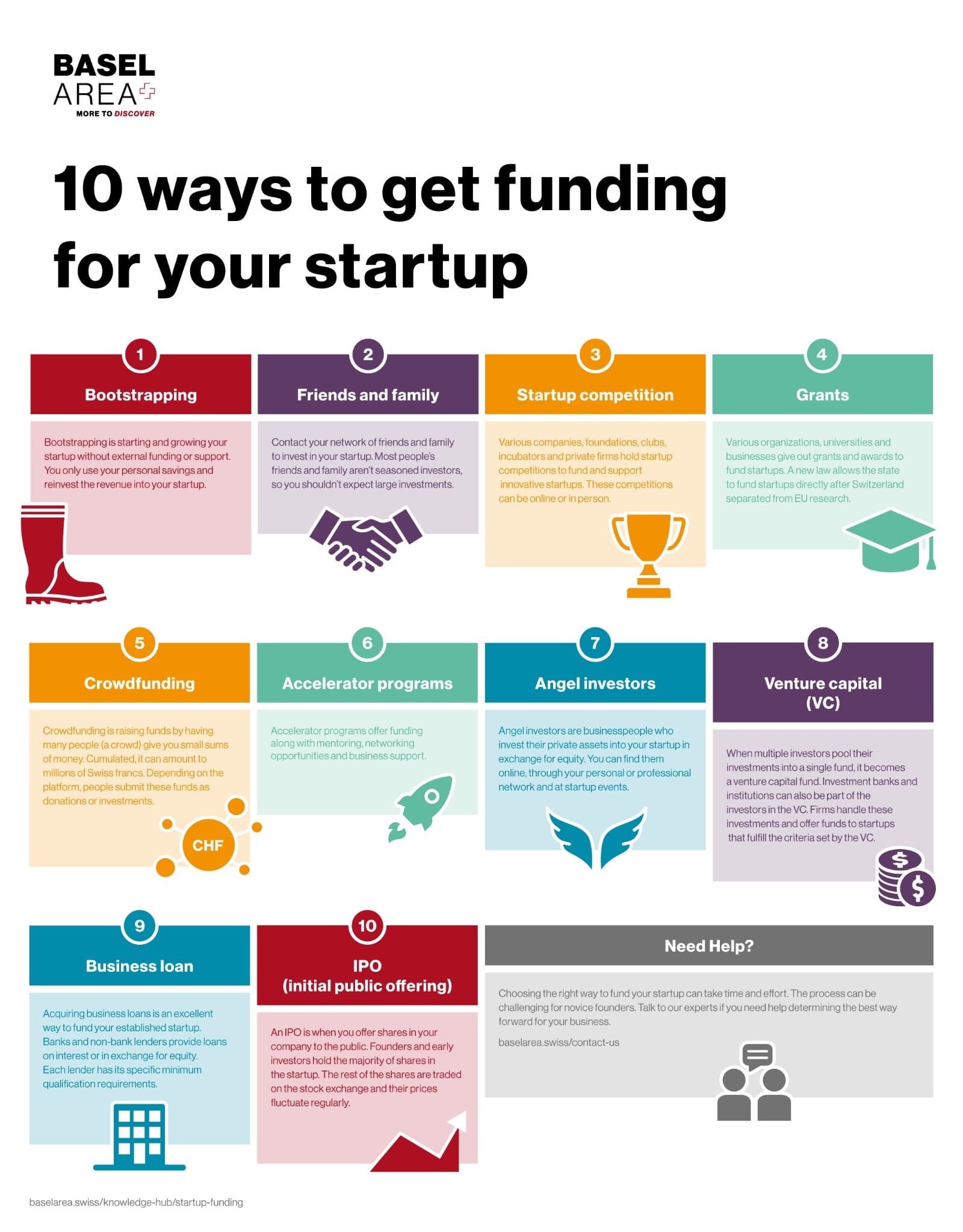
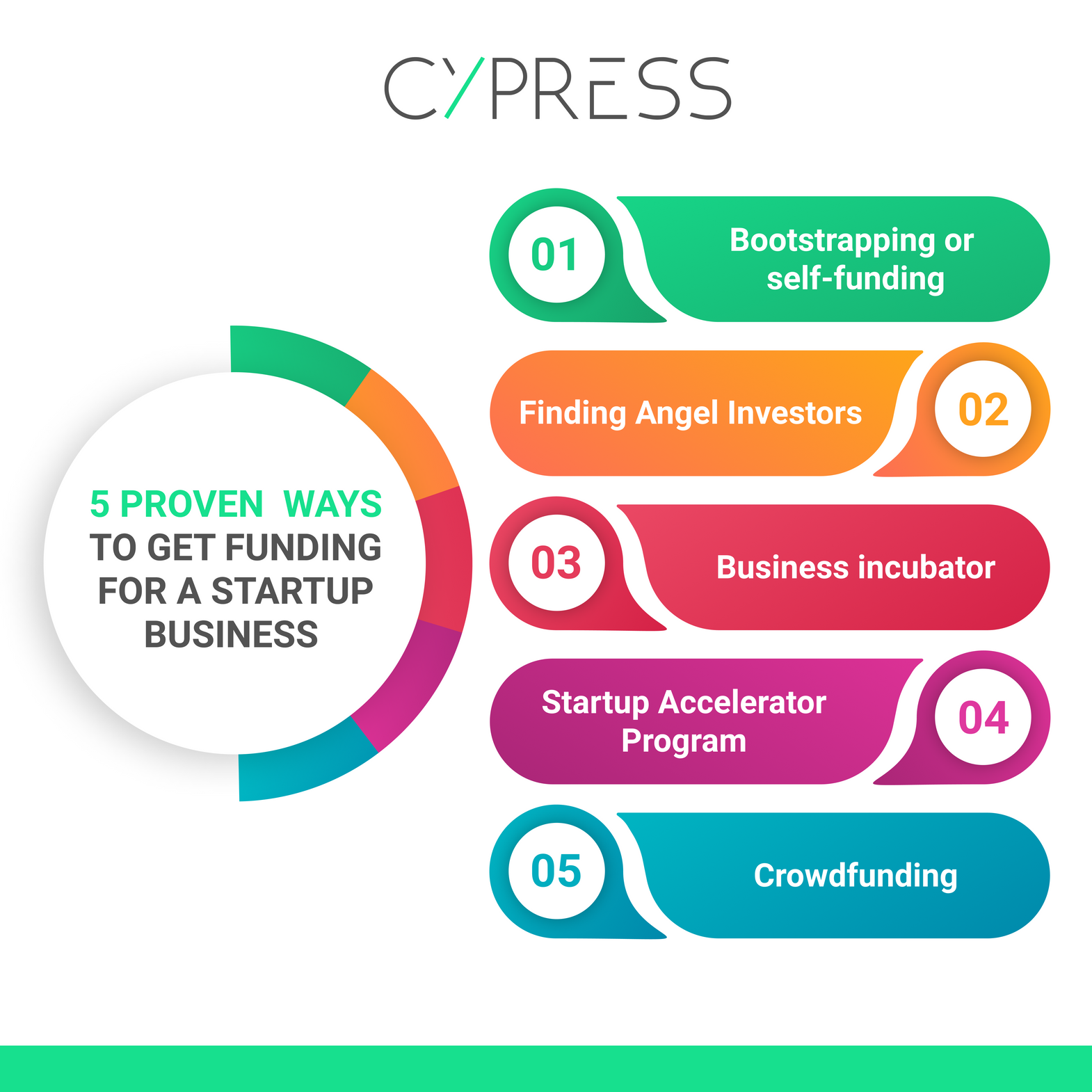
Bootstrapping involves funding your startup through personal savings, credit cards, or early revenues generated by the business itself, without external equity investment. This approach offers unparalleled autonomy and control, as founders retain 100% ownership and are not beholden to investor demands. It fosters financial discipline, forcing founders to be lean, resourceful, and revenue-focused from day one. While it limits initial growth potential due to restricted capital, successful bootstrapped companies often build robust, sustainable business models and can attract more favorable terms from investors once they’ve proven their concept independently. It’s an excellent path for validating ideas with minimal financial risk before seeking significant outside capital.
Friends, Family, and Angel Investors: Tapping into Early Support
Once personal funds are exhausted, or more capital is needed than bootstrapping can provide, many startups turn to their immediate network and early-stage private investors.
-
Friends and Family: Often the first external capital source, these individuals invest based on trust and belief in the founder, rather than strict financial metrics. It’s crucial to treat these investments professionally, with clear agreements, even among loved ones, to avoid future misunderstandings.
-
Angel Investors: High-net-worth individuals who invest their personal capital into early-stage companies, often in exchange for equity. Angels typically bring not just capital but also valuable industry experience, mentorship, and connections. They usually invest smaller amounts than VCs, are more flexible, and focus on the potential of the idea and the team. Finding angels often involves networking through industry events, incubators, or online platforms.
Venture Capital (VC) Firms: Fueling Growth
Venture Capital (VC) firms are professional investment entities that manage funds from limited partners (like pension funds, endowments, or high-net-worth individuals) to invest in high-growth potential startups in exchange for equity. VCs typically invest in Seed to Series D+ rounds, seeking significant returns on their portfolio companies. They are highly selective, focusing on scalability, market size, defensibility, and the potential for a substantial exit (acquisition or IPO). While VC funding provides substantial capital and strategic guidance, it comes with dilution of ownership and often involves more rigorous reporting and governance. Pitching to VCs requires a polished business plan, compelling traction, and strong financial projections, demonstrating a clear path to becoming a market leader.
Bank Loans and Lines of Credit: Debt Financing Options
For some startups, particularly those with existing revenue or tangible assets, traditional debt financing can be a viable option.
-
Bank Loans: While challenging for early-stage, pre-revenue startups, established small businesses can access term loans for specific needs like equipment purchase or working capital. These require a solid credit history, collateral, and a proven ability to repay.
-
Lines of Credit: Offer flexible access to funds up to a certain limit, useful for managing cash flow fluctuations or covering short-term operational expenses.
The key advantage of debt financing is that it does not dilute equity ownership. However, it requires consistent repayment regardless of the company’s performance, making it a higher-risk option for ventures with unpredictable cash flow. Small Business Administration (SBA) loans are often a more accessible option for startups, as they are government-backed, reducing risk for lenders.
Alternative and Emerging Funding Strategies
Beyond traditional methods, the funding landscape has diversified significantly, offering startups a broader spectrum of options. These alternative strategies can be particularly attractive for businesses that may not fit the conventional venture capital mold or those seeking non-dilutive capital.
Crowdfunding Platforms: Democratizing Investment

Crowdfunding has revolutionized how startups can raise capital by allowing them to solicit small investments from a large number of individuals, typically via online platforms.
-
Reward-Based Crowdfunding (e.g., Kickstarter, Indiegogo): Individuals pledge money in exchange for pre-orders of a product, exclusive merchandise, or other non-financial rewards. This is excellent for validating product demand and building a community.
-
Equity Crowdfunding (e.g., SeedInvest, StartEngine): Under regulations like the JOBS Act, startups can offer equity (ownership stakes) to the general public, not just accredited investors. This democratizes investment, allowing everyday individuals to become shareholders. It can provide significant capital but comes with regulatory compliance and managing a large number of small investors.
Crowdfunding platforms offer high visibility and marketing benefits but require compelling campaigns and meticulous fulfillment.
Government Grants and Accelerators: Non-Dilutive Capital
Government grants and startup accelerators offer invaluable non-dilutive capital and resources, meaning founders don’t have to give up equity.
-
Government Grants: Agencies like the Small Business Innovation Research (SBIR) and Small Business Technology Transfer (STTR) programs in the U.S. offer grants to small businesses engaged in R&D with commercial potential. These are highly competitive but provide substantial funding without equity dilution. Similar programs exist in many countries.
-
Accelerators: Programs like Y Combinator or Techstars provide seed funding, mentorship, office space, and a structured curriculum over a few months, culminating in a Demo Day where startups pitch to investors. In exchange, accelerators typically take a small equity stake (e.g., 5-7%). They offer an intensive environment for rapid growth and invaluable networking opportunities.
Strategic Partnerships and Corporate Venture Capital
Forming strategic partnerships can unlock both capital and critical resources. Large corporations may invest in startups that align with their strategic interests through Corporate Venture Capital (CVC) arms. These CVCs often invest not just for financial returns but also for strategic benefits, such as access to new technologies, market intelligence, or innovative business models. Such partnerships can provide significant funding, distribution channels, industry expertise, and credibility. However, founders must carefully consider potential conflicts of interest or loss of agility when partnering with large corporations. Exploring joint ventures, licensing agreements, or even M&A opportunities where a larger company acquires a minority stake can also be financially beneficial.
Crafting Your Funding Pitch and Due Diligence
Regardless of the funding source, the ability to articulate your startup’s value proposition, market opportunity, and financial viability is paramount. A well-structured pitch and thorough preparation for due diligence are essential components of a successful funding round.
Developing a Robust Business Plan
A comprehensive business plan serves as the foundation of your funding narrative. It should clearly outline:
-
Executive Summary: A concise overview of your entire plan.
-
Company Description: What your business does, its mission, and vision.
-
Market Analysis: Industry trends, target market, customer segmentation, and competitive landscape.
-
Organization & Management: The legal structure and leadership team’s expertise.
-
Service or Product Line: Detailed description of your offering and its unique value proposition.
-
Marketing & Sales Strategy: How you will reach and acquire customers.
-
Funding Request: The amount of capital needed and how it will be used.
-
Financial Projections: Detailed forecasts of revenue, expenses, and profitability (covered next).
A robust business plan demonstrates your understanding of the market and your strategic approach to capturing it, providing investors with confidence in your foresight and planning.
Financial Projections: Telling Your Story with Numbers
Financial projections are critical for convincing investors of your startup’s potential for significant returns. These are not merely guesses but educated forecasts based on market research, sales pipeline, and reasonable assumptions. Key components include:
-
Revenue Forecasts: Detailed breakdown of how sales will be generated over a 3-5 year period.
-
Cost of Goods Sold (COGS): Direct costs associated with producing your product or service.
-
Operating Expenses: Salaries, marketing, rent, software, etc.
-
Profit & Loss (P&L) Statement: Projected income and expenses.
-
Cash Flow Statement: How cash moves in and out of the business.
-
Balance Sheet: Assets, liabilities, and equity at specific points in time.
-
Key Metrics: Customer acquisition cost (CAC), lifetime value (LTV), burn rate, runway, and unit economics.
Investors scrutinize these numbers to assess scalability, profitability, and capital efficiency. Realistic, well-justified projections, even if aggressive, are far more credible than overly optimistic or unsubstantiated figures.
The Art of the Pitch Deck
The pitch deck is your startup’s visual story, typically a 10-15 slide presentation designed to capture investor interest and communicate your core value proposition efficiently. Essential slides include:
-
Problem
-
Solution
-
Market Size
-
Product/Service
-
Business Model
-
Traction
-
Team
-
Competition
-
Financials (high-level)
-
Ask (funding amount and use of funds)
A compelling pitch deck is visually appealing, concise, and tells a clear narrative, sparking enough interest for investors to request further information. Practice is vital to deliver the pitch with confidence and clarity, demonstrating your passion and command of the business.
Legal and Financial Preparedness for Due Diligence
Once an investor expresses serious interest, they will initiate a rigorous due diligence process. This involves scrutinizing every aspect of your business to verify your claims and assess potential risks. Founders must be prepared to provide:
-
Legal Documents: Articles of incorporation, bylaws, intellectual property registrations, material contracts (customer, vendor, employee agreements), cap table, and previous financing documents.
-
Financial Records: Audited financial statements (if available), detailed historical financial data, bank statements, and tax returns.
-
Operational Information: Employee records, marketing plans, sales pipelines, product roadmap, and operational procedures.
Being organized and transparent during due diligence instills confidence and can significantly accelerate the closing of a funding round. Any discrepancies or unreadiness can raise red flags and jeopardize the investment.
Post-Funding Management and Growth
Securing funding is a significant milestone, but it’s merely the beginning of a new phase. Effective post-funding management is crucial for translating capital into sustainable growth and maximizing investor returns. This involves meticulous financial stewardship and proactive communication.
Responsible Capital Utilization
Funds raised must be deployed strategically to achieve the milestones outlined in your business plan and pitch. This means adhering to a budget, monitoring cash flow diligently, and making judicious spending decisions. Every dollar should contribute to growth, product development, market expansion, or talent acquisition. Avoid unnecessary expenses, maintain a lean operational structure where possible, and continuously evaluate the return on investment for all spending. Responsible utilization not only propels your startup forward but also builds trust with your investors, positioning you favorably for future funding rounds.
Investor Relations and Reporting
Maintaining transparent and proactive communication with your investors is vital. Regular updates on progress, challenges, and financial performance build strong relationships and foster continued support. This typically includes:
-
Monthly or Quarterly Updates: Brief summaries of key performance indicators (KPIs), achieved milestones, and upcoming objectives.
-
Financial Reports: Providing detailed P&L statements, balance sheets, and cash flow statements.
-
Board Meetings: For equity investors, formal board meetings allow for strategic discussions and decision-making.
Open communication, especially during challenging times, demonstrates maturity and accountability, ensuring investors remain aligned with your vision and can offer their valuable insights and networks when needed.
Planning for Subsequent Funding Rounds
Funding is often a cyclical process, especially for high-growth startups. Even as you deploy current funds, it’s essential to plan for the next round of financing. This involves:
-
Achieving Key Milestones: Demonstrating significant progress with the current capital to show a compelling case for further investment.
-
Forecasting Future Needs: Understanding your burn rate and identifying when you’ll need additional capital to avoid running out of runway.
-
Building Relationships: Continuously networking with potential investors, even if you’re not actively fundraising, to establish rapport and familiarity.
A forward-looking approach ensures a smoother transition into subsequent rounds, allowing your startup to maintain momentum and achieve its long-term growth objectives without unnecessary financial stress.
In conclusion, navigating the path to startup funding is a multifaceted journey that demands strategic planning, meticulous preparation, and relentless execution. By understanding the diverse funding avenues, crafting a compelling financial narrative, and diligently managing investor relationships, founders can secure the capital necessary to transform their innovative ideas into thriving, impactful businesses. The journey is challenging, but with the right financial foresight and execution, the rewards can be profound, not just for the founders but for the economies they stimulate and the problems they solve.
aViewFromTheCave is a participant in the Amazon Services LLC Associates Program, an affiliate advertising program designed to provide a means for sites to earn advertising fees by advertising and linking to Amazon.com. Amazon, the Amazon logo, AmazonSupply, and the AmazonSupply logo are trademarks of Amazon.com, Inc. or its affiliates. As an Amazon Associate we earn affiliate commissions from qualifying purchases.