
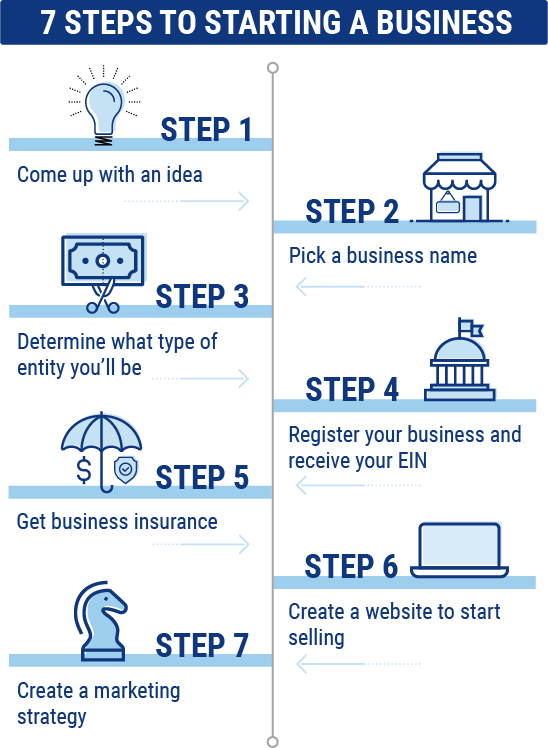
The digital age has democratized entrepreneurship, lowering traditional barriers to entry and opening a vast landscape of opportunities for individuals to launch their own ventures from anywhere in the world. Starting a company online isn’t merely about setting up a website or choosing a product; it’s fundamentally about establishing a sustainable financial engine designed to generate income, manage expenses, and build long-term value. This guide delves into the financial intricacies of launching an online business, emphasizing sound money management, strategic income generation, and robust financial planning to ensure your entrepreneurial journey is not only exciting but also economically viable and prosperous. From initial funding to navigating complex tax landscapes, understanding the financial bedrock is paramount to transforming a digital idea into a thriving enterprise.
Laying the Financial Foundation for Your Online Venture
Every successful online company begins with a clear understanding of its financial blueprint. Before a single product is sold or service rendered, entrepreneurs must meticulously plan their financial requirements, revenue models, and operational budgets. This foundational work dictates the trajectory of the business, influencing everything from scalability to profitability.
Assessing Initial Capital and Funding Options
The first significant financial hurdle for any new business is securing the necessary capital to get off the ground. Online businesses often boast lower startup costs compared to brick-and-mortar establishments, but they are far from free.
-
Bootstrapping vs. External Investment: Bootstrapping, or self-funding, is the most common approach for online startups. It involves using personal savings, credit cards, or small loans from friends and family. This method offers complete control and avoids equity dilution, but it limits initial growth potential. Conversely, seeking external investment from angel investors, venture capitalists, or even crowdfunding platforms can provide significant capital injection for faster scaling. However, this often comes at the cost of equity or control and requires a well-researched pitch deck detailing financial projections and market opportunities. Understanding your risk tolerance and growth aspirations will guide this crucial decision.
-
Understanding Startup Costs: Beyond the Obvious: While physical rent might not be a concern, online companies incur their own set of initial expenses. These typically include domain registration and hosting, website development (or platform subscriptions), initial inventory (if selling physical products), legal fees for business registration, software licenses for accounting or CRM, and initial marketing campaigns. A comprehensive list of these costs, often overlooked in the excitement of a new idea, is critical for an accurate startup budget. Factoring in a contingency fund, typically 15-20% of your total estimated costs, is also wise to cover unforeseen expenses.
Crafting a Sustainable Business Model
Your business model is the strategic framework for how your company creates, delivers, and captures value. From a financial perspective, it defines how you will generate revenue and sustain profitability.
-
Revenue Streams: Subscription, E-commerce, Services: Online businesses can tap into diverse revenue streams. E-commerce involves selling physical or digital products directly to consumers. Subscription models offer recurring revenue through access to content, software, or curated products. Service-based models charge for expertise, consultation, or specific tasks. Each model has distinct financial characteristics regarding cash flow, customer acquisition costs, and scalability. A combination of these might also be viable, for example, offering a basic free service with premium paid features.
-
Pricing Strategies: Value-Based, Cost-Plus, Competitive: How you price your products or services directly impacts your profitability and market perception. Cost-plus pricing involves adding a markup to your production costs. Competitive pricing aligns your prices with those of rivals. Value-based pricing, often favored in the online space, sets prices according to the perceived value to the customer, allowing for potentially higher margins. A thoughtful pricing strategy considers market demand, customer willingness to pay, competitor offerings, and, most importantly, your underlying costs.
Budgeting for Online Operations
Once the initial capital is secured and a business model defined, ongoing operational budgeting becomes essential for financial discipline and control.
-
Essential Tools and Software Subscriptions: The “online” nature of your company means reliance on various digital tools. This includes website hosting, e-commerce platforms (e.g., Shopify, WooCommerce), email marketing services, graphic design software, project management tools, and online accounting solutions. These are recurring expenses that must be accurately budgeted to avoid unexpected drains on cash flow. Savvy entrepreneurs often start with free or freemium versions before upgrading as needs grow.
-
Marketing Spend Allocation: Reaching your target audience online requires a dedicated marketing budget. This can encompass paid advertising (Google Ads, social media ads), content marketing, SEO efforts, influencer collaborations, and email campaigns. Allocating funds strategically, often starting with smaller test campaigns to identify effective channels, is crucial. Tracking Return on Investment (ROI) for each marketing channel is paramount to ensure your spending is generating profitable customer acquisition.
Generating and Managing Online Income Streams
Once the financial foundation is laid, the focus shifts to actively generating revenue and efficiently managing the money that flows into your business. The online environment offers unparalleled flexibility in how income can be earned and optimized.
Diversifying Your Revenue Portfolio
Relying on a single source of income can leave your online company vulnerable to market shifts. Strategic diversification builds resilience.
-
Exploring Multiple Income Avenues: Beyond your primary product or service, consider supplementary income streams. For an e-commerce store, this could mean introducing complementary digital products (eBooks, online courses) or engaging in affiliate marketing, promoting relevant products or services from other companies for a commission. Service providers might offer tiered service packages, premium consultations, or recurring retainer agreements. The goal is to create a robust financial ecosystem that insulates your business from fluctuations in any single stream.
-
Passive vs. Active Income Models: Understand the difference between passive and active income. Active income requires direct effort (e.g., consulting, custom design work). Passive income, once set up, generates revenue with minimal ongoing effort (e.g., digital product sales, ad revenue from a blog, affiliate links). While purely passive income is rare, building assets that generate semi-passive income can significantly boost your company’s financial stability and free up your time for growth initiatives.
Optimizing for Profitability
Generating revenue is only half the equation; true financial success lies in retaining a healthy portion of that revenue as profit.
-
Cost Management and Expense Tracking: Regular, meticulous tracking of all expenses is fundamental. Categorize every outflow, from software subscriptions to advertising spend. Utilize online accounting software to automate this process. Regularly review your expenses to identify areas for cost reduction without compromising quality or growth. Can you negotiate better rates with suppliers? Are there redundant subscriptions you can cancel? Every dollar saved is a dollar added to your bottom line.
-
Scaling for Increased Financial Returns: Scaling an online business involves increasing revenue without a proportional increase in costs. This might mean automating processes, outsourcing non-core functions, leveraging technology to reach a wider audience, or optimizing your sales funnels. A business designed for scalability from the outset—for instance, one selling digital products over physical ones—is inherently poised for greater financial returns as it grows.
Payment Processing and Financial Transactions
The mechanisms through which your online company receives money are crucial for both efficiency and security.
-
Choosing Secure and Efficient Payment Gateways: Selecting the right payment processor (e.g., Stripe, PayPal, Square) is critical. Considerations include transaction fees, supported currencies, ease of integration with your website or e-commerce platform, and security features. A reliable payment gateway ensures smooth transactions for customers and safeguards your company’s financial data.
-
Managing Refunds and Chargebacks: In the online world, refunds and chargebacks are an unavoidable part of doing business. Establish clear refund policies and processes that are transparent to customers. Understand the costs associated with chargebacks (fees, lost revenue, potential damage to your merchant account reputation) and implement strategies to minimize them, such as clear product descriptions, excellent customer service, and timely order fulfillment.
Navigating Business Finance and Compliance Online
Operating an online company, while global in reach, is subject to a complex web of financial regulations, tax obligations, and legal structures. Ignoring these aspects can lead to significant financial penalties and operational disruptions.
Legal Structures and Their Financial Implications
The legal form of your business dictates many of your financial responsibilities and liabilities.
-
Sole Proprietorship, LLC, Corporation: A sole proprietorship is the simplest, but it offers no personal liability protection, meaning your personal assets are at risk. A Limited Liability Company (LLC) provides personal asset protection and offers flexible taxation. Corporations (S-Corp, C-Corp) offer strong liability protection but come with more complex administrative and tax requirements. The choice impacts how you pay taxes, your ability to raise capital, and your personal financial exposure. Consulting with a legal and financial advisor is crucial here.
-
Importance of Separate Business Accounts: Regardless of your legal structure, immediately establishing separate bank accounts and credit cards for your business is non-negotiable. This practice, known as “piercing the corporate veil,” maintains the legal distinction between you and your company, crucial for liability protection, simplifies accounting, and makes tax preparation significantly easier.
Understanding Online Taxation and Regulations
Taxation for online businesses can be particularly intricate due to the borderless nature of the internet.
-
Sales Tax, Income Tax, International Considerations: You’ll likely owe income tax on your profits, similar to traditional businesses. However, sales tax (or VAT/GST in other countries) can be complex, as nexus rules determine where you must collect and remit sales tax. Selling internationally introduces additional layers of complexity, including differing tax rates, import duties, and currency conversions. Staying informed about tax obligations in all regions where you sell is paramount.
-
Compliance with Payment Regulations (e.g., PCI DSS): If your online company handles credit card data, you must comply with Payment Card Industry Data Security Standard (PCI DSS). While your payment gateway often handles much of this, understanding your responsibilities for protecting customer financial data is critical to avoid fines, data breaches, and reputational damage.
Financial Record-Keeping and Accounting
Accurate and consistent financial record-keeping is the backbone of financial health and compliance.
-
Choosing Online Accounting Software: Cloud-based accounting software like QuickBooks Online, Xero, or FreshBooks are invaluable for online companies. They automate transaction categorization, reconcile bank statements, generate financial reports (profit and loss, balance sheet), and simplify invoicing. Investing in such a tool from the outset will save countless hours and prevent errors.
-
Importance of Regular Financial Reviews: Don’t just set up your accounting system and forget it. Schedule regular financial reviews—monthly or quarterly—to assess your company’s performance. Analyze your profit margins, cash flow, and key financial ratios. These reviews help you make informed decisions, identify potential issues early, and adapt your strategies to ensure sustained financial stability and growth.
Strategies for Sustainable Financial Growth
Beyond the initial setup and day-to-day operations, the long-term financial health of an online company hinges on strategic growth planning and prudent financial forecasting. Building a business that not only survives but thrives requires foresight and disciplined financial management.
Reinvestment vs. Profit Distribution
A critical decision for any growing online company is how to allocate its profits.
-
Fueling Growth through Strategic Reinvestment: Reinvesting profits back into the business can accelerate growth. This could involve funding new product development, expanding marketing efforts, hiring key talent, upgrading technology, or acquiring complementary businesses. Strategic reinvestment is particularly important in the early stages to build market share and achieve economies of scale. It requires a clear understanding of where capital can generate the highest return within your specific business model.
-
Understanding Owner’s Draw and Dividends: For sole proprietors and partners, an owner’s draw is how you take money out of the business for personal use. For LLCs and corporations, distributions or dividends serve a similar purpose. It’s crucial to establish a sustainable personal compensation strategy that balances your personal financial needs with the business’s need for capital for growth. Excessive draws can starve the business of funds, hindering its potential, while insufficient compensation can lead to owner burnout.
Financial Forecasting and Goal Setting
Predicting future financial performance and setting clear monetary goals are essential for guiding your company’s trajectory.
-
Setting Realistic Revenue Targets: Based on market research, historical data, and your marketing strategies, set achievable revenue targets. These shouldn’t be arbitrary numbers but rather informed projections that guide your sales and marketing efforts. Break down annual targets into monthly or quarterly goals to make them more manageable and trackable.
-
Cash Flow Projections for Stability: Cash flow is the lifeblood of any business. Developing detailed cash flow projections helps you anticipate periods of surplus or deficit, allowing you to plan for necessary funding, manage inventory, or time marketing campaigns effectively. A healthy cash flow ensures your online company can meet its financial obligations, even during lean periods, providing stability and peace of mind.

Exit Strategies and Valuation
While it might seem premature when just starting, thinking about an eventual exit strategy can profoundly influence how you build your online company financially.
-
Preparing for Future Sale or Acquisition: If your long-term goal is to sell your online business, you must build it with that objective in mind. This means creating robust systems, documenting processes, establishing clear intellectual property, and demonstrating consistent profitability. A clean, well-documented financial history is invaluable for potential buyers conducting due diligence.
-
Building Asset Value in an Online Business: An online company’s value isn’t just in its current profits; it’s also in its assets. These can include a strong brand (monetizable through trademarks), a large customer database, proprietary software or technology, unique content, and efficient operational processes. Strategically investing in these assets contributes to a higher valuation, maximizing your potential financial return should you decide to sell or transition ownership.
Starting your own company online is a journey filled with innovation and opportunity, but its lasting success is inextricably linked to sound financial planning, diligent management of income and expenses, and a clear understanding of the financial landscape. By prioritizing these money-focused principles from conception through growth, entrepreneurs can build not just a website or a product, but a truly sustainable and profitable online enterprise.
aViewFromTheCave is a participant in the Amazon Services LLC Associates Program, an affiliate advertising program designed to provide a means for sites to earn advertising fees by advertising and linking to Amazon.com. Amazon, the Amazon logo, AmazonSupply, and the AmazonSupply logo are trademarks of Amazon.com, Inc. or its affiliates. As an Amazon Associate we earn affiliate commissions from qualifying purchases.