
In the world of finance, timing is not just a logistical detail; it is a fundamental pillar of strategy. For the modern investor, understanding when the markets open and close is as crucial as knowing which assets to buy. The rhythm of the financial world dictates liquidity, volatility, and the availability of information. Whether you are a retail investor managing a personal portfolio or a side-hustler exploring day trading, the “closing bell” represents more than just the end of a work day—it marks a critical transition in price discovery and risk management.
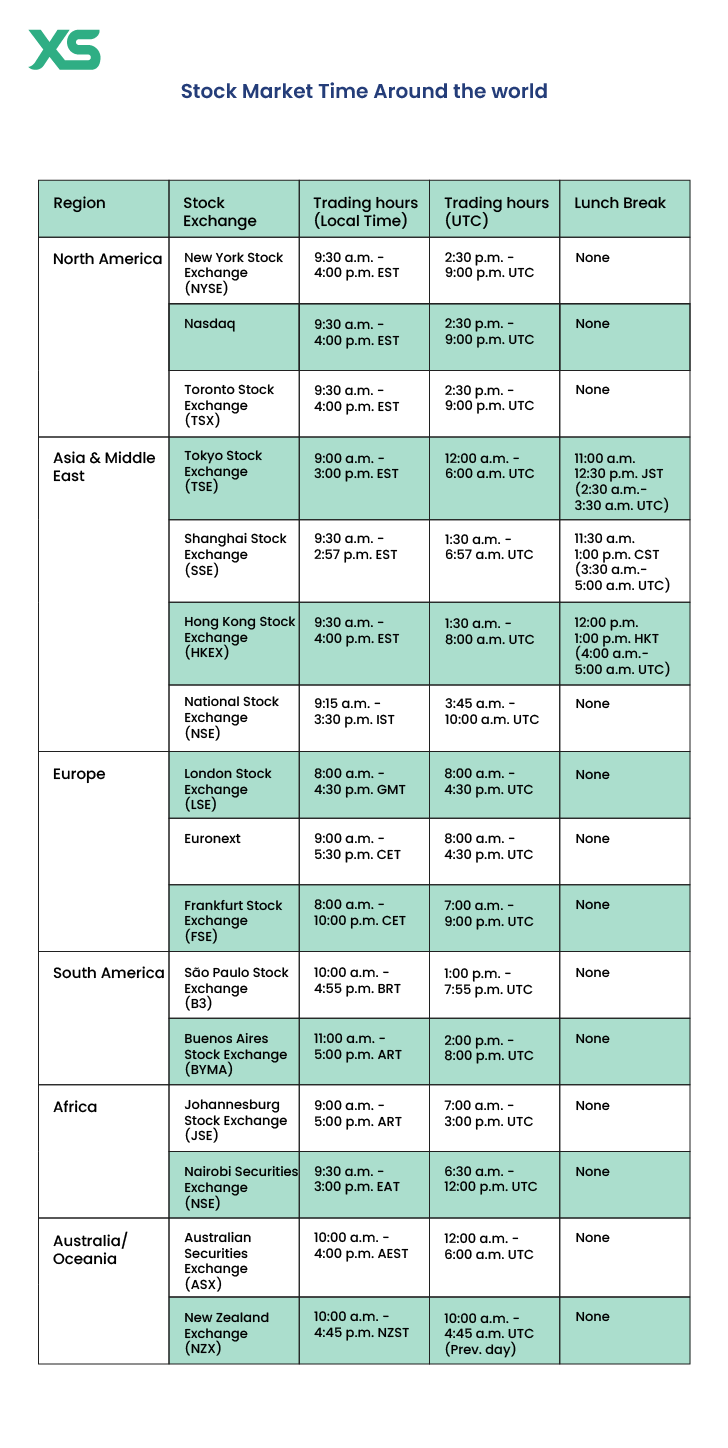
This guide explores the intricate schedules of global financial markets, the nuances of different asset classes, and the strategic implications of market closures for your personal wealth management.
1. The Standard Trading Day: Mastering North American Market Hours
The North American markets, particularly the New York Stock Exchange (NYSE) and the NASDAQ, serve as the epicenter of global equity trading. For most investors, the “market hours” are synonymous with the operating times of these two giants.
The New York Stock Exchange (NYSE) and NASDAQ
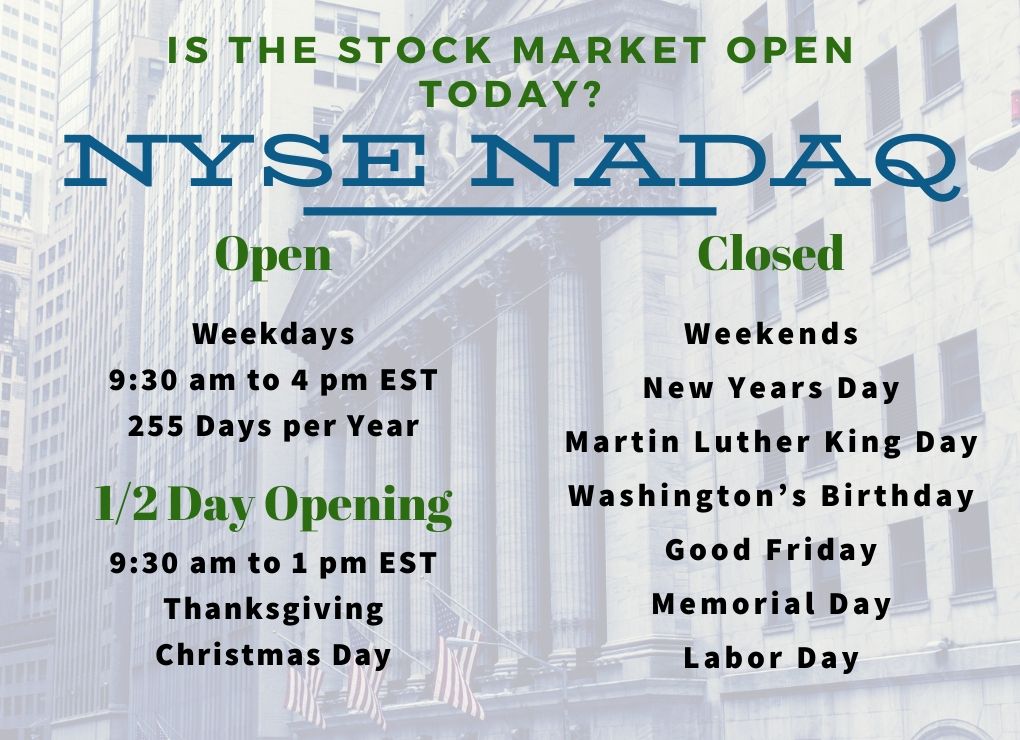
The primary trading session for both the NYSE and the NASDAQ runs from 9:30 AM to 4:00 PM Eastern Time (ET), Monday through Friday. These hours are designed to concentrate liquidity, ensuring that there are enough buyers and sellers active at any given moment to facilitate smooth transactions. Unlike some international markets, major U.S. exchanges do not take a lunch break; the trading persists throughout the day, though volume often dips during the midday “lull” as institutional traders step away.
The Significance of the Closing Bell
The 4:00 PM ET closing bell is one of the most significant moments in the financial day. It is at this moment that “closing prices” are established. These prices are used to calculate the Net Asset Value (NAV) of mutual funds and are the benchmark for most portfolio performance metrics. The final minutes of the session, often referred to as “the close,” frequently see a surge in volume as institutional investors rebalance their holdings to match index weightings or execute “Market-on-Close” (MOC) orders.
Pre-Market and After-Hours Trading Dynamics
While the “official” close is at 4:00 PM, the digital nature of modern finance allows for extended-hours trading. Pre-market trading typically occurs from 4:00 AM to 9:30 AM ET, while after-hours trading runs from 4:00 PM to 8:00 PM ET. However, investors must exercise caution: these sessions are characterized by lower liquidity and higher volatility. Significant news—such as quarterly earnings reports or geopolitical shifts—often breaks after the bell, leading to dramatic price swings that occur before the average retail investor has a chance to react in the primary session.
2. Navigating the Global Financial Cycle: Europe and Asia
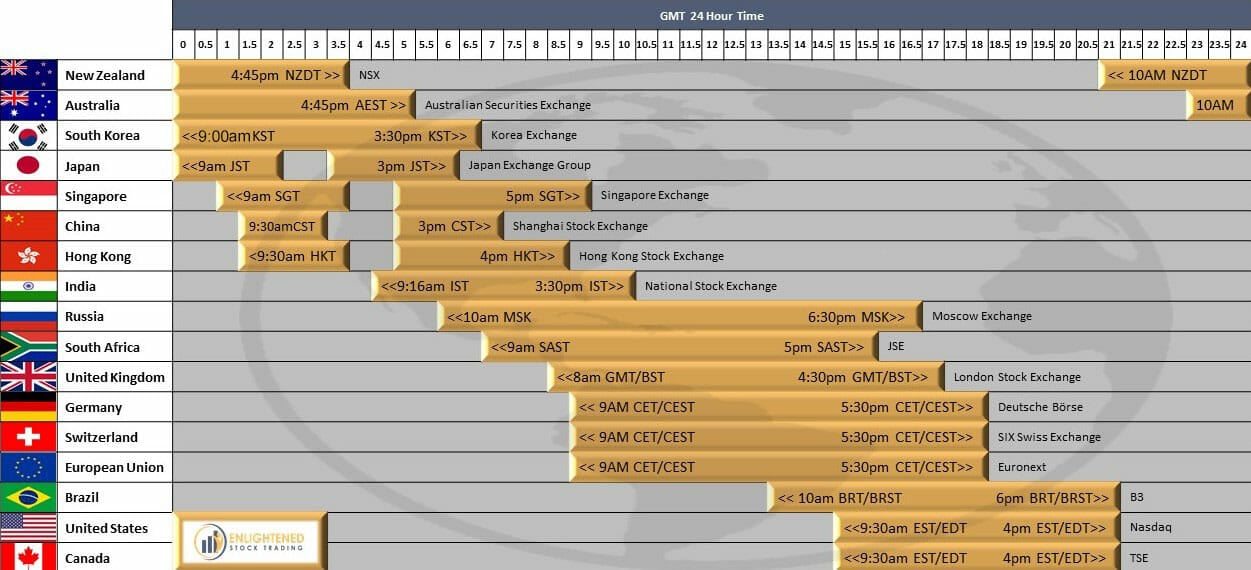
The sun never truly sets on the global financial markets. As the North American markets wind down, the torch is passed across the Pacific to Asia, and eventually through the Middle East to Europe.
European Markets: The London (LSE) and Frankfurt (DAX) Connection
The London Stock Exchange (LSE) is the crown jewel of European finance, typically operating from 8:00 AM to 4:30 PM Greenwich Mean Time (GMT). Other major European hubs, such as the Euronext Paris or the Frankfurt Stock Exchange (DAX), operate on Central European Time (CET). For Western investors, the European close is significant because it often overlaps with the U.S. open. This “overlap period” (roughly 9:30 AM to 11:30 AM ET) is frequently the most liquid and volatile time of the day for global equities and currencies.
Asian Hubs: Tokyo, Hong Kong, and Shanghai
The Asian markets provide the first glimpse into the global sentiment for each new calendar day. The Tokyo Stock Exchange (TSE) operates from 9:00 AM to 3:00 PM JST, but with a notable distinction: a scheduled lunch break from 11:30 AM to 12:30 PM. Similar breaks exist in the Hong Kong (HKEX) and Shanghai (SSE) markets. These pauses in trading allow participants to digest morning news and re-evaluate positions before the afternoon session, a tradition that contrasts with the non-stop nature of Western exchanges.
The “Golden Hour” of Overlapping Sessions
Strategic investors pay close attention to the transitions between these regions. When the Asian markets close and European markets open, or when Europe closes as the U.S. enters its mid-morning peak, “price gaps” can occur. A price gap happens when an asset opens at a significantly different price than it closed at in the previous session or region. Understanding these transition times is essential for anyone looking to optimize entry and exit points in a globalized portfolio.
3. Asset-Specific Timelines: Forex, Crypto, and Commodities
Not all markets follow the traditional “9-to-5” structure. Depending on what you are trading, the concept of a “closing time” might be entirely different—or non-existent.
The 24/5 Forex Market: When Does the World Sleep?
The Foreign Exchange (Forex) market is the largest and most liquid financial market in the world. Unlike stocks, it does not have a centralized physical exchange. Instead, it is a decentralized network of banks and brokers. Consequently, Forex trades 24 hours a day, five days a week. It opens on Sunday at 5:00 PM ET (as the Sydney, Australia session begins) and closes on Friday at 5:00 PM ET (as the New York session ends). While it never “closes” during the week, liquidity shifts between the four major sessions: Sydney, Tokyo, London, and New York.
The 24/7 Cryptocurrency Landscape: Why it Never Closes
For those involved in the “digital gold” rush, the market never sleeps. Cryptocurrency exchanges like Coinbase or Binance operate 24 hours a day, 7 days a week, 365 days a year. There are no holidays, no weekends, and no closing bells. This creates a unique environment for personal finance; while it offers unparalleled flexibility for side-hustlers, it also requires rigorous discipline. Without a closing bell, risk management must be automated via stop-loss orders, as market-moving events can happen at 3:00 AM on a Sunday.
Commodities and Futures: Navigating CME and ICE Schedules
Commodities like oil, gold, and agricultural products primarily trade on futures exchanges such as the Chicago Mercantile Exchange (CME). These markets have specific “trading windows” that often span nearly 24 hours but include brief daily breaks for maintenance and clearing. For example, many CME futures trade from Sunday evening through Friday afternoon, with a daily 60-minute break starting at 5:00 PM ET. Understanding these “micro-closes” is vital for traders who use leverage, as they cannot exit positions during these maintenance windows.
4. Strategic Implications of Market Closures for Investors
Knowing the closing times is only half the battle; the other half is understanding how to use that knowledge to protect and grow your money.
Managing Risk During Market Gaps
One of the greatest risks in investing is “overnight risk.” This is the risk that news will break while the market is closed, causing the price to “gap down” at the next open. For a personal finance enthusiast, this highlights the importance of diversification. If you are heavily invested in a single sector that closes at 4:00 PM, you are vulnerable until 9:30 AM the next day. Strategies like holding a portion of your wealth in 24/7 assets or using international ETFs can help mitigate the impact of localized market closures.
The Impact of Time Zones on Side Hustle Trading
For many, investing is a side hustle performed outside of a standard 9-to-5 job. If you live on the West Coast of the U.S., the NYSE opens at 6:30 AM and closes at 1:00 PM. This might allow you to trade before your primary job starts. Conversely, investors in Europe might find the U.S. market close occurs during their evening. Aligning your financial strategy with your local time zone and the specific closing times of your target assets is a key component of sustainable financial planning.
Utilizing Financial Tools for Real-Time Monitoring
In the modern era, you don’t need to stare at a clock to know when markets close. Numerous financial tools and apps provide customizable alerts for market opens, closes, and “power hours.” Leveraging tools like Bloomberg, TradingView, or even basic brokerage alerts ensures that you are never caught off guard by an early holiday closure (such as the 1:00 PM ET early close often seen around Thanksgiving or Christmas in the U.S.).
5. The Psychology and Economics of the Closing Trade
The final hour of trading is often referred to as the “Power Hour.” This period is driven by a unique blend of human psychology and institutional necessity.
Institutional Rebalancing and the “Market-on-Close” (MOC) Order
Large pension funds and mutual funds often wait until the very end of the day to execute their largest trades. By using MOC orders, they ensure they receive the official closing price, which helps them minimize “tracking error” relative to the indices they follow. This influx of institutional money in the final 30 minutes can create significant price movement, offering opportunities for savvy retail investors to observe where the “smart money” is moving before the day concludes.
Weekend Risk and the Monday Morning Open
The Friday close is perhaps the most significant “closing time” of all. It marks the beginning of a 48-hour window where markets are closed, but the world continues to move. Political elections, natural disasters, or major corporate scandals frequently emerge over the weekend. This “weekend risk” is why many conservative investors trim their positions on Friday afternoon. Conversely, those with a higher risk tolerance might look for “Friday sell-offs” as an opportunity to buy assets at a discount, betting on a “Monday Morning Gap-Up.”
In conclusion, “what time do markets close” is a question with a multi-layered answer. For the equity investor, it is a strict 4:00 PM ET deadline. For the Forex trader, it is a Friday evening sunset. For the crypto enthusiast, it is a concept that doesn’t exist. By mastering these timelines, you gain the ability to navigate the global flow of capital with precision, ensuring that your money is always working for you, regardless of which side of the bell you stand on.
aViewFromTheCave is a participant in the Amazon Services LLC Associates Program, an affiliate advertising program designed to provide a means for sites to earn advertising fees by advertising and linking to Amazon.com. Amazon, the Amazon logo, AmazonSupply, and the AmazonSupply logo are trademarks of Amazon.com, Inc. or its affiliates. As an Amazon Associate we earn affiliate commissions from qualifying purchases.