
For the modern investor, the stock market often feels like a living, breathing entity that never sleeps. With the rise of 24/7 cryptocurrency trading and the ability to check global indices on a smartphone at any hour, it can be a jarring experience to log into a brokerage account and find the “Market Closed” notification. Understanding why the stock market is closed today—or on any given day—requires a dive into the intersection of federal law, tradition, and the operational logistics of global finance.
The primary stock exchanges in the United States, specifically the New York Stock Exchange (NYSE) and the Nasdaq, operate on a disciplined schedule. While the digital infrastructure of these institutions could theoretically run indefinitely, the human and regulatory elements of the financial system necessitate planned pauses. These closures are not merely “days off”; they are critical periods for system maintenance, settlement balancing, and alignment with the broader banking sector.

Understanding the Standard U.S. Stock Market Holiday Calendar
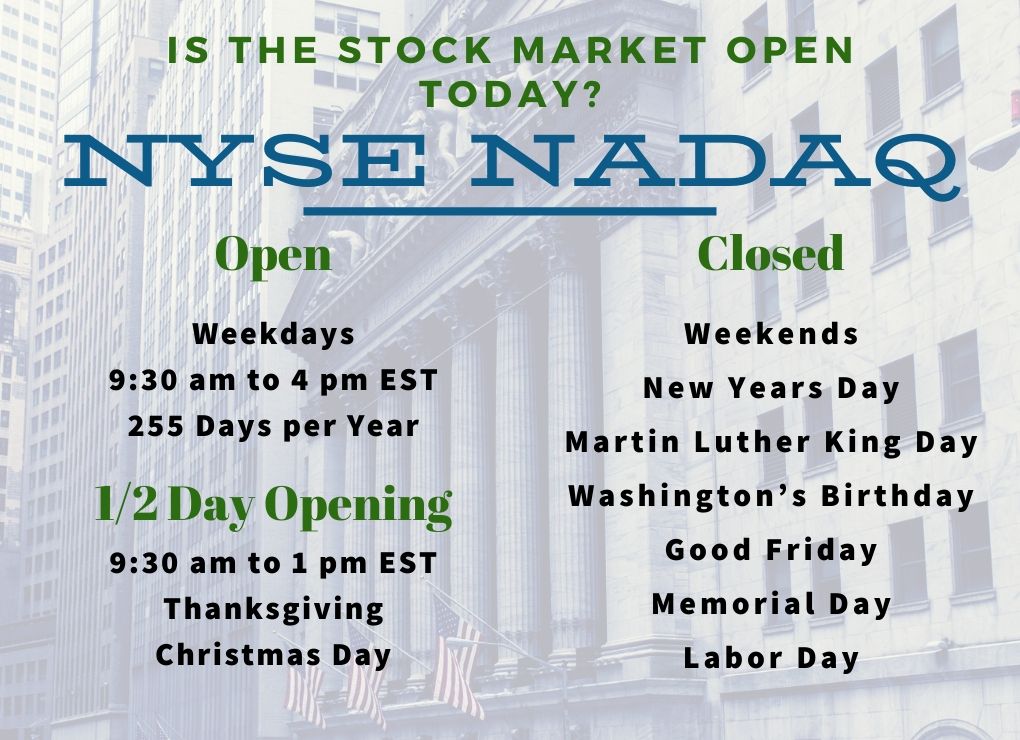
The most common reason the stock market is closed is the observance of a federal holiday. The U.S. equity markets generally follow the federal holiday schedule set by the government, though there are slight variations. These holidays provide a predictable cadence for the trading year, allowing institutional and retail investors to plan their strategies around periods of low liquidity.
The Significance of Federal Holidays and Banking Ties
The stock market is intrinsically linked to the Federal Reserve and the commercial banking system. Because stock trades require “settlement”—the process where the buyer’s money is exchanged for the seller’s securities—the markets cannot function effectively if the banking system is closed. Most stock trades currently operate on a “T+1” basis, meaning settlement occurs one business day after the transaction. If the banks are closed for a federal holiday, the movement of funds is halted, making it impractical for the stock exchanges to remain open.
Common holidays that result in a market closure include:
-
New Year’s Day: Marks the beginning of the financial year.
-
Martin Luther King, Jr. Day: Observed on the third Monday in January.
-
Presidents’ Day: Historically celebrating Washington’s Birthday, observed on the third Monday in February.
-
Good Friday: A notable exception to federal rules, as it is not a federal holiday, but the NYSE and Nasdaq traditionally close in observance of the religious holiday.
-
Memorial Day: Observed on the last Monday in May.
-
Juneteenth National Independence Day: The newest addition to the market calendar, observed on June 19th.
-
Independence Day: Celebrated on July 4th.
-
Labor Day: Observed on the first Monday in September.
-
Thanksgiving Day: Observed on the fourth Thursday in November.
-
Christmas Day: Observed on December 25th.
Fixed vs. Observed Dates
One nuance that often confuses investors is the concept of “observed” holidays. If a fixed-date holiday like Christmas or Independence Day falls on a Saturday, the stock market typically closes on the preceding Friday. If the holiday falls on a Sunday, the market closes on the following Monday. This ensures that the labor force powering the financial industry receives the full benefit of the holiday and that the settlement cycles remain consistent with the five-day work week.
Beyond the Calendar: Unscheduled Market Closures and Early Closes
While the holiday schedule is set years in advance, there are instances where the stock market closes unexpectedly or operates on a shortened schedule. These events are often reactive, responding to national emergencies, technical failures, or significant cultural events.
National Days of Mourning
The U.S. stock market has a long-standing tradition of closing to honor the passing of a U.S. President. These “National Days of Mourning” are designated by a presidential proclamation. For example, the markets closed on December 5, 2018, to honor the late President George H.W. Bush. Such closures are rare and are intended to allow the nation—and the financial community—to pay their respects. From an operational standpoint, these closures are announced with enough lead time to allow traders to adjust their positions, though they can still cause ripples in short-term volatility.
Technical Failures and “Circuit Breakers”
In the age of high-frequency trading and algorithmic execution, technical glitches can occasionally force an unscheduled market halt. While not a “closure” in the holiday sense, these pauses stop all trading activity. Furthermore, the market employs “circuit breakers”—regulatory measures that temporarily halt trading when the S&P 500 drops by specific percentages (7%, 13%, and 20%) within a single day. These pauses are designed to prevent panic selling and allow investors to digest information during periods of extreme volatility. A Level 3 circuit breaker, triggered by a 20% drop, results in the market closing for the remainder of the day.
Severe Weather and Natural Disasters
Physical infrastructure still matters. Even though most trading is electronic, the servers, power grids, and personnel required to maintain the exchanges are vulnerable to the elements. The most famous modern example is Hurricane Sandy in 2012, which caused the NYSE to shut down for two consecutive days due to flooding and power outages in Lower Manhattan. This was the first time the market had a multi-day weather-related closure since the late 1800s.
The Global Ripple Effect: When One Market Shuts Down
The interconnected nature of global finance means that a closure in the U.S. market has significant implications for traders in London, Tokyo, and Hong Kong. When the “Big Two”—the NYSE and Nasdaq—are closed, global liquidity often dries up.
International Exchange Synchronicity
While different countries have different national holidays, global investors often look to the U.S. markets for price discovery. If the U.S. market is closed for Thanksgiving, European and Asian markets may see significantly lower trading volumes. This is because many institutional funds are global in nature; without the ability to hedge or rebalance their U.S. holdings, fund managers may reduce their activity in other regions.
Impact on Liquidity and Price Action
Market closures can lead to “gaps” in pricing. A gap occurs when the market opens at a significantly different price than it closed at on the previous trading day. When the market is closed for a long weekend, news events (such as geopolitical shifts or economic data releases) continue to happen. Since investors cannot trade on this news in real-time on the domestic exchange, the “pent-up” buying or selling pressure is released all at once when the opening bell finally rings. This can lead to increased volatility in the first hour of trading following a holiday.
Strategic Trading: How to Navigate Market Closures
For the savvy investor, a market closure is more than a break from the charts; it is an opportunity to analyze the broader landscape without the noise of tick-by-tick fluctuations. However, closures also require specific tactical adjustments to ensure a portfolio remains protected.
Managing Open Orders and Options Expiry
It is vital to understand what happens to your active orders when the market is closed. Most “Limit” or “Stop” orders remain in the system as “Good ‘Til Canceled” (GTC), meaning they will be active the moment the market reopens. However, if a major news event occurs during the closure, your stop-loss might be triggered at a much worse price than intended due to a price gap.
In the world of options trading, market holidays are even more critical. Options are time-decaying assets. Even when the market is closed, “Theta” (the measure of time decay) continues to erode the value of an option. Traders holding short-term positions must be aware of how a three-day weekend will impact the extrinsic value of their contracts.
Utilizing the “Pre-Holiday Drift”
Historical data often shows a phenomenon known as the “holiday effect.” Markets frequently exhibit a bullish bias in the days leading up to a major holiday. This is often attributed to “window dressing” by fund managers or a general sense of optimism among retail traders. While not a guaranteed rule, understanding these seasonal patterns can help an investor decide whether to trim a position before a long weekend or hold through the closure.
The Importance of a Trading Calendar in Your Financial Strategy
The question of “why the market is closed” is ultimately a reminder that the financial system is a structured environment built on rules and reliability. For the long-term investor, these closures are minor blips in a multi-decade journey. For the day trader, they are essential markers for risk management.
By maintaining a dedicated trading calendar, you can avoid the frustration of missing a settlement deadline or being caught off guard by a sudden drop in liquidity. In a world where we are increasingly conditioned to expect instant gratification and 24-hour access, the stock market’s adherence to a traditional schedule serves as a vital safeguard. It ensures that the systems are maintained, the participants are rested, and the regulatory oversight remains robust.
Whether the market is closed for a celebration of national history or an unscheduled emergency, these pauses are a fundamental part of the market’s architecture. They provide the necessary friction that prevents the global economy from moving too fast for its own infrastructure to handle, ensuring that when the opening bell rings again, the world of finance is ready to resume its complex, essential dance.
aViewFromTheCave is a participant in the Amazon Services LLC Associates Program, an affiliate advertising program designed to provide a means for sites to earn advertising fees by advertising and linking to Amazon.com. Amazon, the Amazon logo, AmazonSupply, and the AmazonSupply logo are trademarks of Amazon.com, Inc. or its affiliates. As an Amazon Associate we earn affiliate commissions from qualifying purchases.