
For the modern investor, the question “When is the market closing today?” is rarely just about a specific time on a clock. It is a question about liquidity, volatility, and the strategic window in which financial decisions are executed. In the high-stakes world of the New York Stock Exchange (NYSE) and the NASDAQ, the final bell signifies more than just the end of a business day; it marks the culmination of global sentiment, institutional rebalancing, and the setting of the “official” price for thousands of publicly traded companies.
Understanding the rhythm of the market—from the opening cross to the closing auction—is a fundamental skill for anyone involved in personal finance and professional investing. Whether you are a day trader looking to capitalize on “Power Hour” or a long-term investor checking your portfolio’s end-of-day value, navigating the nuances of market hours is essential for maximizing returns and minimizing risk.
Standard Trading Hours: Navigating the Major Exchanges
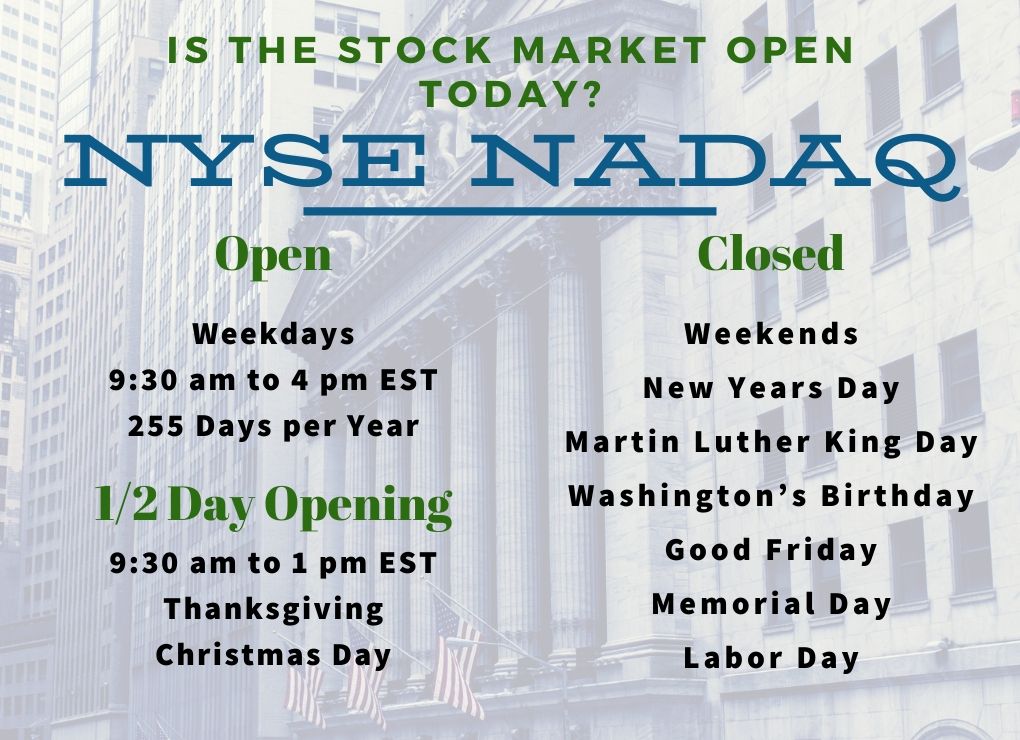
The backbone of the American financial system operates on a strictly regulated schedule. For the primary exchanges in the United States, the NYSE and the NASDAQ, standard trading hours are Monday through Friday, from 9:30 AM to 4:00 PM Eastern Time (ET). This 6.5-hour window is when the vast majority of trading volume occurs and when price discovery is most efficient.
The Significance of Eastern Time
It is important to note that the financial markets operate on Eastern Time, regardless of where the investor is physically located. This synchronization is crucial because it aligns with the business hours of the major financial institutions headquartered in New York City. For investors on the West Coast, the market closes at 1:00 PM PT, while for international investors in London or Tokyo, the U.S. market close occurs in the late evening or early morning. This global alignment ensures that news, economic data, and corporate earnings reports are digested within a standardized timeframe.
Extended Hours: Pre-Market and After-Hours Trading
While the “official” market hours are 9:30 AM to 4:00 PM, the digital nature of modern finance allows for trading outside these windows. Pre-market trading typically begins as early as 4:00 AM ET and runs until the opening bell. After-hours trading begins at 4:00 PM ET and can continue until 8:00 PM ET.
However, trading during these extended hours carries significant risks. Liquidity is substantially lower because most institutional players and retail investors are not active. This low liquidity often leads to wider “bid-ask spreads”—the difference between what a buyer is willing to pay and what a seller is willing to accept. Furthermore, price volatility can be extreme during extended hours, as a single large order can move a stock’s price significantly more than it would during standard hours. For the average personal finance enthusiast, it is often safer to wait for the standard session to execute trades.
Market Holidays and Early Closures: The Investor’s Calendar
The answer to “When is the market closing today?” changes when federal holidays or special observances occur. The U.S. stock markets do not follow the same schedule as the average retail business; instead, they generally align with the federal holiday schedule, with a few notable exceptions.
Scheduled Market Holidays
The stock market is closed for the full day on several key holidays throughout the year. These typically include:
-
New Year’s Day
-
Martin Luther King Jr. Day
-
Presidents’ Day (Washington’s Birthday)
-
Good Friday
-
Memorial Day
-
Juneteenth National Independence Day
-
Independence Day (July 4th)
-
Labor Day
-
Thanksgiving Day
-
Christmas Day
When a holiday falls on a Saturday, the market usually closes on the preceding Friday. If a holiday falls on a Sunday, the market is typically closed on the following Monday. Being aware of these dates is vital for managing cash flow and ensuring that limit orders do not expire or execute unexpectedly during a long weekend.
Early Closure Days
In addition to full-day closures, the market frequently observes “early close” days. On these days, the market typically closes at 1:00 PM ET rather than the standard 4:00 PM. The most common examples are the day after Thanksgiving (Black Friday) and Christmas Eve (if it falls on a weekday).
During these shortened sessions, trading volume is notoriously thin. Many professional traders take the day off, leaving the market to “drift” on low volume. For the savvy investor, these days are often better spent on research and strategy rather than active trading, as the lack of liquidity can result in erratic price movements that do not necessarily reflect the underlying value of the assets.
The Critical “Power Hour”: Why the Final 60 Minutes Matter
In the world of finance, the time between 3:00 PM and 4:00 PM ET is known as the “Power Hour.” This is perhaps the most volatile and high-volume period of the trading day. If you are asking when the market closes today, you are likely interested in the activity that happens during this final stretch.
Institutional Rebalancing
Much of the volume during the Power Hour is driven by institutional investors—mutual funds, pension funds, and hedge funds. These entities often need to rebalance their portfolios or “square” their positions before the closing bell. If a fund needs to buy or sell millions of shares of a particular stock to maintain its target weighting, they often wait until the end of the day to execute these trades to ensure they receive a price close to the official daily closing price.
The Closing Auction and the “Closing Cross”
The final minutes of the day involve a highly sophisticated process known as the “Closing Auction” (on the NYSE) or the “Closing Cross” (on the NASDAQ). This is a centralized process that aggregates all “market-on-close” (MOC) and “limit-on-close” (LOC) orders to determine a single price that clears the maximum number of shares.
This official closing price is what you see reported in the evening news and what is used to calculate the daily performance of indices like the S&P 500 or the Dow Jones Industrial Average. For many automated trading systems and index funds, this price is the most important data point of the day.
Strategy for the Close
For retail investors, the Power Hour offers both opportunity and danger. Day traders often look for “breakouts” or “breakdowns” during this period, betting that the momentum will carry over into the next day. However, for those focused on long-term personal finance, the volatility of the closing hour can lead to “slippage,” where the execution price of a market order is significantly different from the last quoted price. Using limit orders—which specify the maximum price you are willing to pay or the minimum you are willing to accept—is a prudent way to navigate the chaos of the market close.
External Factors Influencing Market Sentiment at the Close
While the clock dictates the official closing time, external events often dictate the mood of the market as it approaches 4:00 PM. Investors must stay attuned to these factors to understand why the market might be moving aggressively toward the finish line.
Economic Reports and Federal Reserve Announcements
Major economic indicators, such as the Consumer Price Index (CPI) or the Jobs Report, are usually released in the morning. However, Federal Reserve interest rate decisions and the subsequent press conferences often happen in the early afternoon. A hawkish or dovish comment from the Fed Chair around 2:30 PM ET can set off a flurry of activity that intensifies as the closing bell approaches. If the market perceives a shift in monetary policy, the final 90 minutes of trading can see massive swings in price as participants adjust their expectations for the coming months.
Corporate Earnings Season
During earnings season, the market close takes on added significance. Most major companies report their quarterly results either shortly before the market opens or immediately after it closes (“After the Bell”). If a major tech giant like Apple or Microsoft is scheduled to report after 4:00 PM, the final hour of trading for that stock—and the broader indices—is often characterized by intense speculation and hedging. Investors may buy “protective puts” (a form of insurance) or adjust their positions to mitigate the risk of a surprise in the earnings report.
Global Geopolitics
In our interconnected world, news from overseas can impact the U.S. market close. Developments in European markets (which are closing just as the U.S. morning session gets underway) or early indicators from Asian markets (which open shortly after the U.S. close) can influence domestic sentiment. A geopolitical event occurring in the afternoon can lead to a “flight to quality,” where investors rush to sell equities and buy safe-haven assets like Treasury bonds or gold in the final minutes of the trading day.
Tools and Habits for Effective Market Timing
To effectively answer “When is the market closing today?” and use that information to build wealth, an investor needs the right tools and a disciplined routine. Timing is not just about the seconds on the clock; it is about the readiness of the investor.
Real-Time Monitoring and Alerts
Relying on delayed data is a recipe for failure in modern investing. Most reputable brokerage platforms provide real-time quotes, but it is also helpful to use financial news aggregators and specialized apps that provide “push” notifications for market halts or sudden volatility. Tools that track “unusual options activity” or “volume spikes” can alert you to institutional movement in the final hour, giving you a clearer picture of where the smart money is moving.
The Importance of a Trading Journal
Successful investors often keep a log of how different stocks behave at the close. Does a particular stock tend to “fade” (drop in price) in the final 30 minutes? Does another consistently see a “buying program” at 3:55 PM? By documenting these patterns, you can develop a “feel” for the market that goes beyond mere charts and numbers. This qualitative data is invaluable for refining your entry and exit points.

Conclusion: Respecting the Bell
The closing bell is more than a tradition; it is a vital mechanism of global capitalism. Knowing when the market closes today—and understanding the mechanics of that closure—allows you to move from a passive observer to an active participant in your financial future. Whether you are managing a small side hustle in stock options or overseeing a massive retirement portfolio, respecting the hours of the exchange is a mark of professional discipline.
In the end, the market rewards those who are prepared. By aligning your strategies with the standard trading sessions, staying cognizant of the holiday calendar, and understanding the unique dynamics of the Power Hour, you position yourself to navigate the complexities of the financial world with confidence. The market may close at 4:00 PM, but the work of a successful investor is a continuous cycle of preparation, execution, and analysis.
aViewFromTheCave is a participant in the Amazon Services LLC Associates Program, an affiliate advertising program designed to provide a means for sites to earn advertising fees by advertising and linking to Amazon.com. Amazon, the Amazon logo, AmazonSupply, and the AmazonSupply logo are trademarks of Amazon.com, Inc. or its affiliates. As an Amazon Associate we earn affiliate commissions from qualifying purchases.