
For investors, traders, and financial enthusiasts, the operating hours of the New York Stock Exchange (NYSE) represent more than just a schedule—they define the rhythm of the global economy. Located at 11 Wall Street in Lower Manhattan, the NYSE is the world’s largest stock exchange by market capitalization. Knowing exactly when the closing bell rings is essential for executing trades, managing risk, and understanding the fluctuations of your investment portfolio.
While the short answer to “when does the New York Stock Exchange close today” is typically 4:00 PM Eastern Time (ET), the reality of market timing is far more nuanced. Between extended hours trading, holiday schedules, and early closures, navigating the temporal landscape of the stock market requires a detailed understanding of how Wall Street operates.
Understanding the Standard Operating Hours of the NYSE
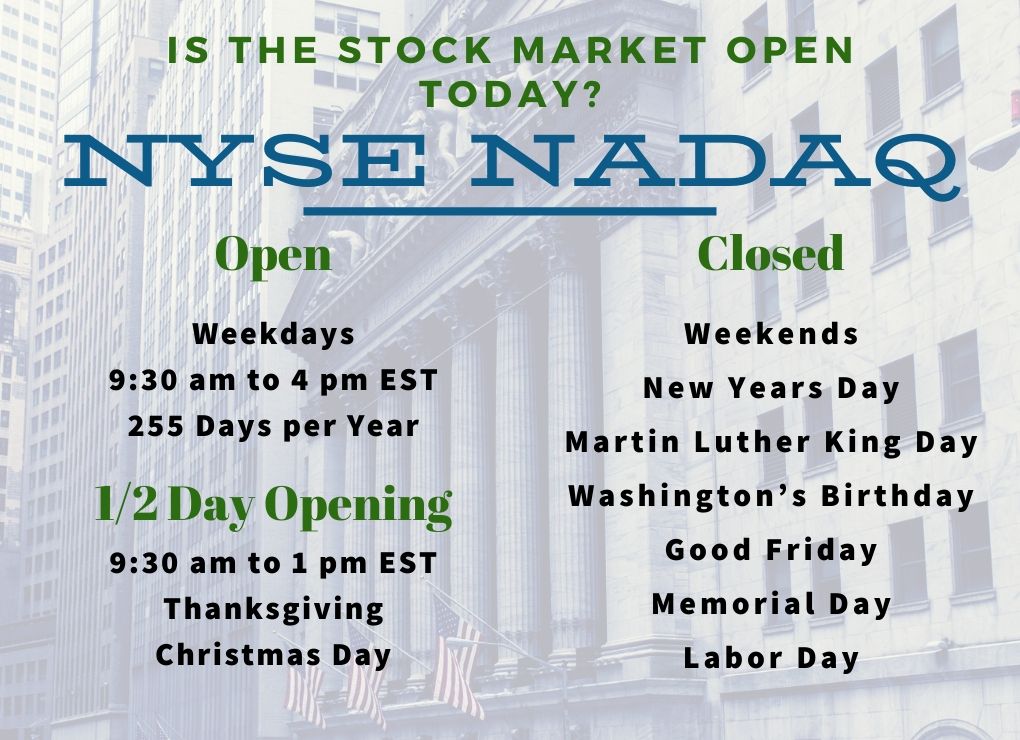
The standard trading session for the New York Stock Exchange runs from Monday through Friday, beginning at 9:30 AM ET and ending at 4:00 PM ET. This six-and-a-half-hour window is when the vast majority of trading volume occurs and when liquidity is at its highest.
The Core Trading Session
The core session is designed to concentrate trading activity into a specific timeframe, ensuring that there are enough buyers and sellers to maintain efficient pricing. During these hours, Designated Market Makers (DMMs) facilitate the trading of listed companies, maintaining fair and orderly markets. For the average retail investor, this is the safest and most transparent time to execute trades, as the “bid-ask spread”—the difference between the highest price a buyer is willing to pay and the lowest price a seller is willing to accept—is usually at its narrowest.
The Opening and Closing Bells
The opening bell at 9:30 AM and the closing bell at 4:00 PM are iconic traditions of the NYSE. Beyond the ceremony, these bells signal the start and end of the continuous trading process. The closing bell, in particular, triggers the “closing auction,” a critical mechanical process where the final price of the day is determined. This “closing print” is the official price used by mutual funds to calculate their Net Asset Value (NAV) and by indices like the S&P 500 to determine their daily performance.
Extended Hours Trading: Pre-Market and After-Hours Sessions
While the physical floor and the primary auction systems operate during standard hours, the digital age has ushered in extended hours trading. This allows market participants to react to news that breaks outside of the 9:30 AM to 4:00 PM window, such as corporate earnings reports or international economic data.
The Dynamics of Pre-Market and After-Hours Trading
The NYSE Arca platform and other electronic communication networks (ECNs) allow for trading outside of standard hours.
-
Pre-Market Trading: Typically occurs from 4:00 AM to 9:30 AM ET.
-
After-Hours Trading: Typically occurs from 4:00 PM to 8:00 PM ET.
During these sessions, the rules of the game change significantly. Because there are fewer participants, the volume of shares traded is much lower than during the core session. This lack of liquidity can lead to significant price swings, even on relatively small trades.
Risks and Opportunities in Extended Trading
The primary advantage of extended hours is the ability to act immediately on news. For example, if a major tech company releases a disappointing earnings report at 4:15 PM, investors can sell their shares in the after-hours market rather than waiting for the next morning’s open.
However, the risks are substantial. The wide bid-ask spreads mean you might pay significantly more (or receive significantly less) for a stock than you would during the day. Furthermore, many brokerages only allow “limit orders” during these sessions to protect investors from extreme price volatility. For most long-term investors, the volatility of extended hours is often best avoided in favor of the stability of the core session.
Holiday Schedules and Early Closures
If you are asking “when does the market close today,” it is vital to check the calendar for federal holidays and special observance days. The NYSE follows a strict holiday schedule, during which the exchange is completely closed for the day.
Standard Market Holidays
The NYSE is closed on the following holidays (or the nearest weekday if the holiday falls on a weekend):
-
New Year’s Day
-
Martin Luther King, Jr. Day
-
Washington’s Birthday (Presidents’ Day)
-
Good Friday
-
Memorial Day
-
Juneteenth National Independence Day
-
Independence Day (July 4th)
-
Labor Day
-
Thanksgiving Day
-
Christmas Day
When Does the Market Close Early?
In addition to full closures, the NYSE observes “early close” days. On these specific dates, the market closes at 1:00 PM ET instead of the usual 4:00 PM. These typically occur on:
-
The day after Thanksgiving (Black Friday)
-
Christmas Eve (if it falls on a weekday and the market is not already closed)
-
July 3rd (if the 4th of July falls on a Tuesday, Wednesday, Thursday, or Friday)
On these early-close days, the transition to after-hours trading also shifts, usually starting immediately at 1:00 PM ET.
Why Market Timing Matters for Your Portfolio
Understanding when the market closes is not just about logistics; it is about strategy. The timing of your trades within the day can have a measurable impact on the execution price and, ultimately, your investment returns.
Volatility at the Open and Close
The first and last 30 minutes of the trading day are often referred to as the most volatile periods. At the open, the market is processing all the news and orders that accumulated overnight. By the close, institutional investors and day traders are “squaring their positions”—closing out trades to avoid overnight risk. This surge in activity can lead to rapid price movements, which experienced traders use to their advantage, but which can catch novice investors off guard.
The “Power Hour” and the Closing Auction
The final hour of trading, from 3:00 PM to 4:00 PM ET, is colloquially known as the “Power Hour.” During this time, volume surges as institutional “smart money” makes its final moves. The peak of this activity is the closing auction.
The NYSE uses a specialized process to determine the closing price, aggregating all “Market on Close” (MOC) and “Limit on Close” (LOC) orders. This ensures that the final price reflects the true collective sentiment of the market. Because so much institutional capital is tied to the closing price, the liquidity in the final minutes of the day is often the highest of the entire session, making it an ideal time for large-scale rebalancing of portfolios.
Global Impact and the Interconnectedness of Exchange Times
While the NYSE closes at 4:00 PM ET, the global financial machine never truly stops. The closing of the New York market sets the stage for the opening of Asian markets, such as the Tokyo Stock Exchange (TSE) and the Hong Kong Stock Exchange (HKEX), followed by the European markets like the London Stock Exchange (LSE).
The “Handover” of Liquidity
As the NYSE closes, capital flows across time zones. For a global investor, the 4:00 PM ET close is simply a transition point. Events that happen in the hours after the NYSE closes will be reflected in the futures markets—derivatives that track the expected opening price of indices like the Dow Jones Industrial Average or the S&P 500.
Practical Tips for Monitoring Market Time
To ensure you never miss a trading window, consider the following:
-
Sync to Eastern Time: Regardless of where you live, always track the market in Eastern Time to avoid confusion during Daylight Saving Time transitions.
-
Use Limit Orders: If you must trade near the close or in after-hours, use limit orders to ensure you don’t get filled at an unfavorable price during a volatility spike.
-
Check the Economic Calendar: High-impact reports (like the Monthly Jobs Report) are often released at 8:30 AM ET, an hour before the NYSE opens, which can lead to massive gaps in the opening price.
By mastering the clock of the New York Stock Exchange, you gain a deeper perspective on market mechanics. Whether you are a long-term retirement saver or an active trader, knowing the exact timing of the closing bell—and the activity that surrounds it—is a fundamental pillar of financial literacy and successful investing.
aViewFromTheCave is a participant in the Amazon Services LLC Associates Program, an affiliate advertising program designed to provide a means for sites to earn advertising fees by advertising and linking to Amazon.com. Amazon, the Amazon logo, AmazonSupply, and the AmazonSupply logo are trademarks of Amazon.com, Inc. or its affiliates. As an Amazon Associate we earn affiliate commissions from qualifying purchases.