
The stock market is a term frequently heard in financial news, economic forecasts, and personal investment discussions, yet its fundamental nature and intricate workings remain a mystery to many. Far from being a single physical location, the stock market is a complex ecosystem of exchanges, brokers, investors, and companies, all interacting to facilitate the buying and selling of ownership stakes in publicly traded corporations. At its core, it represents a crucial pillar of modern capitalism, serving as a powerful engine for capital formation, wealth creation, and economic growth. Understanding the stock market isn’t just for seasoned financiers; it’s a vital component of financial literacy, offering insights into corporate health, economic trends, and personal wealth-building opportunities.

The Foundation of Modern Finance: Understanding the Stock Market
To truly grasp the significance of the stock market, one must look beyond its everyday mention and delve into its core definitions and functions. It is a dynamic marketplace where the future prospects of companies and the economic aspirations of individuals converge.
Defining the Stock Market: More Than Just a Place
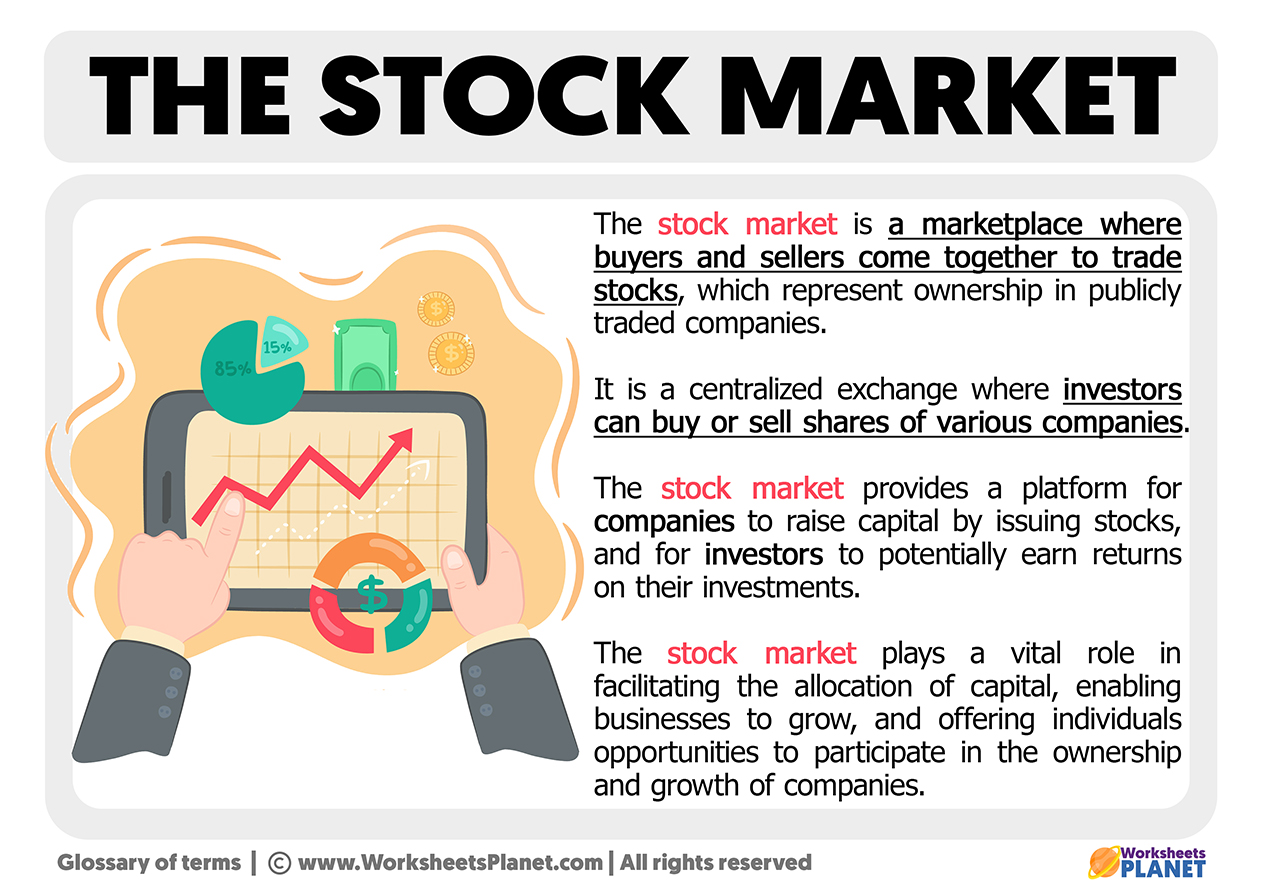
The stock market refers to the collection of markets and exchanges where the issuing and trading of publicly held company shares, or “stocks,” takes place. These shares represent fractional ownership in a company, entitling the holder to a portion of the company’s assets and earnings. While historically some exchanges operated in physical trading pits, today’s stock market is predominantly electronic, a vast network linking buyers and sellers globally. It’s not just a single entity, but a global network of interconnected markets, such as the New York Stock Exchange (NYSE), NASDAQ, London Stock Exchange (LSE), and many others, each with its own rules and listed companies. The stock market provides a transparent and regulated environment for capital to flow from investors to corporations, and from one investor to another.
Key Functions: Capital Formation and Wealth Creation
The stock market serves two primary, symbiotic functions: capital formation for companies and wealth creation for investors. For companies, issuing shares on the stock market (known as going public or an Initial Public Offering – IPO) is a powerful way to raise significant capital without incurring debt. This capital can be used for research and development, expansion, acquisitions, or to pay down existing debt, fueling growth and innovation. For investors, purchasing these shares offers the potential for wealth creation through two main avenues: capital appreciation (when the share price increases) and dividends (a portion of the company’s profits distributed to shareholders). It provides an accessible means for individuals to participate in the growth of successful businesses and, over the long term, build substantial financial assets.
Primary vs. Secondary Markets: Where Shares are Born and Traded
The journey of a stock typically begins in the primary market. This is where new securities are issued and sold for the first time. The most well-known primary market event is an Initial Public Offering (IPO), where a private company sells its shares to the public for the first time. The proceeds from these sales go directly to the issuing company. Once shares have been sold in the primary market, they then move to the secondary market. This is the market most people refer to when they talk about the “stock market.” Here, investors buy and sell existing shares from each other, rather than directly from the issuing company. The exchanges (like NYSE or NASDAQ) are examples of secondary markets. While the company does not directly receive money from these secondary market transactions, the liquidity and price discovery offered by the secondary market are crucial for making primary market offerings attractive to investors, ensuring that shares can be easily bought and sold when needed.
How the Stock Market Works: Mechanisms and Participants
The daily operations of the stock market are a ballet of sophisticated technology, strict regulations, and diverse participants, all working within a framework designed to ensure fair and efficient trading.
Issuers and Investors: The Core Relationship
At the heart of the stock market are two main groups: issuers and investors. Issuers are the companies (or sometimes governments) that raise capital by offering shares or other securities to the public. They do so to fund their operations, expand, or innovate. Investors, on the other hand, are individuals or institutions (like mutual funds, pension funds, or hedge funds) who purchase these shares with the expectation of earning a return on their investment. Their objective might be long-term growth, regular income through dividends, or short-term gains from price fluctuations. The interaction between these two groups, mediated by market mechanisms, drives the continuous flow of capital and the setting of prices.
Brokers and Exchanges: Facilitating Transactions
Connecting issuers and investors are brokers and exchanges. Stock exchanges, like the NYSE or NASDAQ, are organized marketplaces where buyers and sellers can meet to trade securities. They provide the infrastructure, rules, and regulatory oversight for orderly trading. Brokers, licensed financial professionals or firms, act as intermediaries, executing buy and sell orders on behalf of their clients (investors) on these exchanges. In return for their services, brokers charge commissions or fees. With the advent of online trading platforms, many investors can now execute trades themselves with minimal interaction with a traditional broker, though the underlying brokerage firm still routes their orders to the exchanges. These systems ensure that orders are matched efficiently and that transactions are settled promptly.
Market Indices: Gauging Performance and Health
To make sense of the vast and complex movements within the stock market, market indices are used as benchmarks. An index is a hypothetical portfolio of securities representing a particular market or a segment of it. Famous examples include the S&P 500, which tracks 500 large U.S. companies; the Dow Jones Industrial Average (DJIA), representing 30 large, publicly owned American companies; and the NASDAQ Composite, which focuses on technology and growth companies. These indices are crucial for investors to gauge the overall performance of the market or specific sectors, compare the returns of their own portfolios, and understand broader economic trends. A rising index generally indicates a healthy market and economy, while a declining index often signals uncertainty or contraction.
Supply, Demand, and Price Discovery
The fundamental economic principles of supply and demand are the primary drivers of stock prices. When demand for a particular stock is high (more buyers than sellers), its price tends to rise. Conversely, when supply exceeds demand (more sellers than buyers), the price tends to fall. This constant interplay of buying and selling activity, influenced by company performance, economic news, industry trends, and investor sentiment, leads to price discovery – the process by which the market determines the current fair value of a company’s shares. Every second of trading, millions of orders are placed, creating a highly efficient, though sometimes volatile, mechanism for valuing public companies.
Why Invest in the Stock Market? Opportunities and Risks
For many, the stock market represents a powerful tool for financial growth. However, like any investment vehicle, it comes with its own set of opportunities and inherent risks. A balanced understanding of both is essential for informed decision-making.
Potential for Growth and Compounding Returns
The primary allure of stock market investing is its potential for significant long-term growth. Historically, equities have outperformed other asset classes like bonds and cash over extended periods. This growth stems from several factors: companies increasing their earnings, expanding their operations, and innovating. A critical concept here is compounding returns, where the returns generated by an investment are reinvested, subsequently earning their own returns. Over decades, even modest annual returns can accumulate into substantial wealth due to the power of compounding, making the stock market a cornerstone for retirement planning and long-term financial goals.
Diversification and Inflation Hedge
Investing in the stock market also offers avenues for diversification within an investment portfolio. By holding shares in a variety of companies across different industries and geographies, investors can mitigate the risk associated with any single company or sector performing poorly. Furthermore, stocks can act as an effective hedge against inflation. As the cost of living rises due to inflation, the value of cash erodes. Companies, however, can often raise the prices of their products and services to keep pace with inflation, which can translate into higher earnings and, subsequently, higher stock prices. Thus, a well-chosen stock portfolio can help preserve and grow purchasing power over time.
Understanding Market Volatility and Risk Tolerance
While the potential for reward is high, so too is the inherent risk. The stock market is characterized by volatility, meaning prices can fluctuate significantly and unpredictably in the short term. Factors like economic recessions, geopolitical events, company-specific news, or shifts in investor sentiment can lead to sharp market downturns. It’s crucial for investors to understand that the value of their investments can go down as well as up, and there’s no guarantee of returns. This brings us to risk tolerance – an investor’s ability and willingness to take on financial risk. A crucial step before investing is to honestly assess one’s own risk tolerance, as this will guide decisions on how much to invest, in what types of stocks, and over what time horizon.
Long-Term vs. Short-Term Investment Horizons
Investment success in the stock market is often tied to one’s investment horizon. Long-term investing (typically defined as holding investments for five years or more) is generally recommended for most individuals. This approach allows investors to ride out short-term market fluctuations and benefit from the compounding effect and the overall upward trend of the market over time. Short-term investing or trading, which involves frequent buying and selling to profit from minor price movements, is significantly riskier and often requires extensive knowledge, time, and psychological discipline. While it can yield quick profits, it also carries a high probability of losses due to transaction costs, market noise, and the difficulty of consistently timing the market.
Navigating the Stock Market: Practical Approaches for Investors
For those ready to venture into the stock market, a structured approach grounded in education and strategy is paramount. It’s not about guessing; it’s about informed decisions.
Types of Investments: Stocks, ETFs, Mutual Funds
When investing in the stock market, individuals have several options beyond just single company stocks.
-
Individual Stocks: Directly purchasing shares of a specific company. This offers high potential returns if the company performs well but also carries higher risk concentrated in that single entity.
-
Exchange-Traded Funds (ETFs): These are baskets of securities (like stocks, bonds, or commodities) that trade on an exchange, much like individual stocks. ETFs offer instant diversification, often track specific indices (e.g., an S&P 500 ETF), and typically have lower expense ratios than mutual funds.
-
Mutual Funds: Professionally managed portfolios of stocks, bonds, or other investments. Investors buy units of the fund, and a fund manager makes investment decisions. Mutual funds also provide diversification and professional management but are often actively managed and can have higher fees. Choosing the right type depends on investment goals, risk tolerance, and desired level of involvement.
Fundamental vs. Technical Analysis: Tools for Decision-Making
Investors employ various methods to make informed decisions.
-
Fundamental Analysis: This involves evaluating a company’s intrinsic value by examining financial statements (revenue, earnings, assets, liabilities), management quality, industry trends, and economic indicators. The goal is to determine if a stock is undervalued or overvalued relative to its true worth. Long-term investors often favor fundamental analysis.
-
Technical Analysis: This approach involves studying past market data, primarily price and volume charts, to identify patterns and predict future price movements. Technical analysts believe that all known information is already reflected in the stock price, and historical price action can indicate future trends. Short-term traders often use technical analysis. Many investors combine elements of both to gain a comprehensive perspective.
The Importance of Diversification and Asset Allocation
Two pillars of sound investment strategy are diversification and asset allocation. Diversification means spreading investments across different asset classes, industries, and geographies to reduce overall risk. The adage “don’t put all your eggs in one basket” is particularly true here. If one investment performs poorly, others may perform well, cushioning the impact on the overall portfolio. Asset allocation is the process of deciding how to divide an investment portfolio among different asset categories, such as stocks, bonds, and cash equivalents, based on an investor’s risk tolerance, time horizon, and financial goals. A younger investor with a long time horizon might allocate a higher percentage to stocks, while an older investor nearing retirement might opt for a more conservative allocation with a higher percentage in bonds.
Getting Started: Opening a Brokerage Account and Researching
For beginners, the first practical step is to open a brokerage account with a reputable online broker. These platforms provide access to the stock market, tools for research, and the means to execute trades. Before making any investment, thorough research is paramount. This includes understanding the companies or funds you’re considering, reading financial reports, staying informed about market news, and possibly consulting with a financial advisor. Many online brokers offer educational resources, and independent financial websites provide ample data and analysis. Starting small, with investments in diversified funds like ETFs, is often a prudent approach for those new to the market.
The Stock Market’s Impact Beyond Personal Portfolios
While often viewed through the lens of individual wealth, the stock market plays a profound and pervasive role in the broader economy and societal structure. Its health and movements ripple far beyond personal investment accounts.
Economic Barometer: Reflecting National and Global Health
The stock market is widely regarded as a leading economic indicator – a barometer of national and global economic health. Its performance often reflects investor confidence in corporate earnings, economic policies, and future growth prospects. A robust bull market (a period of rising stock prices) can signal optimism and encourage consumer spending and business investment, while a bear market (a period of falling prices) might reflect economic contraction or uncertainty. Governments, central banks, and businesses closely monitor market indices for insights into the current and future state of the economy, using this information to inform policy decisions and strategic planning.
Corporate Governance and Accountability
Listing on a stock exchange brings increased scrutiny and demands for corporate governance and accountability. Public companies are subject to stringent reporting requirements by regulatory bodies like the Securities and Exchange Commission (SEC) in the U.S. They must regularly disclose financial performance, executive compensation, and other material information to the public. This transparency aims to protect investors and ensure fair practices. Shareholder activism also plays a role, with investors having the power to vote on key corporate decisions, hold management accountable, and influence company direction, thereby promoting more ethical and efficient business operations.
Funding Innovation and Job Creation
The capital raised through stock offerings is not merely a transfer of money; it’s often an investment in the future. This influx of funds empowers companies to finance research and development, expand into new markets, and build new facilities. These activities directly lead to innovation, creating new products and services that improve quality of life and drive technological advancement. Furthermore, business expansion fueled by public capital often results in job creation, stimulating employment across various sectors and contributing to the overall economic well-being of a nation. The stock market, therefore, is a critical mechanism for channeling savings into productive investments that benefit society at large.
The stock market, in its essence, is a powerful and multifaceted financial engine. It is where ambition meets opportunity, allowing companies to grow and individuals to build wealth. While its complexities can seem daunting, a fundamental understanding of its structure, functions, opportunities, and risks empowers individuals to make informed financial decisions and appreciate its profound impact on the global economic landscape. Engaging with the stock market, whether directly through investing or indirectly through observing its trends, is an engagement with the very pulse of modern finance and economic development.
aViewFromTheCave is a participant in the Amazon Services LLC Associates Program, an affiliate advertising program designed to provide a means for sites to earn advertising fees by advertising and linking to Amazon.com. Amazon, the Amazon logo, AmazonSupply, and the AmazonSupply logo are trademarks of Amazon.com, Inc. or its affiliates. As an Amazon Associate we earn affiliate commissions from qualifying purchases.